The concept of mortal sin is a profound and, for some, a challenging aspect of Catholic teaching. It’s not merely a mistake or a lapse in judgment; it signifies a grave offense against God’s love and law, with significant spiritual consequences. Understanding mortal sin, therefore, is crucial for any Catholic seeking a deeper spiritual life and a closer relationship with the Divine. This article aims to demystify this doctrine, offering clarity, relatable examples, and a hopeful perspective on navigating its implications.
For many, the term itself can evoke fear or anxiety. However, viewing mortal sin solely through a lens of condemnation misses its ultimate purpose: to guide us toward repentance and the boundless mercy of God. The Catholic Church teaches about mortal sin not to alienate believers, but to illuminate the path towards spiritual healing and the restoration of a relationship broken by serious wrongdoing. It’s a call to awareness, a reminder of our free will, and an invitation to embrace God’s unwavering love and forgiveness.
The Catholic Church defines a mortal sin as a gravely sinful act that destroys the sanctifying grace in the soul. For an act to be considered a mortal sin, three conditions must be met simultaneously: grave matter, full knowledge, and deliberate consent. Without all three, a sin, while still an offense against God, would not be classified as mortal. This distinction is vital for understanding the gravity and the potential consequences of certain actions.
Let’s break down these essential components. Grave matter refers to sins that are considered serious in themselves. The Catechism of the Catholic Church lists examples such as murder, adultery, blasphemy, and grave theft. These are actions that fundamentally violate God’s commandments and undermine the dignity of human life and relationships. Think of it like breaking a very important rule in a game; the consequences are significant because the rule itself is crucial for fair play and the integrity of the game. Without this element, even intended wrongdoing might not reach the level of mortal sin.
Grave Matter: The Seriousness of the Offense
The concept of grave matter is foundational when discussing mortal sin. It signifies actions or omissions that are inherently serious because they involve a significant violation of God’s law and the natural moral law. These aren’t minor infractions; they are actions that have the potential to deeply harm oneself, others, and one’s relationship with God. The Church, through Scripture and tradition, has identified certain actions as falling into this category.
Examples of grave matter include sins against the virtues of faith, hope, and charity. This can manifest as deliberately refusing to believe in revealed truths (heresy), despairing of God’s mercy, or hating God. More concretely, it encompasses actions like taking an innocent human life, engaging in sexual sins outside of marriage, stealing valuable possessions, or bearing false witness in a way that causes significant harm. The seriousness is determined by the object of the act itself, its impact, and its opposition to divine love. For instance, a small white lie told to avoid hurting someone’s feelings is different from a perjury that ruins a person’s reputation and livelihood.
Full Knowledge: Understanding the Gravity
The second crucial element for a sin to be mortal is full knowledge. This means the individual must be aware that the act they are committing is seriously wrong and contrary to God’s law. It’s not enough for an action to be grave matter; the person must understand the gravity of their choice. Ignorance can, in some circumstances, lessen or even remove culpability.
Imagine someone accidentally eating meat on a Friday during Lent without knowing it was forbidden. This act, grave matter for Catholics during Lent, might not be a mortal sin for that individual because they lacked full knowledge. However, if the same person knowingly and intentionally eats meat on a Friday, fully aware of the Church’s prohibition, then the element of full knowledge is present. This emphasizes personal responsibility; we are expected to know and understand fundamental moral principles taught by the Church. This doesn’t imply an exhaustive theological knowledge, but a reasonable awareness of what constitutes a serious offense against God.
Finally, deliberate consent is the third indispensable condition for a sin to be mortal. This means the individual freely chooses to commit the sinful act, without undue external pressure or internal compulsion that overwhelms their free will. Even if an act is grave matter and the person knows it’s wrong, if they are forced into it or act in a moment of extreme emotional distress that clouds their judgment, their consent might not be fully deliberate.
Consider someone who is coerced at gunpoint to steal. While the act is grave matter and they know it’s wrong, the coercion significantly diminishes their deliberate consent. On the other hand, if someone, after contemplating a wrongful action, decides to proceed with it, fully intending to do so, then deliberate consent is present. This element highlights the importance of our free will in our spiritual lives. God has given us the freedom to choose Him or to turn away, and mortal sin represents a deliberate choice to turn away from His love and grace.
Consequences of Mortal Sin
The Catholic Church teaches that a mortal sin has profound spiritual consequences. Primarily, it severs the relationship of grace between the sinner and God. Sanctifying grace, the life of God within the soul, is lost. This is not a punishment in the punitive sense, but a natural consequence of choosing to reject God’s love and friendship. This separation makes it difficult for the individual to grow in holiness and to receive the full benefits of their faith.
Beyond the immediate loss of sanctifying grace, mortal sin, if unrepented, can lead to eternal separation from God, often referred to as hell. This is a serious teaching that underscores the gravity of deliberately and knowingly rejecting God’s love. However, it’s crucial to remember that this is not a predetermined fate. God’s mercy is infinite, and repentance offers a path back to His grace. The Church emphasizes that the possibility of repentance is always present, even for the gravest of sins.
Loss of Sanctifying Grace
When a mortal sin is committed, the most immediate and significant consequence is the loss of sanctifying grace. This grace is like the very lifeblood of the soul, God’s divine presence dwelling within us, enabling us to partake in His divine nature and to live a supernatural life. When this grace is lost, the soul becomes spiritually weakened and vulnerable.
Think of it like a light bulb that has been unplugged from its power source. It can still exist, but it cannot shine. Similarly, a soul without sanctifying grace can still perform natural actions, but it loses its capacity to truly grow in holiness, to offer meritorious prayers, and to draw strength from God’s presence. This loss can lead to a spiritual dryness, a feeling of distance from God, and a struggle to live a virtuous life. The sacraments, particularly Holy Communion, are meant to nourish this grace, and their reception is not advised for those in a state of mortal sin without prior confession.
The Path to Reconciliation: Confession and Forgiveness
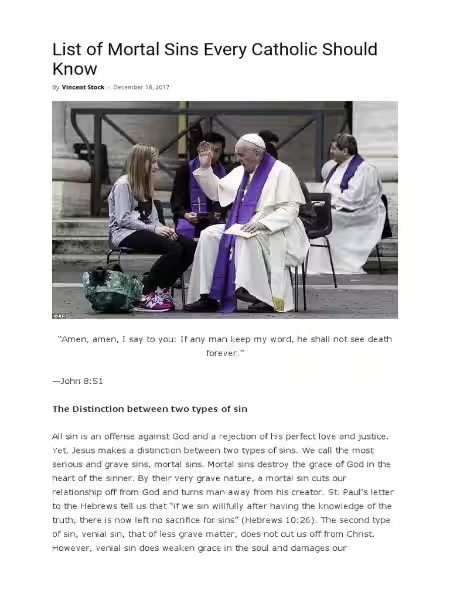
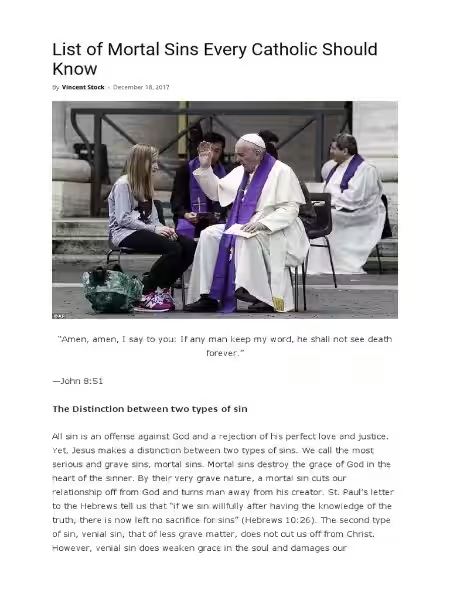
The good news for Catholics is that the consequences of mortal sin are not irreversible. The Sacrament of Reconciliation, also known as Confession, is the primary means by which the Church offers forgiveness and the restoration of sanctifying grace. Through sincere repentance and confession to a priest, who acts in the person of Christ, a soul can be healed and reconciled with God.
This sacrament is a profound act of mercy. When we confess our mortal sins, we are acknowledging our wrongdoing, expressing our sorrow, and resolving to amend our lives. The priest, acting as an instrument of God’s mercy, absolves us of our sins, and the grace of God flows back into our souls. This experience can be incredibly liberating, bringing peace and renewed spiritual strength. It’s a powerful reminder that God’s love is always greater than our sins.
Distinguishing Mortal Sin from Venial Sin
It is essential to understand that not all sins are mortal. The Catholic Church also distinguishes between mortal sins and venial sins. A venial sin, while still an offense against God, does not destroy charity or the life of grace in the soul. It weakens the bond of love between us and God but does not break it entirely.
Think of mortal sin as a serious break in a relationship, requiring a formal reconciliation. Venial sin, on the other hand, is like a minor argument or disagreement that strains the relationship but doesn’t end it. These everyday imperfections and lesser offenses still need to be addressed and repented of, but their impact on our relationship with God is different from that of mortal sin. They hinder our spiritual progress and can make us more susceptible to falling into mortal sin if not addressed.
The Nature of Venial Sin
Venial sins are considered less serious offenses that wound but do not destroy our relationship with God. They can arise from a lack of charity, a moment of weakness, or an imperfection in our actions or thoughts. While they don’t sever our grace, they do impede our spiritual growth and can dull our sensitivity to God’s presence.
Examples of venial sin might include losing your temper over a minor inconvenience, engaging in gossip that isn’t maliciously intended or doesn’t cause grave harm, or being lazy in fulfilling minor obligations. These actions are contrary to God’s will and can lead to habits that eventually pave the way for more serious offenses. However, they can also be forgiven through prayer, acts of charity, and receiving the Eucharist with a contrite heart.
The Importance of Daily Examination and Repentance
Given the distinction between mortal and venial sins, the practice of a daily examination of conscience becomes invaluable. This involves reflecting on one’s actions, thoughts, and omissions throughout the day, identifying areas where one has fallen short of God’s will, whether through mortal or venial sins. This practice fosters self-awareness and a deeper understanding of one’s spiritual state.
Regular repentance, even for venial sins, is crucial for maintaining a close relationship with God. It keeps our hearts open to His grace and prevents the accumulation of spiritual “clutter” that can obscure His light. The Church encourages frequent reception of the Sacrament of Reconciliation, not only for mortal sins but also as a means of growth and purification from venial offenses. This ongoing process of repentance and reconciliation is a vital part of the spiritual journey for every Catholic.
Living a Life Free from Mortal Sin
The ultimate goal for a Catholic is to live a life that strives to avoid mortal sin and to grow in holiness. This is not achieved through human effort alone, but through reliance on God’s grace, the sacraments, prayer, and the practice of virtue. It’s a lifelong journey of conversion and deepening love for God and neighbor.
By understanding the nature of mortal sin, its conditions, and its consequences, Catholics are better equipped to navigate the moral landscape of life. The Church’s teachings on this matter are intended to be a guide, not a burden, pointing towards the path of true freedom and fulfillment found in living in accordance with God’s loving plan. The journey of avoiding mortal sin is one of constant vigilance, reliance on divine assistance, and an unwavering trust in God’s infinite mercy.
Frequently Asked Questions about Mortal Sin in the Catholic Church
What is mortal sin?
A mortal sin is a grave offense against God. It is a deliberate and serious violation of God’s law that destroys sanctifying grace in the soul.
What are the conditions for a sin to be mortal?
For a sin to be considered mortal, three conditions must be met:
1. Grave Matter: The act itself must be seriously wrong. Examples include murder, adultery, grave theft, apostasy, etc. The Catechism of the Catholic Church lists these serious offenses.
2. Full Knowledge: The person must know that the act is a sin and that it is seriously wrong. Ignorance can sometimes lessen culpability.
3. Deliberate Consent: The person must freely choose to commit the act. It cannot be done accidentally or under duress.
What are the consequences of mortal sin?
The primary consequence of mortal sin is the loss of God’s grace and the forfeiture of eternal salvation. It separates a person from God and, if unrepented, leads to eternal damnation. It also weakens one’s ability to commit good acts.
What is the difference between mortal sin and venial sin?
A mortal sin is a grave offense that completely separates one from God. A venial sin is a less serious offense that wounds but does not destroy the relationship with God. While venial sins are still sinful, they do not have the same dire eternal consequences as mortal sins and are typically forgiven through prayer, acts of charity, or confession.
Can a mortal sin be forgiven?
Yes, mortal sins can be forgiven through the Sacrament of Reconciliation (Confession). This sacrament is seen as the ordinary way for Catholics to receive forgiveness for grave sins. It requires sincere contrition (sorrow for sins) and the intention to sin no more.
What is contrition?
Contrition is sorrow of the soul and detestation for the sin committed, together with the resolution not to sin again. There are two types: perfect contrition (arising from love of God) and imperfect contrition (arising from fear of punishment). Both can lead to forgiveness of mortal sin when coupled with the Sacrament of Reconciliation.
What happens if someone dies in a state of mortal sin?
According to Catholic teaching, if a person dies in a state of unrepented mortal sin, they face eternal separation from God, which is hell.
Are there specific examples of mortal sins?
While the gravity of an act can depend on circumstances, common examples of grave matter that can constitute mortal sin include:
* Deliberate murder
* Adultery and fornication
* Grave theft
* Bearing false witness (perjury)
* Apostasy (abandoning the faith)
* Willfully missing Mass on Sundays or holy days of obligation
* Grave abortion
* Blasphemy
* Grave hatred of God or neighbor
Does intention matter in sin?
Yes, intention is crucial. For a sin to be mortal, there must be deliberate consent. An action that might otherwise be sinful can be excused or lessened in culpability if it was done without full knowledge or deliberate intent.
Can one accidentally commit a mortal sin?
No, by definition, a mortal sin requires full knowledge and deliberate consent. An accidental act, even if it has negative consequences, would not be considered a mortal sin.
What is the role of the Holy Spirit in relation to sin?
The Holy Spirit guides believers and convicts them of sin. The Holy Spirit also empowers believers to resist temptation and to live a life free from sin. The forgiveness of sins through Christ is a work of the Holy Spirit.