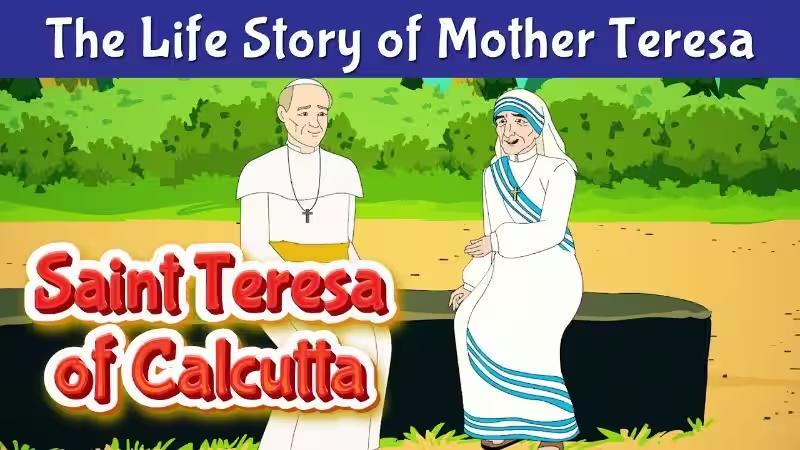
Mother Teresa, a name synonymous with compassion and selfless service, continues to inspire millions across the globe. Her life, a testament to unwavering faith and profound love for humanity, is woven with countless stories that illuminate the transformative power of religion. These narratives are not mere anecdotes; they are windows into a soul dedicated to the most vulnerable, a beacon of hope in the darkest corners of the world. By exploring these Mother Teresa stories, we can gain a deeper understanding of her spiritual journey, the profound impact of her mission, and the universal lessons that continue to resonate with us today. Her legacy is a living testament to how faith, when truly embodied, can ignite change and offer solace.
The essence of Mother Teresa’s work lay in her profound religious devotion, which fueled every action and every comforting word. She saw the face of God in every leper, every starving child, and every abandoned soul. This perspective, rooted in her deep Catholic faith, allowed her to transcend societal barriers and embrace those deemed outcasts by the world. Her stories offer a powerful reminder that true spirituality is not about grand pronouncements or abstract theology, but about practical, tangible acts of love and service, especially towards those who have been forgotten or marginalized. Her life story itself is a sermon in action, demonstrating the practical application of religious tenets in the most challenging circumstances.
The Birth of a Saintly Mission: From Skopje to Calcutta
Born Anjezë Gonxhe Bojaxhiu in 1910, Mother Teresa’s early life in Skopje, then part of the Ottoman Empire, was marked by a deep piety and a growing desire to serve God. From a young age, she felt a spiritual calling, a persistent inner voice that guided her towards a life dedicated to religious service. She was particularly moved by stories of missionaries working in far-off lands, igniting a spark of desire to dedicate her life to helping the poor. This nascent calling, nurtured by her religious upbringing and the fervent prayers of her family, would eventually lead her across continents and into the heart of India’s most impoverished communities.
Her journey to religious life began in earnest when she joined the Sisters of Loreto in Ireland at the age of eighteen, a significant step that marked her departure from her homeland and her complete surrender to a spiritual path. It was here that she adopted the name Sister Teresa, inspired by Thérèse of Lisieux, a Carmelite nun known for her “little way” of holiness. This early period was crucial in shaping her understanding of dedication and sacrifice, preparing her for the immense challenges that lay ahead. The decision to leave her familiar world for a life of religious commitment was a profound act of faith, a testament to her unwavering belief in a higher purpose.
The Call Within the Call: A Revelation in a Train
One of the most pivotal Mother Teresa stories recounts a profound spiritual experience that fundamentally reshaped her mission. During a train journey from Calcutta to Darjeeling in 1946, she heard what she described as “the call within the call.” This wasn’t a mere suggestion, but a divine directive, a clear and insistent voice urging her to leave the relative comfort of her convent and dedicate herself entirely to serving “the poorest of the poor.” This moment was not a sudden whim, but a culmination of years of spiritual discernment and a deep yearning to live out her faith in the most direct and impactful way possible. The experience was so powerful that it propelled her into immediate action, igniting the flame of her future groundbreaking work.
This divine revelation became the bedrock of her life’s mission. It empowered her to step away from the structured life of a nun and embrace a radical form of service, one that involved living amongst the destitute, sharing their suffering, and offering them dignity and love. She understood this call as a direct command from God, a mandate to bring His divine love to those who felt utterly abandoned. This experience underscores the personal and transformative nature of faith, where religious belief translates into concrete, life-altering commitments, demonstrating how religious conviction can be a powerful catalyst for social change and personal sacrifice. Her willingness to embrace this challenging path showcases the depth of her unwavering faith.
Founding the Missionaries of Charity: A Faith-Fueled Endeavor
With the divine mandate firmly in her heart, Mother Teresa embarked on the arduous task of establishing the Missionaries of Charity. This was not a simple administrative process; it was a faith-fueled endeavor that required immense courage, unwavering perseverance, and a profound reliance on God’s providence. She began with almost nothing, facing skepticism from many quarters, but her conviction in the righteousness of her mission, rooted in her religious beliefs, never wavered. The early days were fraught with challenges, from securing basic necessities for her burgeoning ministry to navigating bureaucratic hurdles and societal indifference.
Her initial work involved tending to the sick and dying on the streets of Calcutta, providing them with comfort, care, and a dignified end to their lives. This hands-on approach, a direct manifestation of her religious vows of poverty, chastity, and obedience, became the hallmark of the Missionaries of Charity. These early pioneers, inspired by Mother Teresa’s example and her profound faith, worked tirelessly with little more than their hands and their hearts. The organization’s growth, from a handful of devoted women to an international force for good, is a testament to the power of a shared spiritual vision and the transformative impact of religious dedication.
The “Nirmal Hriday” – Home for the Dying Destitute
One of the most poignant Mother Teresa stories centers around the founding of the “Nirmal Hriday,” which translates to “Pure Heart.” This was her first major initiative, a sanctuary for the dying destitute, those who were left to perish on the streets of Calcutta, overlooked and forgotten by society. The sheer audacity of this project, to welcome and care for individuals deemed worthless by the world, speaks volumes about her radical interpretation of Christian love and her unwavering commitment to the Gospel. She saw these individuals not as burdens, but as brothers and sisters, each a precious child of God deserving of love and respect.
The establishment of Nirmal Hriday was an act of profound faith. Mother Teresa and her initial band of Sisters faced immense opposition and even disgust from some who couldn’t comprehend their mission. Yet, they persevered, driven by their deep religious conviction that every human life has inherent dignity, regardless of their circumstances. This commitment to the marginalized, a core tenet of her faith, meant embracing the most challenging and often repulsive tasks with love and compassion. The Home for the Dying Destitute became a powerful symbol of hope and human dignity, a place where the abandoned could find solace and a peaceful end, directly embodying the principles of her religious order.
Miracles of Faith and Compassion: Beyond the Physical
While Mother Teresa’s life was characterized by extraordinary acts of physical service, many Mother Teresa stories also touch upon the spiritual and, for believers, miraculous dimensions of her work. Numerous accounts speak of her ability to inspire hope and faith in those who had lost it, to bring peace to troubled souls, and to facilitate profound spiritual awakenings. Her presence alone seemed to radiate a divine grace that touched everyone she encountered, regardless of their religious background or beliefs. This spiritual influence was as potent as her physical ministrations, offering a holistic approach to healing and well-being.
Beyond the tangible acts of charity, her ability to connect with people on a deep spiritual level is a recurring theme. She offered not just material assistance but also a profound sense of belonging and divine love. Many who were lost and despairing found renewed purpose and faith through her words and actions. These spiritual encounters, though often less documented than her physical acts of service, were nonetheless powerful manifestations of her religious calling and the impact of her unwavering belief in God’s redemptive power. Her faith was not just a personal conviction; it was a force that inspired profound spiritual transformations in others.
Healing of the Sick and the Troubled Heart
Among the many stories of Mother Teresa, a recurring element is the impact she had on the sick and the emotionally wounded. While she never claimed to perform miracles in a traditional sense, many witnessed profound healings, both physical and spiritual, in her presence. She would often pray with the sick, anointing them with oil and offering words of comfort and faith. These prayers, born from her deep religious connection, seemed to bring solace and a sense of peace that transcended the physical ailments. The sick, who had often been ostracized and neglected, found in her a beacon of hope and divine intervention.
Her encounters with those suffering from despair and mental anguish were equally impactful. A simple touch, a gentle word, or a shared prayer could bring about a remarkable shift in perspective and emotional well-being. These experiences highlight the profound connection between faith, hope, and healing. For those who witnessed or experienced these moments, they were powerful affirmations of the divine power of love and compassion, demonstrating how religious belief, when lived out with such sincerity, can have tangible and often inexplicable positive effects on individuals. Her ability to offer comfort and hope to the suffering is a testament to the power of her faith in action.
The enduring legacy of Mother Teresa is not confined to the buildings she established or the millions she served. It lies in the timeless call to love and compassion that her life embodies. Her stories serve as powerful reminders that religion, at its core, is about service, empathy, and recognizing the inherent dignity of every human being. She demonstrated that even the smallest act of kindness, performed with pure intention and a deep sense of religious purpose, can create ripples of positive change in the world. Her life is a testament to the idea that true fulfillment comes not from personal gain, but from selfless dedication to others.
In a world often marked by division and indifference, the Mother Teresa stories offer a powerful antidote. They challenge us to look beyond our differences and to extend a hand of kindness to those in need, regardless of their background. Her unwavering faith in God’s love for all humanity inspired her to dedicate her life to the most marginalized, proving that faith is not just a belief, but a verb. Her legacy continues to inspire countless individuals and organizations to carry forward her mission, demonstrating the profound and lasting impact of a life lived in unwavering service and divine love, a truly remarkable example of faith in action.
Frequently Asked Questions: Mother Teresa, Stories, and Religion
What was Mother Teresa’s religion?
Mother Teresa was a devout Roman Catholic.
What were some common themes in stories about Mother Teresa’s work?
Stories about Mother Teresa often highlight her dedication to serving the poorest of the poor, her compassion for the sick and dying, her humility, and her deep faith.
Did Mother Teresa’s religious beliefs influence her work?
Yes, her strong Catholic faith was the driving force behind her mission. She believed that serving the marginalized was a direct expression of her love for God and her commitment to Christian teachings.
Are there specific religious orders or denominations that were particularly inspired by Mother Teresa?
Her work and example have inspired people across many Christian denominations, particularly those involved in charitable work and social justice. The Missionaries of Charity, the religious congregation she founded, adheres to Catholic principles.
How did Mother Teresa’s faith shape her understanding of suffering?
From a Catholic perspective, suffering can be seen as having redemptive qualities, and Mother Teresa often spoke about embracing the “suffering of Christ.” However, her primary focus was alleviating the physical and emotional pain of those she served.