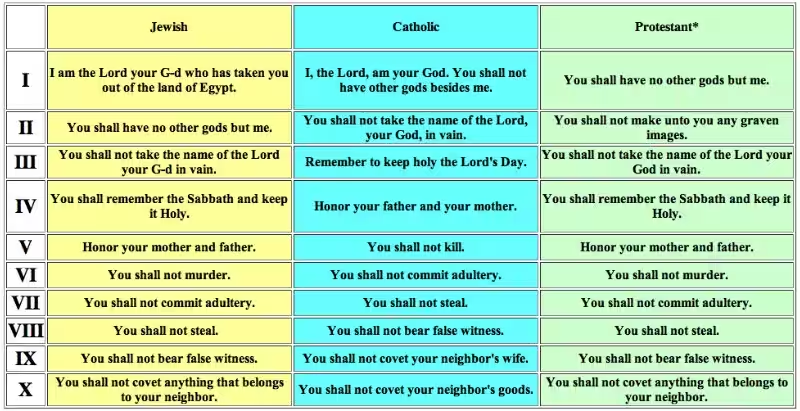
The bedrock of Western morality and spiritual guidance, the Ten Commandments, have served as a moral compass for millennia. These divine pronouncements, etched into stone for Moses and passed down through generations, form the very foundation of Judeo-Christian ethics. Yet, beneath the surface of their shared divine origin, a fascinating divergence exists in how Catholic and Protestant traditions interpret and present these sacred laws. This isn’t a matter of fundamental disagreement on the essence of God’s will, but rather a nuanced distinction in their enumeration, emphasis, and even their categorization. Understanding these differences offers a richer appreciation of the diverse landscape of Christian faith and practice.
For many, the Ten Commandments are a familiar list, perhaps learned in childhood Sunday school or catechism classes. They represent timeless principles that guide our actions, our thoughts, and our relationships – with God and with our fellow human beings. The question of “10 commandments Catholic vs Protestant” might arise when one encounters different versions of this list or observes slightly varied theological discussions surrounding them. This exploration aims to illuminate these distinctions in a way that is both informative and deeply relatable, helping you to grasp the subtle yet significant ways these traditions approach these foundational ethical tenets.
The First Commandment: The Foundation of True Worship
The very first commandment, “You shall have no other gods before me,” sets the stage for all that follows. It is an unwavering declaration of monotheism and a profound call to exclusive devotion to the one true God. For both Catholics and Protestants, this commandment is paramount, emphasizing the absolute necessity of recognizing and worshipping God alone, rejecting idolatry in all its forms. This means not just avoiding physical idols, but also guarding against placing anything else – wealth, power, fame, or even other people – in the place of ultimate allegiance.
The Protestant tradition, in its historical and theological trajectory, often presents this commandment directly and distinctly. The emphasis remains squarely on unconditional loyalty to the Creator, ensuring that no created thing usurps God’s rightful dominion in our hearts and lives. Conversely, the Catholic Church includes discussions on the nature of worship and the veneration of saints and Mary within the broader context of this first commandment. However, this is not to suggest a violation of the first commandment. Instead, Catholic theology understands these as acts of intercessory prayer and honor, not as worship directed towards them as deities. The ultimate worship remains reserved for God the Father, Son, and Holy Spirit.
The Second Commandment: The Prohibition of Idolatry and Misuse of God’s Name
The prohibition against making “any graven image, or any likeness of anything that is in heaven above, or that is in the earth beneath, or that is in the waters beneath the earth” and bowing down to them, follows naturally from the first. This commandment, often perceived as a direct attack on religious imagery, has been a significant point of divergence. Protestants generally interpret this commandment more strictly, often viewing religious statues, icons, and even elaborate artwork as potential stumbling blocks toward idolatry. The focus is on a more direct, unmediated relationship with God, often emphasizing the preaching of the Word.
Catholicism, while also prohibiting the worship of images, views religious art and statues as sacred aids to devotion and visual aids for teaching the faith. They are seen as avenues to contemplate God and the lives of saints, fostering a deeper connection to the divine narrative. For example, a crucifix serves not as an object of worship itself, but as a powerful reminder of Christ’s sacrifice, inspiring reverence and contemplation. The intent behind the Protestant concern is rooted in preventing misplaced worship, while the Catholic approach aims to enrich the devotional experience and make spiritual truths more accessible.
The Third Commandment: Honoring God’s Name
The commandment, “You shall not take the name of the Lord your God in vain,” addresses the sanctity of God’s name. This extends beyond mere profanity to encompass any casual, disrespectful, or dishonest use of God’s name. Both Catholic and Protestant traditions hold this commandment in high regard, emphasizing the reverence due to the divine title. Misusing God’s name, whether through blasphemy, false oaths, or careless pronouncements, is seen as a serious offense that dishonors the Creator.
The application of this commandment is largely consistent across both traditions. It involves speaking about God with respect and awe, and ensuring that any oaths or vows taken in His name are made with sincerity and are honored. For instance, making a promise “in God’s name” carries immense weight and a solemn obligation to fulfill that promise. The core message is about upholding the dignity of the divine in our speech and actions.
The Fourth Commandment: Remembering the Sabbath Day
The call to “Remember the Sabbath day, to keep it holy” is a cornerstone of spiritual rhythm and rest. Historically, this commandment has seen the most significant practical interpretation differences. For many Protestants, particularly those from Reformed traditions, the Sabbath is observed on Sunday, the day of Christ’s resurrection, as a day of rest, worship, and spiritual reflection. Emphasis is often placed on abstaining from secular labor and engaging in activities that honor God.
The Catholic Church also observes Sunday as the Lord’s Day, recognizing it as the primary day of communal worship and rest. However, the Catholic understanding often incorporates the Mass as the central act of worship, highlighting the Eucharist as the culmination of the Sabbath observance. While rest from servile work is encouraged, the emphasis is more on participatory worship and spiritual nourishment rather than a strict prohibition of all activities outside of formal prayer. The core principle remains: setting aside a dedicated time for God and for spiritual renewal.
The Fifth Commandment: Honoring Parents and Authority
“Honor your father and your mother” is a foundational principle for family structure and societal order. This commandment extends beyond biological parents to encompass respect for all legitimate authority figures, including elders, teachers, and civic leaders. Both Catholic and Protestant traditions uphold this command as vital for a harmonious and functional society.
The Catholic Church, through its strong emphasis on the family and its sacramental understanding of marriage, often highlights the sacred bond between parents and children. This commandment is seen as a cornerstone of family unity and the transmission of faith. Protestant denominations also strongly advocate for honoring parents and authority, recognizing its importance in maintaining civic order and personal integrity. The underlying message is about respect, obedience within appropriate bounds, and gratitude for those who have nurtured and guided us.
The Sixth Commandment: The Sanctity of Life
The commandment, “You shall not murder,” is a clear and unequivocal declaration against taking innocent human life. This prohibition is universally accepted and forms the bedrock of legal and moral systems across the globe. Both Catholic and Protestant faiths vehemently condemn unjust killing and advocate for the sanctity of every human life from conception to natural death.
While the core prohibition is the same, the application can sometimes lead to nuanced discussions. Catholic social teaching, for instance, often engages in extensive discourse on just war theory and the consistent ethic of life, which addresses issues like capital punishment and abortion. Protestant denominations also hold strong stances against murder and often engage in similar ethical debates concerning the protection of the vulnerable and the value of human existence. The shared commitment is to protect and cherish life as a divine gift.
The Seventh Commandment: Fidelity in Marriage and Relationships
“You shall not commit adultery” speaks to the importance of faithfulness and purity within marriage and sexual relationships. This commandment is a cornerstone of sexual ethics for both traditions, emphasizing the sacredness of the marital covenant. It calls for chastity outside of marriage and faithfulness within it.
The Catholic Church, with its firm stance on the indissolubility of marriage, views adultery as a grave sin that tears at the fabric of the marital union. Premarital sexual relations and extramarital affairs are strictly prohibited. Many Protestant denominations also uphold strong marital fidelity and condemn adultery. However, there can be variations in the interpretation of other sexual ethics, with some denominations taking more lenient stances on issues like divorce and remarriage, while others maintain strict adherence to traditional interpretations. The overarching goal is to promote healthy, committed, and loving relationships that honor God’s design.
The Eighth Commandment: Honesty in Commerce and Dealings
“You shall not steal” is a straightforward ethical imperative that underscores the importance of honesty and integrity in our dealings with others. This commandment extends beyond the mere act of theft to encompass all forms of dishonest gain, exploitation, and misrepresentation. Both Catholic and Protestant faiths strongly condemn cheating, fraud, and deceptive practices.
This commandment calls for fairness in business, respect for property rights, and a commitment to truthfulness in all transactions. For example, accurately representing the quality of goods or services, paying fair wages, and not engaging in insider trading are all ways this commandment is put into practice. The spirit of the commandment is about building trust and fostering a just economic system where individuals are treated with dignity and their possessions are respected.
The Ninth Commandment: Truthfulness and Integrity in Speech
“You shall not bear false witness against your neighbor” addresses the critical importance of truthfulness in our words and our judgments. This commandment goes beyond legal testimony to encompass all forms of slander, gossip, defamation, and lying. Both Catholic and Protestant traditions consider this a vital aspect of maintaining healthy relationships and a just society.
This commandment urges us to speak truthfully and with integrity, avoiding the temptation to spread rumors or engage in malicious gossip. It also calls us to be fair in our assessments of others, avoiding prejudice and hasty judgments. For instance, refraining from spreading unverified information about a colleague or speaking kindly and truthfully about others are practical applications of this command. The aim is to foster an environment of trust and respect through honest communication.
The Tenth Commandment: The Inner Warfare Against Covetousness
The final commandment, “You shall not covet,” delves into the inner landscape of our desires. It addresses the root of many sins: envy and discontentment. This commandment is not about external actions but about the temptation and longing for what belongs to others. Both Catholic and Protestant traditions recognize the profound significance of this commandment, understanding that unchecked covetousness can lead to a host of other transgressions.
This commandment challenges us to cultivate gratitude for what we have and to resist the siren song of comparison and desire. It calls for contentment and a focus on spiritual riches over material possessions. For example, instead of envying a neighbor’s new car, one might focus on appreciating their own mode of transport or finding joy in simpler things. The ultimate goal is to cultivate a heart that is free from envy and appreciative of God’s blessings.
Navigating the Nuances: A Unified Ethical Framework
While the enumeration and precise categorization of the Ten Commandments may differ between Catholic and Protestant traditions, it is crucial to recognize that the fundamental ethical and spiritual message remains remarkably consistent. Both traditions, in their unique ways, strive to guide believers towards a life of love for God and love for neighbor. The variations often reflect different theological emphases and historical developments rather than a divergence in the core principles of divine law.
Understanding the “10 commandments Catholic vs Protestant” distinctions can deepen our appreciation for the richness and diversity within Christianity. It highlights how different branches of the faith, while holding to the same divine revelation, can interpret and apply these timeless truths in ways that resonate with their specific theological frameworks and pastoral needs. Ultimately, both traditions point towards the same ultimate goal: a life lived in obedience to God’s will and in service to humanity.
Frequently Asked Questions: The Ten Commandments – Catholic vs. Protestant Views
Are the Ten Commandments different between Catholics and Protestants?
Yes, there are differences in how Catholics and Protestants number and categorize the Ten Commandments, although the core moral principles are largely the same.
How do Catholics number the Ten Commandments?
Catholics follow a numbering system derived from the Greek Septuagint and the Latin Vulgate tradition. They combine what Protestants typically consider the first and second commandments into a single commandment against idolatry. The commandment against coveting is then divided into two distinct commandments: one against coveting your neighbor’s wife and another against coveting their possessions.
How do Protestants number the Ten Commandments?
Most Protestant denominations follow a numbering system based on the Hebrew Masoretic Text. They typically separate the commandment against idolatry and false worship into two distinct commandments (the first two). The commandment against coveting is usually treated as a single commandment.
What is the Catholic numbering of the Ten Commandments?
You shall not have strange gods before me. (Combines Protestant 1 & 2)
You shall not take the name of the Lord your God in vain.
Remember to keep holy the Lord’s day.
Honor your father and your mother.
You shall not kill.
You shall not commit adultery.
You shall not steal.
You shall not bear false witness against your neighbor.
You shall not covet your neighbor’s wife.
You shall not covet your neighbor’s goods.
What is the common Protestant numbering of the Ten Commandments?
You shall have no other gods before me.
You shall not make for yourself an idol.
You shall not misuse the name of the Lord your God.
Remember the Sabbath day by keeping it holy.
Honor your father and your mother.
You shall not murder.
You shall not commit adultery.
You shall not steal.
You shall not give false testimony against your neighbor.
You shall not covet.
Do these numbering differences mean Catholics and Protestants disagree on what is morally right or wrong?
No, the fundamental moral teachings of the Ten Commandments are consistent. The disagreement is primarily a matter of how the commandments are divided and enumerated, stemming from differing textual traditions and historical interpretations. Both traditions uphold the importance of loving God and loving one’s neighbor as the essence of the law.