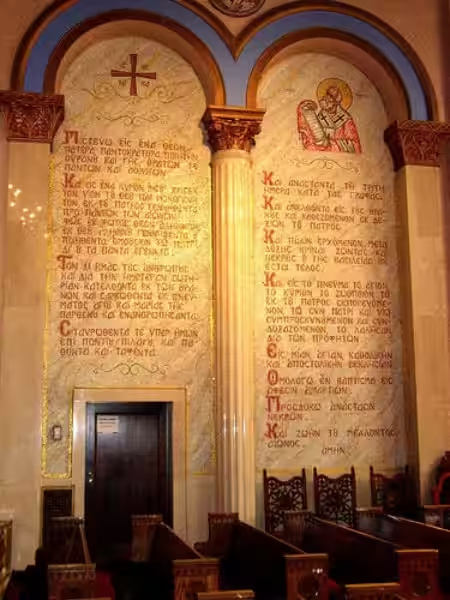
For many, the phrase “speaking Greek” conjures images of ancient philosophers debating in sun-drenched agoras or bustling modern cities filled with lively chatter. Yet, for a significant and deeply rooted community, speaking Greek transcends casual conversation; it is intrinsically linked to their spiritual lives, a language that has been the very heartbeat of their religious traditions for millennia. Whether it’s the resonant chants of the Orthodox liturgy or the quiet contemplation of biblical texts, Greek has played a pivotal role in shaping and preserving faith across generations.
This article delves into the profound connection between speaking Greek and the world of religion, exploring how this ancient tongue continues to be a vibrant, living conduit for spiritual expression, understanding, and community. We will uncover how learning and engaging with Greek can unlock a deeper appreciation for religious texts, traditions, and the very essence of a faith that has been nurtured by its sonorous cadences for centuries. Prepare to embark on a journey where language and divinity intertwine, revealing the sacred power inherent in speaking Greek, not just as a means of communication, but as an act of devotion.
The Divine Echoes in Ancient and Modern Greek Liturgy
The sound of the Greek language filling an Orthodox church is more than just auditory input; it’s a sacred symphony that has echoed through centuries of worship. From the earliest days of Christianity, Greek was the common tongue of the Roman East, the language in which the New Testament was written and the foundational theological texts were articulated. When you hear the priest chanting in Koine Greek, or the congregation responding in Modern Greek, you are participating in a tradition that directly links you to the Apostles and the early Church Fathers. This continuity is a powerful testament to the enduring nature of faith, preserved and transmitted through the very words spoken during worship.
Consider the profound impact of hearing the Trisagion, “Agios o Theos, Agios ischyros, Agios athanatos, eleison imas” (Holy God, Holy Mighty, Holy Immortal, have mercy on us). Even for those who don’t fully grasp every word, the melodious flow and repetition create an atmosphere of reverence and awe. This is not just about understanding the literal meaning; it’s about experiencing the spiritual resonance, the devotional weight carried by these ancient Greek phrases. For those who take the step of learning even basic liturgical Greek, the experience transforms from passive observation to active participation, fostering a much deeper and more personal connection to the divine service.
Decoding the Scriptures: A Deeper Understanding through Greek
The New Testament, the cornerstone of Christian faith, was originally penned in Koine Greek, a dialect that was widely understood throughout the Hellenistic world. This is not a mere historical footnote; it has profound implications for anyone seeking to understand the bedrock of their faith. When scholars and theologians delve into the original Greek texts, they are accessing a level of nuance and meaning that can sometimes be lost in translation. The precise wording, the grammatical structures, and the cultural context of Koine Greek offer insights that enrich our comprehension of Jesus’ teachings, Paul’s epistles, and the very unfolding of early Christianity.
For a layperson, actively engaging with the Scriptures in Greek, even in its modern form, can be an incredibly rewarding spiritual discipline. Imagine reading the Beatitudes directly in Greek: “Makarioi oi ptōchoi tō pneumati, hoti autōn estin hē basileia tōn ouranōn” (Blessed are the poor in spirit, for theirs is the kingdom of heaven). This isn’t just about substituting words; it’s about connecting with the original intent and emotional weight of the message. Many choose to study Greek specifically for this purpose, viewing it as a form of spiritual archaeology, unearthing layers of meaning and devotion that speak directly from the source. The ability to read even a few verses in their original tongue can feel like unlocking a divine secret, a direct line to the foundational narratives of their belief system.
The Living Tradition: Greek as a Community Pillar in Religious Life
Beyond the liturgical chants and scripture, speaking Greek plays a vital role in the social and communal fabric of many religious communities. For Greek Orthodox parishes worldwide, the language is a unifying force, a shared heritage that binds members together regardless of their geographical location. The Sunday sermon, the Bible study group, the parish council meetings – all these activities are often conducted in Greek, fostering a sense of belonging and shared identity that is deeply intertwined with their faith. This is where speaking Greek becomes more than just reciting prayers; it’s about building and sustaining a spiritual family.
Think about the experience of attending a Greek festival hosted by a church. The vibrant atmosphere, the shared meals, the music all contribute to a powerful sense of community. And at the heart of it all, you’ll hear the ubiquitous sound of Greek being spoken – conversations flowing, laughter shared, and a palpable sense of shared heritage. For many younger members, actively participating in these events and hearing their elders converse in Greek is a powerful incentive to learn the language, recognizing its importance not just for religious services but for maintaining their connection to their roots and their community. It’s a living testament to the enduring power of language in preserving faith and culture.
Passing the Torch: Educating the Next Generation in Greek Faith
The transmission of religious heritage is a lifelong endeavor, and for communities where Greek is spoken, this process is often deeply intertwined with language acquisition. Parents and grandparents actively use Greek to teach children about their faith, sharing stories from the Bible, explaining the meaning of icons, and guiding them through the rituals of their religion. This intergenerational dialogue is crucial, ensuring that the spiritual traditions are not just observed but understood and internalized. When a child learns to pray in Greek, they are not just memorizing words; they are learning to speak the language of their ancestors’ devotion.
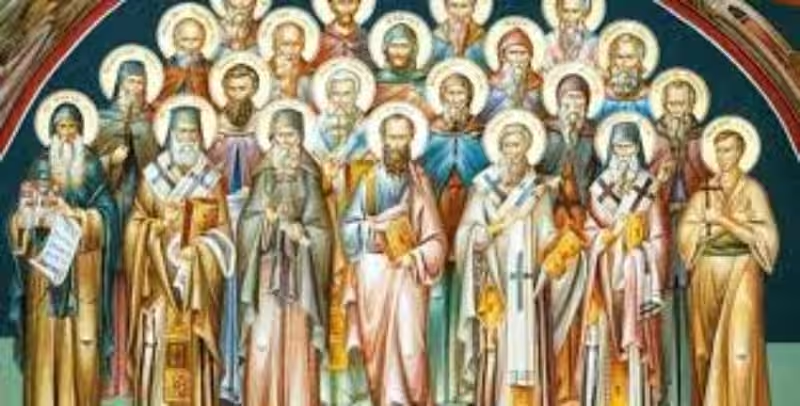
Educational initiatives within religious communities often prioritize Greek language learning. This can range from Sunday school classes that incorporate Greek vocabulary related to religious concepts to more intensive language programs designed to enable deeper engagement with theological texts. The goal is not necessarily to make everyone fluent theologians, but to provide the tools for a richer, more meaningful connection to their faith. For instance, learning the Greek names of saints or the significance of specific liturgical vestments can significantly deepen a child’s appreciation for the symbolism and history embedded within their religious practices. This deliberate effort ensures that the sacred language continues to be spoken, carrying faith forward into the future.
The Personal Journey: How Speaking Greek Can Deepen Your Faith
For individuals who may not have grown up in a Greek-speaking religious environment, the journey of learning Greek can be a profoundly transformative spiritual experience. It’s a conscious decision to step outside of a translated experience and engage directly with the original expressions of faith. This might involve picking up a Greek New Testament, attending a Greek Orthodox church service with a translation in hand, or even enrolling in a language course specifically focused on religious Greek. The effort invested is often met with immense personal reward, a sense of unlocking a deeper dimension to their spiritual understanding.
Consider the satisfaction of being able to read a simple prayer like “Kyrie eleison” (Lord, have mercy) in its original form. This seemingly small act can open doors to appreciating the poetic beauty and theological depth of the liturgy. Many find that the process of learning Greek encourages a more disciplined and focused approach to prayer and study. The very act of wrestling with a new language for the sake of faith can become a form of meditation in itself, a devotional practice that sharpens the mind and opens the heart. The benefits of speaking Greek for your religious life are not just academic; they are deeply personal and spiritually enriching.
Embracing the Sacred Tongue: Practical Steps for Spiritual Growth
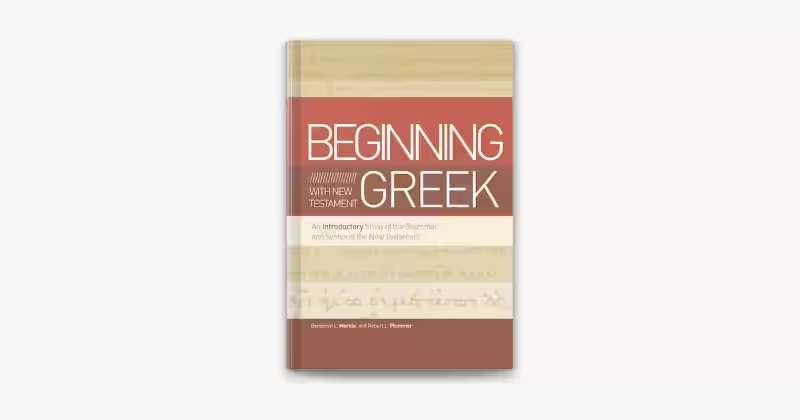
If the idea of speaking Greek to deepen your religious understanding resonates with you, there are numerous practical steps you can take. Start small: familiarize yourself with common liturgical phrases and their meanings. Many Orthodox churches offer bilingual bulletins or have resources available for beginners. Consider investing in a Greek-English New Testament, allowing you to compare translations and see the original wording side-by-side. Online resources and language learning apps offer excellent opportunities to build your vocabulary, especially focusing on words relevant to religious contexts.
Attending services at a Greek Orthodox church, even if you don’t understand everything, is a powerful way to immerse yourself in the sounds and rhythms of the language. Don’t be afraid to ask questions! Clergy and parishioners are often very welcoming and eager to share their knowledge. Joining a Greek language class or a Bible study group that focuses on Greek texts can provide structured learning and a supportive community. Ultimately, the most important step is to begin the journey. By embracing the sacred tongue, you open yourself to a richer, more profound, and deeply personal experience of your faith, where speaking Greek becomes an integral part of your spiritual path.
Frequently Asked Questions about Speaking Greek and Religion
Can I speak Greek if I don’t know the alphabet?
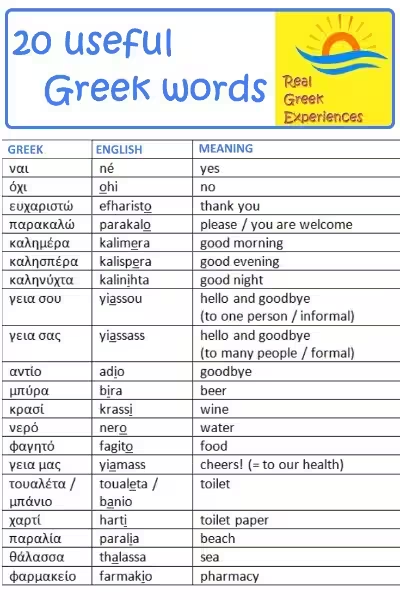
Yes, it is possible to learn to speak Greek without knowing the Greek alphabet. Many learners start by focusing on pronunciation and vocabulary using transliterations (representing Greek sounds with Latin letters). However, to truly engage with the language and culture, learning the alphabet is highly recommended.
Is Greek primarily a religious language?
While Greek has a rich history and has been a significant language in religious contexts, particularly for Orthodox Christianity and ancient philosophical texts, it is also a vibrant, modern language spoken by millions for everyday communication. Its use extends far beyond religious purposes.
Is the Greek Orthodox Church the only religion practiced in Greece?
No, while the Greek Orthodox Church is the dominant religion and holds a significant cultural and historical influence, other religions are practiced in Greece, including Islam, Catholicism, Protestantism, and Judaism.
Are there religious services available in Greek outside of Greece?
Yes, Greek Orthodox churches and communities can be found in many countries around the world, offering religious services in Greek. Additionally, many churches of other denominations may offer services in Greek for immigrant communities.
Is it important to understand the religious context when learning Greek?
Understanding the religious context, particularly the influence of the Greek Orthodox Church, can be very beneficial when learning Greek. Many common phrases, idioms, and cultural references have roots in religious traditions and history. It can also provide insight into the values and traditions of Greek society.