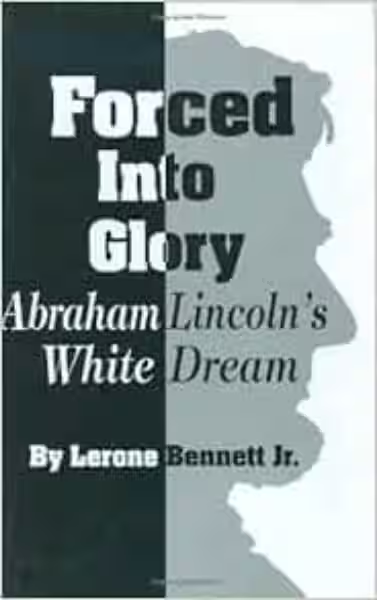
The phrase “forced into glory” conjures a powerful image, one that resonates deeply within the human experience, particularly when we delve into the realm of religion. It speaks to a journey, often unwilling, towards a higher purpose or a spiritual awakening. This concept is the very heart of many faith traditions, where individuals may grapple with their beliefs, question divine intervention, or find themselves unexpectedly thrust into situations that demand a profound re-evaluation of their spiritual lives. The journey of faith is rarely a smooth, predictable path; it’s often a winding road filled with unexpected turns, moments of profound clarity, and periods of disheartening doubt. Understanding this dynamic is crucial for anyone seeking to navigate their own spiritual landscape.
The narrative of being “forced into glory” can be interpreted in numerous ways, each offering a unique lens through which to examine our relationship with the divine. It might describe the feeling of being compelled by circumstance or by an unseen force to embrace a spiritual path, even when one resists. This doesn’t necessarily imply a negative or coercive act, but rather a recognition that sometimes, the universe or our own inner compass guides us towards a destiny greater than we initially perceived. It’s like a seed, dormant underground, that is eventually forced into glory by the natural rhythm of the seasons, pushing its way towards the sun, a process it didn’t actively choose but is inherently designed to undergo.
The Unseen Hand: Divine Intervention and Human Will
In many religious doctrines, the idea of divine intervention is paramount. This is the belief that a higher power actively participates in the world, influencing events and individuals. For some, this intervention is a gentle nudge, a whispered suggestion that guides them towards righteous living. For others, it can feel more like a powerful current, forcing into glory a situation that was previously stagnant or headed in a direction antithetical to spiritual growth. This can manifest in seemingly coincidental events that redirect a life’s trajectory, or in profound personal experiences that shake one’s worldview to its core, leaving no room for doubt about a guiding presence.
Consider the story of someone who, through a series of unexpected challenges – perhaps a devastating loss or a career setback – finds themselves questioning their life’s purpose. In their despair, they might stumble upon a religious text, attend a spiritual gathering they wouldn’t normally consider, or have a transformative encounter with someone deeply rooted in faith. This sequence of events, which might feel entirely random at the time, could ultimately be the catalyst that forces into glory a latent spiritual yearning. The individual didn’t seek out this path actively, but the circumstances converged, creating an opening for spiritual revelation. This often leads to a profound sense of gratitude, even if the initial push was uncomfortable.
The path to spiritual understanding is rarely linear, and the moments of being “forced into glory” often coincide with periods of intense questioning. When our beliefs are challenged by the harsh realities of life, when prayers seem unanswered, or when the tenets of our faith appear to clash with our experiences, we find ourselves at a crossroads. This is a critical juncture where the individual must decide how to respond to the perceived pressure to embrace a spiritual truth that may feel foreign or even alien. It is in these moments of doubt that the true resilience of faith is forged.
For many, these periods of trial are not an indication of a flawed faith, but rather an essential part of its maturation. Think of a sculptor painstakingly chipping away at a block of marble. The initial process might seem destructive, removing large chunks of material. However, with each deliberate strike, a more refined form begins to emerge. Similarly, when we are forced into glory by difficult circumstances, the “chipping away” of our preconceived notions and rigid beliefs allows for a deeper, more authentic spiritual self to be revealed. This can involve confronting uncomfortable truths about ourselves and our place in the divine plan, ultimately leading to a more profound and personal connection with the sacred.
The Personal Revelation: Stories of Unexpected Grace
The concept of being “forced into glory” is richly illustrated in countless personal testimonies and religious narratives. These are stories of individuals who, through no deliberate seeking, found themselves on a path of spiritual awakening that irrevocably altered their lives. These accounts often highlight the unexpected grace that can accompany such experiences. It’s not about a forceful imposition of beliefs, but rather an unfolding of a preordained destiny that the individual eventually embraces with gratitude and understanding. These stories serve as beacons of hope, demonstrating that even in our messiest moments, there is the potential for profound spiritual transformation.
Consider the parable of the prodigal son. This young man squandered his inheritance and lived a life of dissolute indulgence, far from his father’s loving embrace. It was only when he was reduced to utter destitution, when he was truly at his lowest point, that he was forced into glory by his circumstances to return home. His father’s unconditional love and forgiveness, awaiting him all along, represent the divine grace that often meets us when we are most lost. This narrative underscores the idea that sometimes, the greatest spiritual awakenings occur not through diligent seeking, but through the humbling experience of hitting rock bottom and finding an outstretched hand of divine compassion.
Embracing the Journey: From Resistance to Acceptance
The initial reaction to being “forced into glory” can often be one of resistance. We may feel uncomfortable, confused, or even resentful of the forces that seem to be dictating our spiritual path. This is a natural human response to relinquishing control. However, as we begin to understand the underlying divine intention, a shift occurs. We move from a position of passive resistance to active acceptance, and eventually, to a place of genuine embrace. This transformation is the essence of spiritual growth, where the perceived imposition transforms into a welcomed liberation.
The key to navigating this journey lies in cultivating a mindset of openness. Instead of fighting against the tide, we learn to discern the currents and allow them to carry us. This doesn’t mean abandoning our agency, but rather understanding that our agency is often best exercised in alignment with a higher purpose. For example, someone might find themselves drawn to volunteer work in a charitable organization, an activity they never considered before. Initially, they might feel obligated or even slightly coerced by societal expectations. However, as they engage with the community and witness the impact of their efforts, they begin to experience a profound sense of fulfillment and purpose. This feeling of fulfillment, a true spiritual reward, is the ultimate manifestation of being forced into glory, not through coercion, but through the inherent goodness and positive outcomes of the experience itself.
The Enduring Power of Faith: A Lifelong Pursuit
The concept of being “forced into glory,” while suggestive of an external impetus, ultimately speaks to the deeply personal and often lifelong pursuit of faith. It highlights that our spiritual journeys are not always self-directed; sometimes, we are guided, nudged, or even propelled by forces beyond our immediate comprehension. The crucial element is not the initial push, but the subsequent engagement with that experience. Whether we embrace it willingly or after a period of struggle, the opportunity for spiritual growth and deeper connection with the divine is present.
Ultimately, the stories of individuals forced into glory serve as powerful reminders that faith is not a static destination but a dynamic, evolving process. It’s about the courage to question, the resilience to persevere through doubt, and the wisdom to recognize the divine hand in both the joyous and the challenging moments of life. This ongoing dialogue between our human experience and the spiritual realm is what enriches our lives and leads us, in our own unique ways, to a profound and lasting sense of peace and purpose. The pursuit of faith, in its many forms, is a testament to the enduring human longing for meaning and connection, a longing that can, at times, feel like a gentle, or not so gentle, push towards a greater understanding.
Frequently Asked Questions about Forced into Glory and Religion
Is “Forced into Glory” a religious book?
“Forced into Glory” is not primarily a religious book. It is an autobiography that details the life experiences of its author, Jim Brown, including his career in professional football and his activism. While Brown may touch upon personal beliefs or spiritual reflections at times, the core focus is on his personal journey and achievements.
Does “Forced into Glory” promote or condemn any specific religion?
The book does not aim to promote or condemn any particular religion. Its narrative centers on Jim Brown’s life, his perspectives, and his actions. Any mentions of religion are incidental to his personal experiences and do not form the central theme or agenda of the book.
Can someone with strong religious beliefs find value in “Forced into Glory”?
Yes, individuals with strong religious beliefs can find value in “Forced into Glory.” The book offers insights into the life of a prominent figure, his struggles, triumphs, and his dedication to social justice. Readers can connect with themes of perseverance, overcoming adversity, and making a difference, which can resonate across various belief systems.
Are there any religious themes or discussions that might be controversial or offensive to some religious groups?
While the book is not overtly religious, Jim Brown’s life and activism involved challenging established norms and advocating for significant social change. Depending on an individual’s specific religious interpretations and beliefs, some of his outspoken views or actions, discussed within the autobiography, might be perceived differently. However, the book’s intent is not to be religiously provocative but to share his personal journey.