For centuries, the concept of the Holy Spirit has been a cornerstone of religious faith, a divine presence that inspires, guides, and empowers believers. Yet, for many, the Holy Spirit remains an elusive and somewhat abstract entity. This article is an invitation to embark on a comprehensive Holy Spirit study, a journey into the heart of this vital aspect of religious understanding. We aim to demystify the Spirit, making this profound theological concept not just intellectually engaging but also deeply relatable and practically applicable to our daily lives. Whether you are a seasoned theologian or a curious newcomer to religious exploration, this guide will offer valuable insights and foster a richer appreciation for the Spirit’s role in faith and personal growth.
The exploration of the Holy Spirit is not a passive endeavor; it requires active engagement and a willingness to delve into scripture, tradition, and personal experience. This study of the Holy Spirit is designed to equip you with the tools and perspectives needed to understand the Spirit’s multifaceted nature. We will navigate through biblical narratives, explore theological interpretations across different religious traditions, and consider the practical ways the Spirit manifests in the lives of individuals and communities. By the end of this exploration, you will find yourself with a more robust framework for understanding this essential element of religion.
Understanding the Divine Person: Who is the Holy Spirit?
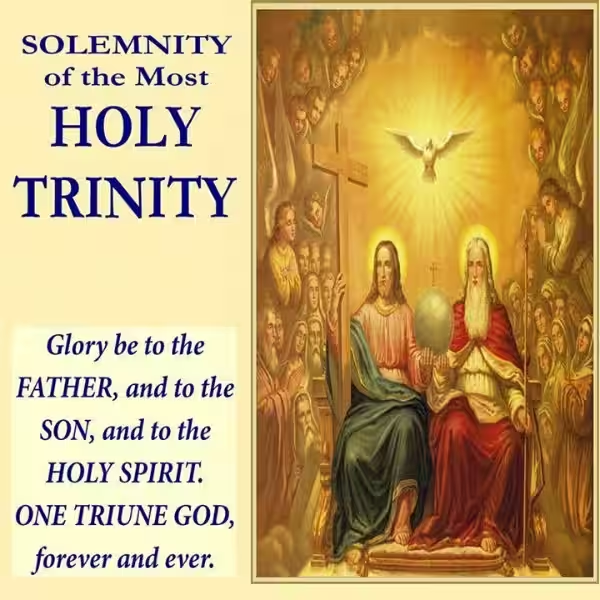
At the core of any robust Holy Spirit study lies the fundamental question: who or what is this divine person? Within Christian theology, the Holy Spirit is recognized as the third person of the Trinity, co-equal and co-eternal with God the Father and God the Son. This understanding is not merely semantic; it signifies the Spirit’s distinct personhood and active involvement in the unfolding of God’s plan for humanity. The Spirit is not a mere force or emanation, but a conscious, volitional, and relational being who interacts with the world and with us. This understanding is crucial for grasping the depth of the Spirit’s engagement in our spiritual lives, moving beyond abstract notions to a personal connection.
Across various denominations and theological perspectives within religion, there are nuanced understandings of the Spirit’s nature and function. However, a common thread emphasizes the Spirit’s role as the mediator of God’s presence in the world after Christ’s ascension. Think of it like this: if God the Father is the architect of a grand design, and Jesus Christ is the perfect embodiment and execution of that design, then the Holy Spirit is the active force that brings that design to life, making it tangible and accessible to us. This perspective highlights the Spirit’s intimate involvement in creation, redemption, and the ongoing sanctification of believers, making the study of the Holy Spirit a vital part of understanding God’s relational nature.
Biblical Foundations: Tracing the Spirit’s Presence Throughout Scripture
The presence and activity of the Holy Spirit are woven throughout the tapestry of Scripture, from the very first verses to the final pronouncements. In the Old Testament, the Spirit is often depicted as a powerful force of creation and empowerment. We see this in Genesis 1:2, where the “Spirit of God was hovering over the waters,” signifying divine energy at work in the primordial chaos. Later, the Spirit descended upon individuals like Samson, granting them extraordinary strength, or upon prophets, enabling them to receive and deliver God’s messages. This foundational understanding in our Holy Spirit study reveals the Spirit as an active agent of God’s will from the beginning of time.
The New Testament further illuminates the role of the Holy Spirit, particularly in the life and ministry of Jesus and the early Church. Jesus himself was conceived by the Holy Spirit, baptized in the Spirit, and empowered by the Spirit to perform miracles and teach with divine authority. The outpouring of the Spirit at Pentecost, as described in the book of Acts, is a pivotal moment, marking the inauguration of the Church and the empowerment of believers to spread the gospel. This biblically grounded study of the Holy Spirit provides concrete examples of the Spirit’s transformative power, demonstrating that the Spirit’s work is not confined to ancient times but is intended for all generations of believers in religion.
The Spirit’s Work in the Believer: Transformation and Empowerment
One of the most profound aspects of a Holy Spirit study is understanding the Spirit’s transformative work within the life of an individual believer. The Spirit is often described as the agent of regeneration, the divine spark that ignites faith and brings about a spiritual rebirth. This is more than just a moral improvement; it’s a fundamental reshaping of one’s inner being, aligning their desires and motivations with God’s will. This is the essence of being “born again,” a concept deeply rooted in the Spirit’s power to renew and sanctify. Consider the analogy of a gardener tending to a wilting plant: the Spirit is the life-giving water and sunlight that revives and allows the plant to flourish.
Beyond regeneration, the Holy Spirit is the source of empowerment for Christian living and service. The Bible speaks of the “gifts of the Spirit,” which are diverse abilities bestowed upon believers to build up the Church and serve the world. These can range from speaking in tongues and prophecy to acts of service, teaching, and leadership. This aspect of our study of the Holy Spirit highlights that the Spirit equips us for specific purposes, enabling us to live out our faith in tangible ways. It’s not about passive reception but about active participation, as the Spirit empowers us to love, forgive, and minister to those around us, thereby living out the principles of religion.
Living by the Spirit: The Fruit and Gifts
A crucial component of a practical Holy Spirit study involves understanding the “fruit of the Spirit” and the “gifts of the Spirit.” While gifts are abilities given for service, the fruit represents the character qualities that the Spirit cultivates in a believer’s life. Galatians 5:22-23 famously lists this fruit as “love, joy, peace, patience, kindness, goodness, faithfulness, gentleness, and self-control.” These are not qualities we can achieve through sheer willpower; they are the natural outworking of a life surrendered to the Spirit’s influence. This is where the abstract becomes deeply personal and relatable, as we witness or experience these virtues growing in ourselves and others.
The interplay between the fruit and the gifts is essential for a balanced understanding of the Spirit’s work. While spiritual gifts equip us for outward service, the fruit of the Spirit refines our inner character, ensuring that our service is motivated by love and humility. A believer might possess the gift of teaching, but without the fruit of patience, their instruction could become harsh. Conversely, a person might exhibit great kindness but lack the Spirit’s empowerment to serve effectively in a larger capacity. Therefore, a comprehensive study of the Holy Spirit encourages a holistic approach, valuing both the development of godly character and the utilization of divinely appointed abilities within the framework of religion.
The Spirit in the Church and the World: A Continuing Ministry
The ministry of the Holy Spirit is not confined to individual believers; it extends dynamically to the Church as a corporate body and to the world at large. The early Church experienced the Spirit’s unifying power, enabling a diverse group of people to come together in fellowship and mission. This continues today as the Spirit fosters unity, guides discernment, and empowers believers to fulfill the Great Commission. When we engage in a Holy Spirit study within a community context, we can observe how the Spirit works through collective prayer, shared worship, and mutual encouragement to strengthen the body of Christ and extend its reach.
Furthermore, the Holy Spirit plays a vital role in the world, acting as the agent of conviction and drawing people to God. Jesus spoke of the Spirit convicting the world of sin, righteousness, and judgment, a process that prepares hearts to receive the gospel. This outreach of the Spirit is often unseen, working behind the scenes to soften hearts and create opportunities for evangelism and discipleship. Understanding this ongoing ministry is crucial for a complete study of the Holy Spirit, reminding us that God’s redemptive work is active and pervasive, extending beyond the visible confines of the church and impacting the broader landscape of religion and human experience.
Experiencing the Spirit: Practical Engagement and Discernment
Engaging with the Holy Spirit is not solely an intellectual exercise; it is an experience that calls for active participation and careful discernment. Many traditions within religion emphasize prayer as a primary means of communion with the Spirit. Through prayer, we can invite the Spirit’s presence, seek His guidance, and express our dependence on Him. This is a direct pathway in our Holy Spirit study to fostering a deeper, more intimate relationship with the divine. Simple practices like meditating on Scripture with an open heart or consciously listening for the Spirit’s promptings in daily decisions can lead to profound spiritual growth.
However, in any exploration of the spiritual realm, the importance of discernment cannot be overstated. The Bible cautions against being deceived and encourages believers to test the spirits. This means evaluating experiences and teachings against the established truths of Scripture and observing the fruit they produce in people’s lives. A robust study of the Holy Spirit will equip you with the discernment needed to differentiate between the genuine work of the Spirit and other influences. This involves seeking wisdom from mature believers, relying on biblical principles, and cultivating an inner sensitivity to the Spirit’s gentle leading, ensuring our faith journey remains grounded and authentic.
Conclusion: Embracing the Ongoing Journey of the Holy Spirit Study
Our exploration into the Holy Spirit study has revealed a divine person of immense power, grace, and relational depth. From the foundational accounts in Scripture to the practical outworking of the Spirit’s gifts and fruit in our lives and communities, the Spirit is an active and vital force within religion. The mystery of the Holy Spirit is not something to be solved and put away, but rather an ongoing journey of discovery and deeper communion. Each believer is invited to continue this profound exploration, seeking to understand and experience more fully the presence and power of God’s Spirit.
May this article serve as a springboard for your personal study of the Holy Spirit. Embrace the invitation to grow in your understanding, to open your life to the Spirit’s transformative work, and to witness His power at work in the world. The journey is rich with revelation, empowerment, and the profound experience of walking with God day by day. Continue to pray, to read, to listen, and to obey, and you will undoubtedly discover new dimensions of the Spirit’s presence and purpose in your life and in the unfolding story of faith.
Frequently Asked Questions about the Holy Spirit
What is the Holy Spirit?
The Holy Spirit is the third person of the Trinity, co-equal with God the Father and God the Son. Christians believe the Holy Spirit is God’s active presence in the world, guiding, comforting, and empowering believers.
What are the roles of the Holy Spirit?
The Holy Spirit plays many roles, including convicting people of sin, regenerating believers, indwelling them, guiding them into truth, empowering them for service, and sealing them for salvation.
How can I know if I have the Holy Spirit?
Believers often experience the presence of the Holy Spirit through a transformed life, a desire to obey God, a growing love for others, and the fruit of the Spirit (love, joy, peace, patience, kindness, goodness, faithfulness, gentleness, and self-control).
Can the Holy Spirit be grieved or resisted?
Yes, the Bible speaks of grieving the Holy Spirit through disobedience and ungodly behavior, and resisting the Holy Spirit by rejecting His promptings and guidance.
What are the gifts of the Spirit?
The Bible mentions various spiritual gifts, such as prophecy, teaching, healing, miracles, tongues, and discernment, which are given by the Holy Spirit to equip believers for ministry and to build up the church.
How does the Holy Spirit relate to religious practices?
The Holy Spirit empowers worship, prayer, and service. He also illuminates Scripture, helping believers understand God’s Word and apply it to their lives.
Is the Holy Spirit the same in all religions?
From a Christian perspective, the Holy Spirit is uniquely understood as the third person of the Christian Trinity. Other religions may have concepts of divine presence or spirit, but these are distinct from the Christian understanding of the Holy Spirit.