In the rich tapestry of religious devotion, certain figures emerge not just as historical icons but as living, breathing inspirations. Among these, El San Gerónimo, often translated as Saint Jerome, holds a significant place, his legacy interwoven with scholarship, faith, and a profound connection to the divine. His story, far from being confined to ancient texts, resonates deeply with individuals seeking guidance, understanding, and a stronger spiritual connection in their daily lives. This article delves into the multifaceted influence of El San Gerónimo, exploring his contributions to religious thought and how his example can illuminate our own spiritual journeys.
The enduring appeal of El San Gerónimo lies in his dedication to truth and rigorous study, qualities that remain highly relevant in our modern, information-saturated world. Whether one is a devout follower or simply exploring different facets of religious history, understanding the life and teachings associated with El San Gerónimo offers a valuable perspective on the pursuit of knowledge and the power of unwavering conviction. His life serves as a testament to the idea that faith and intellect are not mutually exclusive but can, in fact, be powerful allies in navigating the complexities of existence and deepening one’s relationship with the divine.
The Life and Legacy of El San Gerónimo: A Scholar of the Sacred
Born in the 4th century, Eusebius Sophronius Hieronymus, known to us as El San Gerónimo, was a scholar of immense talent and profound faith. His most celebrated accomplishment, the translation of the Bible into Latin, a version known as the Vulgate, remains a cornerstone of Western Christian tradition. This monumental undertaking was not merely a linguistic exercise; it was a deeply spiritual endeavor, aimed at making the sacred texts accessible to a wider audience. Imagine trying to understand a complex recipe written in a foreign language – El San Gerónimo’s work was akin to providing a clear, universally understandable guide for spiritual nourishment.
The dedication required for such a task is awe-inspiring. El San Gerónimo spent years meticulously studying original Greek and Hebrew manuscripts, wrestling with nuances of language and theological interpretation. This commitment to accuracy and clarity in conveying God’s word highlights a fundamental aspect of his spiritual approach: that understanding the divine requires diligent effort and a deep respect for the source of wisdom. His life story, therefore, is not just about a historical figure but about the enduring value of intellectual pursuit in service of faith.
El San Gerónimo’s Impact on Religious Interpretation and Practice
The Vulgate, the Latin translation spearheaded by El San Gerónimo, had a transformative effect on the spread and understanding of Christianity across Europe. Before its creation, access to the Bible was largely restricted to those who could read Greek or Hebrew, creating a barrier for many believers. El San Gerónimo’s diligent work broke down these barriers, allowing for a more widespread engagement with scripture. This democratization of religious knowledge empowered individuals to form their own connections with the divine through personal study.
Beyond his translation work, El San Gerónimo was also a prolific writer, commenting on various biblical texts and offering theological insights. His writings often emphasized penitence, asceticism, and the importance of living a life devoted to God. These themes continue to resonate with believers who seek to live a more disciplined and spiritually focused existence. For instance, his emphasis on self-denial can be seen as an ancient, yet still relevant, call to prioritize spiritual growth over material possessions, a message that remains pertinent in today’s consumer-driven society.
Finding Relevance in El San Gerónimo’s Teachings Today
In an era characterized by rapid technological advancements and a constant barrage of information, the clarity and intellectual rigor exemplified by El San Gerónimo can serve as a powerful compass. His approach to studying scripture, characterized by a deep desire for understanding, encourages us to engage with our faith in a more thoughtful and informed manner. Rather than passively accepting doctrines, we are invited to explore, question, and seek deeper meaning, fostering a more personal and dynamic relationship with the divine.
Moreover, El San Gerónimo’s life story is a potent reminder of the importance of perseverance in the face of challenges. His dedication to his work, often carried out in difficult circumstances, speaks to a profound inner strength. This resilience is a quality that many find inspiring, particularly when navigating personal struggles or seeking to uphold their religious convictions in a secular world. The example of El San Gerónimo encourages us to embrace our own spiritual journeys with determination and unwavering commitment, knowing that even the most arduous paths can lead to profound spiritual rewards.
Practical Applications: Integrating El San Gerónimo’s Spirit into Daily Devotion
For those seeking to deepen their religious practice, the teachings associated with El San Gerónimo offer several practical avenues. One could begin by dedicating time to studying scripture, perhaps starting with translations or commentaries that aim for clarity and accessibility, mirroring his own efforts. This could involve joining a Bible study group, engaging with religious literature, or even using digital resources that offer in-depth explanations of biblical passages. The key is to approach this with the same scholarly curiosity that defined El San Gerónimo.
Another way to honor the spirit of El San Gerónimo is by embracing the concept of disciplined devotion. This doesn’t necessarily mean extreme asceticism, but rather a conscious effort to prioritize spiritual practices in our busy lives. This might involve setting aside time for prayer, meditation, or acts of charity. For example, instead of mindlessly scrolling through social media during a commute, one could use that time to reflect on a scripture verse or offer a silent prayer. These small, consistent efforts, inspired by the dedication of El San Gerónimo, can significantly strengthen one’s connection to the divine.
El San Gerónimo and the Pursuit of Spiritual Truth
The ultimate legacy of El San Gerónimo lies in his unwavering pursuit of spiritual truth. He understood that faith is not a passive endowment but an active engagement, a journey that requires both intellectual effort and heartfelt devotion. His life was a testament to the idea that by diligently seeking knowledge and living a life aligned with divine principles, one can achieve a profound understanding and connection with the sacred. This pursuit is an ongoing process, and the example of El San Gerónimo continues to guide and inspire countless individuals in their own spiritual quests.
In conclusion, the figure of El San Gerónimo, a revered scholar and saint, offers a rich source of inspiration for anyone seeking to deepen their religious understanding and practice. His dedication to scripture, his intellectual rigor, and his unwavering faith provide a powerful roadmap for navigating the complexities of spiritual life. By embracing aspects of his legacy, such as diligent study, disciplined devotion, and the persistent pursuit of truth, we can illuminate our own paths and foster a more meaningful and profound connection with the divine. El San Gerónimo remains a timeless beacon, guiding us towards greater wisdom and spiritual fulfillment.
Frequently Asked Questions about El San Gerónimo and Religion
Who is San Gerónimo?
San Gerónimo, also known as Saint Jerome, was a Latin scholar and theologian who lived in the 4th and 5th centuries. He is most famous for translating the Bible into Latin, a version known as the Vulgate, which became the standard text for the Roman Catholic Church for centuries. He is also known for his asceticism and his role as a cardinal.
What is the significance of San Gerónimo in religious contexts?
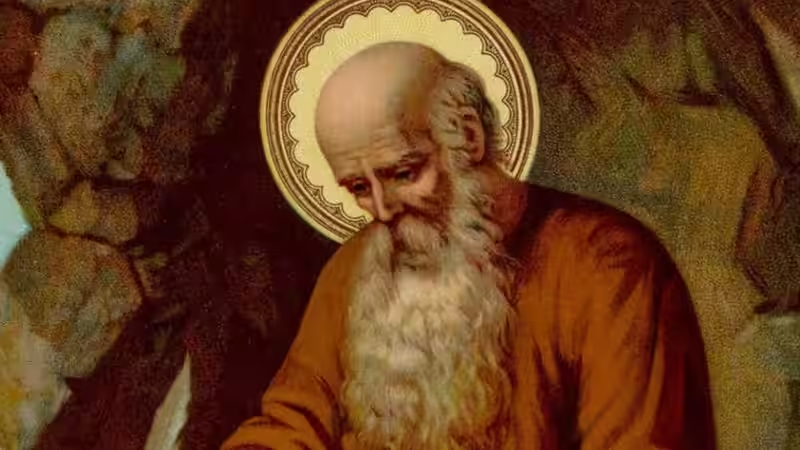
San Gerónimo is revered as a saint in the Catholic, Orthodox, and Anglican churches. He is considered one of the four great Doctors of the Church, a title given to those whose theological writings are deemed of outstanding excellence and of enduring value to the Church. He is often depicted with a lion, a skull, and a book, representing his scholarship, his contemplation of mortality, and his dedication to scripture.
What are some common themes associated with San Gerónimo in religious art and tradition?
Common themes include his:
Study and Scholarship: Often shown reading or writing, emphasizing his intellectual contributions to theology and biblical translation.
Penitence and Asceticism: Depicted in the wilderness, often with a scourge or a rock, signifying his self-denial and devotion.
The Lion: A recurring motif, symbolizing his taming of wild nature through faith or his compassion in healing a wounded lion.
The Skull: Represents his contemplation of death and the transient nature of life (memento mori).
What is the origin of the name “El San Gerónimo”?
“El San Gerónimo” is the Spanish rendering of “Saint Jerome.” The use of “El” is the Spanish definite article. This title is commonly used in Spanish-speaking regions and contexts when referring to the saint.
Are there specific devotions or prayers associated with San Gerónimo?
Yes, there are prayers and novenas dedicated to San Gerónimo, often invoking his intercession for wisdom, understanding of scripture, and strength in times of temptation or scholarly pursuit. His feast day is celebrated on September 30th.