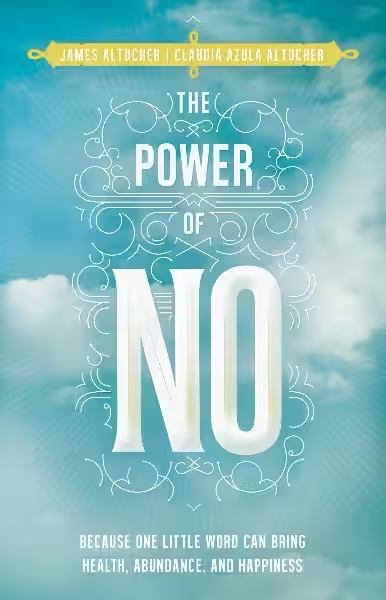
In the tapestry of human experience, religion often serves as a guiding thread, offering solace, community, and a framework for understanding the world. Yet, within this rich spiritual landscape, a potent and often overlooked force lies dormant: the power of no. This isn’t about negating faith or rejecting wisdom; rather, it’s about recognizing the profound strength in setting healthy boundaries, both internally and externally, to cultivate a more authentic and fulfilling spiritual journey. The concept, powerfully explored in works like “The Power of No” book, transcends mere politeness and delves into the core of personal integrity and spiritual well-being.
This article will explore how understanding and implementing the power of no within a religious context can lead to deeper personal growth, stronger connections with the divine, and a more resilient faith. We will uncover how saying “no” to external pressures, internal doubts, and even certain interpretations of tradition can actually lead to a more resounding “yes” to what truly nourishes our souls.
Many of us are conditioned from an early age to be agreeable, to please, and to avoid conflict. This tendency is often amplified within religious communities, where a sense of duty, gratitude, or even fear can make saying “no” feel like a betrayal of faith or a rejection of sacred obligation. We might find ourselves overcommitting to church events, silently tolerating doctrines that don’t resonate, or suppressing personal convictions for the sake of group harmony. This constant state of “yes” can slowly drain our spiritual energy, leaving us feeling exhausted, resentful, and disconnected from our true selves.
Consider the parable of the talents: a master entrusts his servants with varying amounts of money. The servants who actively use their talents, taking calculated risks and making their own decisions, are rewarded. Those who are paralyzed by fear and simply hide their talent, essentially saying “no” to the opportunity, are not. Similarly, a life lived solely by saying “yes” to every external demand, without discernment, can lead to a spiritual stagnation, where our unique gifts and insights remain untapped. The power of no allows us to reclaim our agency, ensuring our spiritual energy is invested in what truly matters.
Discovering Your Sacred “No”: Discernment and Divine Alignment
The journey of discovering our sacred “no” begins with discernment. This is the spiritual practice of carefully evaluating our commitments, beliefs, and actions to see if they align with our deepest values and our understanding of the divine. It’s about listening to that quiet inner voice, the whisper of intuition that often gets drowned out by the clamor of external expectations. This discernment process is not about judgment or negativity; it’s about conscious choice and intentional living.
For instance, imagine a congregant who feels compelled to volunteer for every single committee at their place of worship, even though it leaves them with no time for personal prayer or reflection. By practicing the power of no, they could respectfully decline some of these commitments, freeing up time to deepen their personal connection with the divine. This doesn’t diminish their contribution; it redirects their energy towards a more meaningful and sustainable form of service. The Bible itself offers examples of individuals who, through prayer and contemplation, made profound decisions that were not always in line with popular opinion or immediate expectations, demonstrating a form of sacred “no” to the status quo.
Saying No to External Pressures
Religious communities, while sources of great support, can also exert subtle or overt pressures. These might include expectations about how one should dress, behave, believe, or even marry. Feeling obligated to conform to these external pressures, even when they clash with our personal conscience, can be a significant drain on our spiritual well-being. The power of no empowers us to gently and respectfully assert our boundaries, stating that our path may differ, without necessarily rejecting the community itself.
For example, if a religious tradition strongly encourages a particular career path, but an individual feels a clear calling to a different field, saying “no” to the expected path and “yes” to their true calling is an act of spiritual obedience to their inner compass. This can be challenging, but ultimately leads to a more authentic expression of faith. It’s about understanding that true faith is often a personal dialogue with the divine, not simply adherence to external dictates.
Saying No to Internal Doubts and Self-Imposed Limitations
Beyond external pressures, the power of no also applies to our internal landscape. We often carry ingrained doubts, fears, and limiting beliefs about ourselves and our spiritual capacity. These internal “no’s” can prevent us from embracing our gifts, seeking forgiveness, or experiencing the fullness of divine love. Learning to say “no” to these self-sabotaging thoughts is a crucial aspect of spiritual growth.
Consider the feeling of unworthiness that can plague individuals, leading them to believe they are not “good enough” for spiritual enlightenment or divine favor. By actively challenging these thoughts and saying “no” to their validity, we open ourselves to the unconditional love and acceptance that many religions teach. This internal shift, as described in “The Power of No” book, is about reclaiming our narrative and choosing to believe in our inherent spiritual worth.
The Ripple Effect: Deeper Faith, Stronger Community
When we learn to embrace the power of no, we don’t diminish our faith; we strengthen and deepen it. By setting boundaries, we conserve our energy for what truly nourishes us, leading to a more vibrant and engaged spiritual life. This, in turn, has a positive ripple effect on our relationships and our communities.
A person who has learned to say “no” to overcommitment is often a more present and joyful participant when they do say “yes.” Their contributions are more heartfelt and less born out of obligation. Moreover, by modeling healthy boundaries, we can inspire others to do the same, fostering a more authentic and less burdensome spiritual environment for everyone involved. This creates a space where genuine connection, rather than forced conformity, becomes the hallmark of the community.
Cultivating Authentic Relationships within Faith Communities
When we are constantly saying “yes” out of obligation, our relationships can become superficial. We might feel resentful or unheard, creating unspoken tension. By practicing the power of no, we allow ourselves to be more genuine in our interactions. This means saying “yes” to authentic connection and “no” to relationships built on pretense or unmet expectations. For example, it’s better to politely decline an invitation to an event you truly have no desire to attend than to go and be disengaged or resentful.
This authenticity fosters deeper trust and respect within religious groups. When individuals feel empowered to express their needs and limitations, it creates a more compassionate and understanding community. This allows for true spiritual fellowship to flourish, where individuals feel seen, heard, and valued for who they are, not just for what they do.
Reclaiming Personal Spiritual Authority
Ultimately, the power of no is about reclaiming personal spiritual authority. It’s about recognizing that our relationship with the divine is unique and personal. While traditions and guidance are valuable, they should serve to illuminate our path, not dictate it. By learning to say “no” to external impositions that don’t align with our inner truth, we empower ourselves to discern our own spiritual path.
Think of exploring different interpretations of scripture. While a particular interpretation might be widely accepted, if it doesn’t resonate with your spirit, saying “no” to that specific interpretation and seeking out others doesn’t mean rejecting the scripture itself. It means actively engaging with it in a way that is meaningful and spiritually nourishing for you. This empowerment is a vital part of a mature and resilient faith.
Conclusion: A “Yes” Rooted in Sacred Boundaries
Embracing the power of no within a religious context is not an act of defiance, but an act of deep respect – respect for ourselves, respect for our spiritual journey, and ultimately, respect for the divine. It’s about shedding the weight of unnecessary obligations and cultivating a sacred space for genuine spiritual growth. By learning to say “no” with grace and intention, we make room for a more profound and resounding “yes” to the experiences, relationships, and divine encounters that truly matter.
The journey towards mastering the power of no is ongoing, requiring practice, self-compassion, and a commitment to authenticity. It’s about building a spiritual life that is not just busy, but purposeful, not just dutiful, but joyful. As we learn to honor our boundaries, we discover a deeper wellspring of spiritual strength, allowing us to live our faith with greater integrity, clarity, and profound peace.
Frequently Asked Questions about “The Power of No” and Religion
Can “The Power of No” be applied to religious beliefs?
Yes, “The Power of No” can be applied to religious beliefs. The book’s core message is about setting boundaries and saying no to things that drain your energy or don’t align with your values. This can extend to religious practices, commitments, or even interpretations that you find burdensome or no longer resonate with your personal journey. It encourages an honest assessment of what serves you spiritually and what does not, allowing for a more authentic and fulfilling relationship with your faith.
Does “The Power of No” suggest rejecting religious obligations?
“The Power of No” does not inherently suggest rejecting religious obligations. Instead, it empowers individuals to make conscious choices about their commitments. If a religious obligation feels like an authentic expression of your faith and brings you joy or fulfillment, then saying “yes” to it is perfectly aligned with the book’s principles. However, if an obligation feels like a source of stress, guilt, or obligation without personal meaning, the book would suggest that saying “no” might be a healthier choice for your well-being.
How can I use “The Power of No” to navigate differing religious views within a community?
“The Power of No” can help you navigate differing religious views by enabling you to set boundaries around conversations or situations that become uncomfortable or unproductive. You can politely decline to engage in debates that you don’t wish to participate in, or set limits on how much time you spend discussing sensitive topics. It encourages you to assert your own boundaries while respecting the beliefs of others, fostering healthier interactions within a diverse religious community.
Is it against religious principles to say “no” according to “The Power of No”?
“The Power of No” argues that saying “no” is not inherently against religious principles. Many religious traditions emphasize personal integrity, self-care, and the importance of making choices that align with one’s conscience. Saying “no” can be an act of self-respect and a way to honor your own spiritual path, which can be seen as a religious virtue in itself. The book focuses on the why behind the “no,” urging it to be done with intention and integrity, rather than impulsively or disrespectfully.