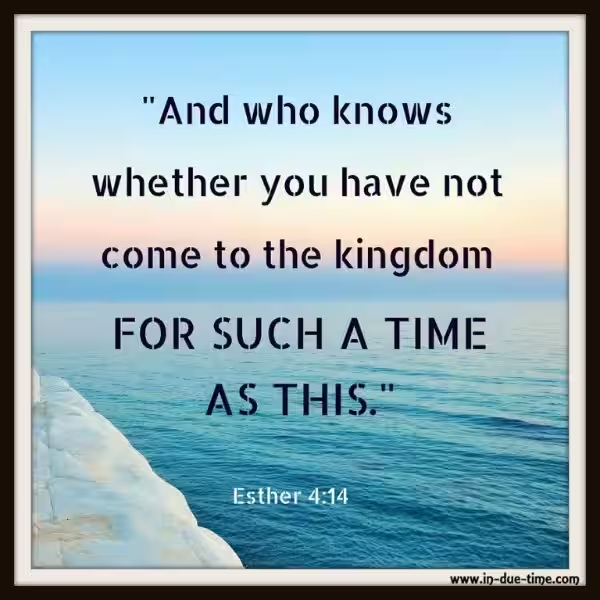
Life often throws us curveballs, doesn’t it? We navigate seasons of joy, periods of profound challenge, and moments that feel utterly bewildering. In the midst of this dynamic human experience, a powerful biblical truth resonates: “For if you remain silent at this time, relief and deliverance for the Jews will arise from another place, but you and your father’s family will perish. And who knows but that you have come to your royal position for such a time as this” (Esther 4:14). This verse, spoken to Queen Esther by her cousin Mordecai, isn’t just an ancient narrative; it’s a timeless declaration of divine purpose woven into the fabric of our own lives, especially within the context of our faith. It speaks to the idea that our presence, our skills, and our unique circumstances are not accidental, but divinely ordained for specific moments in history.
This profound realization can be a source of immense strength and clarity, particularly when faced with overwhelming situations or when questioning our role in the world. The scripture suggests that God doesn’t just operate in grand, sweeping historical events; He also orchestrates individual lives to intersect with the needs of their time. It’s about understanding that wherever you are, whoever you are, and whatever your current struggles, there’s a potential for divine impact, a calling to step into your God-given purpose. This isn’t about seeking fame or recognition, but about embracing a sacred responsibility to be a conduit of God’s love, justice, and grace in the specific context you find yourself in.
The phrase “for such a time as this” implies a critical juncture, a moment where inaction has significant consequences, and decisive, faith-filled action can bring about deliverance and positive change. Esther was in a precarious position, a Jewish queen in a foreign land, with a plot brewing to annihilate her people. Mordecai’s words were a stark wake-up call, urging her to recognize that her elevation to royalty wasn’t a mere stroke of luck, but an opportunity to fulfill a crucial role.
Similarly, we too find ourselves in unique “such times.” These can be personal crises, community challenges, or even global events that demand our attention and our faith. Think about the rapid advancements in technology, the persistent social injustices, or the ongoing environmental concerns. These are all contemporary arenas where our faith calls us to engage. The question then becomes: what is God asking of me, right now, in this specific situation? It’s a call to move beyond passive observation and to actively participate in bringing about God’s kingdom here on earth.
Personal Circumstances as Divine Appointments
Our individual lives, with all their unique challenges and blessings, are often the launchpads for our “such a time” moments. Perhaps you’ve experienced a significant loss, a period of illness, or a career setback. While these can feel devastating, they can also be transformative experiences that equip you with empathy, resilience, and a deeper understanding of human suffering. This newfound wisdom can then be channeled into serving others who are going through similar trials.
Consider someone who has overcome a personal struggle with addiction. Their journey, though difficult, can become a beacon of hope for others still in the throes of addiction. They understand firsthand the despair and the possibility of recovery, making them uniquely qualified to offer compassionate support and practical guidance. This is a powerful example of how our past experiences can prepare us for a future ministry that is precisely “for such a time as this.”
Societal and Global Needs
Beyond our personal spheres, we are also called to address the broader needs of society and the world. The Bible consistently calls believers to be salt and light, to actively pursue justice, and to care for the marginalized. These are not abstract ideals but practical mandates that require our engagement. Whether it’s advocating for the poor, standing up against discrimination, or caring for the environment, these are all areas where God can use us.
Think about the early Christians who, despite facing persecution, actively cared for the sick and the poor in their communities, offering a stark contrast to the prevailing societal norms. Their actions, driven by their faith, brought about significant positive change and demonstrated the transformative power of the gospel. Today, we face our own set of complex issues, and the call remains the same: to respond with faith, courage, and a commitment to Christ’s teachings.
Embracing Your “Royal Position”
The idea of a “royal position” in Esther’s story signifies authority, influence, and access. Esther, by virtue of her marriage to the king, had the ability to speak into matters of grave importance. For us, our “royal position” might not be a literal throne, but it encompasses the unique gifts, talents, and opportunities God has given us. It’s about recognizing the inherent value and potential God has placed within you.
This “royal position” can manifest in various ways: your career, your family relationships, your involvement in your local church, or even your online presence. Each of these platforms, however small or large, offers the potential for impact and influence. The key is to discern where your unique abilities can best serve God’s purposes in the current moment. It requires introspection, prayer, and a willingness to step outside your comfort zone.
Identifying Your God-Given Gifts
The Apostle Paul, in his letter to the Ephesians, emphasizes that God equips believers with diverse spiritual gifts for the building up of the church and the advancement of His kingdom (Ephesians 4:11-13). These gifts are not random; they are purposefully distributed to equip us for ministry. Identifying these gifts is a crucial step in understanding how you can be effective “for such a time as this.”
You might be a gifted communicator who can inspire others through spoken or written words, a natural leader who can rally people around a cause, a compassionate caregiver who can bring comfort to the hurting, or someone with a keen analytical mind who can solve complex problems. Taking an honest inventory of your strengths and passions is a vital part of this process. Prayerfully asking God to reveal your gifts and the opportunities to use them is essential.
Once you’ve identified your potential “royal position” and your God-given gifts, the next step is to act in faith. Mordecai’s plea to Esther was a call to courageous action, even in the face of immense personal risk. He understood that inaction was not an option when the lives of her people were at stake. This is a powerful reminder that faith is not passive; it’s an active engagement with God’s will.
This stepping out might involve starting a new ministry, speaking up against injustice, offering a helping hand to a neighbor, or even simply sharing your faith with someone who needs to hear it. It’s about taking that first courageous step, trusting that God will empower you and guide your path. Remember, you are not expected to have all the answers, but you are called to be obedient and willing.
The Outcome: Deliverance and Divine Flourishing
The scripture promises that if Esther remains silent, “relief and deliverance for the Jews will arise from another place.” This highlights a critical theological truth: God’s purposes will ultimately prevail, even if individuals fail to participate. However, it also implies a missed opportunity for those who choose inaction. For Esther and her lineage, their failure to act would have led to their own destruction.
Conversely, when we embrace our “such a time as this” calling, the outcome is not just external deliverance for others, but also internal flourishing for ourselves. We experience a deeper sense of purpose, a greater connection to God, and the profound joy of being used by Him. Our lives become more meaningful, and we contribute to the unfolding of God’s redemptive plan.
A Legacy of Faith and Courage
Esther’s courageous decision to approach the king, despite the danger, ultimately led to the salvation of her people and the establishment of the annual feast of Purim, a celebration of their deliverance. Her actions created a legacy of faith and courage that has inspired generations. Her story serves as a powerful testament to the fact that one person, stepping into their God-ordained purpose, can have a profound and lasting impact.
We too have the opportunity to leave a similar legacy. By responding to the needs of our time with faith and obedience, we contribute to the ongoing narrative of God’s work in the world. We become part of a grander story of redemption and hope, impacting not only our immediate surroundings but also generations to come.
The Joy of Walking in Purpose
Ultimately, the greatest reward of living “for such a time as this” is the deep, abiding joy that comes from walking in God’s purpose. It’s a sense of fulfillment that transcends material possessions or worldly achievements. It’s the knowledge that you are aligned with the Creator of the universe, contributing to His magnificent plan.
When we embrace our calling, even when it’s challenging, we discover a strength and resilience we never knew we possessed. We experience the sweetness of obedience and the unparalleled satisfaction of knowing we have made a difference. This is the essence of a life lived intentionally, a life that truly matters, a life that is undeniably “for such a time as this.”
Frequently Asked Questions: “For Such a Time as This” Scripture
What is the meaning of “for such a time as this”?
The phrase “for such a time as this” originates from the Book of Esther in the Bible (Esther 4:14). It refers to a divinely appointed moment or situation, suggesting that an individual has been placed in a particular circumstance or position for a specific, God-ordained purpose. It implies that present challenges and opportunities are not accidental but part of a larger, purposeful plan.
Where does the scripture “for such a time as this” come from?
This phrase is found in the Book of Esther, chapter 4, verse 14. It is spoken by Mordecai to Esther when he urges her to approach King Xerxes on behalf of their people, the Jews, who were facing annihilation.
What is the religious significance of “for such a time as this”?
From a religious perspective, particularly within Judaism and Christianity, this phrase signifies divine providence. It suggests that God orchestrates events and places individuals in specific roles and circumstances not by chance, but to fulfill His will. It encourages believers to recognize their purpose and act courageously when faced with challenging or impactful situations, trusting that God has equipped them for that specific moment.
How can I apply the meaning of “for such a time as this” to my own life?
Applying this scripture to your life involves recognizing that your current circumstances, talents, and challenges may be part of a divine plan. It encourages you to:
* Seek God’s purpose: Pray for discernment to understand why you are in your current situation.
* Embrace your calling: Be willing to step out in faith and act, even when it’s difficult or scary.
* Trust in God’s timing: Believe that God has placed you where you are for a reason, and He will guide your steps.
* Be courageous: Act with boldness and conviction, knowing that you are empowered by God for the task at hand.
Does “for such a time as this” imply predestination?
The concept is often interpreted as aligning with the theological idea of predestination or divine sovereignty, where God has a plan and purpose that unfolds through human actions. However, interpretations vary. Some emphasize God’s foreknowledge and preparation of individuals for specific tasks, while others focus on the human responsibility to respond to God’s call within the context of His unfolding plan. The core idea is that God is actively involved in human history and individual lives.