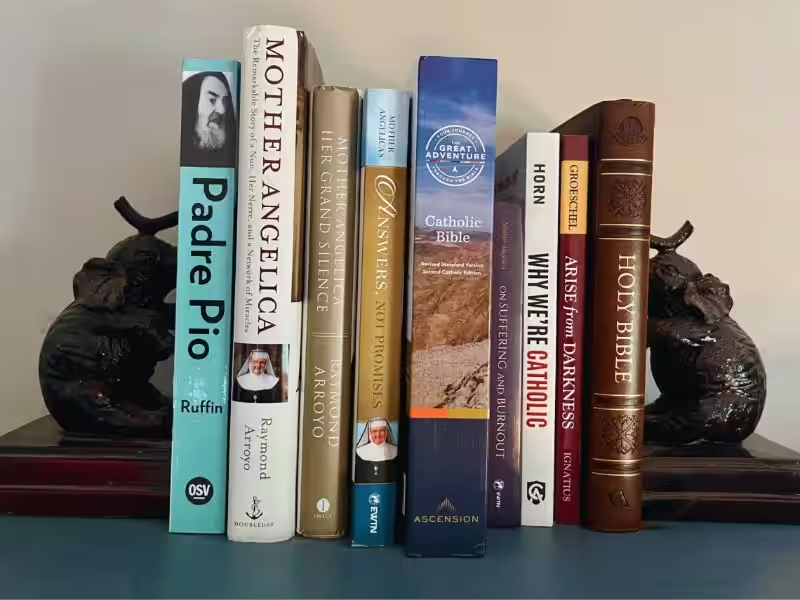
Embarking on a spiritual journey is a deeply personal and rewarding endeavor, and for Catholics, faith is not a passive acceptance, but an active, lifelong pursuit of deeper understanding and lived experience. One of the most profound and accessible ways to nurture this journey is through dedicated reading. A well-curated Catholic reading list can serve as a compass, guiding us through the intricacies of theology, the wisdom of the saints, and the practical application of our faith in the modern world. Whether you’re a seasoned practitioner seeking to deepen your knowledge or a newcomer exploring the richness of the Church, there’s a wealth of literature waiting to illuminate your path.
This article aims to be your comprehensive guide to building a robust Catholic reading list. We’ll explore not just what to read, but why certain books are essential, offering insights into their relevance and providing relatable examples to make complex ideas accessible. Our goal is to empower you to select books that will resonate with your soul, challenge your intellect, and ultimately, strengthen your relationship with God. Let’s begin this enriching exploration.
Why a Catholic Reading List Matters: More Than Just Books
The Catholic faith is a living tradition, rich with centuries of theological reflection, mystical insights, and the tangible witness of countless individuals who have lived extraordinary lives of faith. Simply attending Mass or participating in Sacraments, while vital, is only part of the picture. To truly grasp the depth and breadth of what it means to be Catholic, engaging with the written word is indispensable. A thoughtfully compiled Catholic reading list is not about accumulating a collection of tomes; it’s about actively seeking wisdom, understanding the historical context of our beliefs, and finding inspiration for daily living.
Think of it like building a strong foundation for a house. You wouldn’t construct a home on guesswork. Similarly, our faith benefits from a solid intellectual and spiritual grounding. Reading provides this grounding by offering diverse perspectives, explaining nuanced doctrines, and revealing the universal truths that have guided believers for millennia. It’s about encountering the voices of the Church Fathers, the teachings of the Magisterium, and the personal journeys of saints who walked this earth before us, leaving behind a legacy of wisdom. The benefits are manifold: enhanced prayer life, greater clarity on moral issues, and a deeper appreciation for the beauty and mystery of God’s love.
Nourishing Your Spiritual Intellect
Our minds, like our bodies, need nourishment. For a Catholic, this nourishment comes in the form of spiritual and intellectual food. Reading allows us to move beyond superficial understandings and delve into the profound truths that underpin our faith. It’s about asking the big questions and finding answers that have been pondered and refined over generations. A good Catholic reading list will offer a balanced diet, encompassing scripture, apologetics, lives of saints, and spiritual classics.
Consider a time you’ve felt confused about a particular aspect of your faith, perhaps the nature of the Eucharist or the role of Mary. Rather than relying solely on hearsay or fleeting opinions, turning to a reputable Catholic book can provide clear, authoritative explanations. For instance, reading about the Eucharistic miracles can foster a more profound reverence, while studying the lives of the saints can offer practical models of Christian virtue in action. This intellectual engagement isn’t just academic; it’s a direct path to a more vibrant and informed faith.
Connecting with the Communion of Saints
The Church is not merely an institution; it is the Communion of Saints, a mystical body that transcends time and space. When we read the writings of the saints or theological works by Church doctors, we are quite literally entering into dialogue with those who have gone before us. Their experiences, struggles, and ultimate triumphs in faith offer invaluable guidance and encouragement. A well-rounded Catholic reading list will undoubtedly feature these holy men and women.
Imagine feeling discouraged by a particular sin or a persistent temptation. Reading the autobiography of St. Augustine, for example, reveals a man who wrestled with his own failings and ultimately found profound redemption. His honesty and vulnerability can be incredibly comforting and inspiring. Likewise, the simple yet profound wisdom of St. Thérèse of Lisieux and her “Little Way” offers a path to holiness accessible to everyone, regardless of their circumstances. These are not distant figures; they are fellow pilgrims who have walked the path and can offer us their seasoned advice.
Every journey begins with a first step, and building a Catholic reading list is no different. While the vastness of Catholic literature can seem daunting, starting with a few foundational texts can provide an excellent launching pad for deeper exploration. These are the books that have stood the test of time, offering timeless wisdom and essential insights into the Catholic faith. Selecting from this core group ensures you’re building on a solid bedrock of understanding.
These foundational works often serve as gateways to other authors and topics. Once you’ve engaged with a classic, you’ll likely discover references to other important figures or movements within Catholic thought. It’s a beautiful process of discovery and expansion. Think of it as acquiring the essential tools for a craftsman; once you have them, you can tackle increasingly complex projects. This initial phase of your Catholic reading list is about equipping yourself with the core principles.
Scripture: The Heartbeat of Catholic Teaching
At the very epicenter of any Catholic reading list must be Holy Scripture. The Bible is not just a historical document; it is the divinely inspired Word of God, revealing His plan for humanity and His profound love for us. Understanding scripture is fundamental to understanding the Catholic faith, as it forms the basis for much of our theology, liturgy, and moral teaching. A Catholic Bible with good footnotes and commentary is an invaluable resource.
It’s important to approach the Bible not as a novel to be read from cover to cover in one sitting, but as a sacred text to be prayed with and studied. Engaging with different translations can offer new perspectives. For instance, reading the Psalms can profoundly deepen your prayer life, offering words for every emotion and situation. Studying the Gospels allows us to encounter Jesus Christ directly, understanding His teachings and His life-changing message. Make it a habit to read a few verses each day, perhaps focusing on a particular book or theme.
The Catechism of the Catholic Church: A Compass for Belief
For a comprehensive and authoritative overview of Catholic doctrine, the Catechism of the Catholic Church is an indispensable resource. It is a systematic presentation of the essential teachings of the Catholic faith, covering everything from the Creed, the Sacraments, and the Ten Commandments to prayer and the Christian life. This is not a book to be read passively, but a guide to be consulted and reflected upon.
Think of the Catechism as a detailed map of Catholic belief. If you’re curious about what the Church teaches on a specific topic, like the nature of the Trinity or the sanctity of life, the Catechism provides clear, concise, and accurate answers. It’s also an excellent tool for apologetics, helping you articulate and defend your faith with confidence. Regularly referring to sections that pique your interest will significantly enrich your understanding and strengthen your Catholic reading list.
Classic Spiritual Writers: Voices of Enduring Wisdom
Beyond scripture and the Catechism, a Catholic reading list must include the voices of classic spiritual writers. These are individuals who, through profound prayer and experience, have offered timeless insights into the spiritual life. Their writings often speak directly to the human heart, offering guidance, encouragement, and profound spiritual nourishment.
Consider the enduring impact of St. Thomas Aquinas. His monumental work, the Summa Theologica, though dense, offers a systematic exploration of faith and reason. For a more accessible entry point, his shorter works or commentaries on his thought can be incredibly illuminating. Similarly, the writings of St. John of the Cross and St. Teresa of Avila offer profound meditations on the mystical journey of the soul towards God. These authors provide a rich tapestry of spiritual wisdom that continues to resonate.
Expanding Your Catholic Reading List: Exploring Deeper Themes
Once you have a solid foundation, your Catholic reading list can expand to explore more specific themes, delve into the lives of particular saints, or engage with contemporary Catholic thought. This stage is about personalizing your journey and discovering authors and topics that particularly resonate with your spiritual journey. It’s about moving from the broad strokes to the detailed brushwork that makes your faith come alive.
This expansion is a beautiful process of discovery and growth. As you read, you’ll encounter new questions, new interests, and new avenues for spiritual exploration. The Catholic intellectual tradition is vast and diverse, offering something for every stage of life and every intellectual inclination. Don’t be afraid to venture into genres or authors that might seem unfamiliar at first; growth often happens outside our comfort zones.
The Lives of the Saints: Inspiring Examples of Faith
The lives of the saints are a powerful testament to God’s grace at work in ordinary people. Reading their biographies offers practical examples of holiness and demonstrates that living a virtuous life is achievable, even in the face of immense challenges. A dedicated section of your Catholic reading list for the lives of saints can be incredibly motivational.
From the dramatic conversions of figures like St. Paul to the quiet devotion of a simple layperson like St. Gianna Molla, each saint’s story offers unique lessons. St. Paul’s journey from persecutor to apostle showcases the transformative power of divine mercy. St. Gianna, a modern physician and mother, exemplifies the sanctity of everyday life and the profound love within family. These stories are not just historical accounts; they are invitations to emulate their virtues and draw closer to Christ.
Catholic Apologetics: Understanding and Defending the Faith
For those who wish to deepen their understanding of Catholic doctrine and equip themselves to answer questions about their faith, Catholic apologetics is a crucial area to explore. Apologetics, from the Greek word for “defense,” is the reasoned defense of Catholic beliefs. A well-chosen book in this genre can provide clarity, confidence, and intellectual rigor.
Consider the common questions people have about Catholicism, such as the role of the Pope, the teachings on Purgatory, or the validity of Catholic social teaching. Authors like G.K. Chesterton with his brilliant wit in Orthodoxy or Scott Hahn with his accessible explanations of biblical theology offer profound insights. Engaging with apologetics is not about being argumentative, but about lovingly and intelligently sharing the truth as understood by the Catholic Church. This strengthens your own faith and makes you a more effective witness.
Contemporary Catholic Voices: Faith in the Modern World
While the wisdom of the past is invaluable, engaging with contemporary Catholic voices is essential for understanding how our faith informs and navigates the complexities of the modern world. These authors address current issues, offer fresh perspectives on enduring truths, and provide practical guidance for living as Catholics today. Your Catholic reading list should reflect this dynamic aspect of faith.
Authors like Bishop Robert Barron, with his accessible explanations of theology and culture, or makalah-makalah from Catholic thinkers on social justice issues provide vital insights. Reading about how to live out Catholic social teaching in your community, for instance, can be incredibly impactful. These contemporary voices help us bridge the gap between ancient truths and our daily lived experiences, making our faith relevant and vibrant. They remind us that the Church continues to be a living, breathing entity, grappling with the challenges of our time.
Making Your Catholic Reading List Work for You
The most effective Catholic reading list is not a static collection of books, but a dynamic and evolving guide tailored to your individual needs and spiritual journey. It’s about finding what resonates with you, what challenges you, and what ultimately helps you grow closer to God. Don’t feel pressured to read everything at once; pace yourself and enjoy the process.
Ultimately, the goal of any Catholic reading list is to foster a deeper, more personal relationship with Jesus Christ. The books are tools, aids to contemplation, and sources of inspiration. They are meant to lead us to prayer, to encourage us to live out our faith more fully, and to help us understand the immense love and grace that God offers us. So, dive in, explore, and let these words illuminate your path.
To maximize the benefits of your Catholic reading list, consider a few practical strategies. Start small, perhaps with one or two books that pique your interest. Set aside dedicated time for reading, even if it’s just 15-20 minutes a day. Keep a journal to jot down key takeaways, questions that arise, or personal reflections. Consider joining a book club or discussing what you’re reading with fellow Catholics to gain new perspectives.
Don’t be afraid to revisit books that have deeply impacted you. Often, reading a spiritual classic at different stages of your life will reveal new layers of meaning. Furthermore, remember that reading is a prelude to action. The wisdom you gain should inspire you to live your faith tangibly, whether through acts of charity, deeper prayer, or more intentional living. Your Catholic reading list is a roadmap, but the journey is yours to walk.
The Joy of Discovery: An Ever-Evolving Journey
Building and engaging with a Catholic reading list is a journey, not a destination. It’s a process of continuous learning, reflection, and spiritual growth. The joy lies not just in the knowledge gained, but in the deepening of your relationship with God. Each book can be a stepping stone, a moment of grace, and an invitation to draw nearer to the heart of Christ.
Embrace the richness and beauty of the Catholic intellectual and spiritual tradition. Let these books be your companions, your teachers, and your inspiration. As you continue to read, pray, and live your faith, you will discover a profound and enduring joy that comes from walking with God. Your Catholic reading list is a powerful tool to help you on this most rewarding of adventures.
Frequently Asked Questions: Catholic Reading List
What are some classic Catholic books everyone should read?
The Imitation of Christ by Thomas à Kempis
Confessions by St. Augustine
The Story of a Soul by St. Thérèse of Lisieux
Introduction to the Devout Life by St. Francis de Sales
The City of God by St. Augustine
Where can I find Catholic books?
Catholic bookstores (both physical and online)
Major online retailers (Amazon, Barnes & Noble, etc.)
Catholic publishers’ websites (Ignatius Press, Sophia Institute Press, Pauline Books & Media, Ave Maria Press, Catholic University of America Press)
Public libraries (often have a section for religious or Catholic books)
Second-hand bookstores and online marketplaces
What are some good Catholic books for spiritual growth?
The Practice of the Love of Jesus Christ by St. Alphonsus Liguori
Dark Night of the Soul by St. John of the Cross
The Way of Perfection by St. Teresa of Ávila
Jesus the Son of God by Pope Benedict XVI
The Spirit of the Liturgy by Pope Benedict XVI
Are there Catholic books for beginners?
The Catholic Faith by Bishop Donald H. Hying
Why Do Catholics Do That? by John R. St. John
The New Saint Joseph Baltimore Catechism (various editions)
Catholicism for Dummies by John Trigilio Jr. and Kenneth Brighenti
Rome Sweet Home by Scott Hahn and Kimberly Hahn
Where can I find books on Catholic apologetics?
Mere Christianity by C.S. Lewis (while not strictly Catholic, it’s a foundational work for Christian apologetics often recommended)
The Fathers Know Best by Jimmy Akin
Surprised by Truth (series) edited by Patrick Madrid
The New Dictionary of Catholic Theology edited by Scott Hahn and Mary Healy
Foundations of Catholic Social Teaching by Michael J. Schuck
What are some good Catholic novels?
Brideshead Revisited by Evelyn Waugh
The Power and the Glory by Graham Greene
A Canticle for Leibowitz by Walter M. Miller Jr.
The Brothers Karamazov by Fyodor Dostoevsky (while not exclusively Catholic, it explores profound religious and moral themes)
The Lord of the Rings by J.R.R. Tolkien (often read with allegorical Catholic interpretations)