In the tapestry of Catholic devotion, few practices are as enduring and profoundly spiritual as the recitation of the traditional Catholic rosary. More than just a series of prayers, it’s a meditative journey, a contemplative walk through the pivotal moments of Christ’s life and the Blessed Virgin Mary’s. For centuries, countless souls have found solace, strength, and a deeper connection to God through this sacred rhythm. Whether you are a lifelong Catholic seeking to deepen your prayer life or someone new to the faith curious about its practices, understanding the traditional Catholic rosary offers a gateway to a rich spiritual heritage.
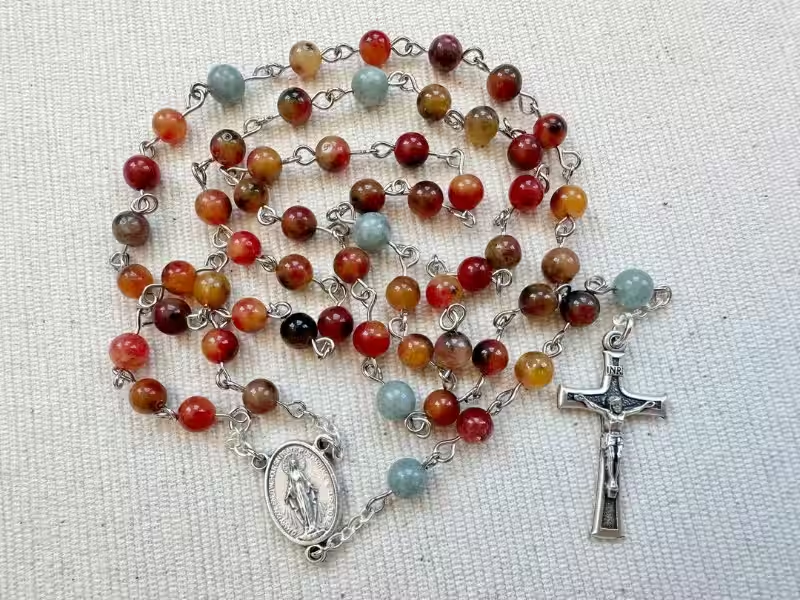
The beauty of the traditional Catholic rosary lies in its simplicity and accessibility. It doesn’t require elaborate rituals or specialized knowledge. All that is needed is a rosary – a string of beads designed to help us keep track of our prayers – and a willingness to open our hearts. This article aims to illuminate the significance, the practice, and the transformative power of the traditional Catholic rosary, making it relatable and informative for all who seek to explore its depths.
Understanding the Heart of the Traditional Catholic Rosary
At its core, the traditional Catholic rosary is a prayer that unites meditation on the life of Jesus Christ with vocal prayers directed to God through the intercession of Mary, His mother. It is a Christ-centered devotion, with each decade of the rosary focusing on a specific “mystery” – an event or aspect of Jesus’ life. This meditative aspect is crucial; it elevates the rosary from mere repetition to a profound spiritual exercise. By contemplating these events, we are invited to more fully understand and embrace the Gospel message. The traditional Catholic rosary acts as a visual and tactile aid, grounding our thoughts and allowing us to more deeply internalize the mysteries being prayed.
The structure of the traditional Catholic rosary is designed to guide the prayer. It typically begins with the Sign of the Cross, followed by the Apostles’ Creed, an Our Father, three Hail Marys (for an increase in faith, hope, and charity), and a Glory Be. Then, a specific “decade” of the rosary is prayed, which consists of one Our Father, ten Hail Marys, and one Glory Be, all while meditating on the chosen mystery. This patterned repetition, far from being monotonous, creates a contemplative space where the mind can focus on the spiritual realities of each mystery. The traditional Catholic rosary offers a structured, yet deeply personal, way to engage with the saving mysteries of our faith, fostering a more intimate relationship with Christ and His Mother.
The Joyful Mysteries: Meditations on Beginnings and Incarnation
The Joyful Mysteries of the traditional Catholic rosary are prayed on Mondays and Saturdays, and on Sundays during Advent. These mysteries focus on the early life of Jesus and Mary, celebrating the Incarnation and the humble beginnings of our Savior. Contemplating these events can bring a sense of wonder, hope, and profound joy into our lives. They remind us of God’s immense love and His willingness to enter into our human experience in the most unexpected and beautiful ways.
The Annunciation: Imagine Mary, a young woman chosen by God, hearing the angel Gabriel’s message. This mystery invites us to reflect on obedience to God’s will and the transformative power of saying “yes” to divine plans, even when they are daunting. It’s a call to openness and trust in God’s unfolding providence in our own lives.
The Visitation: Mary, pregnant with Jesus, visits her cousin Elizabeth, who is also expecting a child, John the Baptist. This mystery highlights charity and service, showcasing Mary’s eagerness to share the good news and help another. It encourages us to reach out to those in need, carrying Christ’s love with us.
The Nativity: The birth of Jesus in a humble stable in Bethlehem. This mystery is a powerful reminder of God’s humility and love, showing that salvation came not through earthly power or grandeur, but through a vulnerable child. It calls us to find joy in simplicity and recognize the divine presence in the ordinary.
The Presentation in the Temple: Jesus is presented to God in the Temple by Mary and Joseph. This mystery emphasizes purity of heart and obedience to the Law. It reminds us of our own dedication to God and the importance of offering our lives to Him, as Mary and Joseph did.
The Finding of Jesus in the Temple: At the age of twelve, Jesus is found in the Temple, teaching the elders. This mystery underscores Jesus’ divine mission and wisdom, as well as Mary and Joseph’s anxiety and eventual relief. It prompts us to reflect on our own spiritual journeys and the importance of seeking God in our lives.
Praying the Joyful Mysteries of the traditional Catholic rosary can infuse our hearts with a sense of renewal and anticipation, much like the joy of expectant parents or the thrill of a new beginning. It’s a powerful way to connect with the foundational events of our faith and discover the profound love that God has for each of us, revealed in the humble birth of His Son.
The Luminous Mysteries: Meditations on Christ’s Public Ministry
Introduced by Pope John Paul II, the Luminous Mysteries, or Mysteries of Light, are prayed on Thursdays. They focus on significant moments in Christ’s public ministry, highlighting His divine nature and His teachings. These mysteries offer a profound insight into Jesus’ mission as the Light of the World, illuminating the path for believers and inviting deeper engagement with His salvific work. The traditional Catholic rosary becomes a lens through which we can see Christ’s active presence and divine power at work.
The Baptism of Jesus in the Jordan: Jesus is baptized by John the Baptist, and the Holy Spirit descends. This mystery emphasizes our own baptism and our identity as beloved children of God. It’s a powerful reminder of the washing away of sin and the reception of the Holy Spirit, a core sacrament in our faith.
The Wedding at Cana: Jesus performs His first public miracle by turning water into wine. This mystery showcases Jesus’ power and His desire to bring joy and abundance, even in ordinary human gatherings. It encourages us to bring our needs and celebrations to Jesus, trusting in His ability to transform and bless.
The Proclamation of the Kingdom of God and the Call to Conversion: Jesus begins His public ministry by preaching about the Kingdom of God. This mystery calls us to repentance and a sincere commitment to living according to God’s will. It’s a constant invitation to re-evaluate our lives and align them with the values of the Gospel.
The Transfiguration: Jesus is transfigured on a mountain, appearing with Moses and Elijah. This mystery reveals Jesus’ divine glory and His true identity, offering a glimpse of the heavenly realm. It can inspire us to seek moments of spiritual clarity and to recognize God’s majesty in our lives.
The Institution of the Eucharist: Jesus institutes the Sacrament of the Holy Eucharist at the Last Supper. This profound mystery centers on Jesus’ ultimate sacrifice and His enduring presence among us. The traditional Catholic rosary leads us to this central act of worship, reminding us of the nourishment and grace we receive through communion.
Meditating on the Luminous Mysteries through the traditional Catholic rosary is like walking alongside Jesus during His earthly ministry, witnessing His miracles, hearing His teachings, and understanding the depth of His love. These events are not just historical accounts; they are living encounters that continue to shape our faith and guide our actions, offering a bright and illuminating path forward.
The Sorrowful Mysteries: Meditations on Christ’s Passion and Sacrifice
The Sorrowful Mysteries, prayed on Tuesdays and Fridays, and on Sundays during Lent, delve into the suffering and sacrifice of Jesus Christ. These meditations are challenging yet profoundly rewarding, as they draw us into the heart of Christ’s redemptive act on the cross. The traditional Catholic rosary here becomes a powerful tool for empathy and a deep appreciation for the immense love that led Christ to endure such pain for humanity’s salvation. It’s a time of deep reflection and repentance.
The Agony in the Garden: Jesus prays in the Garden of Gethsemane before His arrest, His soul overwhelmed with sorrow. This mystery invites us to consider Jesus’ inner struggle and His perfect submission to the Father’s will, even in the face of immense suffering. It teaches us about perseverance in prayer and acceptance of difficult circumstances.
The Scourging at the Pillar: Jesus is brutally whipped by Roman soldiers. This mystery highlights Jesus’ physical suffering endured for our sins. It calls for a profound sense of gratitude for His sacrifice and a renewed commitment to living a life free from sin.
The Crowning with Thorns: Jesus is mocked and crowned with thorns. This mystery reveals Jesus’ humiliation and suffering in bearing the weight of our pride and vanity. It’s a stark reminder of the scorn He faced and a call to embrace humility in our own lives.
The Carrying of the Cross: Jesus struggles to carry His cross to Golgotha. This mystery emphasizes Jesus’ arduous journey of suffering and His willingness to bear the burden of our sins. It encourages us to reflect on the crosses in our own lives and to offer them up with Jesus.
The Crucifixion: Jesus is nailed to the cross and dies. This is the culmination of Christ’s sacrificial love, the ultimate act of redemption. Meditating on the Crucifixion through the traditional Catholic rosary helps us grasp the immense price paid for our salvation and inspires a deep sense of awe and thankfulness.
Engaging with the Sorrowful Mysteries through the traditional Catholic rosary can be emotionally demanding, but it is also incredibly purifying. It allows us to stand at the foot of the cross, to weep with Mary, and to truly understand the depth of Christ’s love. This contemplation fosters a profound sense of repentance, a desire for spiritual healing, and a renewed commitment to living a life worthy of the sacrifice made for us.
The Glorious Mysteries: Meditations on Christ’s Victory and Mary’s Triumph
The Glorious Mysteries, prayed on Wednesdays and Sundays, celebrate the ultimate victory of Christ over death and sin, and the triumphant journey of Mary into heaven. These meditations are filled with hope, joy, and the promise of eternal life. The traditional Catholic rosary here lifts our gaze to the celestial realities, reminding us of our ultimate destiny and the powerful intercession of our Blessed Mother. They are moments of profound spiritual ascension.
The Resurrection: Jesus rises from the dead, conquering death. This is the cornerstone of our faith, the proof of Christ’s divinity and the promise of our own resurrection. It fills us with unshakeable hope and the assurance that death is not the end.
The Ascension: Jesus ascends into heaven, seated at the right hand of the Father. This mystery signifies Christ’s triumph and His continued presence with us through the Holy Spirit. It reminds us that our true home is in heaven and that our earthly journey is a preparation for it.
The Descent of the Holy Spirit: The Holy Spirit descends upon Mary and the Apostles at Pentecost. This mystery highlights the power of the Holy Spirit to guide, inspire, and empower the Church. It calls us to be open to the promptings of the Spirit in our own lives and to live out our faith with boldness.
The Assumption of Mary: Mary is assumed body and soul into heaven. This beautiful mystery celebrates Mary’s unique role as Queen of Heaven and Earth, and the ultimate reward for her perfect fidelity. It assures us of her constant intercession and maternal care for us.
The Coronation of Mary: Mary is crowned Queen of Heaven. This final mystery of the traditional Catholic rosary exalts Mary as our Heavenly Queen, a visible sign of God’s love and favor. It inspires us to honor her and to seek her guidance as we journey towards our heavenly home.
Reciting the Glorious Mysteries of the traditional Catholic rosary is an exercise in faith and a glimpse of what awaits the faithful. They are a powerful reminder that our suffering on earth is temporary and that glory awaits those who love and serve God. These mysteries offer profound comfort, unwavering hope, and a deep sense of peace, knowing that Christ has conquered all and that Mary, our Mother, watches over us with infinite love.
Making the Traditional Catholic Rosary a Part of Your Life
Incorporating the traditional Catholic rosary into your daily life doesn’t have to be an overwhelming task. Start small, perhaps with just one decade a day, or commit to praying the entire rosary on a specific day of the week. What matters most is the intention and the heart you bring to the prayer. Many find it helpful to designate a quiet time and space for prayer, free from distractions, allowing for deeper meditation on the mysteries. Even a few minutes spent in focused prayer can be profoundly impactful.
The beauty of the traditional Catholic rosary is its adaptability. You can pray it alone, with family, during your commute, or while engaging in quiet activities. The beads serve as a tactile anchor, helping to keep your mind focused when thoughts wander. Remember, it’s a journey, not a race. The repetition of the prayers, combined with meditation on the mysteries, creates a rhythm that can lead to a profound sense of peace and a deeper spiritual connection. The traditional Catholic rosary is a constant invitation to draw closer to God and His Mother, offering a wellspring of grace and spiritual strength for all who embrace it.
Frequently Asked Questions about the Traditional Catholic Rosary
What is the Rosary?
The Rosary is a traditional Catholic prayer that involves meditating on the life of Jesus and Mary while reciting specific prayers, primarily the Hail Mary, Our Father, and Glory Be. It is prayed using a string of beads called a Rosary.
What do I need to pray the Rosary?
You will need a Rosary (the string of beads), a quiet place to pray, and a basic understanding of the prayers involved. You can also use a Rosary guide or a digital app for assistance.
What are the prayers in the Rosary?
The primary prayers are the Hail Mary, the Our Father, and the Glory Be. The Apostles’ Creed is also recited at the beginning.
How do I pray the Rosary?
The Rosary is structured around reciting prayers while meditating on different “Mysteries,” which are events from the lives of Jesus and Mary. There are four sets of Mysteries: the Joyful, Luminous, Sorrowful, and Glorious Mysteries. You typically pray one set of Mysteries per day.
What are the Mysteries of the Rosary?
Joyful Mysteries: The Annunciation, the Visitation, the Nativity, the Presentation of Jesus in the Temple, the Finding of Jesus in the Temple.
Luminous Mysteries: The Baptism of Jesus, the Wedding at Cana, the Proclamation of the Kingdom of God, the Transfiguration, the Institution of the Eucharist.
Sorrowful Mysteries: The Agony in the Garden, the Scourging at the Pillar, the Crowning with Thorns, the Carrying of the Cross, the Crucifixion.
Glorious Mysteries: The Resurrection, the Ascension, the Descent of the Holy Spirit, the Assumption of Mary, the Coronation of Mary.
How long does it take to pray the Rosary?
A full Rosary (praying all five decades of one set of Mysteries) typically takes about 15-20 minutes, depending on the pace of prayer and meditation.
What is the purpose of praying the Rosary?
The Rosary is a devotional practice aimed at deepening one’s relationship with God through meditation on the life of Christ and Mary. It is also considered a powerful prayer for intercession.
Can non-Catholics pray the Rosary?
While the Rosary is a Catholic devotion, anyone can pray it as a form of meditation or prayer. However, the full spiritual benefits are understood within the context of Catholic teaching.
Is there a specific time to pray the Rosary?
There is no strict rule, but Catholics often dedicate specific days of the week to each set of Mysteries. Many find it beneficial to pray it at a consistent time each day, such as in the morning or evening.
What is a decade of the Rosary?
A decade refers to the repetition of ten Hail Marys, preceded by an Our Father and followed by a Glory Be, while meditating on one specific Mystery. The Rosary is made up of five decades.