For many, the Eucharist, also known as Holy Communion or the Lord’s Supper, is a central and deeply meaningful act of worship. It’s a ritual that connects believers to a sacred history, a community of faith, and a profound spiritual experience. However, for a growing number of individuals within these faith traditions, the traditional wafer and wine present a significant challenge. Celiac disease and gluten sensitivities mean that the very elements intended to bring unity can inadvertently cause physical distress and exclusion. This article explores the evolving landscape of the gluten-free eucharist, examining its theological implications, practical considerations, and the growing movement towards greater inclusivity within religious practices.
The question of how to provide a gluten-free eucharist is no longer a niche concern but a vital aspect of pastoral care and a reflection of the church’s commitment to serving all its members. As our understanding of dietary needs has expanded, so too has the awareness within religious communities that physical well-being should not be a barrier to spiritual participation. This journey towards a more inclusive communion table is a testament to the evolving ways faith communities adapt to meet the needs of their congregants, ensuring that gluten-free eucharist options are readily available and thoughtfully provided.
Understanding the Sacred Elements and Dietary Needs
At the heart of the Eucharist lies the symbolism of bread and wine, representing the body and blood of Jesus Christ. For centuries, these have been prepared using traditional methods, often with wheat flour for the bread. This deeply ingrained practice, however, overlooks the reality faced by individuals diagnosed with celiac disease or non-celiac gluten sensitivity. These conditions trigger an autoimmune response to gluten, a protein found in wheat, barley, and rye, leading to a range of symptoms from digestive upset to more severe health complications. The thought of knowingly consuming a substance that can cause such harm, especially during a sacred rite, is a source of anxiety and, for many, outright avoidance of communion.
The need for a gluten-free eucharist is rooted in compassion and the fundamental belief that no one should be alienated from a core practice of their faith due to a medical condition. Imagine a parent struggling to explain to their child why they can’t partake in a practice their friends and family regularly do. This is the lived reality for many. Therefore, exploring alternatives that are both theologically sound and physically safe for those with gluten-related disorders is not just a matter of convenience, but an act of religious inclusion and pastoral responsibility, ensuring that the promise of spiritual nourishment is accessible to all.
Theological Considerations of a Gluten-Free Eucharist
Theological discussions surrounding the gluten-free eucharist often center on the concept of sacramental integrity. Does the use of a different type of bread, one without gluten, alter the essential nature of the sacrament? Most theological traditions affirm that the intention of the minister and the faith of the recipient are paramount. The physical substance, while important, is understood to be a vessel for spiritual grace. For instance, historical texts and theological commentaries often emphasize the symbolic meaning over precise ingredient lists, allowing for adaptation. The core message of the Eucharist – remembrance, sacrifice, and communion with Christ – remains unchanged, regardless of the precise composition of the bread, as long as it is recognized as bread.
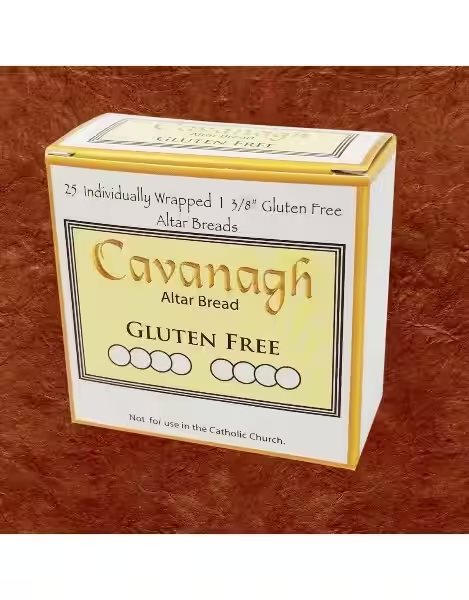
Furthermore, many denominations and individual congregations have affirmed the validity of gluten-free eucharist wafers. These are often made from rice flour, corn flour, or other gluten-free grains and are consecrated in the same manner as traditional hosts. The focus remains on ecclesial hospitality, ensuring that all members are welcomed and can participate fully. The debate isn’t about whether a gluten-free host is the body of Christ, but rather about how to best facilitate the participation of all believers in this sacred act, demonstrating that religious inclusivity is a guiding principle.
Practicalities and Provisions for Gluten-Free Communion
The practical implementation of a gluten-free eucharist has become increasingly straightforward as awareness grows and resources become more available. Many churches now offer dedicated gluten-free wafers, often stored separately to avoid cross-contamination. This might involve a small, clearly marked container or individual packaged wafers. Some congregations even have a designated server responsible for distributing the gluten-free eucharist, ensuring that those who require it can receive it without embarrassment or concern.
When attending a service, individuals seeking a gluten-free eucharist are encouraged to discreetly inform the clergy or a member of the pastoral staff beforehand. Many churches have protocols in place for this situation. For example, a priest might hold aside a gluten-free host, or a separate chalice of wine might be offered. The key is proactive communication, allowing the church to prepare and ensure a seamless experience. Offering gluten-free eucharist is a tangible demonstration of a church’s commitment to caring for its members’ physical and spiritual needs, reflecting a congregational embrace of diversity.
Innovations and Accessibility in Gluten-Free Eucharistic Practices
The landscape of the gluten-free eucharist is continually evolving, with innovative solutions emerging to further enhance accessibility. Beyond commercially produced gluten-free wafers, some churches have explored making their own, using carefully selected ingredients and strict preparation protocols. This might involve baking small, rice-flour based hosts specifically for communion. These homemade options can foster a sense of shared effort and community participation in providing for all members.
Moreover, the conversation around gluten-free eucharist has broadened to include other dietary restrictions. While gluten is the most common concern, some individuals may have allergies to corn or other ingredients. This pushes religious communities to think even more holistically about inclusive worship. The goal is to create an environment where everyone can approach the altar with confidence and peace of mind, free from the worry of adverse physical reactions, thereby strengthening the fabric of faith for all.
The Role of Denominations and Parish Leadership
Denominational guidelines and the leadership within individual parishes play a crucial role in the provision of a gluten-free eucharist. Many major Christian denominations have issued statements or official guidance on the matter, affirming the theological validity of gluten-free options and encouraging their availability. This top-down approach helps to standardize practices and provides a framework for local churches to implement inclusive communion policies.
Parish leaders, including pastors, priests, and church councils, are often the driving force behind ensuring that gluten-free eucharist is a reality. Their commitment to understanding the needs of their congregants and their willingness to make practical arrangements demonstrate a pastoral heart. This might involve researching suppliers, training servers, or educating the wider congregation about the importance of gluten-free eucharist options. Their efforts are vital in fostering a welcoming and accessible spiritual environment for everyone, embodying the spirit of pastoral care.
Personal Stories and the Impact of Inclusion
The impact of having access to a gluten-free eucharist extends far beyond mere physical comfort; it’s about spiritual belonging and the affirmation of one’s place within the community of faith. Consider Sarah, who was diagnosed with celiac disease in her early twenties. She had always loved attending church with her family, but the inability to receive communion created a growing sense of detachment. When her church introduced gluten-free eucharist wafers, it was a profound moment for her. “It felt like I was finally able to fully participate again,” she shared. “It wasn’t just about the bread; it was about feeling seen and valued.”
These personal testimonies highlight the deep emotional and spiritual significance of gluten-free eucharist provisions. For individuals who have felt excluded, the availability of these options can be transformative, reconnecting them to their faith community and reinforcing their sense of identity as believers. This act of religious hospitality strengthens the bonds of fellowship and demonstrates that the church is a living, breathing entity that adapts to care for all its members, fostering a richer and more unified spiritual journey.
Embracing a Full and Welcoming Communion
The journey towards consistently offering a gluten-free eucharist is a testament to the evolving nature of religious communities and their dedication to radical inclusivity. It’s about recognizing that the sacred meal, intended to be a source of unity and spiritual nourishment, should be accessible to everyone, regardless of their dietary needs. This isn’t a novel concept, but rather a continuation of the church’s mission to welcome all who seek to draw closer to the divine.
As more faith communities embrace the necessity and theological soundness of gluten-free eucharist, the table of the Lord becomes a more welcoming and representative space. It signifies a deeper understanding of pastoral responsibility and a commitment to ensuring that no one is left on the sidelines. This ongoing adaptation ensures that the act of communion remains a powerful and unifying experience for all believers, embodying the true spirit of shared faith and communal worship.
Frequently Asked Questions: Gluten-Free Eucharist
What is the Eucharist?
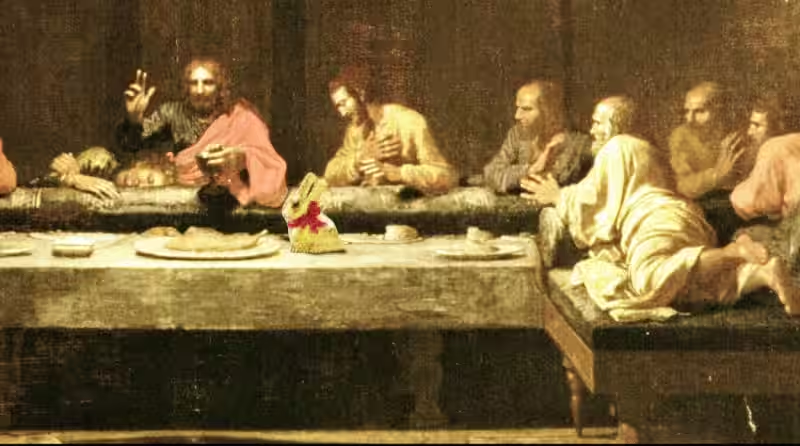
The Eucharist, also known as Holy Communion or the Lord’s Supper, is a central sacrament in many Christian denominations. It commemorates the Last Supper of Jesus Christ with his disciples and is understood as a spiritual nourishment and a sign of unity with Christ and with other believers. During the Eucharist, bread and wine (or sometimes grape juice) are consecrated and consumed.
Why are there gluten-free options for the Eucharist?
Traditionally, the bread used in the Eucharist is made from wheat, which contains gluten. For individuals with celiac disease, non-celiac gluten sensitivity, or wheat allergies, consuming gluten can cause serious health issues. Gluten-free options ensure that these individuals can participate fully and safely in the sacrament.
What are gluten-free hosts made from?
Gluten-free hosts are typically made from alternative grains that do not contain gluten. Common ingredients include rice flour, tapioca flour, potato starch, corn flour, or almond flour. Some may also be made with a blend of these ingredients to achieve a texture and consistency similar to traditional hosts.
Are gluten-free hosts consecrated and considered real Eucharist?
Yes, in most Christian traditions that offer gluten-free options, these hosts are consecrated in the same way as traditional hosts and are considered to be the true Body of Christ. The intention of the sacrament and the prayer of consecration are understood to be the essential elements, not the specific grain used to make the bread.
How can I request a gluten-free host?
If you require a gluten-free host, it is best to inform your church leaders, priest, pastor, or minister in advance, especially if you are visiting a new parish. Many churches have established procedures for providing gluten-free options, and they can guide you on how to receive one during the liturgy.
Will other communicants know I am receiving a gluten-free host?
Typically, the gluten-free hosts are indistinguishable from traditional hosts once consecrated. Churches often have a discrete method for distributing them to ensure the dignity of the sacrament and to avoid singling out individuals.
Are there any traditions that do not offer gluten-free Eucharist?
Practices regarding gluten-free Eucharist can vary between denominations and even between individual parishes within the same denomination. Some traditions may not have the resources or established practice to offer gluten-free options, while others may have theological reasons for their specific practices. It is always advisable to inquire with the specific church you plan to attend.
What about the wine or grape juice?
The wine or grape juice used in the Eucharist is naturally gluten-free. The concern for gluten is primarily with the bread.
Is it necessary to receive Communion if I have a gluten intolerance?
No, it is not necessary to receive Communion if you have a gluten intolerance and gluten-free options are not available or you are not comfortable with them. Your participation in the liturgy and your spiritual connection with God are the most important aspects of worship. Many churches offer alternative ways to participate, such as a blessing.