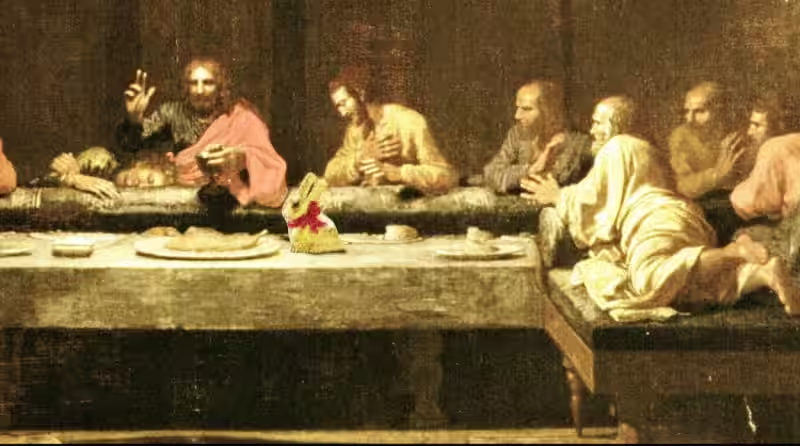
Imagine a table, laden with simple elements – bread and wine. For millennia, this humble setting has served as the focal point for some of humanity’s most profound spiritual experiences. The act of sharing these elements, known by various names like Eucharist, Lord’s Supper, or Holy Communion, is far more than just a ritual; it’s a deeply ingrained practice woven into the very fabric of religious history. From its origins in ancient traditions to its diverse expressions across countless faiths today, the history of communion is a captivating journey through belief, community, and the enduring human need for connection with the divine.
This article will explore the rich tapestry of communion history, delving into its religious significance and offering relatable insights into why this practice continues to resonate so powerfully with believers worldwide. We’ll uncover how this seemingly simple act has evolved, been debated, and ultimately solidified its place as a cornerstone of faith for billions.
The Roots of Remembrance: Ancient Precursors to Communion
Before we delve into the specific practices that shaped Christian communion, it’s crucial to understand that the idea of sharing food and drink as a sacred act has ancient roots. Many early cultures engaged in rituals involving shared meals to commemorate significant events, honor deities, or forge bonds within their communities. These were not just meals; they were sacred feasts, imbued with spiritual meaning. Think of the ancient Israelites sharing Passover meals, a tradition that involved the symbolic consumption of lamb, unleavened bread, and bitter herbs to remember their liberation from slavery in Egypt – a powerful act of historical and spiritual remembrance.
These precursor rituals often emphasized remembrance and community. The sharing of sustenance was seen as a way to connect with the past, with the divine, and with each other. This concept of symbolic nourishment and communal participation laid fertile ground for the development of more formalized communion rites in later religious traditions, highlighting a universal human impulse to express devotion and solidarity through shared physical acts.
The Last Supper: The Genesis of Christian Communion
The most pivotal moment in the history of Christian communion is undoubtedly the Last Supper, as described in the New Testament Gospels. It was during this meal, shared with his disciples on the eve of his crucifixion, that Jesus instituted what Christians call the Eucharist. He took bread, broke it, and declared, “This is my body, which is given for you; do this in remembrance of me.” Similarly, he took the cup of wine, saying, “This cup is the new covenant in my blood; do this, whenever you drink it, in remembrance of me.” This event transformed a simple meal into a profound theological act, forever linking the consumption of bread and wine with Jesus’ sacrifice and the establishment of a new covenant between God and humanity.
The directives from Jesus at the Last Supper – “do this in remembrance of me” – became the foundational command for Christian worship. Early Christians understood this as a call to regularly gather and reenact this moment, not as a mere historical commemoration, but as a living, present encounter with Christ. The early church embraced this practice with fervor, seeing it as a vital means of spiritual sustenance and a tangible expression of their unity in Christ. This act of sacred remembrance was central to their identity and their understanding of their faith.
Evolution and Interpretation: Debates and Developments in Communion
As Christianity spread and diversified, so too did the understanding and practice of communion. The initial simplicity of the early church’s gatherings began to be elaborated upon, leading to centuries of theological discussion and, at times, intense debate. Different interpretations arose regarding the nature of Christ’s presence in the bread and wine. Was it a literal presence, a symbolic one, or something in between? These questions were not merely academic; they had profound implications for how individuals experienced their faith and their relationship with God.
One of the most significant debates centered on the doctrine of transubstantiation, a core belief in Roman Catholicism. This doctrine, formalized in the 13th century, asserts that during the consecration of the Eucharist, the bread and wine are fundamentally transformed into the actual body and blood of Christ, while retaining their outward appearance. This understanding emphasizes a real and substantial presence of Christ, offering believers direct access to his divine nature through the sacrament. Other traditions, like many Protestant denominations, developed different theological frameworks, often emphasizing a spiritual presence or a symbolic remembrance.
Key Theological Differences and Practices
The Reformation in the 16th century brought about a seismic shift in the history of communion. Reformers like Martin Luther and John Calvin challenged the prevailing Catholic doctrines, leading to a fragmentation of Christian practice. Luther proposed the doctrine of consubstantiation, suggesting that Christ’s body and blood are present “in, with, and under” the bread and wine, rather than the substances themselves changing. This offered a middle ground between literal and purely symbolic interpretations, aiming to affirm Christ’s presence while avoiding what he saw as the philosophical complexities of transubstantiation.
Calvin, on the other hand, emphasized a spiritual presence, arguing that believers, through faith, partake in the spiritual reality of Christ’s body and blood, which are ascended to heaven. For Calvin and many Reformed traditions, the sacrament is a sign and seal of God’s promises, received by faith. These differing understandings led to distinct practices, including variations in the frequency of communion, the elements used (some traditions only use bread), and the specific words of consecration. The diversity of practice within Christianity today reflects this rich and complex theological history.
Beyond the intricate theological debates, the enduring power of communion lies in its profound ability to foster a sense of community and belonging. Gathering around the table for this sacred meal is an act of shared identity, a tangible expression of unity among believers. It’s a moment where individuals, despite their differing backgrounds and life experiences, come together as one body in Christ, reinforcing their collective commitment to their faith and to one another. This communal aspect is vital for spiritual resilience and mutual support.
Think of it like a family gathering for a special meal. While the food itself nourishes, the true richness comes from the shared conversation, the laughter, and the feeling of being connected. In a similar vein, communion provides a space for shared spiritual nourishment and connection. It’s a time to reflect on common beliefs, to offer prayers for each other, and to be reminded that no one is alone in their spiritual journey. This sense of collective faith is a powerful force that strengthens individuals and the church as a whole.
Personal and Transformative Meaning
For many individuals, communion is a deeply personal and transformative experience. It’s a moment of intimate encounter with the divine, a time to reflect on their relationship with God and to seek forgiveness and renewed strength. The act of partaking can bring a sense of peace, comfort, and spiritual renewal. It’s a reminder of God’s love and sacrifice, offering hope and assurance in the face of life’s challenges. This personal dimension is what makes the practice so meaningful and vital for individual believers.
Consider the analogy of receiving a heartfelt letter from a loved one. The words on the page are significant, but the feeling of connection and love they convey is what truly matters. Similarly, the bread and wine in communion are physical conduits for spiritual grace. They serve as tangible reminders of God’s presence and his unfailing love, offering solace and encouragement. This personal significance underscores why communion remains a central and cherished practice across the vast spectrum of Christian denominations.
The Enduring Legacy of Shared Sustenance
The history of communion, from its ancient antecedents to its multifaceted expressions today, reveals a practice deeply embedded in the human experience. It speaks to our innate need for symbolic rituals, our desire for community, and our yearning for a connection with something greater than ourselves. The humble elements of bread and wine have become potent symbols of sacrifice, redemption, and enduring love, binding generations of believers together across time and cultures.
As we continue to navigate the complexities of modern life, the enduring legacy of communion offers a powerful reminder of the importance of shared traditions, spiritual nourishment, and unwavering connection. Whether viewed as a literal transformation, a spiritual engagement, or a profound act of remembrance, the history of communion continues to shape and enrich the lives of millions, a testament to the timeless power of shared bread and the enduring presence of the divine.
Communion History
What is the origin of Communion?
Communion, also known as the Eucharist or the Lord’s Supper, has its origins in the Last Supper of Jesus Christ with his disciples, as described in the Gospels of Matthew, Mark, Luke, and the First Epistle to the Corinthians. During this meal, Jesus broke bread and shared wine, instructing his followers to do so in remembrance of him.
When did Communion become a regular practice in Christianity?
The early Christian church quickly adopted the practice of celebrating Communion as part of their worship services. The Book of Acts and early Christian writings show that it was a central element of their fellowship and remembrance of Jesus from the very beginning.
How has the understanding of Communion evolved over time?
The theological understanding of Communion has developed and been debated significantly throughout Christian history. Different denominations hold varying beliefs about its nature and significance, ranging from a symbolic remembrance to a literal spiritual presence of Christ, or even a miraculous transformation of the elements (transubstantiation). These interpretations have been a source of theological discourse and, at times, division within Christianity.
Are there different names for Communion?
Yes, Communion is known by several names depending on the Christian tradition. It is commonly called the Eucharist (from the Greek word for “thanksgiving”), the Lord’s Supper, Holy Communion, the Mass (in some traditions like Roman Catholicism), and the Breaking of Bread.
What are the key biblical passages related to Communion?
The primary biblical passages that describe the institution of Communion are:
* Matthew 26:26-28
* Mark 14:22-24
* Luke 22:17-20
* 1 Corinthians 11:23-26