The Catholic Church, rich in symbolism and ancient ritual, uses a variety of sacred oils in its sacraments. Among these, the baptism oils Catholic tradition holds a particularly profound significance. These oils are not mere ceremonial additions; they are tangible expressions of God’s grace, imbuing the recipient with spiritual strength and marking them as Christ’s own. For anyone curious about the depth of this sacrament, understanding the role of these oils offers a beautiful window into the Catholic faith and its emphasis on spiritual transformation.
The very act of anointing with oil in religious contexts dates back to the Old Testament, where it was used to consecrate kings, priests, and prophets, setting them apart for a divine purpose. This ancient practice finds its ultimate fulfillment in the New Covenant established through Jesus Christ, and the Catholic Church faithfully carries forward this tradition, particularly in the Sacrament of Baptism. The baptism oils Catholic understanding is rooted in this lineage of sacred anointing, signifying a profound spiritual consecration.
The Oils of Catechumens and Chrism: Two Pillars of Baptismal Anointing
The Catholic Rite of Baptism utilizes two distinct types of sacred oils, each with its own unique symbolism and purpose. These are the Oil of Catechumens and the Sacred Chrism. While both are applied during the baptismal ceremony, their separate roles highlight different aspects of the spiritual journey initiated by this sacrament. Understanding these distinctions provides a clearer picture of the multifaceted graces bestowed upon the newly baptized.
The Oil of Catechumens, often a simple olive oil, is used for anointing on the chest (often in the shape of a cross). This anointing signifies strengthening for the struggle against evil and the infusion of courage. It is a prayer for the individual to be empowered by God’s might to resist temptation and to live a virtuous life, free from the clutches of sin. This initial anointing prepares the candidate for their commitment to Christ, empowering them for the challenges that lie ahead in their faith journey.
The Oil of Catechumens: A Shield Against Spiritual Warfare
Imagine a soldier preparing for battle. They are given armor and weapons to protect them and fight effectively. In a similar, though spiritual, sense, the Oil of Catechumens serves as a form of spiritual armor for the newly baptized. It is a prayer that God will grant them the strength to overcome the temptations of the world, the flesh, and the devil. This anointing is a tangible sign of God’s protective grace, empowering the individual to stand firm in their faith.
This oil’s use predates the formalization of the Sacrament of Baptism as we know it today, appearing in early Christian writings as a common practice for those preparing for initiation. It symbolizes the casting out of evil spirits and the invitation of God’s presence. This is why it is often applied to the chest, the seat of courage and conviction, as a prelude to the more profound consecration that follows. The baptism oils Catholic tradition emphasizes this preparatory phase, ensuring readiness for the full reception of God’s grace.
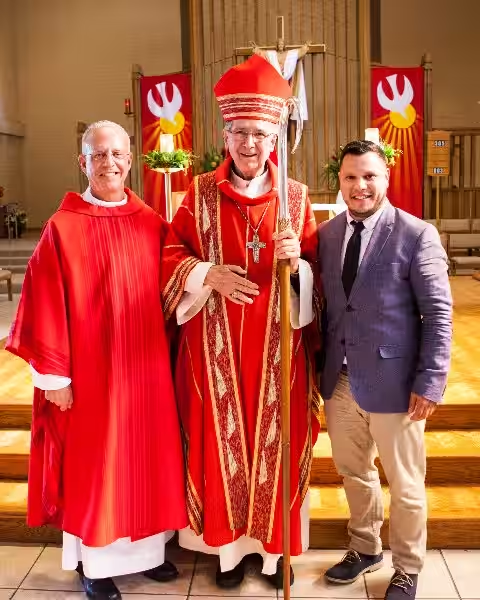
The second oil, and perhaps the most significant, is Sacred Chrism. This is a mixture of olive oil and balsam, consecrated by the bishop during the Chrism Mass. The balsam is added to give it a fragrance, symbolizing the sweetness of Christ’s presence and the perfume of Christian virtue. This oil is used for the anointing on the crown of the head after the baptismal water. It is a profound and indelible mark, signifying the reception of the Holy Spirit and the indelible sealing of the individual as a member of Christ’s body, the Church.
The anointing with Sacred Chrism is a direct parallel to the ancient practice of anointing kings and priests. It signifies that the baptized person is now consecrated to God, sharing in Christ’s priestly, prophetic, and kingly office. This is a permanent spiritual mark, often referred to as a “character”, which cannot be erased and signifies their belonging to God forever. The baptism oils Catholic rite, in this instance, points to an eternal union.
The Theological Significance of Anointing in Baptism
The application of these baptism oils Catholic tradition is far more than a symbolic gesture; it is a sacramental sign that conveys actual grace. This means that the oil, when applied by a minister in the proper manner and with the intention of the Church, does something. It efficaciously imparts the spiritual realities it signifies. This concept of sacraments as efficacious signs is central to Catholic theology and powerfully illustrated in the rite of baptism.
When a person is anointed with the Oil of Catechumens, they are not just being prayed over for strength; they are being supernaturally empowered to resist sin and live for God. Similarly, the anointing with Sacred Chrism is not merely a symbolic welcoming into the Church; it is the actual infusion of the Holy Spirit, sealing the individual with God’s indelible mark. This signifies their new identity as a child of God, united with Christ in a profound and eternal way.
A New Identity: Marked as Christ’s Own
The anointing with Sacred Chrism is particularly significant because it bestows an indelible spiritual mark. Think of it like a unique seal or a brand that signifies ownership. In this case, the baptized individual is marked as belonging to Christ. This spiritual seal means they are forever incorporated into the Mystical Body of Christ, the Church, and share in His divine life. This is why Sacred Chrism is also used in the sacraments of Confirmation and Holy Orders, as these also confer an indelible spiritual character.
This anointing signifies a radical transformation. The individual is no longer simply themselves; they are now a new creation in Christ. They are called to live out their baptismal promises, to participate in the mission of the Church, and to grow in holiness. The baptism oils Catholic practice underscores this profound shift in identity, from being an individual in the world to being a beloved child of God, marked for eternal life.
The Scent of Holiness: Balsam and the Holy Spirit
The inclusion of balsam in Sacred Chrism adds another layer of meaning. The fragrant aroma is meant to represent the sweetness of God’s presence and the “odor of Christ” that the baptized person is called to exude. Just as a pleasant fragrance spreads, so too should the virtues of a Christian life – love, joy, peace, patience, kindness, goodness, faithfulness, gentleness, and self-control – be evident in their actions and interactions with others.
This metaphor of fragrance is a beautiful reminder of the transformative power of the Holy Spirit. When the Spirit dwells within us, our lives should bear the fruit of His presence. The baptism oils Catholic tradition, through the use of Chrism, highlights this call to holiness and the outward expression of an inward grace. It’s a reminder that our faith is not meant to be hidden but to be a living testament to God’s love.
Experiencing the Significance: Beyond the Ritual
For parents preparing to baptize their child, or for adults undergoing the Rite of Christian Initiation of Adults (RCIA), the baptism oils Catholic ritual can feel both sacred and perhaps a little mysterious. However, understanding the meaning behind the anointing can transform it from a mere ceremony into a deeply personal and powerful encounter with God’s grace. It’s an opportunity to witness firsthand the Church’s ancient wisdom and its unwavering commitment to bringing souls into the divine family.
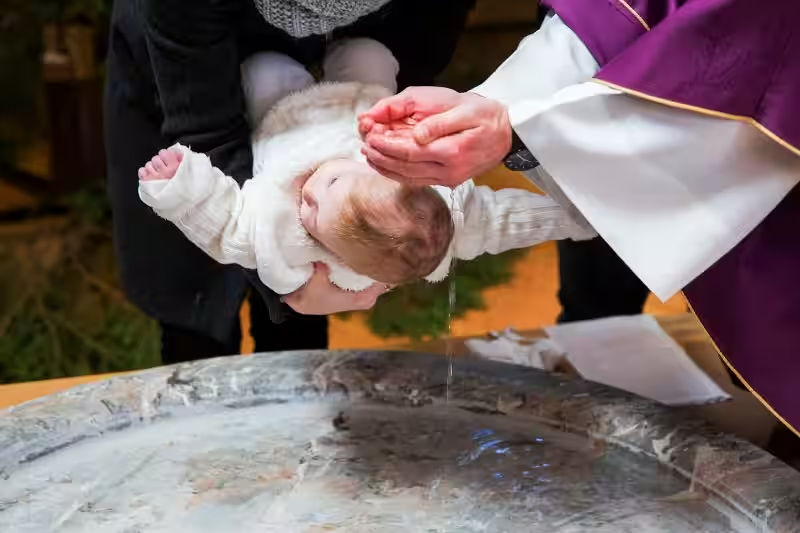
When you witness a baptism, pay close attention to the moments of anointing. Observe the minister’s hands, hear the prayers, and consider the profound spiritual realities being conveyed. This is not just about tradition; it’s about the lifelong journey of faith that begins with this sacrament. The baptism oils Catholic tradition is a visible sign of an invisible reality, a testament to God’s love and His desire to draw us into relationship with Him.
A Spiritual Journey Begins
The baptismal anointing, with both the Oil of Catechumens and Sacred Chrism, marks the official beginning of a spiritual journey. It is the moment a person is welcomed into the Christian community, empowered by the Holy Spirit, and set apart for a life lived in accordance with God’s will. The oils are tangible reminders of the graces received and the ongoing call to live out one’s baptismal promises.
As the newly baptized person grows, these initial anointings serve as a foundation for future sacraments and for a life of prayer and discipleship. The baptism oils Catholic practice, therefore, is not a one-time event but a powerful beginning. It is a testament to the Church’s belief in the transformative power of God and His enduring love for each of His children.
Frequently Asked Questions: Baptism Oils in the Catholic Church
What are the different types of oils used in Catholic baptism?
In the Catholic Church, three sacred oils are traditionally used during the Sacrament of Baptism: the Oil of Catechumens, the Oil of Chrism, and the Oil of the Sick (though the Oil of the Sick is not typically used in baptism itself, but is one of the three sacred oils blessed by the bishop).
What is the Oil of Catechumens and what is its purpose?
The Oil of Catechumens is a blessed olive oil used to anoint the catechumen (one preparing for baptism) on the chest. It symbolizes strength and protection against the temptations of evil, preparing them for their new life in Christ.
What is the Oil of Chrism and what is its significance?
The Oil of Chrism is a mixture of olive oil and balsam, blessed by the bishop. It is used to anoint the newly baptized on the crown of the head. This anointing signifies their incorporation into Christ, who is anointed as priest, prophet, and king. It marks them as belonging to God and imprints an indelible spiritual mark.
When are these oils used during the baptism ceremony?
The Oil of Catechumens is typically used before the baptismal vows and the renunciation of sin. The newly baptized are then anointed with the Oil of Chrism immediately after they are baptized with water.
Who blesses these oils?
The Oil of Catechumens and the Oil of Chrism are blessed by the bishop during the Chrism Mass, which is usually celebrated on Holy Thursday. These oils are then distributed to the parishes for use throughout the year.
Can any type of oil be used for baptism?
No, only the specific sacred oils blessed by the bishop are used for the Sacrament of Baptism in the Catholic Church. These oils are considered sacred vessels, consecrated for their sacramental purpose.
Is the use of these oils mandatory in Catholic baptism?
Yes, the use of the Oil of Catechumens and the Oil of Chrism is considered an integral part of the rite of Catholic Baptism and is prescribed by the Church’s liturgy.
What happens to the leftover sacred oils?
Leftover sacred oils are treated with reverence. They are typically kept in sacred vessels in the sacristy and are used for future sacraments. Proper disposal methods are followed if they are no longer needed or have become unusable.