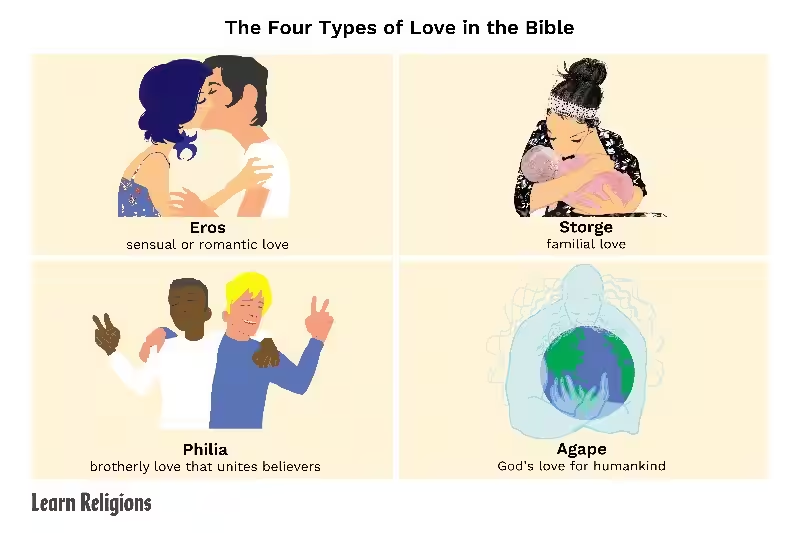
In a world often saturated with fleeting affections and conditional regard, the concept of love can feel elusive, a beautiful ideal that’s hard to grasp. Yet, within the sacred pages of the Bible, a profound and enduring definition of love is laid bare, offering a blueprint not just for personal relationships, but for the very fabric of religious life. This isn’t just about romantic notions; the Bible defines love as a foundational principle, a guiding force that shapes how we interact with God and with each other. It’s a transformative power, capable of mending brokenness and building communities grounded in unwavering grace. Understanding this divine definition unlocks a deeper appreciation for faith and its practical application in our daily lives.
When we explore how the Bible defines love, we encounter a concept far richer and more demanding than mere emotion. It’s an active, intentional commitment, a way of being and doing that prioritizes the well-being of others, often above our own. This understanding is crucial for anyone seeking to navigate the complexities of their faith and its impact on their interactions. It’s a call to action, a challenge to live out our beliefs in tangible ways, demonstrating a love that mirrors the selfless devotion we are called to emulate.
At the heart of the biblical narrative lies the profound and unconditional love of God. This is not a love earned or deserved, but a freely given gift, an unmerited favor extended to all humanity. The Bible defines love in its purest form through God’s actions – His sacrifice, His patience, and His relentless pursuit of reconciliation. This divine love serves as the ultimate example, setting the standard for how we are to love one another. It’s a love that sees beyond our flaws and failures, offering forgiveness and redemption, a testament to its boundless depth.
Consider the parable of the prodigal son. This story vividly illustrates God’s extravagant love. Even after the son squandered his inheritance and returned in shame, the father ran to him, embraced him, and celebrated his return. This is a powerful depiction of how the Bible defines love: as a persistent, forgiving, and joyfully welcoming force. It’s a love that doesn’t keep score, but rejoices in the return of the lost. This foundational understanding of God’s love provides the bedrock for all other forms of love within a religious context.
The Bible consistently portrays love not as a passive sentiment, but as an active, engaged commitment. It’s about deeds, not just declarations. When we ask, “How does the Bible define love?”, the answer often points to tangible actions. This is beautifully articulated in 1 Corinthians 13, often referred to as the “love chapter.” Here, love is described as patient, kind, not envious, not boastful, not proud, not rude, not self-seeking, not easily angered, and keeping no record of wrongs. These are not passive qualities, but active choices and behaviors.
Think about the practical implications. If love is patient, it means choosing to wait for someone, to give them grace in moments of frustration. If love is kind, it means actively seeking ways to be helpful and considerate. If love is not self-seeking, it means putting the needs of others before our own, even when it’s inconvenient or difficult. This active definition of love is the engine that drives religious communities, inspiring acts of service, compassion, and mutual support, transforming abstract faith into lived reality.
The Intertwined Nature of Love for God and Neighbor
A central tenet of religious teaching, particularly within Christianity, is the inseparable connection between loving God and loving our neighbor. Jesus himself declared that the greatest commandments are to love the Lord your God with all your heart, soul, and mind, and to love your neighbor as yourself. This highlights how the Bible defines love as a holistic principle that extends outward from our devotion to the divine. Our love for God is not meant to be an isolated spiritual exercise; it finds its truest expression in how we treat those around us.
This interconnectedness means that acts of kindness, justice, and compassion towards others are, in essence, acts of worship. When we feed the hungry, clothe the naked, or visit the sick, we are demonstrating our love for God in a tangible way. This perspective transforms everyday interactions into opportunities for spiritual growth and service. The Bible defines love as a unifying force, bridging the gap between the sacred and the secular, making our faith relevant and impactful in every aspect of life.
Practical Expressions of Biblical Love in Religion
Religious communities are called to be living laboratories for biblical love. This means actively cultivating environments where people feel valued, supported, and cared for. The Bible defines love as something that can be seen and felt through the actions of its followers. This can manifest in numerous ways:
Acts of Service: Organizing food drives, volunteering at shelters, or simply helping a neighbor in need are direct applications of biblical love.
Forgiveness and Reconciliation: Religiously, we are called to forgive those who have wronged us, mirroring God’s own forgiveness. This is a challenging but vital aspect of biblical love.
Empathy and Compassion: Striving to understand and share the feelings of others, especially those who are suffering, is a profound expression of this love.
Generosity and Stewardship: Sharing resources, time, and talents with others, recognizing that all we have is a gift from God, is another facet of biblical love.
These practical expressions are not optional add-ons to faith; they are integral to its very essence. When a religious community actively practices these principles, it becomes a beacon of hope and a testament to the transformative power of a love that is defined by action. It’s in these acts that the world truly sees the impact of a faith grounded in a profound understanding of how the Bible defines love.
Conclusion: Living Out the Definition of Love
The biblical definition of love is not a passive creed to be recited, but an active, dynamic force to be lived out. It’s a challenging yet incredibly rewarding path that underpins the entire framework of religion. By understanding that the Bible defines love as sacrificial, patient, kind, and actively committed to the well-being of others, we gain a clearer vision for our own spiritual journey and our impact on the world.
Embracing this definition means continually striving to embody these qualities in our relationships, our communities, and our service. It’s about moving beyond simply believing in love to actively practicing it, allowing it to shape our thoughts, words, and actions. In doing so, we not only deepen our own faith but also become living witnesses to the transformative power of a love that truly reflects the divine.
Frequently Asked Questions
What does the Bible say about love?
The Bible defines love in many ways, but a central passage is 1 Corinthians 13:4-7: “Love is patient, love is kind. It does not envy, it does not boast, it is not proud. It does not dishonor others, it is not self-seeking, it is not easily angered, it keeps no record of wrongs. Love does not delight in evil but rejoices with the truth. It always protects, always trusts, always hopes, always perseveres.” The Bible also emphasizes that God’s love is a foundational love (agape) that is unconditional and sacrificial, and that believers are called to love God and love their neighbor as themselves (Matthew 22:37-39).
What is religion according to the Bible?
While the Bible doesn’t offer a single, concise definition of “religion,” it frequently discusses its practice and meaning. In James 1:27, it states, “Religion that God our Father accepts as pure and faultless is this: to look after orphans and widows in their distress and to keep oneself from being polluted by the world.” This suggests that true religion involves both outward acts of compassion and inward moral purity and devotion to God, rather than mere ritual or outward observance. The Bible critiques empty or hypocritical religious practices, emphasizing a genuine relationship with God and obedience to His commands.