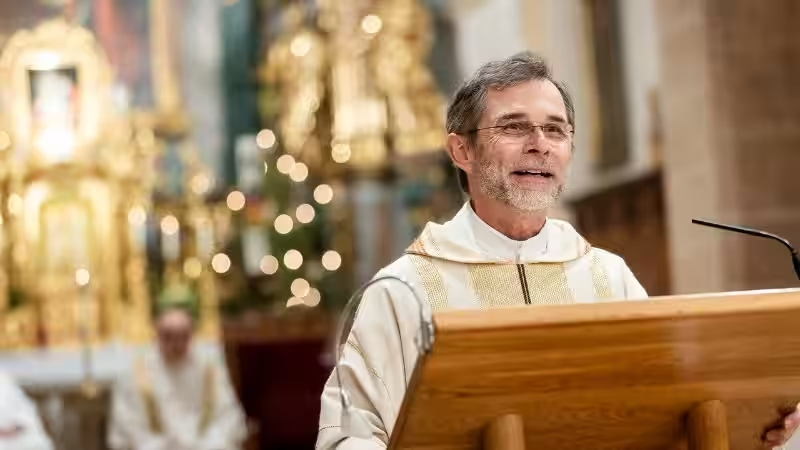
The world of religion, with its intricate doctrines and deep-rooted traditions, often presents a tapestry of leadership roles. Among these, the figure of the bishop stands out, a person entrusted with significant powers and responsibilities within various Christian denominations. Far from being mere ceremonial figureheads, bishops are pivotal in the spiritual and administrative life of their flock, their authority shaping communities and influencing countless lives. This article delves into the multifaceted powers of bishops in religion, aiming to demystify their roles and highlight their tangible impact on the faithful.
Understanding the modern-day powers of bishops requires a journey through history and theology. These powers are not arbitrary but are believed to stem from apostolic succession, a concept that posits a continuous line of ordination tracing back to the apostles of Jesus Christ. This unbroken chain is seen as the conduit through which divine authority is passed down, empowering bishops to lead, teach, and govern. Their influence extends beyond the local parish, often encompassing a wider diocese and impacting the broader church.
One of the most fundamental powers of bishops is their authority to teach and define doctrine. This is not a power exercised lightly; it is a solemn duty to safeguard the integrity of religious beliefs and to guide their congregations in understanding and living out the tenets of their faith. Bishops are seen as the primary interpreters of scripture and tradition, ensuring that teachings remain faithful to the established doctrines of their denomination.
This teaching power manifests itself in various ways. Bishops may issue pastoral letters addressing contemporary issues, offering spiritual guidance and reaffirming core beliefs. They are responsible for overseeing theological education within their dioceses, ensuring that future clergy are well-equipped to articulate and defend the faith. Consider, for instance, a bishop addressing the ethical challenges of a new scientific discovery. Their pronouncements, rooted in theological understanding and prayerful discernment, can provide a moral compass for thousands of individuals navigating complex questions. This power to clarify and guide is crucial in maintaining the spiritual coherence of a religious community.
Upholding Truth and Guiding the Faithful
The bishops’ power in matters of doctrine is intrinsically linked to their role as guardians of truth. They are entrusted with the responsibility to discern and reject teachings that deviate from the established faith, a process that can sometimes be challenging but is essential for preserving the unity and authenticity of the church. This safeguarding function ensures that the core message of their religion remains pure and accessible across generations.
When a bishop proclaims a particular interpretation of scripture or defines a stance on a moral issue, it carries immense weight within their community. This does not mean they are infallible, but their pronouncements are made with deep prayer, consultation, and an understanding of the historical and theological underpinnings of their faith. For example, a bishop might issue a statement on the sanctity of life, providing clear guidance to parishioners on how to approach difficult ethical decisions, thereby exercising their power to inform and shape moral understanding.
The Administrator’s Role: Governance and Ordination
Beyond their theological responsibilities, bishops wield significant powers of governance and administration. They are the chief administrators of their respective dioceses, responsible for the well-being of both the clergy and the laity. This includes managing diocesan finances, overseeing church property, and ensuring the smooth functioning of all its various ministries.
The power of ordination is perhaps one of the most visible and profound powers of bishops. It is through their hands that new priests and deacons are consecrated, bringing forth the spiritual leaders who will serve local congregations. This act is not merely symbolic; it is understood as a sacramental conferring of spiritual authority and responsibility. Imagine a graduation ceremony, but with eternal implications; the bishop’s role in ordaining new clergy is akin to bestowing a sacred trust, empowering individuals to serve God and His people.
Leading and Supervising the Clergy
The powers of bishops extend to the supervision and support of the clergy serving under them. They are responsible for appointing priests to parishes, providing ongoing spiritual and professional development, and addressing any concerns or disciplinary issues that may arise. This oversight ensures that the clergy are functioning effectively and maintaining the high standards expected of their office.
A bishop’s administrative powers also involve the strategic planning for their diocese. This might include deciding where to build new churches, developing programs to address social needs within the community, or organizing diocesan-wide events. For instance, a bishop might identify a growing need for youth ministry in a particular region and allocate resources and personnel to establish new programs, demonstrating their power to direct and develop congregational life.
The Pastor’s Heart: Spiritual Guidance and Sacramental Authority
At its core, the power of bishops is deeply pastoral. They are called to be shepherds of their flock, offering spiritual guidance, comfort, and encouragement. This involves being present in the lives of their congregants, celebrating important life events, and providing solace during times of crisis. Their sacramental authority allows them to administer key rites of the church, connecting individuals with the divine.
The power to administer sacraments is a cornerstone of the episcopal office. Bishops themselves can perform all sacraments, and they authorize priests to do so. These sacred moments – from baptisms and confirmations to marriages and the anointing of the sick – are central to the spiritual journey of believers. A bishop might personally confirm hundreds of young people, bestowing the Holy Spirit and empowering them for their Christian walk, a profound exercise of their sacramental and pastoral power.
Nurturing Faith and Offering Divine Grace
The bishops’ power as spiritual leaders is about nurturing the faith of their people and facilitating their encounter with God. This involves fostering a prayerful environment, encouraging acts of charity, and reminding the faithful of God’s love and mercy. They are the visible embodiment of the church’s commitment to its people’s spiritual growth and well-being.
When a community faces hardship, such as a natural disaster or a period of economic downturn, the bishop’s presence and pronouncements can offer a beacon of hope. They can lead prayers for healing and resilience, mobilize charitable efforts, and remind people of their shared faith and mutual support. This ability to unite and inspire, to offer spiritual strength in times of need, is a testament to their pastoral power and symbolic leadership. The powers of bishops, therefore, are a blend of theological, administrative, and deeply spiritual responsibilities, all aimed at guiding their communities toward a deeper relationship with the divine.
Frequently Asked Questions about Bishops’ Powers
What is the primary role of a bishop in the Catholic Church?
The primary role of a bishop is to be a successor to the Apostles. This entails teaching, sanctifying, and governing the faithful entrusted to his care within his diocese.
Bishops have the authority and responsibility to teach the doctrines of the Catholic Church. This includes preaching, catechesis, and issuing pastoral letters. They are seen as authentic teachers of the Word of God.
What are the bishop’s powers related to “sanctifying”?
The bishop is the chief minister of the sacraments in his diocese. He has the authority to ordain priests and deacons, confirm believers, and consecrate holy oils. He also presides over major liturgical celebrations.
In what ways does a bishop “govern” his diocese?
Governing involves the bishop’s administrative responsibilities. He oversees the administration of the diocese, appoints pastors and other church officials, establishes parishes, and ensures the faithful are cared for pastorally and materially. He is responsible for the discipline of the clergy and laity.
Does a bishop have authority over other bishops?
In the Catholic Church, bishops are generally equal in their sacramental order. However, an Archbishop has authority over the bishops within his ecclesiastical province. The Pope (the Bishop of Rome) has supreme authority over all bishops.
Can a bishop excommunicate someone?
Yes, a bishop has the power to impose the penalty of excommunication, which excludes a person from the communion of the Church, under specific circumstances defined by canon law.
Are bishops fallible in their teachings?
Bishops are fallible in their ordinary teachings. However, when a bishop, or the college of bishops united with the Pope, teaches definitively on matters of faith and morals, even outside of an ecumenical council, this teaching is considered infallible. This is known as the extraordinary magisterium.
What is the source of a bishop’s powers?
The authority and powers of a bishop are believed to be derived from the sacrament of Holy Orders and the mandate given to him by the Pope, who acts as the successor of St. Peter.
Do bishops have a role in canon law?
Yes, bishops are bound by and have a role in applying and upholding canon law within their dioceses. They can also initiate changes or propose amendments to canon law through the proper channels.