For centuries, the Catholic Church has held a deep reverence for the human body, viewing it as a temple of the Holy Spirit and an integral part of God’s creation. This profound respect has traditionally guided funeral practices, with burial being the norm. However, in recent decades, there has been a notable shift, and the Church’s stance on Catholic cremation has evolved, offering families more options while still upholding core religious tenets. This article aims to provide clear, compassionate, and comprehensive information for those exploring Catholic cremation and its significance within the broader context of Catholic belief and practice.
Understanding this evolution is crucial for many Catholics today. As societal norms change and practical considerations arise, the question of Catholic cremation becomes increasingly relevant. We will delve into the historical context, the official Church teachings, and the practical implications of choosing cremation for a loved one, all while maintaining a focus on faith and remembrance. Our goal is to empower you with knowledge, allowing you to make informed decisions that align with your spiritual values and offer solace during times of grief.
A Shift in Tradition: From Burial to Acceptance of Catholic Cremation
Historically, the Catholic Church strongly favored burial. This preference was rooted in several theological understandings. Firstly, the belief in the resurrection of the body played a significant role. The imagery of the body returning to the earth, mirroring Christ’s burial and resurrection, was a powerful symbol of hope. The Church saw burial as a way to physically honor the body, awaiting the final resurrection. Furthermore, early Christian communities often buried their dead in catacombs, a practice that became deeply ingrained in the tradition.
However, the Church’s understanding is not static. As societal practices and practicalities changed, particularly with the rise of cremation in many cultures, the Church re-examined its position. The primary concern was always the dignity of the human person and the theological meaning of death and resurrection. It wasn’t about the method of disposition itself, but rather the attitude and intent behind it. Therefore, to address the needs of its faithful and accommodate diverse circumstances, the Church began to allow Catholic cremation, with specific guidelines in place to ensure it reflected their faith.
Theological Foundations and Church Directives on Catholic Cremation
The cornerstone of the Catholic Church’s teaching on death and burial lies in the belief in the resurrection of the body. This doctrine asserts that at the end of time, the souls of the faithful will be reunited with their resurrected bodies, which will be glorified. While cremation involves the reduction of the body to ashes, the Church teaches that this does not impede God’s power to resurrect the individual. As Pope Benedict XVI stated, “The resurrection of the body is a fundamental truth of the Christian faith.” The ashes, therefore, are still seen as the remains of a person who was created in God’s image and is therefore worthy of respect.
The current guidelines, updated in 2016 by the Congregation for the Doctrine of the Faith in the document “Ad Resurgendum cum Christo” (To Rise Again with Christ), clearly outline the Church’s position. Catholic cremation is now permitted, provided it is not done in a manner that demonstrates a denial of faith, such as scattering ashes or keeping them in jewelry. The directive emphasizes that the Church “does not oppose cremation when it is chosen for reasons of hygiene, economic, or social considerations.” However, it reiterates the preference for burial as a more potent symbol of resurrection, reminding us that “the Church continues to encourage the most worthy manner of burying the body of the Christian.”
Practical Considerations and Reverent Practices for Catholic Cremation
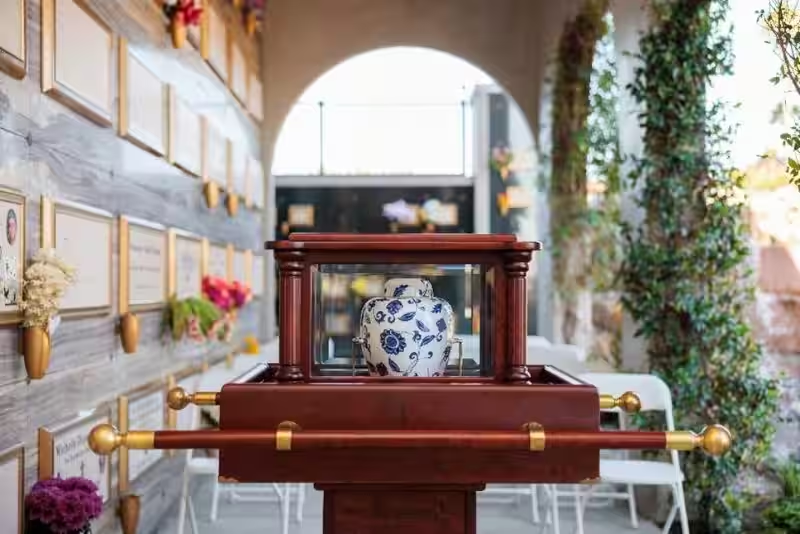
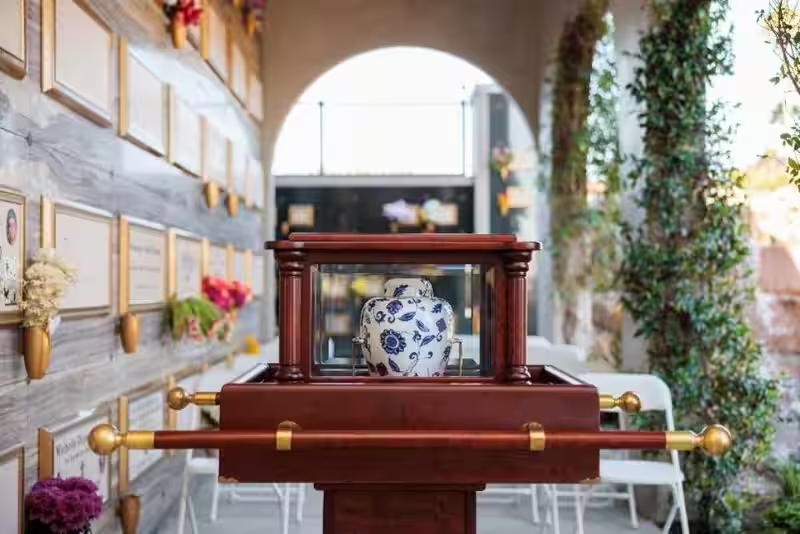
When a family chooses Catholic cremation, several practical aspects come into play, all while maintaining reverence for the deceased and their faith. The Church requires that the cremated remains be treated with the same respect as a full body. This means they should be placed in a worthy vessel, such as an urn, and kept in a dedicated place. This could be a columbarium niche in a cemetery, a sacred space in a church, or a family burial plot. The intent is to preserve a tangible reminder of the loved one and provide a focal point for prayer and remembrance.
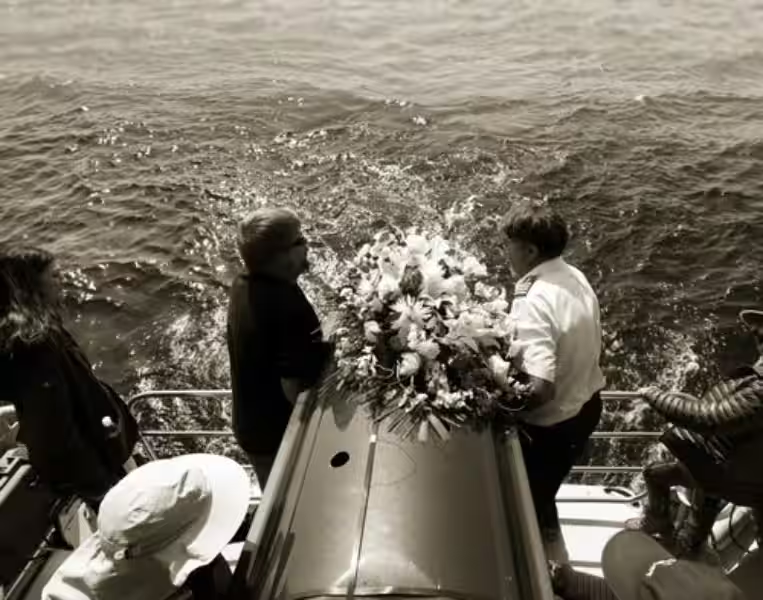
The manner in which the ashes are treated is paramount. Scattering ashes at sea, in the air, or on land is generally discouraged by the Church. This is because it can be seen as an act that prevents the resurrection of the body and lacks the reverence due to human remains. Likewise, keeping ashes at home indefinitely without a clear intention for final disposition is also discouraged. The purpose of retaining the ashes should be temporary, awaiting a more permanent and sacred resting place, allowing for mourning and prayer for the deceased’s soul. Examples of acceptable final resting places include a traditional grave, a columbarium, or a mausoleum.
The Catholic funeral liturgy remains largely the same, whether the deceased is buried or cremated. The Church understands that the funeral Mass is an offering for the soul of the departed, a time for communal prayer, and a celebration of the resurrection. The presence of the body, or in this case, the cremated remains in a dignified urn, is not the central focus; rather, it is the celebration of the Eucharist and the prayers for the deceased’s eternal rest that are paramount. The urn can be placed in the sanctuary alongside the casket would have been, symbolizing the deceased’s presence among the gathered community.
The Rite of Christian Burial can be adapted to accommodate cremation. The prayers and readings used during the Mass and at the committal service will still focus on themes of hope, resurrection, and God’s mercy. The committal service, whether at the cemetery or the columbarium, will involve prayers for the repose of the soul and the final interment or placement of the urn. This moment is a sacred act, a final entrustment of the earthly remains back to God, and a tangible expression of enduring love and faith in the promise of eternal life. It is a time for communal grief and mutual support.
Making the Decision: Guidance for Families Considering Catholic Cremation
Deciding on funeral arrangements, especially when considering Catholic cremation, can be an emotional and complex process. Open and honest communication within the family is vital. It’s important to discuss your wishes and beliefs with your loved ones, and if possible, with your parish priest or a Catholic funeral director. They can provide guidance and ensure that your chosen disposition method aligns with Church teachings and your personal spiritual journey.
Remember, the Church’s primary concern is the spiritual well-being of the deceased and the comfort of the grieving family. While the preference for burial remains, the acceptance of Catholic cremation offers a compassionate alternative that allows for the dignified and faithful remembrance of our loved ones. By understanding the theological underpinnings and practical guidelines, families can navigate this decision with faith, hope, and a deep sense of peace, knowing that their loved one is being honored in a manner consistent with Catholic tradition.
What is the Catholic Church’s stance on cremation?
The Catholic Church permits cremation, provided that it does not demonstrate a rejection of the doctrine of the resurrection of the body. This permission was formally granted in 1963.
Does cremation prevent a Catholic burial?
No, cremation does not prevent a Catholic burial. The deceased can still be buried in a cemetery or entombed in a mausoleum.
What are the guidelines for Catholic cremains?
The Church directs that the cremated remains of a body should be treated with the same respect given to a human body. This means they should be buried in a grave or entombed in a mausoleum or columbarium. Scattering ashes, keeping them in the home, or dividing them among family members is not permitted.
Why are there restrictions on the handling of cremains?
These restrictions are in place to uphold the dignity of the human body and to reflect the belief in the resurrection of the body. Keeping ashes at home or scattering them can be seen as diminishing the respect due to the deceased and the belief in their eventual bodily resurrection.
Can a Catholic funeral Mass be celebrated with a cremated body?
Yes, a Catholic funeral Mass can be celebrated with the cremated body present, as long as the ashes are treated with respect and are present during the service.
What if a Catholic wishes to be cremated but their family wants to scatter the ashes?
The Church’s guidelines regarding the respectful burial or entombment of cremains should be followed. If a family has differing wishes, it is important to consult with a priest or Catholic funeral director for guidance. The Church’s position prioritizes the dignified treatment of the deceased.