The rhythm of the Catholic Church, for many of its adherents, is punctuated by periods of profound spiritual reflection and intentional self-denial. Among these practices, Catholic fasting rules stand out as a cornerstone of devotional life, offering a tangible way to deepen one’s relationship with God and foster a spirit of solidarity with the less fortunate. Far from being mere dietary restrictions, these rules are designed to cultivate inner discipline, detach us from worldly comforts, and open our hearts to divine grace. This article will explore the purpose, practicalities, and profound spiritual benefits of observing Catholic fasting, making it accessible and relatable for everyone seeking to embark on this enriching journey.
Fasting, in its essence, is about more than just abstaining from food. It’s a deliberate act of sacrifice, a conscious choice to limit physical desires in order to elevate spiritual ones. Throughout history, countless individuals have found solace, clarity, and renewed faith through the practice of fasting. Whether you’re a lifelong Catholic familiar with these traditions or someone new to the faith exploring its rich spiritual landscape, understanding the nuances of Catholic fasting rules can unlock a deeper appreciation for this ancient and powerful discipline.
The Purpose Behind Catholic Fasting: More Than Just Empty Stomachs
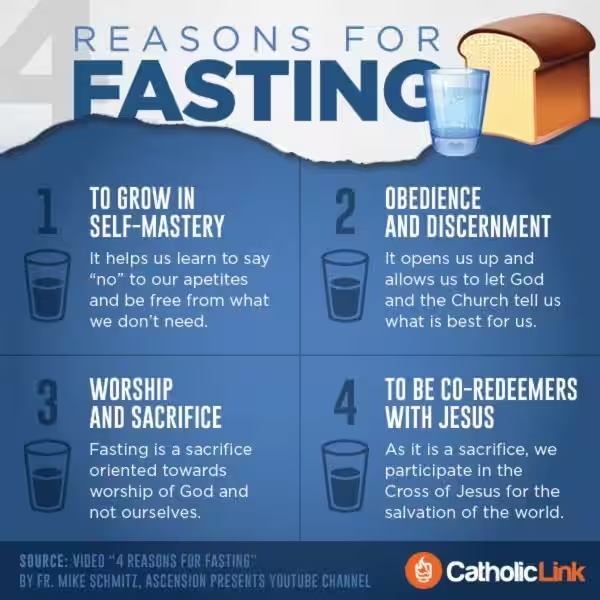
At its heart, Catholic fasting serves a multifaceted spiritual purpose. It’s a way to exercise self-mastery, to tame the unruly appetites of the flesh that can often distract us from our connection with the divine. By voluntarily relinquishing certain foods or limiting meals, we learn to say “no” to our desires, strengthening our will and making us more receptive to God’s voice. This intentional act of asceticism is not punitive but rather formative, shaping us into more disciplined and God-centered individuals.
Furthermore, Catholic fasting rules serve as a powerful reminder of our interconnectedness with humanity. When we experience even a mild form of hunger or deprivation, we are more readily able to empathize with those who face chronic hunger and poverty. This fosters a spirit of charity and solidarity, prompting us to reach out and share our blessings with those in need. The spiritual discipline of fasting, therefore, becomes a catalyst for concrete acts of love and service in the world.
Key Principles of Catholic Fasting: Understanding the ‘What’ and ‘When’
The Catholic Church outlines specific guidelines concerning Catholic fasting rules, primarily centered around two key days of obligation: Ash Wednesday and Good Friday. On these days, the faithful are called to abstain from meat and to observe a limit on the number of full meals. This is not about a complete cessation of eating, but rather a thoughtful reduction in consumption. The intention is to create space for prayer and reflection, rather than to cause undue hardship.
Here’s a breakdown of the core principles often associated with Catholic fasting rules:
Abstinence: This typically refers to abstaining from meat. It’s a practice observed on all Fridays of Lent, as well as Ash Wednesday and Good Friday. Many Catholics choose to extend this abstinence to all Fridays throughout the year as a personal devotion.
Fasting: This involves limiting oneself to one full meal and two smaller meals that, when combined, do not equal the size of a full meal. This is obligatory on Ash Wednesday and Good Friday for those aged 18 to 59.
Age Requirements: The obligation for fasting and abstinence generally applies to individuals between the ages of 18 and 59 for fasting, and 14 years of age and older for abstinence. Those who are ill, pregnant, nursing, or engaged in strenuous labor are typically exempt.
It’s crucial to remember that these are general guidelines, and individual conscience and pastoral guidance can play a role in their application.
Ash Wednesday and Good Friday: Pillars of Lenten Discipline
Ash Wednesday marks the beginning of Lent, a forty-day period of prayer, penance, and fasting in preparation for Easter. The imposition of ashes on our foreheads is a stark, visual reminder of our mortality and a call to repentance. The Catholic fasting rules for Ash Wednesday are particularly significant, setting a solemn tone for the Lenten journey. This day is a powerful opportunity to begin our spiritual detox, shedding the burdens of sin and worldly distractions.
Good Friday, the day commemorating the crucifixion of Jesus Christ, is often considered the most solemn day of the liturgical year. The Catholic fasting rules on Good Friday are stringent, encompassing both abstinence from meat and the fast of one full meal. This profound act of self-denial is a way to unite ourselves with Christ’s suffering and to express our sorrow for the sins that led to his crucifixion. Observing these rules on Good Friday is a deeply personal and communal act of witness to our faith.
Beyond the Obligatory: Personalizing Your Fasting Practice
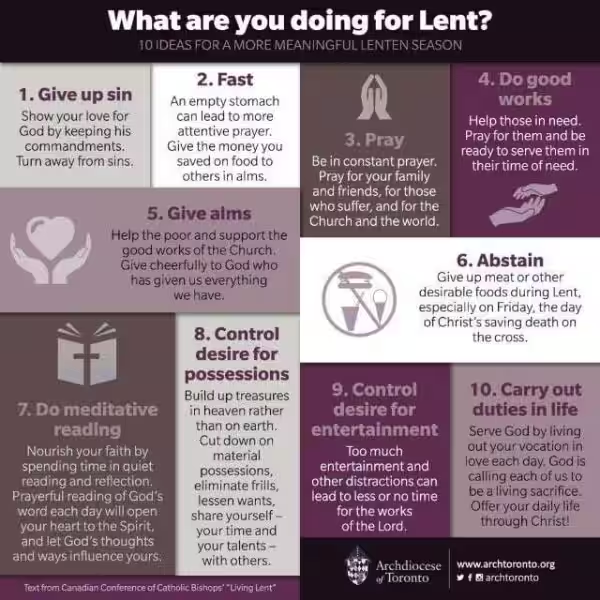
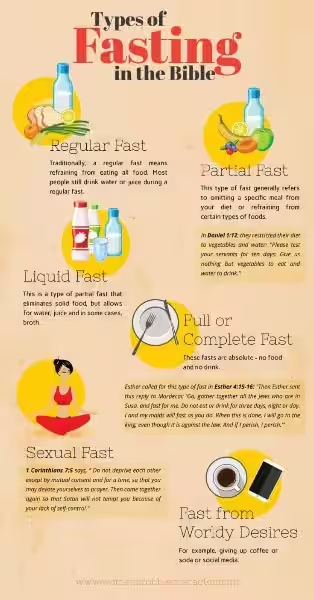
While Ash Wednesday and Good Friday have specific Catholic fasting rules that are obligatory, many faithful choose to embrace fasting and abstinence more broadly throughout the year. This might involve observing abstinence from meat on all Fridays, as mentioned earlier, or undertaking other forms of fasting such as giving up specific foods, activities, or even limiting our consumption of digital media. The beauty of personal fasting lies in its adaptability to individual spiritual needs and circumstances.
For instance, someone might find it particularly challenging to abstain from sweets. Choosing to give up desserts for a period can be a significant act of sacrifice and self-control, opening up more time and mental space for prayer. Another individual might choose to fast from social media for a week, redirecting that time towards reading Scripture or engaging in quiet contemplation. These personal choices, aligned with the spirit of Catholic fasting rules, can lead to profound spiritual growth and a renewed focus on what truly matters.
The Sacramental Power of Fasting: Nourishing the Soul
The act of fasting is not an end in itself, but a means to a greater end: a deeper, more vibrant relationship with God. When we deny our physical appetites, we create a spiritual hunger that can only be satisfied by divine grace. This hunger draws us closer to the sacraments, particularly the Eucharist, where we receive the very Body and Blood of Christ. The days of fasting and abstinence often prepare us to receive communion with a more receptive and grateful heart.
Think of it like preparing a soil for planting. The fasting and prayers are like the tilling and fertilizing, making the ground fertile and ready to receive the seed of God’s word. The Eucharist, then, becomes the life-giving seed that blossoms within us. This interconnectedness between Catholic fasting rules, prayer, and the sacraments is a beautiful illustration of how our spiritual disciplines work in harmony to nourish our souls.
Navigating Challenges and Finding Support
Observing Catholic fasting rules can present challenges, especially in a world that often prioritizes comfort and convenience. There may be times when social obligations conflict with fasting days, or when we simply struggle with the temptation to break our fast. It’s important to approach these challenges with patience and self-compassion, recognizing that we are human and that the journey of spiritual discipline is a lifelong one.
If you find yourself struggling, don’t hesitate to seek support. Talking with a spiritual director, a priest, or a trusted fellow believer can provide encouragement and practical advice. Remembering the purpose behind fasting – to draw closer to God and to grow in virtue – can be a powerful motivator. Furthermore, focusing on the joy and spiritual fruit that fasting can bring, rather than solely on the momentary discomfort, can shift your perspective and strengthen your resolve.
Conclusion: Embracing the Spiritual Harvest of Fasting
In conclusion, Catholic fasting rules offer a rich and time-tested path to spiritual growth and renewal. They are not burdensome obligations, but rather invitations to a deeper encounter with God, a greater sense of compassion for others, and a more disciplined and virtuous life. By understanding the purpose, adhering to the guidelines, and personalizing the practice, we can unlock the profound spiritual harvest that fasting offers.
As we navigate the rhythms of the liturgical year, let us embrace the opportunities for fasting and abstinence not as a chore, but as a sacred privilege. Through these acts of intentional self-denial, we can purify our hearts, strengthen our spirits, and draw ever closer to the divine love that sustains us. The journey of Catholic fasting rules is a rewarding one, leading to a deeper, more meaningful faith.
Frequently Asked Questions about Catholic Fasting Rules
What is fasting in the Catholic Church?
Fasting, in the Catholic tradition, generally refers to abstaining from food for a period of time as an act of penance, prayer, and self-discipline. It is a way to unite oneself with Christ’s suffering and to grow in spiritual awareness.
What are the primary days of fasting and abstinence in the Catholic Church?
The primary days for fasting and abstinence are Ash Wednesday and Good Friday. All Fridays of Lent are also days of abstinence.
What are the rules for fasting on Ash Wednesday and Good Friday?
On Ash Wednesday and Good Friday, Catholics between the ages of 18 and 59 are permitted to eat only one full meal. Two smaller meals are allowed, but they should not together equal the size of the full meal. Eating between meals is not permitted.
What is abstinence from meat?
Abstinence from meat means refraining from eating the flesh of mammals and birds. Fish and seafood are permitted.
Who is obligated to observe fasting and abstinence?
Catholics aged 18 to 59 are obligated to observe the fast on Ash Wednesday and Good Friday. All Catholics aged 14 and older are obligated to abstain from meat on Fridays during Lent. Older Catholics and those with health issues may be dispensed from these obligations.
Are there any exceptions to the fasting rules?
Yes, individuals who are ill, pregnant, nursing, or are engaged in strenuous physical labor are typically dispensed from the obligation to fast. Likewise, those under the age of 14 and over the age of 59 are not bound by the fast.
Do I have to abstain from meat on all Fridays?
All Fridays of Lent are days of abstinence from meat. The U.S. Conference of Catholic Bishops has also encouraged Catholics to continue the practice of abstinence on all Fridays throughout the year as a reminder of Christ’s passion, though it is not a strict obligation outside of Lent.
Can I eat fish on Fridays during Lent?
Yes, fish and seafood are permitted on Fridays during Lent as they are not considered “meat” in the context of abstinence.
What is the purpose of fasting and abstinence?
Fasting and abstinence are spiritual disciplines intended to help Catholics grow in their relationship with God. They are acts of penance, self-control, and solidarity with the poor and suffering. They also serve as a preparation for celebrating the Paschal Mystery of Christ.
Is there a difference between fasting and abstinence?
Yes. Fasting typically refers to limiting the amount of food eaten, while abstinence refers to abstaining from certain types of food (like meat) or from all food for a period.
What if I miss a day of fasting or abstinence?
The Church encourages sincere effort in observing these practices. If an individual unintentionally misses a day, they should make a sincere effort to resume the practice as soon as possible. The focus is on spiritual growth and a contrite heart.