The word “Catholic” evokes a powerful image for many: soaring cathedrals, chanting choirs, the solemnity of Mass. But what truly constitutes “Catholic forms”? It’s a question that delves far beyond mere outward appearances, exploring the tangible expressions of a faith that has shaped cultures and touched countless lives for two millennia. These Catholic forms are not static relics; they are dynamic, living manifestations of belief, practice, and community that offer a profound and often deeply personal connection to the divine. Understanding these forms is key to appreciating the enduring significance of the Catholic Church.
When we speak of Catholic forms, we are encompassing a vast spectrum of human experience interwoven with faith. This includes the architectural marvels that draw us in, the sacred music that stirs our souls, the sacraments that mark pivotal moments in life, and the devotional practices that provide solace and strength. These are the visible, audible, and tactile elements that allow individuals to engage with their faith in a meaningful and tangible way, making the abstract tenets of Catholicism accessible and relatable. They are the language through which many Catholics understand and express their relationship with God.
The Sacred Architecture: Cathedrals as Expressions of Faith
The very buildings that house Catholic worship are themselves a testament to the grandeur and enduring nature of the faith. Think of the awe-inspiring Catholic forms found in structures like Notre Dame Cathedral in Paris or St. Peter’s Basilica in Rome. These aren’t just stone and mortar; they are meticulously designed spaces intended to elevate the spirit and draw the mind towards contemplation of the sacred. The soaring vaulted ceilings, the stained-glass windows depicting biblical narratives, and the intricate altars all serve a purpose, guiding the worshipper’s focus and fostering a sense of reverence.
The design of these sacred spaces often follows specific principles rooted in theology and tradition. For instance, the orientation of many churches, with the altar at the eastern end, symbolizes the resurrection of Christ, the “Light of the World,” rising in the East. The use of light, particularly through stained glass, is another powerful element, with vibrant colors and images transforming sunlight into a divine presence. Even the smallest details, from the Stations of the Cross adorning the walls to the fonts of holy water at the entrances, are Catholic forms designed to facilitate prayer and reflection, reminding worshippers of Christ’s journey and the purifying power of baptism.
Liturgical Practices: The Heartbeat of Catholic Worship
At the core of Catholic forms lies the liturgy, the communal prayer and worship of the Church. The Mass, in particular, is the central act of Catholic spiritual life. It’s a highly structured, yet deeply spiritual, experience that draws from ancient traditions and continues to evolve. From the opening procession to the final blessing, every element of the Mass is imbued with theological meaning and spiritual significance, involving the faithful in a profound encounter with God.
The specific prayers, readings, gestures, and music of the liturgy are carefully prescribed, creating a unified experience for Catholics worldwide. The use of Latin, once prevalent, has given way to vernacular languages, making the Mass more accessible, yet the underlying structure and sacramental core remain. The breaking of bread and the sharing of wine, central to the Eucharist, are powerful Catholic forms that symbolize Christ’s sacrifice and his abiding presence among us, offering a tangible connection to the divine. Understanding these liturgical forms is crucial to appreciating the communal and spiritual heart of Catholicism.
The Sacraments: Milestones of Faith and Grace
The seven sacraments are perhaps the most profound and personal Catholic forms. These are visible signs instituted by Christ to give grace, marking significant moments in a Catholic’s journey from birth to eternal life. They are not mere ceremonies but channels through which divine love and power are communicated. Each sacrament has its own unique rituals and symbolism, offering a tangible experience of God’s presence and action in our lives.
Consider Baptism, the first sacrament. The pouring of water, the anointing with oil, and the presentation of a white garment are all potent Catholic forms that signify purification from sin, incorporation into the Body of Christ, and the reception of the Holy Spirit. Similarly, the sacrament of Marriage is a covenant between two people, blessed by God, and expressed through vows, rings, and the exchange of blessings, embodying the Catholic forms of commitment and mutual love. These sacraments are the Catholic forms that ground believers in their faith, providing spiritual nourishment and guidance throughout their lives.
Baptism: Entry into the Christian community, cleansing from original sin.
Confirmation: Strengthening of faith and reception of the Holy Spirit.
Eucharist: The Real Presence of Christ, spiritual nourishment.
Reconciliation (Penance/Confession): Forgiveness of sins and spiritual healing.
Anointing of the Sick: Comfort, healing, and spiritual strength for the ill.
Holy Orders: Ordination of bishops, priests, and deacons.
Matrimony: The sacred union of a man and a woman.
Devotional Practices: Personal Pathways to the Divine
Beyond the formal liturgy, a rich array of devotional Catholic forms allows individuals to cultivate a deeper, more personal relationship with God and the saints. These practices, developed over centuries, offer diverse avenues for prayer, meditation, and spiritual growth. They are the quiet whispers of faith in the lives of individuals, complementing the communal worship of the Church.
Think of the Rosary, a prayer that involves meditating on the mysteries of Christ’s life while reciting specific prayers. The beads themselves are a tangible tool, a physical anchor for the mind and heart. The veneration of saints, through prayer and the use of holy images or relics, is another significant aspect, recognizing the communion of saints and seeking their intercession. These Catholic forms provide comfort, inspiration, and a sense of connection to a living tradition, allowing individuals to engage with their faith in ways that resonate deeply with their personal spiritual needs.
Art and Music: Expressing the Ineffable
For centuries, Catholic forms have found profound expression in the realms of art and music. These disciplines have been instrumental in conveying theological truths, inspiring devotion, and enriching the worship experience. From the grand frescoes of the Renaissance to the soaring melodies of Gregorian chant, art and music have served as powerful vehicles for communicating the beauty and mystery of the Catholic faith.
The vast treasury of Catholic art, including paintings, sculptures, and mosaics, often depicts biblical stories, the lives of saints, and central tenets of Christian belief. These visual forms serve not only as decoration but as teaching tools, making sacred history accessible to all, regardless of literacy. Similarly, Catholic music, ranging from ancient plainchant to contemporary hymns, aims to elevate the spirit and create an atmosphere of prayer and contemplation. The careful selection of music for liturgies and the creation of sacred musical compositions demonstrate how Catholic forms in art and music are integral to the expression and experience of faith.
From Gregorian Chant to Contemporary Hymns: The Sound of Faith
The sonic landscape of Catholicism is as diverse as its global community. Gregorian chant, with its monophonic melodies and Latin texts, represents an ancient and deeply contemplative Catholic form of musical worship, designed to focus the mind on the divine. Over centuries, this evolved into more complex polyphonic music, choral traditions, and the development of liturgical music in various languages.
Today, Catholic forms in music encompass a wide spectrum, from traditional organ music and choral anthems to contemporary praise and worship songs. The goal remains the same: to praise God, to edify the faithful, and to facilitate a deeper spiritual connection. The careful use of music within Mass and other services, whether it’s a solemn organ prelude or an uplifting congregational hymn, highlights the enduring power of Catholic forms to move the heart and inspire the soul.
The Enduring Relevance of Catholic Forms
In a world that often feels increasingly secularized and fast-paced, the enduring presence of Catholic forms offers a grounding anchor for many. These tangible expressions of faith provide a sense of continuity, community, and a pathway to the sacred. They are not simply historical curiosities but living traditions that continue to shape lives and offer solace, meaning, and hope.
The beauty of Catholic forms lies in their ability to speak to different aspects of the human experience. Whether it’s the awe inspired by a magnificent cathedral, the comfort found in the rhythm of the Rosary, or the communal joy of singing a beloved hymn, these forms connect us to something larger than ourselves. They are the threads of a rich tapestry, woven together by devotion, tradition, and a profound encounter with the divine, offering a timeless and universal language of faith.
Frequently Asked Questions about Catholic Forms of Religion
What are the core beliefs of Catholicism?
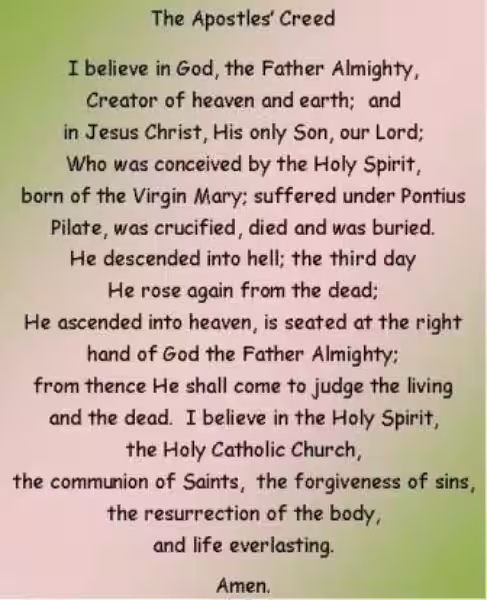
Catholics believe in one God in three persons: the Father, the Son (Jesus Christ), and the Holy Spirit. They believe Jesus Christ is the Son of God, who became human to save humanity from sin. Key tenets include the resurrection of Jesus, the existence of heaven and hell, and the importance of sacraments such as Baptism, Confirmation, the Eucharist, Reconciliation, Anointing of the Sick, Holy Orders, and Matrimony. They also venerate Mary, the mother of Jesus, and the saints.
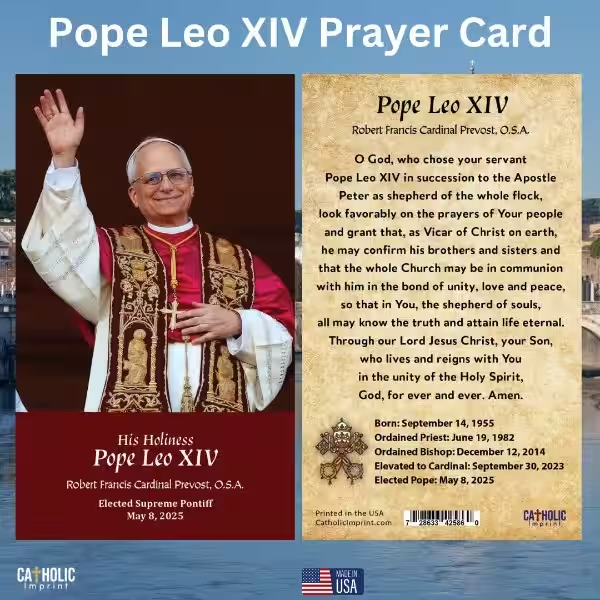
The Pope is considered the Bishop of Rome and the visible head of the Catholic Church on Earth. He is believed to be the successor of Saint Peter, to whom Jesus entrusted the keys of the Kingdom of Heaven. The Pope has supreme authority in the Church and is considered infallible when speaking ex cathedra (from the chair) on matters of faith and morals.
What are sacraments and why are they important in Catholicism?
Sacraments are outward signs instituted by Christ to give grace. They are considered essential channels through which God’s grace is imparted to believers. The seven sacraments are Baptism, Confirmation, the Eucharist, Reconciliation (Confession), Anointing of the Sick, Holy Orders, and Matrimony. Each sacrament signifies a spiritual reality and confers specific graces.
What is the significance of the Mass in Catholicism?
The Mass is the central act of worship in the Catholic Church. It is a re-presentation of the sacrifice of Jesus Christ on the cross. During the Mass, Catholics receive the Eucharist, which they believe is the true body and blood of Jesus Christ, as instituted at the Last Supper. It is a communal celebration of faith and a profound spiritual experience.
What is the role of the Bible and Tradition in Catholicism?
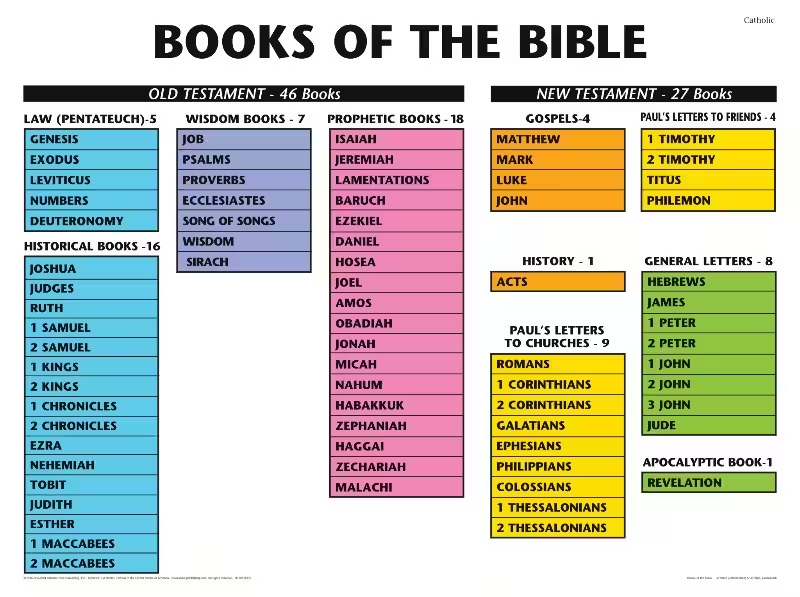
Catholics believe that both Sacred Scripture (the Bible) and Sacred Tradition are divinely inspired sources of God’s revelation. Tradition refers to the teachings and practices of the Church passed down from the Apostles. The Church, guided by the Holy Spirit, interprets both Scripture and Tradition to provide guidance on faith and morals.
What is the Catholic understanding of salvation?
Catholics believe that salvation is achieved through God’s grace, which is freely given, and through faith in Jesus Christ, coupled with good works. They believe that baptism initiates one into the life of grace, and that living according to Christ’s teachings and participating in the sacraments are vital for maintaining and growing in that grace, ultimately leading to eternal life with God.
What is the Catholic view on saints and Mary?
Catholics believe that saints are individuals who have lived exceptionally holy lives and are now in heaven. They are venerated, not worshipped, and are seen as intercessors who can pray for believers on Earth. Mary, the mother of Jesus, holds a special place as the Mother of God. Catholics believe in her Immaculate Conception, perpetual virginity, and Assumption into heaven, and they ask for her intercession.
What are the different ministries and vocations within the Catholic Church?
The Catholic Church recognizes various ministries and vocations. These include the ordained ministry (bishops, priests, deacons), the consecrated life (monks, nuns, religious sisters and brothers), and the laity (all other baptized Catholics). Each vocation plays a unique role in the mission and life of the Church.