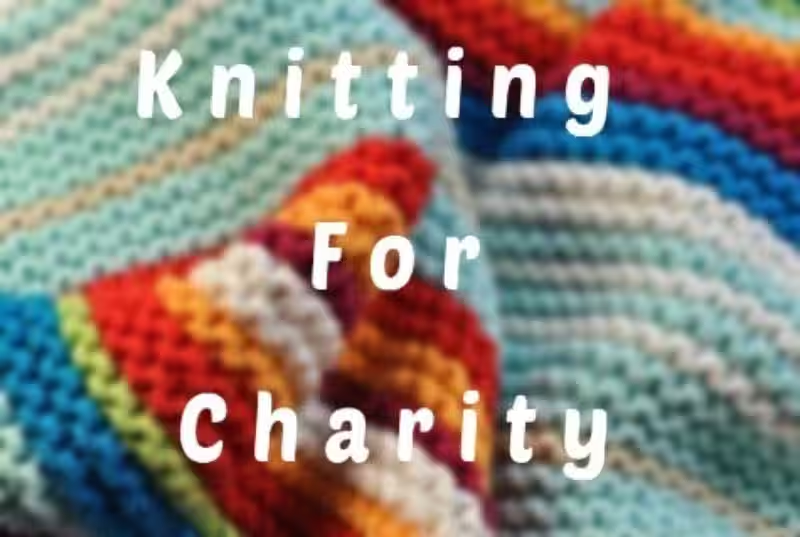
There’s a unique warmth that emanates from a hand-knitted item, a tangible expression of care and intention that mass-produced goods simply can’t replicate. When that warmth is directed towards a cause, towards helping those in need, the act of charity knitting becomes something profoundly special. It’s a practice that has woven itself through countless communities, and for many, its origins and enduring appeal are deeply intertwined with their religious faith. This article will explore the beautiful synergy between charity knitting and religion, revealing how threads of yarn have become conduits for compassion, prayer, and tangible acts of love.
From the humble stitch to the completed garment, charity knitting offers a pathway for individuals to contribute to the well-being of others. It’s a quiet revolution of kindness, where needles click and yarn transforms into blankets for the homeless, hats for premature babies, or scarves for soldiers. The rhythmic motion of knitting can be meditative, a mindful practice that allows for reflection, and when that reflection turns towards those less fortunate, the act gains a spiritual dimension. This isn’t just about creating physical objects; it’s about sending a message of solidarity, a silent prayer knitted into every row.
From Hearth to Humble Hands: The Spiritual Significance of Crafting
Historically, domestic crafts like knitting were not merely utilitarian; they were often imbued with a sense of purpose and even spiritual practice. In many religious traditions, the home was a sacred space, and the activities performed within it carried a certain reverence. Knitting, particularly for the family, was a labor of love, a way to provide warmth and protection – concepts that directly mirror the spirit of charity knitting. Think of the generations of mothers and grandmothers whose knitting needles were extensions of their care, their prayers for their children woven into every stitch of a baby’s booties or a warm sweater.
This inherent connection to nurturing and provision makes the transition to charitable giving feel natural for many. When the focus shifts from personal needs to the needs of the wider community, especially those facing hardship, the act of knitting becomes an extension of one’s religious calling to love thy neighbor. For many individuals, their faith provides a moral compass, guiding them to address suffering and inequality. Charity knitting offers a concrete, accessible, and deeply personal way to live out those tenets, transforming abstract principles of compassion into tangible acts of support.
Biblical Echoes: Provision, Protection, and the Power of Hands
Across various religious texts, there are recurring themes of provision, protection, and the dignity of labor. The Bible, for instance, is replete with stories of God providing for his people and of individuals being called to care for the vulnerable. The act of knitting aligns beautifully with these narratives. A knitted blanket can be seen as a modern-day interpretation of divine provision, offering comfort and warmth to someone who might otherwise be exposed to the elements. Similarly, a hand-knitted hat for a newborn can symbolize protection and a blessing for a new life, echoing the protective instincts found in countless religious teachings.
Consider the parable of the Good Samaritan, a powerful example of acting with compassion beyond one’s own community. Charity knitting allows individuals to embody this spirit, reaching out to strangers with acts of kindness. The very act of using one’s hands to create something useful for another can be a profound spiritual experience. It’s a form of active prayer, where the physical effort translates into tangible good. Many knitters describe a sense of peace and fulfillment as they work, feeling that their efforts are guided by a higher purpose, contributing to a larger tapestry of good in the world.
Faith in Action: Organized Knitting Circles and Religious Institutions
Many religious institutions, from local churches and synagogues to larger denominations, have recognized the power of bringing people together for a common cause. Charity knitting groups are a common and beloved feature in these communities. These groups offer a dual benefit: they provide a space for fellowship and shared spiritual practice, while simultaneously producing valuable items for charitable distribution. Imagine a group of women in a church hall, their needles dancing in unison, their conversation interspersed with laughter and scripture, all while creating dozens of warm blankets for a local shelter.
These organized efforts often partner with specific charities or outreach programs, ensuring that the knitted items reach those who need them most. This might involve donating to:
Homeless shelters: Providing blankets, hats, and scarves to keep individuals warm during colder months.
Hospitals and hospices: Creating comforting items for patients, such as baby hats for neonatal units or lap blankets for those undergoing long treatments.
Disaster relief efforts: Sending knitted goods to communities affected by natural disasters, offering a sense of comfort and normalcy.
Missionary work: Supplying warm clothing to children in underserved areas or to communities in colder climates.
The religious affiliation of these groups often lends a strong sense of trust and accountability, assuring donors and recipients alike that the intentions are pure and the effort is driven by genuine care.
A Tapestry of Giving: Knitting as a Form of Worship
For many, the act of charity knitting transcends a mere hobby; it becomes a form of worship. The dedication, the skill, and the time invested are all offered as a gift, a testament to their faith. The rhythm of the needles can be a form of meditation or prayer, allowing for quiet contemplation and a deepening connection to their spiritual beliefs. Each stitch can be a silent affirmation of love, a whispered prayer for the recipient’s well-being.
This spiritual dimension is often amplified in the communal setting of a knitting circle. Sharing stories, offering encouragement, and celebrating the completion of projects together fosters a profound sense of community and shared purpose. It’s a tangible demonstration of how religious principles of love, compassion, and service can be translated into practical action. The finished items are more than just knitted goods; they are symbols of faith made manifest, tangible proof of a community’s commitment to making the world a little warmer and a little kinder, stitch by stitch.
Beyond the Yarn: The Enduring Legacy of Compassionate Craftsmanship
The beauty of charity knitting lies in its simplicity and its profound impact. It’s an accessible craft that can be learned by people of all ages and abilities, allowing for widespread participation. The materials are relatively inexpensive, and the skill can be developed over time, making it a sustainable form of giving. The joy derived from creating something with one’s own hands, and then knowing that it will bring comfort and warmth to another, is a powerful motivator. This emotional reward, coupled with the spiritual fulfillment, makes charity knitting an enduring practice.
As our world continues to grapple with complex social issues, the straightforward act of knitting a warm scarf or a cozy blanket offers a grounding and deeply human response. It reminds us of our interconnectedness and our shared responsibility to care for one another. The threads of compassion, spun through religious faith and manifested in charity knitting, continue to weave a stronger, warmer, and more loving fabric for our communities, one stitch at a time. The legacy is not just in the completed items, but in the hearts and hands that create them, forever linking acts of faith with tangible expressions of love.
Frequently Asked Questions About Charity Knitting
Can I knit for any charity?
Yes, most charities welcome handmade items. It’s always a good idea to check with the specific charity or organization you wish to support to see if they have any specific needs or guidelines for donations.
What kind of items are most needed by charities?
This often depends on the charity’s focus. Common needs include blankets for animal shelters, hats and scarves for homeless shelters, baby items for hospitals or adoption agencies, and warm clothing for people in cold climates.
Are there specific yarn or material requirements?
Some charities, especially those dealing with babies or medical facilities, may have requirements for hypoallergenic, easily washable, or flame-retardant yarns. Always check with the charity to ensure your materials are appropriate.
How do I find out where to donate my knitted items?
You can often find donation information on a charity’s website. Local community centers, hospitals, animal shelters, and religious organizations are also good places to inquire. There are also many online groups dedicated to coordinating charity knitting.
Is there a particular religion associated with charity knitting?
No, charity knitting is not tied to any specific religion. It’s a secular act of kindness and generosity that is embraced by people of all faiths and backgrounds. Many religious organizations, however, actively encourage their members to participate in charitable activities like knitting.