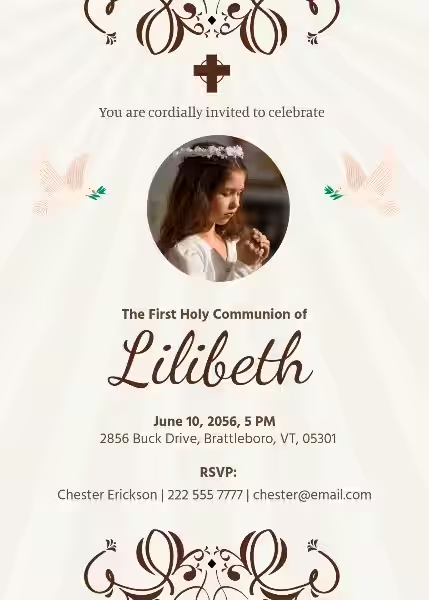
The First Communion is a monumental milestone in a young Catholic’s spiritual journey, marking their full participation in the Eucharist, the central sacrament of their faith. This deeply personal and profoundly communal event is often accompanied by celebrations, and at the heart of these celebrations lie communion invites. These aren’t just pieces of paper; they are gateways to shared joy, expressions of love, and formal invitations to witness and partake in a sacred moment. Understanding the role and significance of communion invites can transform a simple announcement into a meaningful prelude to a spiritual feast.
For many families, the process of creating and sending communion invites is as much a part of the preparation for the sacrament as the catechetical lessons themselves. It’s a tangible way to involve the wider community – family, friends, and fellow parishioners – in this significant step. These invitations serve as a bridge, connecting the individual’s faith development with the support and blessings of their loved ones. They are a deliberate act of inclusion and welcome, ensuring that those who have nurtured and guided the child are present to share in their joy and spiritual growth.
Beyond the Card: The Purpose and Power of Communion Invites
At its core, a communion invite is an invitation to witness and celebrate a sacrament. It’s an opportunity for guests to offer prayers and blessings to the child as they receive Christ’s body and blood for the first time. This act of witnessing is not passive; it’s an active affirmation of the faith community’s support for the child’s commitment to Christ. The invitation ensures that this significant occasion is not a solitary event but a shared experience of faith and fellowship.
Consider the impact of receiving a beautifully designed communion invite. It immediately signals the importance of the event and prompts the recipient to mark their calendars and prepare their hearts. It’s a thoughtful gesture that acknowledges the guest’s place in the child’s life and their role in their spiritual upbringing. The invitation can also provide essential details for the event, such as the date, time, and location of the Mass, as well as information about any post-ceremony reception or gathering. This practical information is crucial for facilitating attendance and ensuring a smooth, joyous celebration for all involved.
Crafting the Message: What to Include on Your Communion Invites
The content of communion invites should be both informative and heartfelt. The primary objective is to clearly communicate the essential details of the event. This typically includes:
The Honoree’s Name: Clearly stating the name of the child receiving their First Communion.
The Event: Explicitly mentioning “First Holy Communion.”
Date and Time: The precise date and start time of the Mass.
Location: The name and address of the church where the Mass will be held.
Reception Details (Optional but Recommended): Information regarding any planned gathering after the Mass, including the time and location.
RSVP Information: A clear request for guests to RSVP by a specific date, and contact details (phone number or email) for their response. This is vital for planning the reception.
Dress Code (Optional): While not always necessary for a religious ceremony, some families may wish to suggest a dress code, especially for the reception.
Beyond the practicalities, the wording should reflect the sacred nature of the event. Phrases like “We joyfully invite you to celebrate the First Holy Communion of our beloved [Child’s Name]” or “Join us as [Child’s Name] receives the Blessed Sacrament for the first time” convey the reverence and significance. Many choose to include a short bible verse or prayer that resonates with the sacrament, adding a spiritual depth to the invitation. For instance, a verse like “Let the little children come to me, and do not hinder them, for the kingdom of heaven belongs to such as these” (Matthew 19:14) beautifully encapsulates the spirit of the occasion.
Designing Your Communion Invites: A Blend of Tradition and Personal Style
The design of communion invites offers a wonderful opportunity to reflect the child’s personality and the family’s aesthetic. While traditional designs often feature religious symbols like chalices, doves, crosses, or communion wafers, there’s ample room for creativity. Many families opt for designs that incorporate pastel colors, elegant fonts, and delicate floral motifs to convey a sense of purity and grace. The choice of paper quality can also elevate the invitation, with heavier cardstock often lending a more formal and sophisticated feel.
However, modern communion invites are increasingly reflecting a more contemporary style. This might involve cleaner lines, bolder fonts, or even incorporating personal touches like a favorite color or a small illustration that represents the child’s interests. For example, a child who loves nature might have an invitation featuring a subtle watercolor of wildflowers, while another might have a design with a simple, elegant calligraphy. The key is to create an invitation that feels authentic to the child and the family, while still honoring the sacredness of the sacrament. Whether you choose a classic, ornate design or a minimalist, modern aesthetic, the communion invite serves as a beautiful prelude to a profound spiritual celebration.
Frequently Asked Questions about Communion Invitations
What is a communion invite?
A communion invite is a formal invitation sent to friends and family to celebrate a child’s First Holy Communion, a significant religious sacrament.
What information should be included on a communion invite?
Key information typically includes the name of the child receiving communion, the date and time of the ceremony, the name and address of the church, and RSVP details.
Is there a specific religious format for communion invites?
While not strictly mandated, many communion invites feature religious imagery such as crosses, doves, or chalices. The wording often includes a religious verse or blessing.
Can I use a generic invitation for my child’s communion?
Yes, you can use generic invitations. However, personalizing them with your child’s name and specific ceremony details is recommended.
When should I send out communion invites?
It’s customary to send communion invitations out 4-6 weeks before the event to allow guests ample time to respond and make arrangements.
What is the religious significance of First Holy Communion?
First Holy Communion is a sacrament in the Catholic Church where a child receives the Eucharist (the body and blood of Christ) for the first time, marking a significant step in their spiritual journey and initiation into full communion with the Church.