In the tapestry of faith, where devotion takes myriad forms, the veneration of La Santísima Muerte, or “Holy Death,” stands as a powerful and often misunderstood spiritual practice. Far from being a morbid obsession, for many, she represents a divine feminine force of protection, transition, and ultimate justice. Within this rich spiritual landscape, the La Santísima Muerte prayer serves as a vital conduit, a whispered plea or a chanted affirmation that connects the devotee to this enigmatic figure. This article delves into the heart of this devotion, exploring its origins, its modern manifestations, and the profound comfort and strength that a La Santísima Muerte prayer can offer.
The image of a skeletal figure, often adorned with vibrant robes and holding symbols of life and death, can be arresting. Yet, to dismiss La Santísima Muerte as merely a grim specter is to miss the nuance of her spiritual significance. She is not the harbinger of doom, but rather the inevitable transition that all life undergoes. In many cultures, including pre-Hispanic Mexico, death was not feared but integrated into the cycle of existence, a continuation rather than an end. La Santísima Muerte embodies this understanding, offering a sense of peace and acceptance in the face of life’s impermanence.
Her devotees often turn to her for protection from harm, for justice when they feel wronged, and for assistance in navigating difficult life transitions. Whether it’s a plea for safety in dangerous environments or a request for clarity during times of uncertainty, the La Santísima Muerte prayer is a cornerstone of this spiritual connection. It’s a personal dialogue, a way to acknowledge her presence and seek her benevolent intervention in the earthly realm.
The Power and Purpose of the La Santísima Muerte Prayer
At its core, a La Santísima Muerte prayer is an act of faith and supplication. It’s a way to express reverence, to ask for her blessings, and to solicit her help in overcoming obstacles. These prayers are not rigid incantations but rather personal expressions of need and gratitude. For instance, a common sentiment within a La Santísima Muerte prayer might be: “Santísima Muerte, my protector, guard me from all evil, seen and unseen. Guide my steps and grant me your divine favor.” This simple yet profound request encapsulates the core desire for safety and well-being.
The effectiveness of any prayer lies in the sincerity of the devotee’s heart. When uttered with genuine belief and a clear intention, the La Santísima Muerte prayer can become a powerful tool for spiritual empowerment. It’s about fostering a personal relationship with this divine entity, recognizing her as a powerful ally who can intercede on behalf of her followers. Many find that by reciting a La Santísima Muerte prayer regularly, they experience a tangible sense of calm and resilience.
Crafting Your Own La Santísima Muerte Prayer: A Personal Connection
While established prayers exist, the most potent La Santísima Muerte prayer is often one that resonates deeply with the individual. It’s about speaking from the heart, articulating your specific needs and desires. Think of it as a conversation with a trusted, albeit formidable, friend. You might begin by acknowledging her presence: “Oh, Santísima Muerte, beloved and revered…” Then, you can express your gratitude for her perceived protection: “…thank you for watching over me and my loved ones.”
The crucial part is to clearly state your request. For example, if you are facing financial hardship, a La Santísima Muerte prayer might include: “Santísima Muerte, I humbly ask for your assistance in finding prosperity and security. Open doors of opportunity and bless my endeavors with success.” Alternatively, if you seek protection, you might pray: “Sweet Death, shield me from the dangers that surround me. Wrap me in your protective cloak and keep me safe from all harm.” The key is authenticity and clarity.
Examples of La Santísima Muerte Prayers and Their Meanings
Many devotees find comfort in traditional prayers, which have been passed down through generations. One such example, often recited with deep reverence, is:
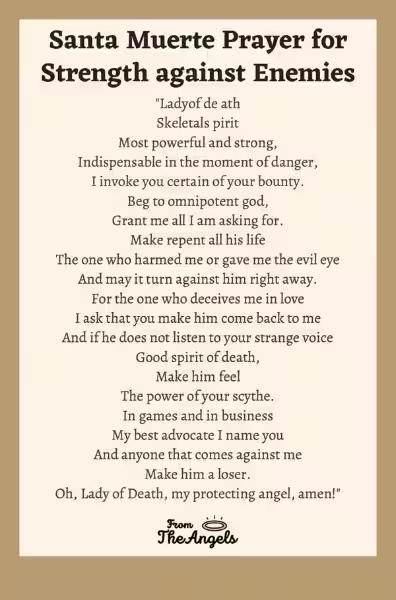
“Santísima Muerte, my good friend,
I come before you today with a humble heart.
Protect me from all evil,
From my enemies, seen and unseen.
Grant me strength, wisdom, and courage,
And guide me on my path.
Amen.”
This La Santísima Muerte prayer highlights the multifaceted nature of her protection. It’s not just about shielding from physical threats but also from psychological and spiritual adversaries. The request for “strength, wisdom, and courage” acknowledges that navigating life’s challenges requires inner fortitude.
Another common prayer focuses on her role as a dispenser of justice:
“La Flaca, queen of the night,
Hear my plea.
Bring me justice for the wrongs done to me,
And may truth and fairness prevail.
Bless me with your discerning gaze,
And let my righteousness be known.
Amen.”
This La Santísima Muerte prayer demonstrates her association with fairness and accountability. Devotees turn to her when they feel that earthly justice has failed them, trusting in her ultimate impartiality. The phrase “La Flaca” (The Skinny One) is a common and affectionate nickname for her.
La Santísima Muerte in Contemporary Society: Faith and Challenges
In the modern world, the devotion to La Santísima Muerte continues to thrive, particularly within Latino communities in Mexico and the United States. She is often seen as a protector of the marginalized, the vulnerable, and those who live in challenging circumstances. Her altars, adorned with offerings of flowers, candles, liquor, and tobacco, are vibrant testaments to the deep personal connection devotees feel. The La Santísima Muerte prayer is a daily ritual for many, a constant reminder of her presence.
However, this devotion is not without its controversies. Some religious institutions have condemned the veneration of La Santísima Muerte, equating her with demonic entities. This perception often stems from a misunderstanding of her symbolic meaning. For her followers, she is a divine entity who offers solace and empowerment, not malevolence. They see her as a powerful intercessor, a figure who understands the struggles of humanity because she embodies the universal experience of transition.
Finding Solace and Strength Through Devotion
Ultimately, the practice of invoking La Santísima Muerte through prayer is about finding solace, strength, and a sense of divine connection. It’s about acknowledging the inevitable cycles of life and death and finding comfort in a figure who represents both the end of one phase and the beginning of another. Whether you are seeking protection, justice, or simply a guiding hand through life’s complexities, a La Santísima Muerte prayer can serve as a powerful expression of your faith and intentions.
The act of praying, regardless of the deity invoked, is a testament to the human need for spiritual support and guidance. For those who feel drawn to the benevolent power of La Santísima Muerte, her prayers offer a pathway to a unique and profound spiritual experience. By approaching her with reverence and an open heart, one can discover the profound peace and unwavering protection that her sacred embrace can offer, making the La Santísima Muerte prayer a cornerstone of their spiritual journey.
Frequently Asked Questions about La Santísima Muerte and Religion
What is La Santísima Muerte?
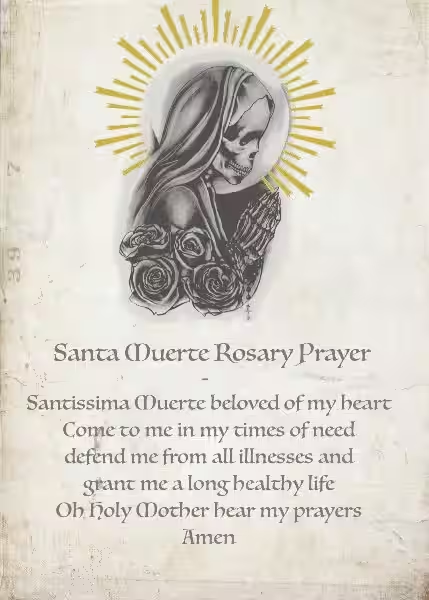
La Santísima Muerte, often translated as “Holy Death” or “Most Holy Death,” is a folk saint venerated primarily in Mexico and parts of Central America. She is depicted as a skeletal figure, often dressed in robes and holding symbols such as a scythe, hourglass, or globe. Devotion to her is distinct from mainstream Catholic or Protestant Christianity, though some adherents incorporate elements from those traditions.
Is La Santísima Muerte a recognized saint in the Catholic Church?
No, La Santísima Muerte is not officially recognized as a saint by the Roman Catholic Church. The Vatican has condemned the veneration of La Santísima Muerte, viewing it as incompatible with Christian teachings. However, many of her devotees identify as Catholic or spiritual and see her as a powerful intercessor, distinct from traditional saints.
What are the beliefs surrounding La Santísima Muerte?
Beliefs vary widely among devotees, but common themes include her role as a protector, a bringer of good fortune, and a facilitator of healing. She is often invoked for protection against violence, illness, and hardship. Many believe she offers her protection to all, regardless of their past actions or social standing. Some also believe she offers a more impartial form of justice and can assist in legal matters.
There isn’t a single, universally prescribed “La Santísima Muerte Prayer.” Devotees often create their own prayers based on their personal needs and relationship with her. However, common elements include requests for protection, guidance, healing, and prosperity. Many prayers address her as “Niña Blanca” (White Girl) or “Flaca” (Skinny One) and invoke her powerful presence.
How is La Santísima Muerte venerated?
Veneration typically involves the creation of home altars adorned with images or statues of La Santísima Muerte, accompanied by offerings such as candles, flowers, incense, alcohol, cigarettes, and food. Devotees may recite prayers, light candles, and engage in personal meditation or contemplation. Public celebrations and processions also occur, particularly around her feast days.
Is devotion to La Santísima Muerte considered a religion?
While not a formally organized religion with a central dogma or hierarchy, the devotion to La Santísima Muerte functions as a spiritual practice for millions. It has its own rituals, symbols, community of believers, and a unique theological framework that has developed outside of established religious institutions. Some refer to it as a “cult” or “folk religion.”
What are the origins of La Santísima Muerte devotion?
The exact origins are debated, but the devotion is believed to have roots in pre-Hispanic indigenous beliefs about death, blended with Catholic imagery and symbolism that emerged during the colonial period in Mexico. The figure of death has always held a significant place in Mexican culture, and La Santísima Muerte is seen by many as an evolution of these long-standing traditions.
Are there specific prayers for different needs when invoking La Santísima Muerte?
Yes, many devotees believe that different prayers or approaches can be used depending on the specific request. For example, some may focus on prayers for protection from harm, while others might pray for financial assistance or healing. The intention and sincerity of the devotee are often considered more important than the exact wording of the prayer.
Is it acceptable to be devoted to La Santísima Muerte if you are also Christian?
For many devotees, their faith in La Santísima Muerte exists alongside their Christian beliefs. They may see her as a powerful intermediary or a unique aspect of the divine that complements their existing spiritual framework. However, as mentioned, this practice is not sanctioned by the official Catholic Church, and some Christians may find it contradictory to their faith.