The city of Rome, a living testament to millennia of history and faith, holds countless sacred sites, each whispering stories of devotion and divine intervention. Among these, the Madonna della Neve Rome holds a special, gentle place in the hearts of many. This devotion, rooted in a legendary winter snowfall, offers a unique lens through which to explore the enduring power of religion in the Eternal City and beyond. It’s a story that resonates not just with the devout, but with anyone captivated by the intersection of history, legend, and unwavering belief.
The legend of the Madonna della Neve Rome isn’t just a quaint historical anecdote; it represents a profound human need for solace, hope, and a tangible connection to the divine. It speaks to how faith can manifest in the most unexpected ways, painting the world with a celestial hue. Understanding this particular devotion allows us to appreciate the broader tapestry of religious expression that makes Rome so spiritually rich.
The origin of the devotion to Madonna della Neve Rome is inextricably linked to a miraculous event that occurred in Rome during the pontificate of Pope Liberius in the 4th century. The story, passed down through generations, tells of a wealthy Roman patrician, John, and his wife who, having no heirs, pledged their fortune to the Virgin Mary. They prayed for guidance on how to best fulfill their promise.
According to tradition, on the night of August 5th, 358 AD, the Virgin Mary appeared to both the patrician and Pope Liberius in separate dreams. She instructed them that their offering should be used to build a church dedicated to her on the Esquilino Hill. The extraordinary part of this divine revelation was the sign accompanying it: a miraculous snowfall dusted the very summit of the hill, a stark white blanket in the heat of Roman summer. This Madonna della Neve Rome event was seen as a clear sign from heaven, marking the exact spot where the basilica should be erected.
The Basilica di Santa Maria Maggiore: A Monument to Miracles
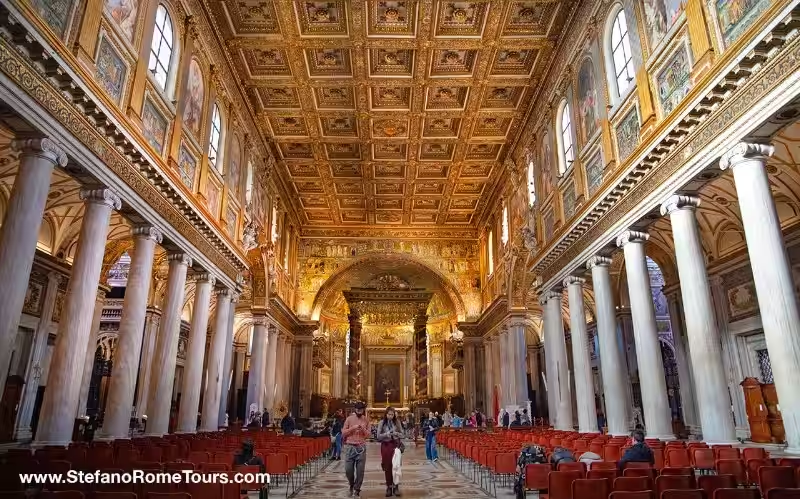
The basilica built in response to this miraculous sign is none other than the magnificent Basilica di Santa Maria Maggiore, one of Rome’s four major basilicas and the largest church dedicated to the Virgin Mary in the city. Its very foundations are steeped in the legend of the Madonna della Neve Rome, making it a pilgrimage site for believers from around the globe. The basilica itself is a breathtaking testament to art, architecture, and unwavering faith, with stunning mosaics that depict biblical scenes and the life of Mary.
Within the hallowed walls of Santa Maria Maggiore, the faithful find a profound sense of peace and connection to the Madonna della Neve Rome. The basilica’s history is a living narrative, its stones imbued with centuries of prayer and devotion. For many, visiting this sacred place is not just a tourist experience, but a spiritual journey, a chance to stand where a miracle is said to have unfolded and to feel the enduring power of faith.
The Significance of ‘Madonna della Neve’ in Religious Devotion
The title “Madonna della Neve,” meaning “Our Lady of the Snow,” carries a deep symbolic weight within Catholic tradition. It represents purity, divine intervention, and a gentle, yet powerful, presence of the Virgin Mary in the lives of believers. The image of snow, often associated with cleanliness and a fresh start, imbues this particular devotion with a sense of hope and renewal.
This devotion to Madonna della Neve Rome is not confined to the basilica itself. Churches and chapels dedicated to Our Lady of the Snow can be found throughout Italy and other parts of the world, each bearing witness to the enduring impact of the Roman legend. The story serves as a powerful reminder that faith can be found in the most unexpected circumstances, and that divine guidance can manifest in extraordinary ways, even in the heart of a bustling city.
Understanding the Symbolism of Snow in Religious Contexts
The use of snow as a divine sign in the Madonna della Neve Rome narrative is particularly poignant. In many cultures, snow is seen as a symbol of purity, often linked to cleansing and spiritual renewal. Think of how the world appears transformed and pristine after a snowfall; this natural phenomenon can be interpreted as a divine act of purification.
For believers, the August snowfall in Rome was not a meteorological anomaly but a divine signature, a celestial endorsement of the Virgin Mary’s intercession and the importance of the sacred site. This miraculous event solidified the belief that Mary actively watches over and guides humanity, offering signs and solace when needed most; it’s a powerful image that continues to inspire.
Experiencing the Madonna della Neve Rome Today
Visiting Madonna della Neve Rome, primarily through the lens of Santa Maria Maggiore, offers a deeply immersive religious and historical experience. The basilica pulses with a vibrant spiritual energy, a testament to the centuries of prayer and reverence it has hosted. Whether you are a devout pilgrim or a curious traveler, the grandeur and history of the site are undeniably moving.
The Feast Day of Santa Maria Maggiore, celebrated on August 5th, is when the devotion to Madonna della Neve Rome is most profoundly felt within the basilica. On this day, a symbolic “snowfall” is often recreated within the basilica, using white petals or confetti, to commemorate the original miraculous event. This tradition beautifully connects the present-day experience with the ancient legend, making the story of the Madonna della Neve Rome come alive for a new generation.
Pilgrimage and Personal Reflection at Santa Maria Maggiore
For many, a visit to Santa Maria Maggiore is a pilgrimage, a journey undertaken with a specific spiritual intention or a desire to connect with a particular aspect of faith. The sheer scale and beauty of the basilica, combined with its rich history, provide fertile ground for personal reflection. One can spend hours wandering its naves, gazing at the ancient mosaics, and contemplating the enduring power of belief.
The “snowfall” tradition, while a beautiful reenactment, also serves as a powerful reminder of the story’s core message: that faith can lead to extraordinary outcomes and that divine love is ever-present. It’s a moment of shared devotion, where the entire congregation can feel connected to the miraculous event that started it all, reinforcing the significance of Madonna della Neve Rome.
Beyond the Basilica: The Enduring Legacy of Madonna della Neve
While Santa Maria Maggiore stands as the primary sanctuary for the Madonna della Neve Rome, the influence of this devotion extends far beyond its ancient walls. The story has been depicted in countless works of art, inspiring painters, sculptors, and musicians throughout history. Its narrative of divine intervention and a miraculous sign continues to be a source of comfort and inspiration for people of all backgrounds.
The legend of Madonna della Neve Rome reminds us that faith often finds expression in the tangible, in stories that resonate with human hopes and fears. It’s a beautiful example of how religious narratives can transcend time, offering a timeless connection to the divine and a source of enduring spiritual strength for believers. The white blanket of snow remains a potent symbol of purity and divine grace.
Frequently Asked Questions about Madonna della Neve, Rome and Religion
What is Madonna della Neve?
Madonna della Neve, which translates to “Our Lady of the Snow,” is a title given to the Virgin Mary. It commemorates the miraculous snowfall that occurred in Rome on August 5, 358 AD, covering the Esquiline Hill with snow, despite it being the height of summer. This event is traditionally linked to the founding of the Basilica di Santa Maria Maggiore.
While “Madonna della Neve” is a title, the most significant church associated with this devotion is the Basilica di Santa Maria Maggiore, one of the four major papal basilicas in Rome. The legend of the snow is central to its history and consecration. There may also be smaller chapels or altars dedicated to Our Lady of the Snow in various churches throughout Rome and Italy.
What is the religious significance of Madonna della Neve?
The religious significance lies in the miraculous event itself, interpreted as a divine sign and confirmation of the Virgin Mary’s intercession and protection. The snowfall is seen as a symbol of purity and a divine message, leading to the construction of a prominent church in her honor. The feast day, August 5th, is a significant date for veneration.
How is Madonna della Neve venerated?
Madonna della Neve is venerated through prayer, Mass, and specific devotions, particularly on her feast day, August 5th. Pilgrims often visit Santa Maria Maggiore to honor the Virgin Mary under this title. Artistic representations and religious imagery depicting the legendary snowfall are also important in her veneration.
Is there a specific prayer to Madonna della Neve?
While there isn’t one universally mandated “Madonna della Neve” prayer, prayers to the Virgin Mary can be offered with the intention of invoking her under this title. Many people adapt traditional Marian prayers, such as the Hail Mary or the Magnificat, or offer personal prayers of thanksgiving and petition, acknowledging her role as Our Lady of the Snow.
What is the connection between Madonna della Neve and Santa Maria Maggiore?
The Basilica di Santa Maria Maggiore is directly linked to the legend of the miraculous snowfall of Madonna della Neve. According to tradition, Pope Liberius was instructed in a dream to build a church where he found snow the next morning. This occurred on the Esquiline Hill, and the subsequent basilica was built, becoming one of Rome’s most important Marian sanctuaries.
What is the Feast of Madonna della Neve?
The Feast of Madonna della Neve is celebrated annually on August 5th. This day commemorates the miraculous snowfall of 358 AD and is a significant day for the veneration of the Virgin Mary under this title, especially at Santa Maria Maggiore.