Across the globe, millions of Christians observe a rich tapestry of Marian holidays, dedicated to honoring the Virgin Mary, the mother of Jesus Christ. These sacred days are far more than mere calendar entries; they are vibrant expressions of faith, deeply rooted in tradition, and brimming with opportunities for spiritual reflection and communal celebration. From the solemnity of Lent to the joyous feasts of summer, Marian holidays offer a unique lens through which to understand the central role Mary plays in Christian theology and devotion, providing moments of grace and connection for believers of all ages. They are invitations to pause, to remember, and to draw closer to the divine through the intercession and example of the Blessed Mother.
The significance of Mary extends beyond her role as the mother of Jesus. She is venerated as a model of virtue, obedience, and unwavering faith, a spiritual mother to all believers, and a powerful intercessor. Each Marian holiday is an opportunity to delve deeper into these aspects of her identity, to learn from her life, and to seek her guidance in our own spiritual journeys. Whether you are a seasoned devotee or new to exploring the profound impact of Mary in Christian tradition, understanding these holidays can unlock a richer, more meaningful spiritual experience, offering solace, inspiration, and a profound sense of belonging to a faith community united in love for her.
The Genesis of Marian Devotion: Why Mary Holds Such Reverence
The veneration of Mary, often referred to as hyperdulia (a term signifying a special, higher form of veneration given to Mary, distinct from the worship due to God alone), has a long and fascinating history within Christianity. Its roots can be traced back to the earliest centuries, stemming directly from the Gospels and the foundational narratives of the Christian faith. The pivotal moment, of course, is the Annunciation, where the Angel Gabriel announced to Mary that she would conceive Jesus, and her humble acceptance – “Behold, I am the handmaid of the Lord; let it be to me according to your word” – is a cornerstone of Marian devotion. This act of surrender and faith is celebrated on the Feast of the Annunciation.
Beyond this foundational event, Mary’s presence throughout Jesus’ life, from his birth in Bethlehem to his crucifixion, imbues her with a unique significance. She is present at the Nativity, witnessing the miraculous birth of her son, a moment celebrated with profound joy during the Christmas season. Her sorrow at the foot of the cross, a scene often depicted in art and scripture, highlights her deep maternal love and her participation in Christ’s suffering, a theme explored during Holy Week and particularly on Our Lady of Sorrows. This enduring connection to the life, death, and resurrection of Jesus Christ forms the bedrock of the reverence and love that Christians hold for Mary, making her a central figure in their spiritual lives.
Key Marian Holidays: A Calendar of Devotion and Celebration
The Church’s liturgical calendar is punctuated by a variety of Marian holidays, each with its own unique history, theological significance, and devotional practices. These feasts offer specific opportunities to contemplate different facets of Mary’s life and her role in salvation history. Understanding these holidays can provide a structured approach to deepening one’s devotion and engaging with the rich traditions surrounding the Mother of God. They are not simply days of remembrance, but active invitations to participate in the ongoing story of faith, drawing inspiration from Mary’s exemplary life.
Exploring these Marian holidays can illuminate the multifaceted nature of Marian devotion. From the solemnity of remembrance to the exuberance of celebration, each feast offers a distinct pathway to connect with Mary. Whether it’s through prayer, scripture, or communal worship, these days provide sacred moments for believers to reflect on her virtues, seek her intercession, and grow in their love for her and her divine son. The following are some of the most prominent and widely observed Marian holidays:
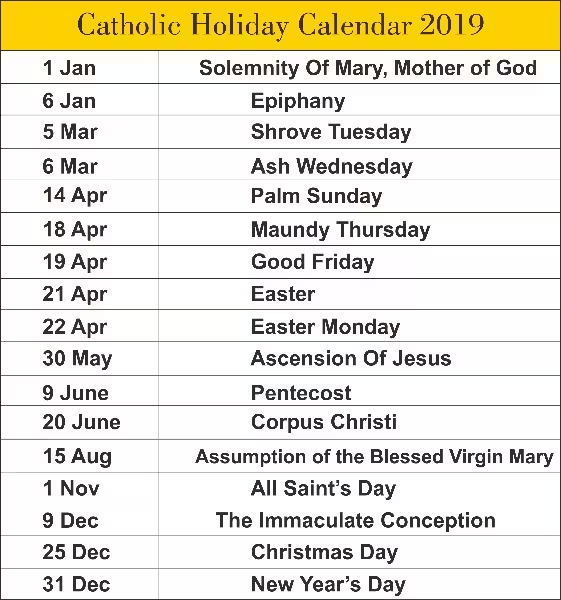
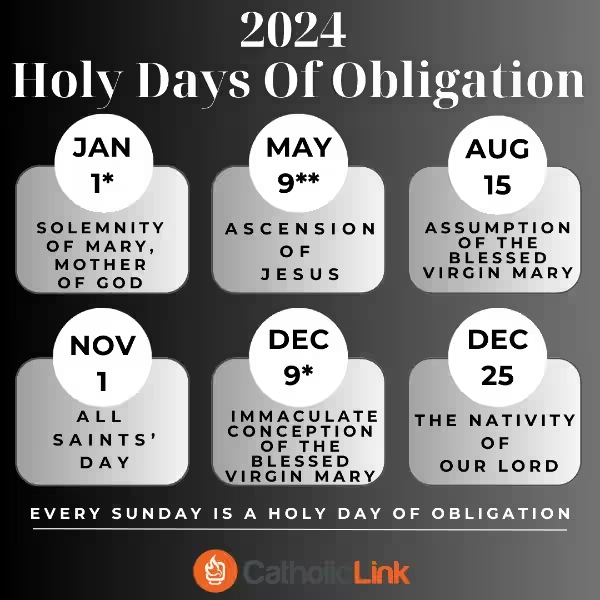
The Solemnity of Mary, Mother of God (January 1st)
This important feast, celebrated on the octave day of Christmas, is a powerful affirmation of Mary’s role as the Theotokos, a Greek term meaning “God-bearer.” It directly addresses the theological understanding that Mary is not just the mother of Jesus, but the mother of God himself. This declaration, reaffirmed at the Council of Ephesus in 431 AD, highlights the profound mystery of the Incarnation – God becoming human in the person of Jesus, born of Mary. The day is a reminder of the extraordinary dignity and blessedness of Mary’s vocation.
Observing the Solemnity of Mary, Mother of God invites believers to contemplate the unique relationship between Mary and Jesus. Her “yes” at the Annunciation allowed God to enter humanity, making her instrumental in the unfolding of salvation. This feast is a time for reflecting on her obedience, humility, and profound faith, which enabled God’s plan to be realized. Many churches hold special Masses on this day, often with homilies that delve into the theological significance of Mary’s motherhood and her enduring importance for Christians. It’s a fitting way to begin the new year, entrusting ourselves to the care of Mary, our spiritual mother.
Our Lady of Lourdes (February 11th)
This feast commemorates the vision of the Blessed Virgin Mary to Saint Bernadette Soubirous in the Grotto of Massabielle, near Lourdes, France, in 1858. Over several weeks, Bernadette experienced multiple apparitions, during which Mary identified herself as the Immaculate Conception. The apparitions led to the discovery of a spring with miraculous healing properties, making Lourdes a major pilgrimage site for those seeking spiritual and physical healing. It’s a powerful testament to Mary’s continued presence and intercession in the lives of believers.
The story of Our Lady of Lourdes is a profound reminder of Mary’s compassion and her desire to bring comfort and hope to suffering humanity. The apparitions emphasized a message of prayer, penance, and conversion. For many, this feast is a time to pray for healing, both for themselves and for others, and to reflect on the importance of trusting in God’s mercy through Mary’s intercession. Pilgrimages to Lourdes, or even praying the Rosary with a focus on the Lourdes apparitions, can be deeply spiritual experiences, drawing believers closer to Mary’s loving care and the healing power of God.
The Annunciation of the Lord (March 25th)
As mentioned earlier, the Annunciation marks the moment when the Angel Gabriel appeared to Mary and announced that she would be the mother of Jesus, the Son of God. Her cooperative response, “Let it be done to me according to your word,” is a profound example of faith and surrender. This event is central to Christian theology as it signifies God’s initiative to redeem humanity through the Incarnation, and Mary’s willing participation in this divine plan. It is celebrated nine months before Christmas, emphasizing its direct connection to the birth of Jesus.
The Feast of the Annunciation calls us to reflect on the power of God’s grace and the importance of our own “yes” to God’s will. Mary’s acceptance was not passive; it was an active, courageous choice that changed the course of history. This feast encourages us to consider how we respond to God’s call in our own lives, to embrace humility and trust, even when faced with the unknown. It’s a time to pray for the grace to be open to God’s plans, just as Mary was, recognizing that our cooperation is essential in God’s work.
Our Lady of Fatima (May 13th)
This feast commemorates the first apparition of the Blessed Virgin Mary to three shepherd children – Lucia, Francisco, and Jacinta – in Fatima, Portugal, in 1917. Mary appeared to them six times, delivering messages of prayer, penance, and devotion to her Immaculate Heart. She warned of the dangers of war and the need for prayer for the conversion of sinners, foretelling future events and emphasizing the importance of the consecration of Russia to her Immaculate Heart. The message of Fatima has had a profound impact on the Church and continues to resonate with millions.
The messages of Our Lady of Fatima are a call to a deeper spiritual life, emphasizing the power of the Rosary and the importance of making sacrifices for the sake of peace and the salvation of souls. This feast is a reminder of Mary’s maternal concern for humanity and her powerful role as an intercessor. Many believers focus on praying the Rosary and reflecting on the consecration of their lives and families to Mary’s Immaculate Heart, seeking her protection and guidance during challenging times. The apparitions at Fatima are seen as a sign of hope and a call to spiritual renewal.
The Visitation of the Blessed Virgin Mary (May 31st)
This feast celebrates the visit of Mary to her cousin Elizabeth, who was also miraculously pregnant, in her old age. Upon Mary’s arrival, Elizabeth’s unborn child, John the Baptist, leaped for joy in her womb, and Elizabeth exclaimed, “Blessed are you among women, and blessed is the fruit of your womb!” Mary’s response is the beautiful Magnificat, a prayer of praise and thanksgiving that has become a central part of Christian liturgy. The Visitation highlights the joy of Christ’s coming and the spiritual connection between the two mothers and their unborn sons.
The Visitation is a profound depiction of joy, fellowship, and the dawning of God’s salvation. It shows Mary, despite her own miraculous circumstances, immediately going to serve her cousin, demonstrating compassion and active love. This feast encourages us to be bearers of Christ’s presence to others, to share the good news with joy, and to offer practical help and support to those in need. It’s a beautiful reminder of how faith can inspire us to reach out and connect with one another, spreading the love of God through our actions.
The Assumption of the Blessed Virgin Mary (August 15th)
This solemn feast celebrates the belief that, at the end of her earthly life, Mary was assumed body and soul into heaven. This doctrine, proclaimed as dogma by Pope Pius XII in 1950, is rooted in the belief that Mary, being the Mother of God, was preserved from the corruption of sin and death. The Assumption signifies Mary’s unique place in salvation history and her role as Queen of Heaven. It is a moment of immense joy and celebration for the Church, anticipating the resurrection and eternal life that awaits all believers.
The Assumption of Mary offers a powerful glimpse of our own future hope. It reminds us that the journey of faith leads to eternal glory. This feast is a time to reflect on Mary’s exemplary life of faith, purity, and devotion, and to ask for her intercession as we strive to live lives pleasing to God. The celebration often involves vibrant liturgies and reflections on Mary’s heavenly reign, inspiring believers to look forward with hope to their own reunion with God in heaven, with Mary as their guide and mother.
The Nativity of the Blessed Virgin Mary (September 8th)
This feast celebrates the birth of Mary, a seemingly ordinary event that holds extraordinary significance because of who she would become. While the Gospels do not provide details of her birth, tradition holds that she was born to Joachim and Anne. The Church celebrates her birth as the dawn of salvation, for it was through her lineage that Jesus would be born. Her Immaculate Conception (celebrated on December 8th) is intrinsically linked to her birth, as it signifies her being conceived without original sin.
The Nativity of Mary is a joyous occasion that marks the beginning of God’s plan of redemption. It’s a time to thank God for the gift of Mary to the world and to reflect on the privileges and graces she received. This feast encourages us to consider the humble beginnings of great things and to trust that God can work through anyone who is willing to be His instrument. It’s a celebration of new life and the promise of hope that Mary embodies for all Christians.
Our Lady of the Rosary (October 7th)
Originally known as Our Lady of Victory, this feast was instituted to commemorate the naval victory of the Holy League against the Ottoman Empire at the Battle of Lepanto in 1571. Pope Pius V attributed the victory to the intercession of the Blessed Virgin Mary, particularly through the recitation of the Rosary. The feast was later renamed Our Lady of the Rosary to emphasize the importance of this prayer in invoking Mary’s aid. It is a powerful reminder of the efficacy of prayer and the intercessory power of Mary.
The Feast of Our Lady of the Rosary is a profound invitation to engage with this contemplative prayer. The Rosary is a journey through the life of Jesus, with Mary as our guide, meditating on the Joyful, Luminous, Sorrowful, and Glorious Mysteries. This feast encourages believers to make the Rosary a regular part of their spiritual practice, seeking Mary’s help to understand and embrace the teachings of Christ more deeply. It’s a powerful tool for spiritual growth and a way to experience Mary’s constant accompaniment in our lives.
The Presentation of the Blessed Virgin Mary (November 21st)
This feast commemorates the traditional event of Mary’s presentation in the Temple at a young age by her parents, Joachim and Anne. Although not described in the Bible, this tradition emphasizes Mary’s early dedication to God and her purity of heart. It highlights her lifelong commitment to God and foreshadows her unique role in salvation history. The Presentation signifies a life consecrated to God from its earliest moments.
The Presentation of Mary serves as a powerful example of devotion and consecration. It reminds us that dedicating ourselves to God can begin at any age and that a life lived in service to Him is a life of profound meaning. This feast encourages us to reflect on our own commitments to God and to consider how we can live more fully dedicated lives. It’s a celebration of the spiritual journey and the importance of offering our lives, in their entirety, to the divine.
Beyond the Feasts: Integrating Marian Devotion into Daily Life
While Marian holidays offer special moments for focused devotion, the spirit of honoring Mary can and should be woven into the fabric of our everyday lives. Her example of faith, love, and service provides a constant source of inspiration. Simple practices like reciting the Hail Mary, praying the Rosary daily, or invoking her name in times of need can foster a personal relationship with her. These ongoing acts of devotion keep her presence alive in our hearts and minds, offering comfort and guidance throughout the year.
Integrating Marian devotion into daily life is not about adding more to an already busy schedule, but about finding moments of connection and grace. It’s about recognizing Mary’s role as our spiritual mother, always present and ready to intercede for us. Whether it’s a brief prayer before starting the day, a moment of reflection during a challenging situation, or a dedicated time for the Rosary, these small acts can profoundly deepen our faith and bring us closer to the heart of God, guided by the loving example of His mother. The enduring love for Mary is a powerful force that can transform our daily experiences.
Frequently Asked Questions about Marian Holidays
What are Marian holidays?
Marian holidays are special feast days in the Catholic Church and some other Christian denominations that honor the Virgin Mary, the mother of Jesus. These celebrations commemorate significant events in her life and her role in salvation history.
What are some of the most important Marian holidays?
Some of the most important Marian holidays include:
* The Solemnity of Mary, Mother of God (January 1st): Celebrates Mary’s role as the Mother of God.
* The Annunciation (March 25th): Commemorates the angel Gabriel’s announcement to Mary that she would conceive Jesus.
* The Visitation (May 31st): Celebrates Mary’s visit to her cousin Elizabeth.
* The Assumption of Mary (August 15th): Celebrates the belief that Mary was taken body and soul into heaven at the end of her earthly life.
* The Nativity of Mary (September 8th): Celebrates Mary’s birth.
* Our Lady of Sorrows (September 15th): Commemorates the suffering Mary experienced throughout her life, particularly at the foot of the cross.
* The Immaculate Conception (December 8th): Celebrates the belief that Mary was conceived without original sin.
What is the religious significance of Marian holidays?
Marian holidays are significant because they highlight Mary’s unique role in Christian theology. They emphasize her purity, her obedience to God’s will, her suffering, and her exalted position as the Mother of God and Queen of Heaven. These feasts encourage believers to emulate her virtues and to seek her intercession.
How are Marian holidays observed?
Marian holidays are typically observed with special Masses, prayers, and sometimes processions. Many Catholics participate in devotional practices such as praying the Rosary or reciting specific Marian prayers. Some holidays may also have specific liturgical traditions or customs associated with them.
Are Marian holidays celebrated by all Christians?
While Marian holidays are central to the Catholic Church and are also observed by Orthodox Christians and some Anglicans, they are not as widely celebrated or emphasized in Protestant denominations. The theological understanding of Mary’s role can differ among Christian traditions.