The institution of marriage, a cornerstone of human society, finds its deepest and most profound expression within the realm of religion, where it is often elevated to the status of a matrimonial sacrament. This sacred union, far beyond a mere legal or social contract, is viewed by many faiths as a divine covenant, a profound spiritual bond consecrated by God. It’s a commitment that transcends the earthly and ventures into the eternal, imbuing the relationship with a unique significance and purpose. Understanding the matrimonial sacrament is to delve into the heart of religious teachings on love, commitment, and the sacredness of partnership.
For believers, the matrimonial sacrament is not simply about two individuals joining hands; it’s about two souls, guided by divine grace, embarking on a shared spiritual journey. This journey is intended to foster mutual growth, to support each other’s faith, and to create a stable, loving environment for family and community. The matrimonial sacrament therefore carries with it a weighty responsibility, but also an immeasurable promise of divine blessing and enduring love. It’s a testament to the belief that some of life’s most significant moments are meant to be sanctified.
What is the Matrimonial Sacrament? A Religious Perspective
At its core, the matrimonial sacrament signifies that marriage is not merely a human invention but a sacred mystery, established by God and blessed by divine presence. Different religions interpret and observe this sacrament in unique ways, yet the underlying principle often remains the same: the union of a man and a woman is elevated to a sacred, unbreakable bond, reflecting the relationship between Christ and the Church, or other divine paradigms. This elevation imbues the marital state with a holy purpose, making it a path for spiritual development and a testament to divine love.
The matrimonial sacrament is understood as an outward and visible sign of an inward and spiritual grace. It is through this sacramental act that couples receive specific graces necessary to live out their marital vows and to build a strong, faith-filled life together. Think of it as a channel through which God’s love and strength flow directly into the marriage, empowering the couple to navigate life’s challenges and to celebrate its joys with a divine perspective. This sacred covenant is a powerful reminder that they are not alone in their journey.
The Significance of the Matrimonial Sacrament in Different Religions
The matrimonial sacrament is a concept deeply woven into the fabric of various religious traditions, though its specific theological underpinnings and expressions may differ. Across these faiths, the core idea is the sanctification of marriage, transforming it from a personal agreement into a divine undertaking. Understanding these variations offers a richer appreciation for the universal human desire to find spiritual meaning in the most intimate of relationships.
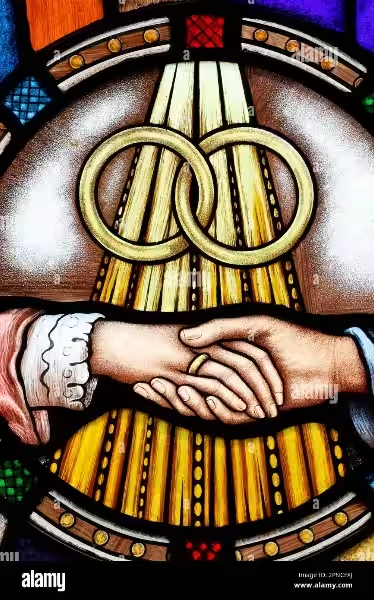
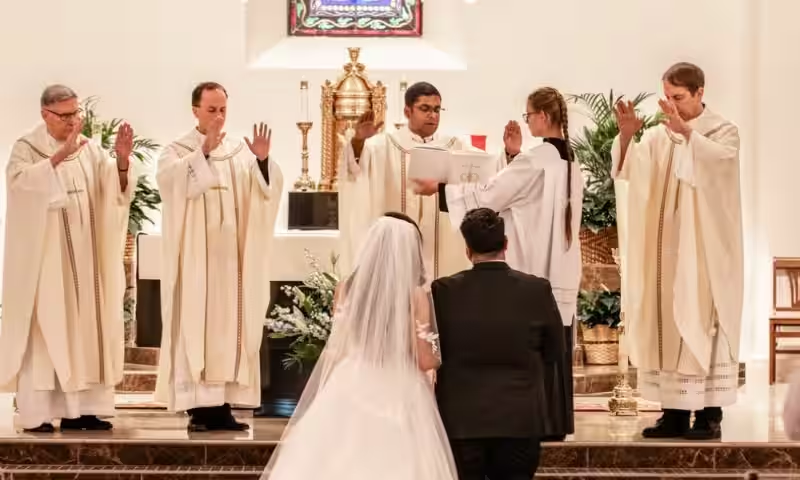
In Catholicism, for instance, the matrimonial sacrament is one of the seven sacraments, considered an indelible mark on the souls of the baptized couple. It signifies the indissoluble bond between husband and wife, mirroring Christ’s unbreakable love for his Church. This divine union is seen as a source of grace, enabling the couple to live out their vows of love, fidelity, and support. The ceremony itself is a profound act of worship, with the couple exchanging vows before God and the Church community, signifying their total self-giving.
Orthodox Christianity: Similar to Catholicism, Orthodox Christianity views marriage as a divine sacrament, often referred to as the “Mystery of Holy Matrimony.” The ceremony is rich in symbolism, including the crowning of the couple, signifying their spiritual victory and their dominion over their new household. The emphasis is on the sanctification of the union and the couple’s reception of grace to live a Christ-centered life together. The unbreakable nature of the bond is a central tenet, reflecting God’s faithfulness.
Protestant Traditions: While not all Protestant denominations formally recognize marriage as a sacrament in the same theological sense as Catholics or Orthodox Christians, many uphold its sacredness and divine institution. Marriage is often seen as a covenant before God, requiring fidelity, love, and mutual commitment. Services may include blessings and prayers for the couple, emphasizing God’s role in their union and the importance of living according to biblical principles. The sacred commitment is paramount.
Other Religions: While the term “sacrament” is specific to Christian theology, other religions also imbue marriage with profound spiritual significance. In Judaism, marriage is a holy covenant (kiddushin), establishing a sacred bond between two individuals and between them and God. Hindu weddings are elaborate ceremonies involving sacred vows and rituals, emphasizing dharma (duty) and the spiritual growth of the couple. Islamic marriages, while a civil contract, are also understood as a divine blessing and a sacred union blessed by Allah.
Preparing for the Matrimonial Sacrament: A Journey of Faith and Growth
The journey toward the matrimonial sacrament is rarely a spontaneous event; it is a period of intentional preparation, a time for couples to deepen their understanding of the commitment they are making and to cultivate the spiritual and practical foundations for a lifelong union. This preparation is not merely about wedding planning; it’s about nurturing the very essence of their relationship within a sacred context.
This preparatory phase often involves pre-marital counseling or religious instruction. These programs are designed to equip couples with the tools and insights needed to navigate the complexities of married life, grounded in their faith. Topics typically covered include communication skills, conflict resolution, financial management, understanding roles and expectations, and, crucially, deepening their spiritual lives together. The goal is to ensure that the couple enters the matrimonial sacrament with a clear understanding of its spiritual dimensions and their responsibilities.
Faith plays an indispensable role in nurturing the marital bond, especially within the framework of the matrimonial sacrament. It provides a divine compass that guides couples through life’s inevitable storms and illuminates their shared journey with purpose and hope. When a marriage is grounded in faith, it is less susceptible to the erosion of everyday stresses and more resilient in the face of adversity.
A shared faith strengthens the spiritual intimacy between a couple. Engaging in prayer, scripture study, and worship together creates a common language of the heart and soul, fostering a deeper connection that transcends superficial interactions. This shared spiritual life becomes a powerful source of mutual support, encouraging each partner to grow in their faith and to embody the virtues of love, patience, forgiveness, and kindness. The matrimonial sacrament is not just a beginning, but a continuous unfolding of this divinely-sanctioned partnership.
Building a Life Together: Practical and Spiritual Foundations
The matrimonial sacrament calls couples to build a life together that reflects the sacredness of their union. This involves establishing both practical and spiritual foundations that will support their enduring commitment. It’s about creating a home that is not only a physical space but also a sanctuary of love, peace, and spiritual growth.
Practically, this means developing healthy communication patterns, where both partners feel heard, understood, and respected. It involves learning to manage finances wisely, working as a team towards shared goals. Spiritually, it means prioritizing time for prayer and reflection, both individually and as a couple. It also entails actively participating in their faith community, drawing strength and guidance from their religious traditions. By diligently cultivating these aspects, couples honor the matrimonial sacrament and lay the groundwork for a fulfilling and spiritually rich marriage.
The Enduring Strength of the Matrimonial Sacrament
The matrimonial sacrament is not a static event but a dynamic and ongoing reality in the lives of those who embrace it. Its enduring strength lies in the belief that it is a union blessed and sustained by divine power, offering a profound source of grace and resilience. This understanding transforms marriage from a fragile human endeavor into a divine covenant capable of weathering any storm.
Couples who view their marriage through the lens of the matrimonial sacrament often find a deeper sense of purpose in their relationship. They are called to love each other as Christ loves the Church – unconditionally, sacrificially, and eternally. This sacred commitment inspires them to continuously seek reconciliation, to practice forgiveness, and to nurture the spiritual growth of one another. The matrimonial sacrament thus becomes a lifelong journey of faith, love, and mutual sanctification.
Frequently Asked Questions about the Matrimonial Sacrament
What is the matrimonial sacrament?
The matrimonial sacrament, also known as marriage, is a sacred covenant between two baptized individuals, a man and a woman, recognized and blessed by God within the Church. It signifies the union of Christ and the Church, characterized by love, faithfulness, and indissolubility.
What are the essential requirements for a Catholic marriage?
For a valid and sacramental Catholic marriage, both individuals must be baptized Christians, freely consent to enter into marriage, and intend to remain married for life, open to the procreation and education of children. Furthermore, the marriage must be celebrated in accordance with the Church’s laws, typically before a priest or deacon and two witnesses.
Can Catholics marry non-Catholics?
Yes, Catholics can marry non-Catholics through a process called “mixed marriage.” This requires permission from the local bishop and involves specific conditions, including the non-Catholic spouse’s agreement that any children born of the marriage will be baptized and raised in the Catholic faith.
What does “indissoluble” mean in the context of marriage?
“Indissoluble” means that a valid sacramental marriage, once entered into, cannot be broken by any human power. It is a lifelong commitment, reflecting God’s unfailing love and faithfulness.
What is the role of the Church in marriage?
The Church acts as a witness to the sacrament of marriage, ensuring that the couple understands the commitments they are making and that their union is blessed according to divine law. The Church also provides ongoing support and guidance to married couples throughout their lives.
What is the purpose of pre-marital preparation?
Pre-marital preparation, often called marriage preparation or pre-cana, is a vital process designed to help engaged couples understand the theological, sacramental, and practical aspects of marriage. It equips them with the tools and knowledge to build a strong, Christ-centered, and lasting union.
What if a Catholic individual has been previously married and divorced?
If a Catholic individual has been previously married and divorced, their previous marriage must be examined by the Church for validity. If the previous marriage is found to be null (i.e., it was not a valid sacramental union), the individual is free to remarry in the Church. This process is handled by the diocesan tribunal.
What is the difference between a civil marriage and a sacramental marriage?
A civil marriage is a legal contract between two individuals recognized by the state. A sacramental marriage, within the Catholic Church, is a spiritual union blessed by God, a covenant that reflects Christ’s love for His Church. While a civil marriage can be dissolved, a sacramental marriage is considered indissoluble.
Can a divorced Catholic receive Holy Communion?
A divorced Catholic who has not remarried in accordance with Church law may receive Holy Communion. However, a divorced Catholic who has remarried without an annulment of their previous marriage is generally not permitted to receive Holy Communion.