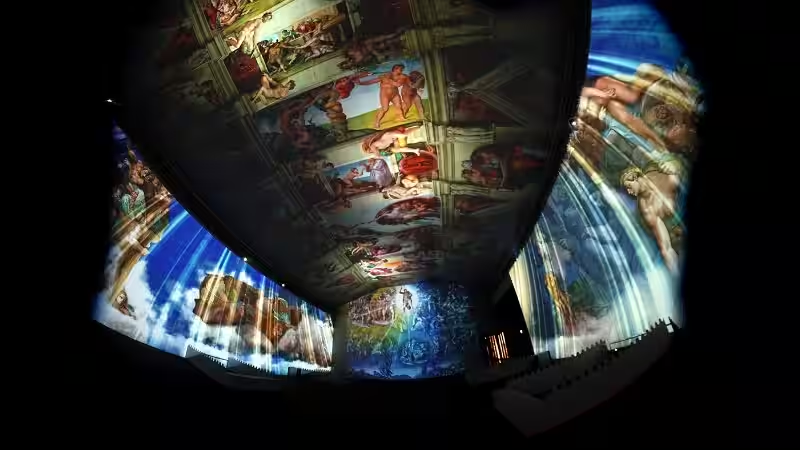
For centuries, the name Michelangelo has conjured images of awe-inspiring art, a testament to human genius and divine inspiration. But what if you could move beyond mere observation and truly step into his world? Imagine feeling the cool Sistine Chapel air on your skin, the vastness of the painted heavens stretching above you, and the palpable emotion of Adam’s reaching finger. This is the promise of the Michelangelo immersive experience – a modern approach to art appreciation that transcends the traditional museum visit, allowing us to connect with the profound religious narratives that fueled the master’s immortal creations.
This isn’t just about seeing a painting; it’s about feeling it. It’s about understanding the intense devotion, the theological debates, and the sheer human struggle that Michelangelo poured into his work. Through innovative technology and thoughtful curation, the Michelangelo immersive experience aims to unlock a deeper understanding of the religious fervor that shaped his art and, in turn, our collective cultural consciousness. It offers a unique opportunity to engage with faith not as an abstract concept, but as a vibrant, tangible force brought to life by unparalleled artistic skill.
The Divine Spark: Michelangelo’s Religious Calling
Michelangelo Buonarroti was a man deeply intertwined with his faith. Born into a devout Catholic family in the late 15th century, religion wasn’t just a backdrop to his life; it was the very bedrock of his artistic and personal philosophy. His patrons, including popes and powerful cardinals, commissioned works that were explicitly religious, designed to inspire awe, educate the populace, and reinforce the tenets of the Church. From the sorrowful Pieta to the thunderous Last Judgment, his art is a visual sermon, a profound exploration of biblical stories and theological ideas.
His genius wasn’t solely in his technical prowess, though that was undeniable. It was in his ability to imbue marble and paint with the very essence of spiritual struggle and divine grace. When he sculpted David, he wasn’t just carving a man; he was embodying the triumph of faith over overwhelming odds. When he painted the Sistine Chapel ceiling, he wasn’t just decorating a room; he was narrating the grand sweep of salvation history, from creation to the covenant with humanity. This deep personal faith allowed him to transcend mere representation and touch the divine in his art, a quality that continues to resonate centuries later.
From Fresco to Virtual Reality: The Evolution of Appreciation
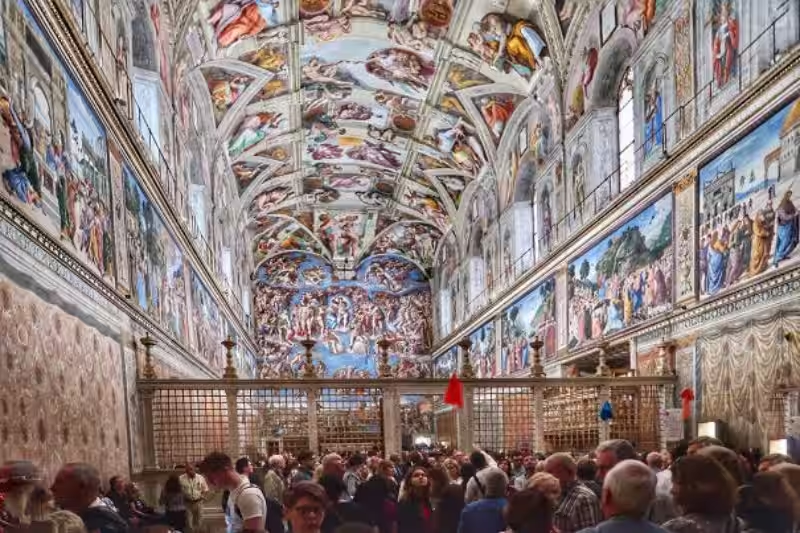
For centuries, experiencing Michelangelo’s religious masterpieces meant undertaking arduous journeys, often to stand in crowded chapels craning one’s neck to catch a glimpse of painted ceilings. The Sistine Chapel, for instance, became a pilgrimage site, with visitors often experiencing it through the limitations of distance and perspective. While undeniably powerful, this physical encounter could still leave much to the imagination, relying on guidebooks and prior knowledge to fully grasp the narratives and emotional weight.
Enter the Michelangelo immersive revolution. This new wave of exhibitions utilizes cutting-edge digital projection mapping, virtual reality, and augmented reality to bring these iconic works into a more intimate and accessible realm. Imagine standing on a virtual platform, allowing you to examine the musculature of a painted angel or the despair on a damned soul’s face in exquisite detail, as if you were hovering beside the artist himself. This technological leap allows for a profound Michelangelo immersive encounter that can illuminate the religious intent and artistic genius in ways previously unimaginable.
The Sistine Chapel: A Celestial Theater Unveiled
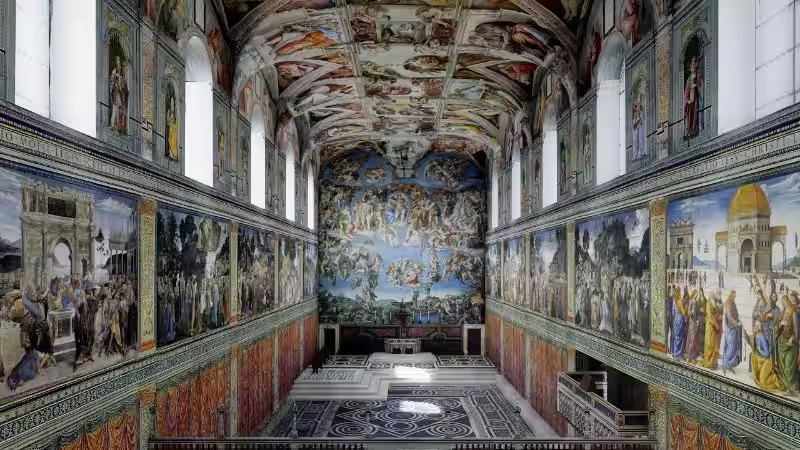
The Sistine Chapel ceiling is perhaps the most iconic example of Michelangelo’s religious artistic output. It’s a sprawling narrative of the Old Testament, a visual epic commissioned by Pope Julius II. The sheer scale of the project, undertaken over four painstaking years, is a testament to Michelangelo’s unwavering dedication and the profound religious significance he attributed to it. He saw himself not merely as an artist, but as a vessel for divine inspiration, tasked with bringing God’s word to life for generations to come.
Within this Michelangelo immersive experience, you can virtually walk beneath the painted heavens, your perspective shifting as you follow the stories of Genesis. You’ll witness the iconic creation of Adam, a moment of divine spark that has come to symbolize the very essence of human existence and our connection to the divine. You can explore the sinuous figures of prophets and sibyls, each rendered with an emotional intensity that speaks to their divine pronouncements and the weight of their divine messages. The Michelangelo immersive journey through the Sistine Chapel is a profound exploration of faith, creation, and humanity’s place within God’s grand design.
The Last Judgment: A Divine Reckoning in Vivid Detail
Decades after completing the ceiling, Michelangelo returned to the Sistine Chapel to paint The Last Judgment. This monumental fresco, a dramatic depiction of Christ returning to judge all of humanity, is a powerful and unsettling masterpiece. It reflects a more tumultuous period in Michelangelo’s life and in the wider Church, grappling with reform and the ever-present anxieties of sin and salvation. The sheer dynamism and emotional turmoil captured on the fresco walls are breathtaking, a testament to his evolving artistic and spiritual perspective.
An effective Michelangelo immersive exhibition will allow visitors to get up close and personal with this terrifyingly beautiful vision. You can trace the anguish on the faces of the damned as they are dragged into hell, or the serene ascension of the saved. The Michelangelo immersive approach can highlight the intricate details of each figure, revealing the anatomical mastery and the profound theological symbolism embedded within the composition. It’s a visceral reminder of the Christian belief in a final accounting and Michelangelo’s unparalleled ability to translate that belief into a visual spectacle that continues to move and challenge viewers today.
Beyond the Sistine: Other Religious Masterpieces in Immersive Formats
While the Sistine Chapel often takes center stage, Michelangelo’s religious art extends far beyond its walls. His sculptures, in particular, possess a profound spiritual gravitas that lends itself beautifully to an immersive experience. The Pieta, for instance, a sculpture of Mary cradling the dead Christ, is a masterpiece of pathos and divine sorrow. Imagining standing before this work, with a Michelangelo immersive projection guiding your gaze to the subtle folds of Mary’s robe and the heartbreaking stillness of Christ’s body, can evoke a powerful emotional connection.
Similarly, his series of drawings and sketches, often preparatory works for larger commissions, offer an intimate glimpse into his creative process and his deeply contemplative mind. An Michelangelo immersive exhibition might present these works in a way that allows viewers to virtually “unfold” his thought process, seeing his initial ideas and gradual refinements. This focus on the journey of creation, combined with the spiritual underpinnings of his subject matter, provides a unique and deeply informative Michelangelo immersive encounter with faith expressed through artistic endeavor.
The Enduring Power of Faith and Art
The Michelangelo immersive experience isn’t just about appreciating art; it’s about understanding the profound human drive to connect with something greater than ourselves. Religion, for Michelangelo, was not a quiet contemplation but a vibrant, often turbulent, force that shaped his world and his art. His masterpieces are enduring testaments to this, offering us windows into the anxieties, hopes, and profound spiritual beliefs of his time, as well as the universal human quest for meaning.
By stepping into these Michelangelo immersive worlds, we are invited to engage with faith not just intellectually, but emotionally and viscerally. We can feel the awe of creation, the fear of judgment, and the solace of divine love, all through the lens of unparalleled artistic genius. This modern approach to experiencing art allows us to move past the limitations of time and physical space, forging a direct and potent connection with the religious spirit that continues to inspire and resonate within Michelangelo’s eternal creations.
Frequently Asked Questions: Michelangelo Immersive and Religion
Is Michelangelo Immersive focused on religious themes?
Yes, Michelangelo Immersive deeply explores themes of religion, particularly the religious narratives and imagery central to Michelangelo’s most famous works, such as the Sistine Chapel ceiling and the Last Judgment.
How does Michelangelo Immersive connect to Catholic beliefs?
The exhibition showcases Michelangelo’s profound connection to Catholicism. Many of his masterpieces were commissioned by the Church and directly depict stories and figures from the Bible, reflecting Catholic doctrine and theology.
Does Michelangelo Immersive include an analysis of Michelangelo’s personal faith?
While the exhibition primarily focuses on Michelangelo’s artistic output and its religious context, it provides insights into how his faith likely influenced his artistic vision and the powerful religious messages conveyed in his art.
Can I expect to see religious art in Michelangelo Immersive?
Absolutely. The core of Michelangelo Immersive is his groundbreaking religious art. Visitors will experience high-resolution projections and immersive displays of iconic religious scenes and figures.
Is this exhibition suitable for religious education?
Michelangelo Immersive can serve as a valuable resource for religious education, offering a visually engaging and accessible way to learn about key biblical stories and their artistic interpretation by one of history’s greatest masters.