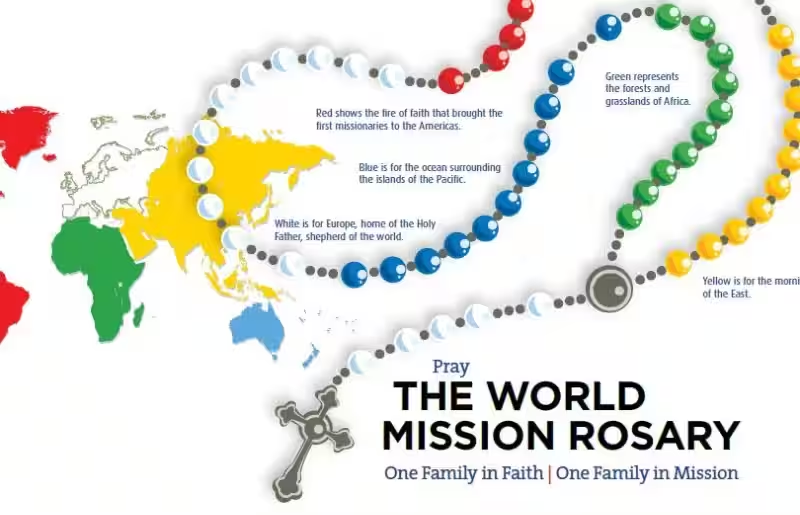
The concept of missionary work is as old as many of the world’s major faiths. It’s a powerful force, often sparking both admiration and controversy, driven by a profound belief in the transformative power of faith. At its core, a missionary example isn’t just about converting others; it’s about embodying the principles and values of one’s religion, sharing its teachings, and often, offering tangible assistance to those in need. This article delves into the multifaceted nature of the missionary example in religion, exploring its motivations, methods, impact, and the legacy it continues to shape.
The Heart of the Mission: Why Religions Send Out Their Messengers
The impetus behind missionary endeavors is deeply rooted in the core tenets of many religions. Often, there’s a belief in a universal message or truth that has the potential to bring salvation, enlightenment, or a better way of life to all humanity. This isn’t born out of a desire to dominate, but rather from a genuine conviction that what they possess is of immense value and should be shared. Think of the early Christians, compelled by the Great Commission to spread the Gospel, or Buddhist monks carrying teachings of compassion and mindfulness across continents. The motivation is a powerful cocktail of faith, compassion, and a sense of divine mandate.
This drive is not always about grand pronouncements or elaborate ceremonies. For many, the missionary example is found in the quiet dedication of individuals who live their faith outwardly. Consider a doctor who volunteers in a remote village, not just to practice medicine, but to offer spiritual comfort and share their beliefs. This person is a living testament to their faith, their actions speaking louder than any sermon. The commitment to helping others, whether through medical aid, education, or simply offering a listening ear, becomes an intrinsic part of their missionary example, demonstrating the practical application of their religious values.
Diverse Paths, Shared Purpose: Exploring Different Missionary Models
The way missionary work is conducted varies significantly across different religious traditions and historical periods. There isn’t a single, monolithic approach. We see the missionary example manifest in numerous forms, each with its own unique characteristics and historical context. From the itinerant preachers of the Reformation to the global aid organizations of modern Christianity, and from the saffron-robed monks sharing Buddhist philosophy to the meticulous efforts of Jewish outreach programs, the methods are as diverse as the faiths themselves. Understanding these differences helps us appreciate the breadth of religious expression through missionary activity.
One common and highly impactful missionary example is the establishment of schools and hospitals. Many religious groups have historically founded institutions of learning and healing, often in areas where such services were sorely lacking. These endeavors, while inherently tied to their faith, have had a profound and lasting positive impact on communities, irrespective of religious affiliation. For instance, a missionary example in this vein could be a group of nuns establishing a leper colony and providing care, demonstrating their faith through acts of profound service and compassionate action. These institutions often become centers of community life, fostering education, health, and social upliftment.
The Power of Presence: How Missionaries Live Their Faith
Perhaps the most potent missionary example is found in the lives of the missionaries themselves. Their commitment, sacrifices, and dedication serve as a powerful testament to their beliefs. They often immerse themselves in new cultures, learn local languages, and strive to understand the perspectives of those they seek to engage with. This isn’t a superficial engagement; it’s a deep dive into the human experience, driven by a desire to connect and share. The missionary example is often characterized by personal sacrifice, unwavering dedication, and a deep sense of empathy.
This “living witness” is crucial. It’s not just about reciting doctrines; it’s about demonstrating the transformative power of faith through one’s actions and character. A missionary who patiently endures hardship, treats everyone with respect, and actively works to improve the lives of others provides a compelling missionary example. Think of a young person leaving their homeland, foregoing personal comfort, and dedicating years of their life to teaching children in a developing country, all while sharing their faith through their daily life. This relatable and inspiring narrative is a powerful form of evangelism.
Beyond Conversion: The Broader Impact of Missionary Endeavors
While religious conversion is often a primary goal, the impact of missionary work extends far beyond this. Missionaries have historically played significant roles in education, healthcare, and social development. They have introduced new technologies, promoted literacy, and advocated for human rights, often in challenging environments. The missionary example can be seen in the tireless efforts to alleviate suffering and empower marginalized communities. This multifaceted contribution highlights the complex and often beneficial role religious outreach can play in the wider world.
Furthermore, missionary activities have, in many instances, fostered cultural exchange and understanding. As individuals from different backgrounds interact, a bridge can be built between cultures, leading to mutual learning and respect. Even when conversion doesn’t occur, the missionary example can inspire introspection and dialogue about faith, values, and the human condition. Consider the missionary example of an anthropologist who, while sharing their faith, also meticulously documents a dying language, preserving it for future generations. This act of preservation, born from a deep respect for humanity, transcends the immediate goal of religious conversion.
Navigating the Complexities: Challenges and Criticisms of Missionary Work
It’s crucial to acknowledge that missionary work has not been without its controversies and criticisms. Throughout history, some missionary efforts have been intertwined with colonialism, leading to the suppression of indigenous cultures and the imposition of foreign values. This has resulted in a complex legacy, where the positive contributions are often overshadowed by the negative consequences for certain communities. The missionary example is therefore a nuanced one, requiring careful consideration of its historical context and ethical implications.
The methods employed by missionaries have also come under scrutiny. Critics often point to instances of cultural insensitivity, exploitation, or aggressive proselytization as detrimental aspects of missionary endeavors. A missionary example that involves pressuring individuals to abandon their cultural heritage in favor of a new faith can be deeply damaging. It’s essential for modern missionary work to prioritize respect, cultural sensitivity, and genuine dialogue, ensuring that the desire to share faith does not come at the expense of human dignity or cultural integrity.
The Modern Missionary: Evolving Approaches and Ethical Considerations
In the contemporary landscape, missionary work is evolving. There’s a growing emphasis on inculturation, which involves integrating faith into existing cultural frameworks rather than seeking to replace them entirely. This approach recognizes the inherent value of diverse cultures and aims to foster a missionary example that is respectful and relevant to local contexts. The focus is shifting from simply “converting the heathen” to building relationships, fostering mutual understanding, and empowering local communities to lead their own spiritual journeys.
Today, many missionary examples involve grassroots initiatives, where individuals work collaboratively with local communities on projects that address immediate needs, such as poverty alleviation, education, or environmental sustainability. The emphasis is on partnership and empowerment, with the spiritual aspect being shared organically within the context of these collaborative efforts. This more nuanced and ethical approach to religious outreach seeks to build bridges rather than erect walls, recognizing that faith can be a force for good when expressed with love, respect, and a genuine commitment to the well-being of all.
Missionary work, in a religious context, refers to the activity of spreading a religious faith or teaching to others, often in new territories or among people who do not share the same beliefs. This can involve teaching, preaching, providing humanitarian aid, and living by the principles of their faith in hopes of inspiring others.
What are some common examples of missionary work?
Examples of missionary work include:
Teaching religious doctrines and scriptures.
Sharing personal testimonies of faith.
Organizing and leading religious services or study groups.
Engaging in community service and humanitarian efforts, such as building homes, providing medical care, or distributing food.
Learning and speaking the local language to better communicate with people.
Living a life that exemplifies the values and teachings of their religion.
What motivates people to become missionaries?
People become missionaries for a variety of reasons, often rooted in their religious beliefs and a desire to:
Share what they believe to be a truth or a path to salvation.
Fulfill a perceived divine commandment to spread their faith.
Help others find spiritual guidance, peace, or purpose.
Serve humanity and make a positive impact on the world.
Deepen their own understanding and commitment to their faith through service.
Are there different types of missionary work?
Yes, missionary work can take many forms. Some missionaries focus primarily on proselytizing, while others emphasize humanitarian service. Many engage in a combination of both. Some may be sent to specific geographic locations, while others might work within their own communities to reach different cultural groups. There are also short-term mission trips and long-term commitments.
What are some challenges missionaries might face?
Missionaries can encounter numerous challenges, including:
Language barriers.
Cultural misunderstandings.
Physical hardship and difficult living conditions.
Rejection or opposition from those they are trying to reach.
Emotional and psychological stress from being away from home and family.
Navigating complex social and political environments.
Maintaining their own faith and well-being amidst these challenges.
How does missionary work relate to the religion itself?
Missionary work is often seen as an integral part of a religion’s identity and mission. It reflects the religion’s core beliefs about its truth, its value to humanity, and its adherents’ responsibility to share it. For many religions, evangelism or missionary outreach is a fundamental expression of their faith and a key mechanism for growth and perpetuation.