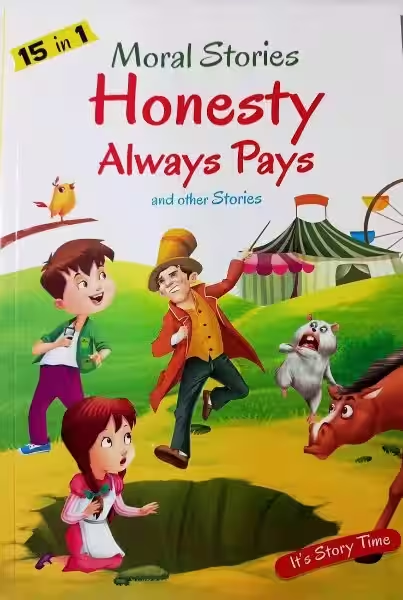
In the quiet moments of reflection, or amidst the clamor of daily life, we often seek guidance. We yearn for a compass to navigate the complexities of right and wrong, a framework to understand our purpose and our place in the world. For many, this compass is found within the pages of a moral book. These texts, often deeply intertwined with religious traditions, offer more than just stories; they present a blueprint for living a life of integrity, compassion, and meaning. They are the bedrock upon which spiritual journeys are built, providing wisdom passed down through generations, shaping our understanding of virtue and vice, and ultimately, influencing the very essence of our being.
The concept of a moral book isn’t confined to a single faith or culture. Across the vast tapestry of human history, societies have relied on sacred texts, philosophical treatises, and even collections of parables to instill ethical principles. These books serve as repositories of collective wisdom, offering a shared language for discussing morality and a common ground for ethical decision-making. They are not static relics but living documents, their messages reinterpreted and applied anew by each generation, ensuring their continued relevance in a constantly evolving world.
The Sacred Scroll: Religion as the Foundation of Morality
Religion, in its myriad forms, has historically been the primary custodian of the moral book. These sacred texts, whether the Bible, the Quran, the Torah, the Bhagavad Gita, or the Tripitaka, are not merely historical records; they are considered divine revelations, imbued with the authority to dictate moral conduct. They offer a divine mandate for ethical living, outlining commandments, virtues, and the consequences of transgression. This divine sanction provides a powerful incentive for individuals to adhere to the moral codes presented, fostering a sense of accountability that extends beyond societal expectations.
Within these religious traditions, the moral book acts as a spiritual guide. It provides narratives of prophets, saints, and exemplary individuals whose lives serve as models for emulation. These stories illustrate abstract moral principles in concrete human experiences, making them relatable and understandable. For instance, the story of Abraham’s willingness to sacrifice Isaac in Judaism, Christianity, and Islam, though controversial, is often interpreted as a profound lesson in absolute obedience and faith, highlighting the ultimate sacrifice one might be called to make for a higher purpose. Such narratives offer both inspiration and a cautionary tale, shaping our understanding of what it means to live a virtuous life.
The Golden Rule and Beyond: Universal Ethical Principles in Religious Texts
One of the most striking aspects of many religious moral books is the prevalence of universal ethical principles that resonate across different faiths. The Golden Rule, in its various formulations – “Do unto others as you would have them do unto you” – appears in some form in nearly every major religion. This fundamental tenet emphasizes empathy and reciprocity, urging individuals to consider the impact of their actions on others. It’s a simple yet profound concept that forms the cornerstone of compassionate interaction and peaceful coexistence, a testament to the shared human desire for fairness and respect.
Beyond the Golden Rule, religious moral books delve into a rich spectrum of virtues. They champion qualities such as honesty, kindness, forgiveness, humility, and justice. Consider the emphasis on charity and compassion for the poor and vulnerable found in the teachings of Jesus, the Zakat in Islam, or the concept of Dana in Buddhism. These are not just abstract ideals; they are calls to action, encouraging believers to actively participate in building a more just and equitable world. The narratives within these books often depict the rewards of virtuous living and the pitfalls of succumbing to greed, envy, or anger, providing a clear roadmap for cultivating inner peace and contributing positively to society.
From Ancient Wisdom to Modern Application: The Evolving Role of the Moral Book
While the core tenets of many religious moral books have remained remarkably consistent, their application in the modern world requires thoughtful engagement. The rapid pace of technological advancement, globalization, and changing social norms present new ethical dilemmas that may not have been explicitly addressed in ancient texts. However, the underlying principles of compassion, justice, and responsibility continue to offer a robust framework for navigating these challenges. For example, the ethical considerations surrounding artificial intelligence or environmental stewardship can be approached by drawing upon the enduring wisdom regarding our duties to one another and to creation.
The interpretation and application of a moral book is a dynamic process. It involves critical thinking, dialogue, and a commitment to understanding the spirit rather than just the letter of the law. This is where religious scholarship and community discussions become invaluable. By engaging with different perspectives and wrestling with challenging passages, individuals can deepen their understanding and find ways to live out the moral teachings in ways that are relevant to their contemporary lives. The act of studying and discussing a moral book fosters a sense of community and shared purpose, strengthening the bonds between individuals on their spiritual journeys.
Personal Growth and Spiritual Resilience: The Internal Impact of Moral Texts
The influence of a moral book extends far beyond outward behavior; it profoundly shapes our inner lives. Regularly engaging with teachings on virtues like patience, perseverance, and gratitude can cultivate greater emotional resilience. When faced with adversity, the wisdom found in these texts can offer solace, perspective, and a renewed sense of hope. For instance, the story of Job’s unwavering faith in the face of immense suffering, a central narrative in Abrahamic religions, serves as a powerful example of endurance and trust in a higher power during times of profound hardship.
Furthermore, the exploration of a moral book encourages self-reflection and introspection. By examining the ethical challenges faced by characters in these narratives, and by considering the divine commandments, individuals are prompted to examine their own motivations, actions, and character. This process of self-assessment is crucial for spiritual growth. It allows us to identify areas where we fall short of our ideals and to actively work towards becoming better versions of ourselves. The journey of understanding and embodying the teachings of a moral book is, in essence, a journey of continuous self-improvement and spiritual maturation.
Conclusion: The Timeless Relevance of Moral Books
In a world often characterized by flux and uncertainty, the moral book stands as a steadfast beacon of wisdom and guidance. Whether viewed through the lens of religious faith or as a source of profound ethical philosophy, these texts offer invaluable insights into the human condition and the pursuit of a meaningful life. They provide a shared heritage of moral principles, a framework for ethical decision-making, and a wellspring of inspiration for personal growth.
Ultimately, the power of a moral book lies not just in its written words, but in its ability to inspire action and transform lives. By internalizing its teachings and striving to live by its principles, individuals can cultivate inner peace, build stronger communities, and contribute to a more just and compassionate world. The enduring relevance of these sacred texts is a testament to their profound understanding of what it means to be human, and their timeless capacity to guide us toward a life of purpose and virtue.
Frequently Asked Questions – Moral Books and Religion
What is a moral book and how does it relate to religion?
A moral book is a text that focuses on ethical principles, values, and guidance for behavior. Many religions produce moral books, such as scriptures, theological works, or collections of teachings, which outline their specific moral codes and doctrines. These books often serve as foundational texts for understanding a religion’s view on right and wrong.
Are all moral books religious in nature?
No, not all moral books are religious. While many moral philosophies and ethical systems are deeply intertwined with religious beliefs, there are also secular ethical frameworks and philosophical texts that explore morality without reference to divine authority or religious dogma. These can include works on humanism, utilitarianism, virtue ethics, and more.
How do religious moral books influence followers?
Religious moral books profoundly influence followers by providing a framework for understanding their faith’s ethical teachings, shaping their personal values, and guiding their actions in accordance with religious commandments and principles. They often offer narratives, examples, and commandments that serve as models for moral conduct.
Can people of different religions or no religion benefit from religious moral books?
Yes, individuals from different religious backgrounds or those with no religious affiliation can still benefit from religious moral books. They can offer insights into diverse ethical perspectives, contribute to understanding different cultures and belief systems, and provide universal moral lessons that resonate across various traditions, such as compassion, honesty, and justice.
How do religious moral books address moral dilemmas?
Religious moral books address moral dilemmas by offering specific commandments, parables, case studies, and theological interpretations that provide guidance. They often present a divinely sanctioned perspective on how to navigate complex ethical situations, emphasizing obedience to divine law, the pursuit of spiritual growth, and the welfare of the community.