Have you ever marveled at the intricate beauty of a sunrise, the effortless grace of a dancer, or the profound wisdom of an elder? These are not mere accidents of existence; they are often manifestations of what many traditions call natural gifts. These inherent talents and abilities, seemingly woven into our very being, have long been a subject of wonder and spiritual exploration across diverse religious and philosophical landscapes. Religion, in its myriad forms, offers a rich tapestry of perspectives on these innate endowments, viewing them not as random occurrences but as divine sparks, blessings, or even sacred responsibilities bestowed upon humanity.
From the carpenter’s skillful hands to the poet’s evocative words, our natural gifts shape our interactions with the world and with each other. They are the building blocks of our individual journeys and, collectively, the threads that weave the intricate fabric of human society. This article will delve into the profound connection between these innate abilities and the spiritual underpinnings of various religions, exploring how these traditions understand, celebrate, and guide the development of our natural gifts.
Many religions posit that our natural gifts are not self-generated but are divinely ordained. They are seen as extensions of the Creator’s own attributes, imprinted upon us at conception or birth. Consider the concept of the soul, a fundamental tenet in many faiths, often believed to carry with it a unique blueprint of potential, including specific talents and inclinations. This perspective imbues our abilities with a sense of sacredness, elevating them beyond mere practical skills to something far more profound and meaningful. They are not just things we are good at; they are sacred endowments designed for purpose.
The idea of predestination, present in some theological frameworks, suggests that certain individuals may be born with specific natural gifts for a predetermined role or mission. This doesn’t necessarily imply a lack of free will, but rather a recognition that our innate capacities can align with a larger divine plan. Think of a musician whose innate talent for melody is so strong it feels like a calling, or a healer whose inherent empathy draws them towards alleviating suffering. These aren’t just hobbies; they are often seen as divinely guided inclinations that point towards a deeper purpose, a sacred calling waiting to be embraced.
Gifts as Divine Trust and Responsibility
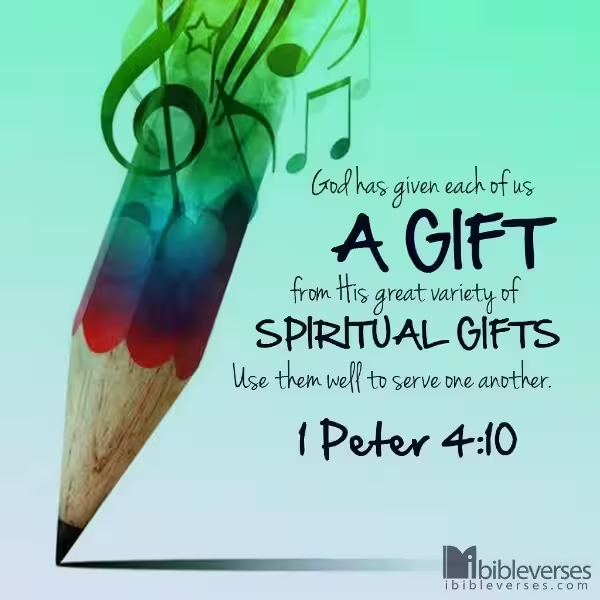
One of the most consistent themes across religions concerning natural gifts is the notion that they are a form of divine trust. We are not simply given these abilities; we are entrusted with them, expected to nurture, develop, and utilize them for good. This perspective shifts the focus from passive reception to active stewardship. It means that our talents come with an inherent sacred responsibility to use them wisely and ethically, contributing positively to the world around us.
For instance, a person with a natural gift for leadership might be seen as divinely appointed to guide their community, not for personal gain, but for the collective well-being. Similarly, someone with a natural gift for teaching is entrusted with the responsibility of imparting knowledge and wisdom to future generations. The parable of the talents in Christianity, where servants are rewarded based on how they invested the money entrusted to them, powerfully illustrates this concept. It emphasizes that neglecting or squandering our natural gifts is akin to betraying this sacred trust.
Nurturing the Divine Spark: Religious Pathways to Growth
Religion offers a rich array of practices and teachings aimed at helping individuals discover, cultivate, and harness their natural gifts. These pathways are not about forcing someone to be something they are not, but rather about creating an environment where their innate potential can flourish. From prayer and meditation to communal worship and ethical instruction, religious traditions provide the tools and the framework for this growth, viewing the development of natural gifts as an integral part of spiritual maturation.
Many faiths encourage introspection and self-discovery, often through journaling, contemplation, or seeking guidance from spiritual mentors. These practices help individuals identify the whispers of their natural gifts, the activities that bring them joy and a sense of fulfillment, and the areas where they naturally excel. This journey of self-awareness is crucial, as it allows us to align our actions with our inherent talents, leading to a more authentic and purpose-driven life. The pursuit of spiritual wisdom often involves understanding our unique contributions and how they can serve a higher purpose.
The Role of Community and Service
Beyond individual introspection, religious communities play a vital role in the nurturing of natural gifts. Fellowship and shared practice provide opportunities for individuals to test their abilities, receive constructive feedback, and collaborate with others who possess complementary talents. This communal aspect reinforces the idea that our natural gifts are not meant to be hoarded but shared, contributing to the collective strength and flourishing of the group.
Service is a cornerstone of many religious traditions, and it provides a powerful arena for the application and refinement of natural gifts. Whether it’s volunteering at a soup kitchen, mentoring young people, or participating in charitable initiatives, engaging in acts of service allows individuals to use their innate abilities to make a tangible difference in the lives of others. This selfless application of talents not only benefits the recipients but also deepens the giver’s connection to their divine purpose and their understanding of their sacred calling.
Recognizing the Universal Nature of Divine Endowments
While specific doctrines and terminology may vary, the underlying recognition of natural gifts as special endowments is a remarkably common thread weaving through the world’s religions. From the concept of karma in Hinduism and Buddhism, which suggests that current abilities are influenced by past actions and predispositions, to the Islamic emphasis on zakat (charity) as a recognition of God’s blessings and a means of purifying wealth and talents, the idea of inherent capacities being divinely bestowed or influenced is pervasive.
Even in secularized societies, the echoes of this spiritual understanding persist. We speak of “talent scouts” in sports and the arts, recognizing exceptional innate abilities. We marvel at “prodigies” who display extraordinary skills at a young age, hinting at something beyond mere learned proficiency. These modern observations, though often devoid of overt religious language, resonate with the ancient wisdom that recognizes a “divine spark” within individuals, a natural gift that sets them apart and offers them the potential for remarkable contribution.
From Potential to Purpose: Living a Gifted Life
Ultimately, understanding our natural gifts through a religious lens is an invitation to live a more purposeful and fulfilling life. It encourages us to see ourselves not as passive recipients of circumstance, but as active participants in a divine plan, endowed with sacred tools to contribute to the world. When we recognize our abilities as natural gifts, we imbue them with a deeper significance, transforming them from mere skills into expressions of our unique divine spark.
Embracing this perspective can lead to a profound shift in how we approach our careers, our relationships, and our contributions to society. It means actively seeking opportunities to use our innate talents in ways that align with our values and that benefit others. It is about recognizing the sacred responsibility that comes with possessing these divine endowments and striving to live a life that honors them, a life where our natural gifts become the vibrant colors in the masterpiece of our existence, painted with the brushstrokes of purpose and faith.
Frequently Asked Questions about Natural Gifts and Religion
What are natural gifts in a religious context?
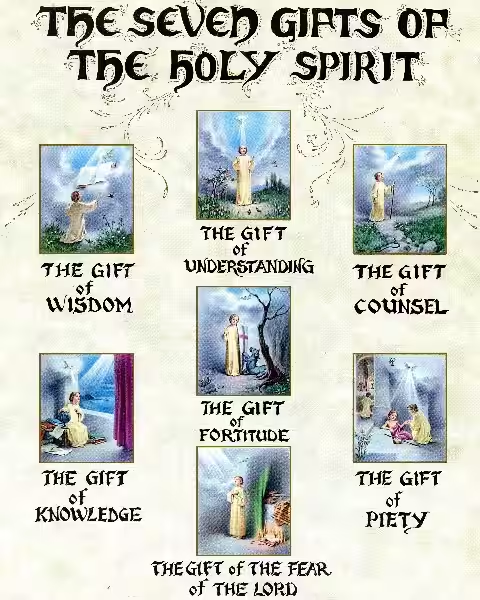
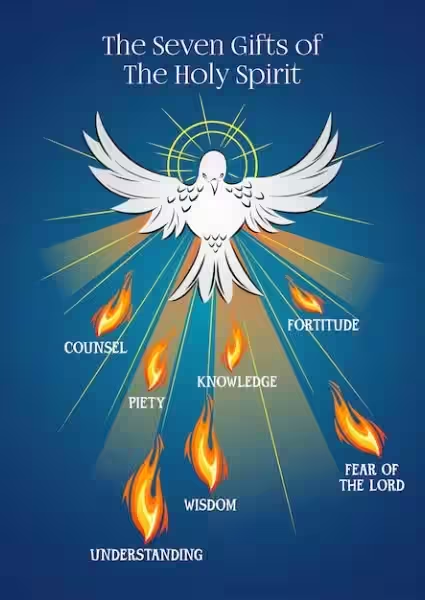
In a religious context, natural gifts are often understood as inherent talents, abilities, or inclinations that individuals possess from birth, which are believed by some to be bestowed or influenced by a divine source or spiritual force. These are distinct from spiritual gifts, which are often seen as supernatural endowments specifically for religious ministry or service.
How does religion view the origin of natural gifts?
Different religions offer various perspectives on the origin of natural gifts. Some believe they are direct blessings from a creator deity, intended to be used for good. Others might see them as part of the karma or destiny accumulated from past lives. Still others may view them as simply biological or psychological traits that are part of the human condition, with religious teachings guiding how these gifts should be developed and utilized.
Are natural gifts and spiritual gifts the same?
No, they are generally considered distinct. Natural gifts are typically seen as innate human capabilities (e.g., artistic talent, logical reasoning, empathy), while spiritual gifts are divine endowments given for the purpose of building up the religious community or serving God. Some theological traditions believe natural gifts can be sanctified or elevated by divine grace and used in service of religious purposes.
How should one use their natural gifts according to religious teachings?
Most religions encourage individuals to use their natural gifts for the betterment of themselves, others, and the world. This often involves using talents ethically, responsibly, and in ways that align with the religious community’s values, such as promoting compassion, justice, or spiritual growth. The specific application will vary based on the tenets of each faith.
Can natural gifts be seen as a form of divine calling?
For some religious individuals, their natural gifts can be perceived as a sign of a divine calling or purpose. The inclination and aptitude for certain activities might be interpreted as God’s way of directing them towards a specific path or ministry, whether within or outside formal religious structures.
What if someone feels they don’t have significant natural gifts?
Religious teachings often emphasize that every individual has value and purpose, regardless of perceived extraordinary talents. The focus may shift to developing existing, perhaps less obvious, abilities, cultivating virtues like patience and kindness, or finding fulfillment in service and contribution through ordinary means. Humility and gratitude are also frequently encouraged.