In a world increasingly dominated by concrete jungles and digital distractions, the allure of a nature home, a dwelling intrinsically connected to the natural world, has never been stronger. But beyond the aesthetic appeal and the promise of tranquility, these spaces are increasingly becoming fertile ground for spiritual growth and a profound re-engagement with the sacred. For many, building or inhabiting a nature home isn’t just about creating a beautiful living space; it’s a conscious act of aligning their lives with the rhythms of the earth, a practice that echoes ancient religious traditions and offers a modern pathway to a more meaningful existence.
This article will explore the deep, often unspoken, connections between nature homes and the realm of religion. We’ll delve into how these living spaces can serve as sanctuaries for contemplation, catalysts for gratitude, and tangible manifestations of spiritual principles. From the humble hermitages of ascetics to the grand eco-villages, the desire to live in harmony with nature is a recurring theme in human history, deeply intertwined with our spiritual aspirations.
The Sanctuary of Silence: Nature Homes as Sacred Spaces
The very essence of a nature home often cultivates an atmosphere conducive to spiritual practice. Imagine waking to the gentle chirping of birds instead of an alarm, or watching the sunrise paint the sky from your window. This daily immersion in the natural world can naturally quiet the incessant chatter of the mind, creating a profound sense of peace. This stillness is not an absence of sound, but rather an invitation to listen to the subtler whispers of existence, a core tenet in many religious and contemplative traditions. The absence of man-made noise pollution allows for a heightened awareness of the earth’s symphony, fostering a meditative state effortlessly.
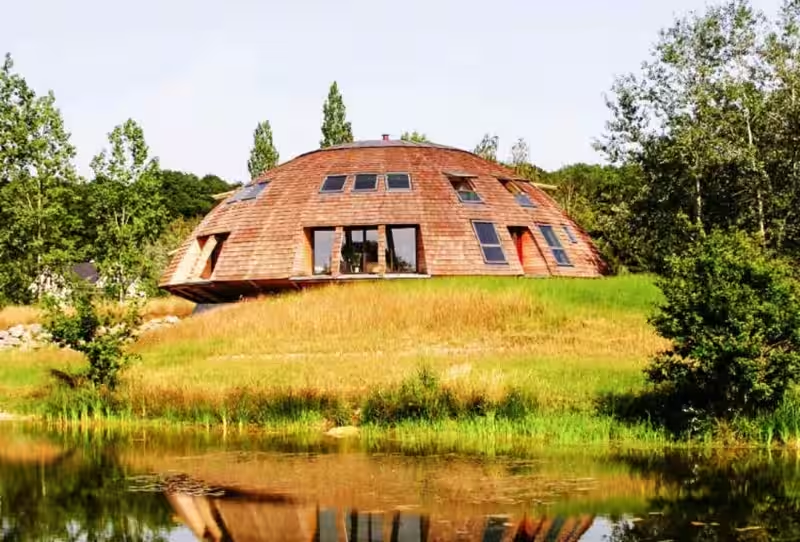
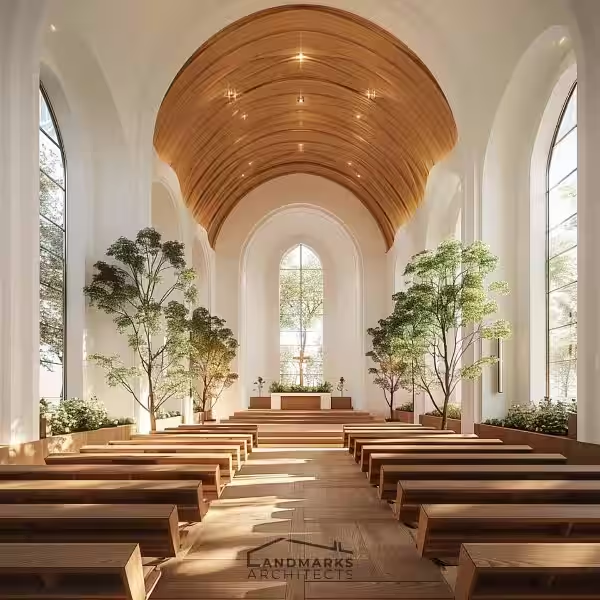
Many religions emphasize the importance of sacred spaces – places set apart for reflection, prayer, and communion with the divine. A nature home, by its very design and location, can embody this sacredness. Whether it’s a simple cabin nestled in a forest, a mud-brick dwelling overlooking rolling hills, or a yurt under a canopy of stars, these homes become personal temples. The materials used, often sourced locally and sustainably, further imbue the space with reverence for the earth. Think of the warmth of natural wood, the grounding presence of stone, or the breathable comfort of natural fibers – these elements connect us to the very fabric of creation, mirroring the inherent divinity found in all things, a concept central to pantheistic and animistic beliefs.
From Contemplation to Communion: Experiencing the Divine in Nature Homes
The act of building or tending to a nature home itself can be a deeply spiritual endeavor. The physical labor involved, the connection to the seasons, the challenges and rewards of living in tune with the environment – all these can become forms of active meditation or devotion. For instance, tending a garden within the vicinity of your nature home isn’t just about growing food; it’s about participating in the miracle of life, a tangible expression of faith in the generative power of the earth. This hands-on engagement fosters a sense of reciprocity, a feeling of being a steward rather than a master of the land, aligning with religious calls for responsible stewardship of creation.
Furthermore, the profound beauty and order observed in nature, from the intricate patterns of a snowflake to the vastness of the cosmos visible from a remote nature home, often inspire awe and wonder. This sense of awe is a powerful gateway to spiritual experience. It can trigger feelings of gratitude, humility, and a recognition of something larger than oneself. Many religious traditions speak of experiencing the divine through the contemplation of creation, and a nature home provides an unparalleled vantage point for such contemplation. Witnessing the resilience of a wildflower pushing through concrete, or the grandeur of a mountain range, can evoke a profound spiritual realization, reminding us of our interconnectedness with all living things.
The Language of the Land: Nature Homes and Religious Symbolism
Throughout history, religious practices have been rich with symbolism drawn from the natural world. The olive branch representing peace, the dove symbolizing the Holy Spirit, the lotus flower signifying purity – these are just a few examples of how nature’s forms and cycles have been used to convey spiritual truths. A nature home can become a living embodiment of this symbolism. Imagine a home with a living roof, symbolizing the abundance of life and the earth’s nurturing embrace, or a water feature that mimics a sacred spring, representing purification and renewal.
The materials and design of a nature home can also carry inherent religious significance. For example, the use of ethically sourced timber might reflect a commitment to non-violence (ahimsa), a principle found in many Eastern religions. A circular design, evoking the sun or the moon, could symbolize the eternal cycle of life and death, a concept central to numerous spiritual cosmologies. Even the orientation of a nature home, perhaps aligning with the solstices or equinoxes, can connect inhabitants to ancient celestial observances and the profound cosmic order that many religions seek to understand and participate in. These choices transform a dwelling from mere shelter into a sacred artifact, a physical manifestation of deeply held beliefs.
Living Out Faith: Practical Spirituality in Nature Homes
The practicalities of living in a nature home often necessitate a lifestyle that aligns with many religious values. Resourcefulness, mindfulness, and a deep respect for the environment become not just desirable traits, but essential skills. For instance, managing water resources responsibly in a drought-prone area teaches a profound lesson in conservation, which can be framed as a religious duty to protect God’s creation. Similarly, composting organic waste, a common practice in nature home living, transforms what might be considered refuse into fertile soil, embodying the spiritual principle of redemption and the cyclical nature of life.
The community aspect often found in eco-villages and intentional communities centered around nature homes also fosters spiritual growth. Shared responsibilities, mutual support, and collective decision-making can create a strong sense of kinship and shared purpose, mirroring the communal ideals of many religious congregations. Whether it’s a shared harvest, a communal work party on a sustainable building project, or simply gathering for shared meals and reflection, these interactions strengthen bonds and reinforce common values. This communal living, deeply rooted in the earth, allows for the practical application of religious teachings on love, compassion, and service, creating a tangible expression of faith in action.
The Modern Pilgrim: Finding Meaning in Nature Homes
In essence, a nature home offers a powerful antidote to the spiritual emptiness that can arise from a disconnection from the natural world. It provides a tangible space where individuals can cultivate a deeper relationship with themselves, with others, and with the divine. The very act of choosing to live in greater harmony with nature is often a spiritual calling, a recognition that our well-being is intrinsically linked to the health of the planet. This conscious choice can be seen as a pilgrimage, a journey towards a more authentic and meaningful existence.
Whether one identifies with a specific religious tradition or follows a more personal spiritual path, the principles embodied by nature homes – respect for life, mindful consumption, gratitude for abundance, and a reverence for the sacredness of the earth – are universally applicable. These homes are not just structures; they are living testaments to the enduring human need to connect with something larger than ourselves, a need deeply rooted in our religious and spiritual heritage. They remind us that true prosperity lies not in accumulation, but in connection, and that our most profound spiritual insights can often be found in the quiet embrace of the natural world.
Frequently Asked Questions
What is a nature home?
A nature home, also known as an eco-home or sustainable dwelling, is a residence designed and built with a focus on minimizing its environmental impact. This often involves using natural, recycled, or locally sourced materials, incorporating energy-efficient systems, and integrating with the surrounding natural environment.
Living in a nature home can offer numerous benefits, including reduced utility costs due to energy efficiency, improved indoor air quality from natural materials, a closer connection to nature, and a smaller ecological footprint. Many also find them to be more peaceful and aesthetically pleasing.
What kind of materials are typically used in nature homes?
Common materials include wood (often sustainably harvested), bamboo, straw bales, earth (cob, adobe, rammed earth), recycled steel, reclaimed wood, and natural insulation like wool or cellulose. The emphasis is on renewable, non-toxic, and low-impact resources.
What does “sustainable architecture” mean in the context of nature homes?
Sustainable architecture is the philosophy and practice of designing buildings in a way that minimizes negative environmental impact. For nature homes, this translates to thoughtful site selection, energy conservation, water efficiency, use of renewable energy, and responsible material choices.
Are nature homes more expensive to build?
The initial cost of building a nature home can vary greatly. While some sustainable materials and technologies might have a higher upfront cost, the long-term savings on energy, water, and maintenance can make them more cost-effective over time. The complexity of design and available local resources also play a significant role.
What role does religion play in the design or philosophy of nature homes?
While not inherently religious, the principles of nature homes often align with various religious and spiritual beliefs that emphasize stewardship of the Earth, respect for creation, and living in harmony with nature. Many faiths encourage living simply and responsibly, which can be a driving force behind choosing a nature home. Some individuals may incorporate specific religious symbols or practices into their nature homes as a reflection of their faith.
Can nature homes be built anywhere?
Nature homes can be adapted to various climates and locations. However, the specific design, materials, and systems will need to be tailored to the local environment, climate, and building codes. Passive solar design, for instance, will be implemented differently in a hot, sunny climate versus a cold, cloudy one.