The world of faith is a vast and often intricate landscape, filled with stories, teachings, and profound truths that have shaped civilizations for millennia. At the heart of Christianity lies a collection of texts known as the New Testament books. These writings, far more than just ancient literature, offer a vibrant and deeply personal roadmap for understanding the life, teachings, and enduring impact of Jesus Christ. Engaging with these biblical books can feel like embarking on a grand adventure, a quest for meaning, purpose, and a deeper connection to the divine. Whether you’re a lifelong believer seeking to deepen your understanding or a curious newcomer exploring the foundations of a major world religion, the New Testament offers a rich tapestry of narratives and wisdom waiting to be discovered.
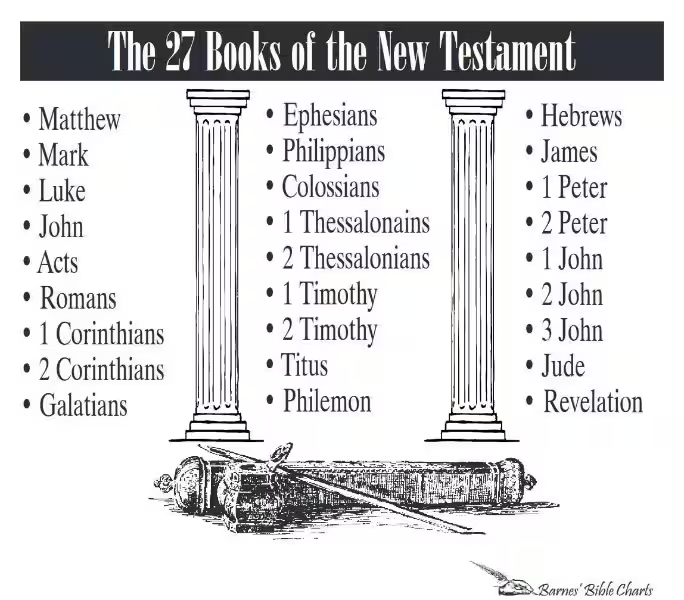
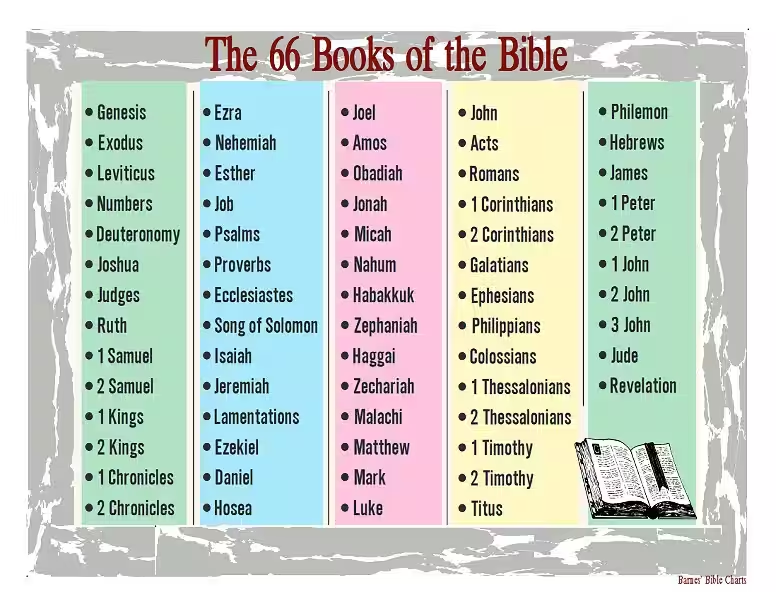
This collection, comprising twenty-seven individual books, acts as the second major division of the Christian Bible, following the Old Testament. It presents a narrative of Jesus’s life, his ministry, his death and resurrection, and the subsequent growth of the early Christian church. Understanding the purpose of the New Testament is key to appreciating its significance. It’s not merely a historical record; it’s a living testament to a transformative message of love, redemption, and hope. The various New Testament books each contribute a unique perspective, painting a comprehensive picture of the early Christian movement and its foundational beliefs. From the foundational Gospels to the insightful epistles and the prophetic Revelation, there’s a wealth of knowledge and spiritual nourishment to be found.
The four Gospels – Matthew, Mark, Luke, and John – are the cornerstone of the New Testament. They serve as the primary biographies of Jesus, each offering a distinct yet complementary portrait of his life, miracles, parables, and teachings. Imagine four artists, each given the same subject – Jesus – but each using a different palette and style to capture his essence. Matthew, often seen as highlighting Jesus as the fulfillment of Old Testament prophecy, appeals to a Jewish audience. Mark, known for its direct and action-packed style, emphasizes Jesus’s powerful deeds. Luke, a physician by profession, presents a meticulously researched account, focusing on Jesus’s compassion and his care for the marginalized. John, on the other hand, delves into the theological depths of Jesus’s identity as the divine Son of God, using profound symbolism and “I Am” statements.
These Gospel books are indispensable for grasping the core of Christian faith. They introduce us to Jesus’s revolutionary teachings, such as the Sermon on the Mount, found primarily in Matthew, which outlines principles of righteous living, forgiveness, and love for one’s enemies. The parables, like the Parable of the Prodigal Son (Luke) or the Parable of the Sower (Mark and Matthew), are simple yet profound stories that Jesus used to illustrate spiritual truths about the Kingdom of God. By studying these narrative New Testament books, we encounter Jesus’s interactions with people from all walks of life, witnessing his empathy, his challenging questions, and his unwavering commitment to his mission. They invite us to reflect on our own lives and how Jesus’s message can transform our perspectives and actions.
Matthew: The Messiah King
The Gospel of Matthew is particularly significant for its focus on Jesus as the Messiah King, the promised descendant of David who would establish God’s kingdom on earth. Matthew meticulously weaves in quotes from the Old Testament, demonstrating how Jesus’s life and ministry fulfill ancient prophecies. For example, his birth in Bethlehem and his flight to Egypt are presented as direct fulfillments of scriptural predictions. This book of the New Testament aims to convince Jewish readers that Jesus is indeed the long-awaited Messiah they had been anticipating.
One of the most influential sections within Matthew is the Sermon on the Mount. This is where Jesus delivers some of his most radical and challenging teachings, including the Beatitudes, which bless those who are poor in spirit, mournful, meek, and hungry for righteousness. He also reinterprets the Law, elevating it beyond mere outward observance to a matter of the heart. The teachings in Matthew encourage a higher standard of holiness, emphasizing internal transformation over external religiosity. This makes it an incredibly practical and relevant guide for living a life aligned with God’s will, even today.
Mark: The Servant and Suffering Messiah
The Gospel of Mark is characterized by its fast pace and vivid descriptions, portraying Jesus as a dynamic and powerful servant who is also destined to suffer. This book in the New Testament is the shortest of the Gospels, and it often uses the Greek word “euthys,” meaning “immediately,” to propel the narrative forward. Mark emphasizes Jesus’s actions and miracles, showcasing his authority over sickness, demons, and even nature itself. The purpose of Mark’s Gospel is to highlight Jesus’s divine power and his unwavering dedication to his mission, even in the face of opposition and misunderstanding.
Mark’s Gospel is particularly poignant in its depiction of Jesus’s suffering and sacrifice. While the other Gospels also cover the crucifixion, Mark’s account is stark and direct. It underscores Jesus’s obedience to the Father’s will, even to the point of death on the cross. This Gospel narrative challenges believers to consider the cost of discipleship, reminding them that following Jesus often involves self-denial and carrying one’s own cross. It’s a powerful call to embrace a faith that is not always easy but is ultimately redemptive and transformative.
Luke: The Compassionate Savior for All
The Gospel of Luke, written by a skilled physician and historian, presents Jesus as a compassionate Savior who has a special concern for the poor, the outcasts, and the marginalized. Luke’s meticulous research and detailed accounts highlight Jesus’s humanity and his deep empathy for all people, regardless of their social standing or background. This New Testament book emphasizes the universality of God’s salvation, showing how Jesus came to offer hope and healing to everyone. He famously includes stories like the Parable of the Good Samaritan, which breaks down ethnic and social barriers, teaching that true neighborliness extends to those we might traditionally overlook.
Luke’s Gospel is also rich with accounts of Jesus’s interactions with women, Samaritans, and tax collectors – groups often excluded from religious and social circles in that era. The teachings of Luke consistently point to Jesus’s inclusive love and his desire for all to experience the joy of God’s kingdom. The beautiful Nativity story, with its humble beginnings and angelic pronouncements, is found in Luke, setting a tone of grace and divine favor for the entire narrative. This biblical book offers a powerful reminder that God’s love is boundless and extends to every corner of humanity.
John: The Divine Son of God
The Gospel of John stands apart from the other three Synoptic Gospels (Matthew, Mark, and Luke) with its distinct theological focus and unique narratives. John presents Jesus not just as a prophet or a king, but as the divine Son of God, the eternal Word made flesh. This book of the Bible is filled with profound theological statements, such as “In the beginning was the Word, and the Word was with God, and the Word was God.” John’s purpose is to lead readers to believe that Jesus is the Christ, the Son of God, and that by believing, they may have life in his name. He records seven “I Am” statements by Jesus, such as “I am the bread of life” and “I am the light of the world,” which reveal his divine nature and his essential role in spiritual sustenance and guidance.
John’s Gospel is also characterized by extended discourses and dialogues, offering deep insights into Jesus’s relationship with the Father and the nature of eternal life. The miracles in John, though fewer in number than in the Synoptics, are presented as “signs” that point to Jesus’s divine identity and authority. The most famous example is the raising of Lazarus, which powerfully demonstrates Jesus’s control over death. Unlike the Synoptics, John doesn’t focus as much on parables; instead, he uses extended metaphors and symbolic language to convey complex spiritual truths. This Gospel book is a profound invitation to contemplate the very essence of God and Jesus’s unique place within the divine.
The Acts of the Apostles: The Spread of the Good News
Following the Gospels, The Acts of the Apostles (often simply called Acts) provides a thrilling historical account of the early Christian church’s explosive growth. This book of the New Testament chronicles the ministry of the apostles, particularly Peter and Paul, as they spread the message of Jesus beyond Jerusalem, establishing churches throughout the Roman Empire. It’s a testament to the power of the Holy Spirit, which empowered the early believers to boldly proclaim the Gospel and perform miracles. Imagine a small spark igniting a wildfire; Acts details that fiery expansion of faith.
Acts is a foundational text for understanding church history and the missionary impulse within Christianity. It showcases the challenges and triumphs faced by the first Christians, from persecution to profound spiritual awakenings. The narrative of Acts highlights key events like the Day of Pentecost, where the Holy Spirit descended upon the disciples, enabling them to speak in various languages and boldly preach the Gospel. This historical book offers practical lessons on evangelism, discipleship, and church leadership, making it an invaluable resource for anyone interested in the practical application of Christian faith in the world.
The Epistles: Guidance and Encouragement for Believers
The Epistles, or letters, form the largest section of the New Testament books. These letters were written by apostles like Paul, Peter, James, and John to various churches and individuals throughout the Roman world. Their purpose was practical: to offer guidance, correct doctrinal errors, encourage believers, and address specific issues arising within the early Christian communities. Think of them as personal correspondences filled with wisdom, encouragement, and instruction, designed to help believers navigate their faith journey.
These New Testament letters cover a wide range of theological topics and practical advice. They offer insights into how to live a Christian life, how to conduct oneself in community, and how to understand the person and work of Jesus Christ. The authors of the Epistles were deeply invested in the spiritual well-being of their readers, and their words continue to resonate with believers today, offering timeless principles for living a life of faith, hope, and love. Studying these epistolary books is like receiving direct counsel from the spiritual fathers and mothers of the early church.
Paul’s Letters: Theology and Practical Living
The Apostle Paul is the most prolific author among the New Testament writers, with thirteen epistles attributed to him. His letters, such as Romans, 1 and 2 Corinthians, Galatians, Ephesians, Philippians, and Colossians, are foundational to Christian theology. Romans, for instance, is a systematic exposition of the Gospel, explaining salvation by grace through faith in Jesus Christ. 1 Corinthians addresses a wide array of issues, including divisions within the church, immorality, and questions about spiritual gifts. Paul’s teachings in his epistles are both deeply theological and remarkably practical, offering guidance on everything from marriage and family to church governance and enduring hardship.
Paul’s letters offer a profound exploration of God’s plan of salvation and the believer’s identity in Christ. He emphasizes themes of justification, sanctification, and the unity of the church. For example, in Ephesians, he describes the church as the body of Christ and outlines the spiritual blessings believers have received. In Philippians, he encourages joy and perseverance even in suffering, famously stating, “I can do all things through Christ who strengthens me.” These Pauline epistles provide invaluable insights into how to live out one’s faith authentically in the world, offering both robust doctrinal teaching and heartfelt encouragement.
Other Epistles: Diverse Voices of Faith
Beyond Paul’s extensive writings, other significant New Testament epistles offer unique perspectives and valuable teachings. The Letter of James emphasizes the importance of faith demonstrated by works, stating that “faith without works is dead.” It offers practical wisdom on various aspects of life, including controlling the tongue, dealing with wealth and poverty, and persevering through trials. The Letters of Peter (1 and 2 Peter) focus on enduring persecution, living holy lives, and anticipating Christ’s return, reminding believers of their inheritance in heaven.
The Letters of John (1, 2, and 3 John) are characterized by their emphasis on love, truth, and fellowship with God and one another. John stresses the importance of walking in the light and obeying God’s commandments. The Letter to the Hebrews, though its authorship is debated, eloquently explains the superiority of Jesus Christ over the Old Covenant sacrificial system, presenting him as the ultimate High Priest and the perfect sacrifice. These diverse New Testament books collectively provide a rich and multifaceted understanding of Christian life and doctrine, offering encouragement and guidance for every believer.
Revelation: Hope and the Ultimate Victory
The Book of Revelation, the final book of the New Testament, is a work of apocalyptic literature that offers a vision of God’s ultimate triumph over evil and the establishment of his eternal kingdom. Written by the Apostle John, this prophetic book uses vivid imagery, symbolism, and visions to convey a message of hope and assurance to persecuted Christians. While often perceived as complex and even frightening, Revelation’s core message is one of divine sovereignty and ultimate victory for God’s people. It assures believers that despite present suffering and opposition, God is in control and will bring all things to their rightful conclusion.
The visions in Revelation describe cosmic battles, divine judgments, and the eventual establishment of a new heaven and a new earth. Key elements include the seven churches, the seals, the trumpets, and the bowls of wrath, which symbolize periods of trial and God’s unfolding plan. Despite the dramatic imagery, the purpose of Revelation is to encourage perseverance and faithfulness in the face of adversity. It paints a picture of a glorious future where Christ reigns supreme, and all injustice is rectified. This final book of the New Testament provides a powerful reminder of God’s ultimate plan for humanity and the enduring hope that is found in Christ.
Engaging with the New Testament books is a lifelong journey of discovery and transformation. Each book, from the foundational Gospels to the profound Epistles and the visionary Revelation, offers unique insights into the person of Jesus Christ and the principles of the Christian faith. By dedicating time to read, study, and reflect on these sacred texts, individuals can find guidance for daily life, a deeper understanding of religious truths, and an ever-growing connection to the divine. The wisdom of the New Testament is not confined to ancient history; it is a living, breathing message that continues to shape lives and inspire hope for generations to come.
Frequently Asked Questions about New Testament Books
What are the New Testament books?
The New Testament books are a collection of twenty-seven sacred texts that form the second part of the Christian Bible. They were written in the first century CE and focus on the life, teachings, death, and resurrection of Jesus Christ, as well as the early history of the Christian church.
What are the main divisions of the New Testament books?
The New Testament books are traditionally divided into four main categories: the Gospels (Matthew, Mark, Luke, and John), the Acts of the Apostles, the Epistles (letters written by apostles like Paul, Peter, and John), and the Book of Revelation (also known as the Apocalypse).
What is the purpose of the Gospels?
The Gospels are narratives that recount the life and ministry of Jesus Christ. Each Gospel offers a unique perspective and emphasis, but collectively they present his birth, teachings, miracles, crucifixion, and resurrection, which are central to Christian faith.
What is the significance of the Acts of the Apostles?
The Book of Acts serves as a historical account of the early Christian church following Jesus’ ascension. It details the spread of Christianity from Jerusalem to the wider Roman Empire, driven by the work of the apostles and the Holy Spirit.
What are the Epistles and their role in the New Testament?
The Epistles are letters written by early Christian leaders, primarily the Apostle Paul, to various churches or individuals. They offer theological explanations, practical guidance for Christian living, and addresses to specific issues faced by early Christian communities.
What is the Book of Revelation?
The Book of Revelation is an apocalyptic text filled with symbolic imagery. It describes visions of future events, the ultimate triumph of good over evil, and the establishment of God’s eternal kingdom. It is often interpreted in various ways by different Christian traditions.
Who wrote the New Testament books?
The New Testament books were written by various individuals, many of whom were close followers or associates of Jesus. Key authors include Matthew, Mark, Luke, John, Paul, Peter, James, and Jude.
When were the New Testament books written?
The New Testament books were written during the latter half of the first century CE, with most scholars placing their composition between approximately 50 CE and 100 CE.
Why are the New Testament books important in Christianity?
The New Testament books are foundational to Christian belief and practice. They provide the primary source for understanding Jesus Christ, his teachings, the nature of salvation through him, and the principles for Christian discipleship and community life.
Are the New Testament books considered divinely inspired?
Yes, Christians generally believe that the New Testament books are divinely inspired by God. This means they are considered authoritative and a true revelation of God’s will and plan for humanity.