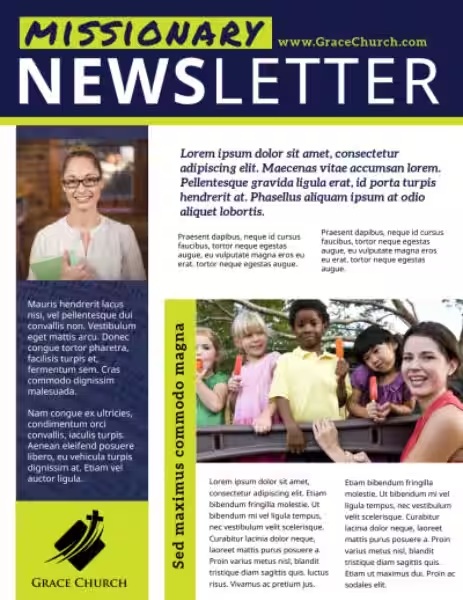
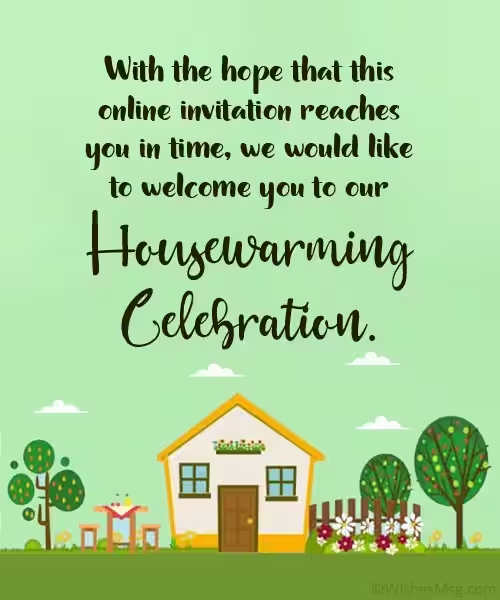
In the bustling digital landscape, where attention spans are fleeting and inboxes overflow, the humble newsletter headline plays a crucial role, especially within the realm of religion. It’s your first, and often only, chance to invite someone into a conversation about faith, community, and the profound aspects of spiritual life. Think of it as the threshold to your sacred space, a brief but powerful invitation to explore deeper meaning. A well-crafted headline isn’t just a title; it’s a promise, a question, and an opportunity to resonate with the hearts and minds of your subscribers.
Whether you’re a church, a spiritual center, a religious organization, or even an individual sharing reflections on faith, the art of writing effective newsletter headlines for religious content is both a science and an art. It requires understanding your audience, the nuances of your message, and the power of compelling language. Let’s dive into how to transform your newsletter openings from overlooked to unmissable, fostering engagement and building a stronger connection with your community.
The primary goal of any newsletter headline is to capture attention. In the context of religion, this means appealing to a sense of curiosity, shared values, and the inherent human quest for meaning. We want to draw people in, not just with catchy phrases, but with headlines that hint at wisdom, solace, or inspiration. Consider the questions people wrestle with daily: “What is my purpose?” “How can I find peace?” “How do I connect with something greater than myself?” Your headlines should offer a glimpse of an answer or a path towards exploration.
For instance, instead of a generic “Weekly Update,” imagine a headline that sparks immediate interest. Think about what your newsletter offers. Is it a message of hope? A practical guide to spiritual growth? A reflection on current events through a faith lens? A headline like “Finding Light in the Shadows: This Week’s Message of Hope” or “Seeking Serenity? Practical Steps for Inner Peace” instantly communicates value and addresses a potential subscriber need. The key is to be specific yet intriguing, offering a clear benefit without giving everything away.
Headline Strategies for Diverse Religious Content
Different types of religious content require different headline approaches. A sermon summary might need a headline that highlights the core teaching, while an announcement about a community event requires something more action-oriented. For news and updates, clarity is paramount, but even then, a touch of evocative language can make a difference. Let’s explore some effective strategies, accompanied by examples that could grace your next email:
Intrigue and Curiosity: Pique their interest by posing a question or hinting at a revelation. Examples: “The Unseen Hand: Discovering Divine Intervention in Everyday Life,” “Beyond Belief: Unpacking the Mysteries of [Specific Religious Concept],” or “What if Everything You Thought You Knew About [Topic] Was Just the Beginning?” These headlines invite readers to click and learn more, suggesting there’s a deeper understanding to be gained.
Benefit-Oriented: Clearly state what the reader will gain from opening the newsletter. This could be practical advice, emotional support, or spiritual growth. Examples: “Grow Your Faith: A Guide to Deeper Prayer this Season,” “Overcoming Doubt: Tools to Strengthen Your Spiritual Resilience,” or “Connect with Community: Your Invitation to [Event Name].” These headlines speak directly to the reader’s needs and aspirations.
Timeliness and Relevance: Connect your message to the current moment, holidays, or significant events. This makes your content feel immediate and important. Examples: “Preparing Our Hearts for [Upcoming Holiday]: A Reflection,” “Navigating [Current Event] with Faith and Compassion,” or “Lent Special: Finding Renewal in [Specific Practice].” These headlines leverage topical awareness to draw readers in.
Emotional Resonance: Tap into the emotions that faith often evokes – joy, peace, hope, love, or even a sense of wonder. Examples: “A Symphony of Souls: Celebrating Our Shared Spiritual Journey,” “Whispers of Grace: Finding Comfort in Difficult Times,” or “Ignite Your Spirit: A Call to Joyful Service.” These headlines appeal to the heart and soul.
When crafting these headlines, consider the specific denomination or spiritual tradition you represent. A headline for a Buddhist newsletter might focus on mindfulness and peace, while a Christian newsletter might lean towards themes of redemption and community. The language should feel authentic and resonant with your particular faith expression, creating a bridge of understanding with your audience. For example, a headline like “The Path to Enlightenment: A Mindfulness Practice for Busy Lives” might resonate strongly within a Buddhist community, while “Embracing the Light of Christ: Community Gatherings and Spiritual Nourishment” would be more fitting for a Christian context.
The Power of “You” and “Your”: Personalizing the Spiritual Connection
One of the most effective techniques in newsletter headline writing, religious or otherwise, is the use of personal pronouns like “you” and “your.” This simple linguistic shift transforms a general announcement into a direct, personal invitation. It makes the reader feel seen, understood, and directly addressed. When you speak directly to “you,” you create a sense of intimacy and relevance, making it far more likely they’ll open your email to discover what you have to say.
Imagine the difference between “Upcoming Community Potluck” and “Your Invitation to Connect: A Community Potluck for Fellowship and Food.” The second headline immediately makes it about the reader and their potential experience. Similarly, a headline like “A Message for Your Soul” is far more engaging than simply “Spiritual Reflection.” It suggests that the content is tailored to their inner journey, offering something uniquely for them. This personalization is key to building a stronger, more intimate relationship with your subscribers.
Beyond the Click: Headlines That Foster Community and Action
While grabbing attention is the first step, the ultimate goal of religious newsletters is often to foster a sense of community, encourage spiritual growth, and inspire action. Your headlines should, therefore, hint at the deeper purpose of your communication. They should invite not just a click, but a deeper engagement with your faith community and its values.
Think about headlines that encourage participation. Instead of just announcing an event, frame it as an opportunity for connection. For example, “Join Us in Prayer: A Shared Journey of Spiritual Support” invites active participation and highlights the communal aspect of prayer. Or, “Your Voice Matters: Share Your Thoughts on [Community Initiative]” encourages feedback and demonstrates that the organization values its members’ input. These headlines don’t just inform; they mobilize and unify.
Consider also headlines that promise transformation or deeper understanding. “Unlock Your Inner Peace: Practical Wisdom from [Spiritual Leader/Text]” suggests a tangible benefit that goes beyond mere information. “Rediscover the Sacred: A Journey into [Specific Religious Practice or Belief]” invites exploration and a renewed appreciation for spiritual traditions. By crafting headlines that speak to the transformative power of faith, you encourage subscribers not only to open your emails but to actively participate in the spiritual life you offer. Remember, the most effective headlines for religious newsletters are those that act as a beacon, guiding subscribers toward meaning, connection, and a richer spiritual life.
What kind of newsletter headlines are appropriate when discussing religion?
Headlines should be respectful and neutral, avoiding biased language or sensationalism. They should accurately reflect the content of the newsletter, whether it’s an academic exploration, a community announcement, or a spiritual reflection. Examples include: “Exploring the Symbolism in [Religious Tradition],” “Community Gathering for [Religious Event],” or “Reflections on Faith and [Topic].”
Should newsletter headlines use religious terminology?
When discussing specific religious topics, using appropriate terminology can be helpful for clarity and engaging the intended audience. However, for a broader audience, consider providing brief explanations or using more accessible language to ensure understanding.
How can newsletter headlines be inclusive when religion is a topic?
Headlines should strive for inclusivity by using language that acknowledges the diversity of beliefs and practices. Avoid language that presumes a particular religious viewpoint or excludes individuals who do not share that viewpoint. Focusing on shared human values or the specific subject matter rather than broad religious claims can be more inclusive.
Are there any topics related to religion that should be avoided in newsletter headlines?
Avoid headlines that promote proselytization, express condemnation of other faiths, or engage in divisive or inflammatory rhetoric. Topics that are highly sensitive or could easily be misinterpreted should be approached with extreme care, and the headline should reflect a nuanced understanding.
How can a newsletter headline encourage thoughtful engagement with religious topics?
Headlines can be crafted to pose questions, invite reflection, or highlight intriguing aspects of a religious tradition or its intersection with other subjects. Phrases like “Understanding the Role of…” or “A New Perspective on…” can encourage readers to delve deeper into the content.