The journey of parenthood, while brimming with immeasurable joy and profound love, can also present moments of intense challenge. For many, these challenges are amplified when navigating them through the lens of faith and religion. The desire to raise children who embody the values and spiritual principles we hold dear is a powerful motivator, yet the practicalities of discipline, sleep, and temper tantrums can feel overwhelming. This is where the wisdom found within books like the “No-Cry Solution” series can become an invaluable companion, offering a framework for peaceful parenting that resonates deeply with religious families.
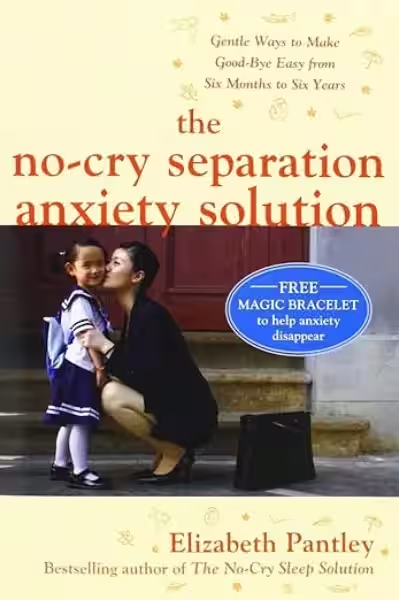
Many parents, regardless of their specific spiritual path, are seeking alternatives to traditional, often punitive, disciplinary methods. They yearn for approaches that foster mutual respect, understanding, and a strong emotional connection with their children. The principles championed by authors like Elizabeth Pantley, who penned the seminal “The No-Cry Solution: Gentle Ways to Raise a Baby with a Good Night’s Sleep,” offer a path forward, one that aligns beautifully with the tenets of compassion, patience, and love that are central to most religious traditions. These books don’t offer magic cures, but rather a philosophy of empathetic guidance and problem-solving, which can be a powerful tool for faith-driven households.
Nurturing Faith and Fostering Good Behavior: A Harmonious Approach
The intersection of religious upbringing and effective discipline is a topic that resonates with countless parents. We often envision our children embodying the virtues of kindness, honesty, and respect – qualities that are frequently emphasized in religious teachings. The challenge lies in translating these abstract ideals into consistent, everyday practices. The “No-Cry Solution” approach, with its emphasis on understanding the root causes of behavior rather than simply punishing the symptom, offers a remarkably compatible framework. Instead of focusing solely on obedience, it encourages parents to become detectives, uncovering why a child is acting out.
For example, a child who is consistently resisting bedtime might not be deliberately defiant, but rather experiencing anxiety about being alone, or perhaps they are simply not tired. A religious parent might see this as an opportunity to discuss feelings of security and peace, perhaps incorporating a prayer for restful sleep or a comforting story from their faith. The “No-Cry Solution” advocates for exploring these underlying needs and finding gentle, supportive solutions, such as establishing a calming bedtime routine filled with quiet reading or soft singing. This mirrors the religious emphasis on empathy and tending to the needs of others, extending that care to our own children in a practical, actionable way.
Discipline as Discipleship: Applying Gentle Principles
The term “discipline” itself can sometimes carry negative connotations, conjuring images of harsh punishment. However, within many religious contexts, discipline is understood as teaching and guiding, akin to a mentor guiding a student or a shepherd guiding a flock. The “No-Cry Solution” book series champions this very philosophy. Instead of focusing on making a child “pay” for misbehavior, it encourages parents to teach them better ways to express themselves, manage their emotions, and solve problems. This can be powerfully reinforced by religious teachings that highlight forgiveness, patience, and the importance of learning from mistakes.
Imagine a situation where a child is struggling with sharing. A punitive approach might involve taking away a toy or sending them to their room. The “No-Cry Solution” would suggest a different path: exploring the child’s feelings about sharing, perhaps through role-playing or a simple conversation about the joy of playing together. A religious parent could weave in lessons about generosity and community, drawing parallels from their scriptures or faith traditions. This approach transforms disciplinary moments into opportunities for spiritual growth and character development, aligning perfectly with the goal of raising children with strong moral compasses guided by their faith.
Sleep Solutions Rooted in Faith and Empathy
Sleep is a cornerstone of well-being, and for new parents, achieving consistent, peaceful sleep for their infants and toddlers can feel like an insurmountable hurdle. The “No-Cry Sleep Solution” book, a cornerstone of the series, offers a comprehensive guide to establishing healthy sleep habits through gentle, responsive methods. This is particularly relevant for religious families who often prioritize nurturing and attachment, seeking to avoid methods that might cause distress or fear in their children.
Many faiths emphasize the sacredness of life and the importance of physical and emotional well-being. The “No-Cry Solution” book aligns with this by advocating for understanding a baby’s cues and responding with comfort and reassurance. Instead of “crying it out,” which can be deeply unsettling for both parent and child, the book suggests strategies like gradual sleep training, consistent bedtime routines, and responsive soothing. For a parent who prays for their child’s peace and rest, the methods in the “No-Cry Solution” book offer a practical, compassionate way to support those prayers. This can involve singing lullabies, offering gentle back rubs, or simply being present and offering a calming presence, all of which are deeply rooted in the love and care that are hallmarks of religious devotion.
Building a Foundation of Trust and Spiritual Connection
The ultimate goal for many faith-filled parents is to raise children who not only behave well but also develop a deep and abiding connection to their faith. The “No-Cry Solution” principles, with their focus on building strong, positive relationships, can powerfully support this endeavor. When children feel understood, respected, and loved, they are more open to guidance, including spiritual instruction.
By employing gentle, responsive parenting techniques, parents create a safe space for their children to explore their emotions, ask questions, and learn. This can extend to their spiritual journey. A child who trusts their parents will feel more comfortable discussing their doubts, their joys, and their understanding of their faith. The “No-Cry Solution” book encourages parents to be patient and understanding, qualities that are essential when guiding a child through the often complex process of developing their own spiritual identity. This creates a virtuous cycle: compassionate parenting fosters a secure child, who in turn is more receptive to the spiritual lessons and values their parents cherish.
In conclusion, the “No-Cry Solution” book series offers a treasure trove of practical advice and a compassionate philosophy that can significantly enhance the parenting experience for families of all backgrounds, especially those seeking to integrate their religious beliefs into their disciplinary and nurturing practices. By focusing on empathy, understanding, and gentle guidance, these books empower parents to raise children who are not only well-behaved but also deeply connected to their families, their faith, and themselves. The journey of parenthood is a sacred one, and the “No-Cry Solution” provides a roadmap for navigating it with grace, love, and unwavering faith.
What does the “No Cry Solution” book say about religion?
The “No Cry Solution” book does not directly address or offer advice on religious practices or beliefs. Its focus is on sleep training and addressing infant sleep challenges, not on matters of faith.
Can I use the “No Cry Solution” if my religion has specific views on sleep or child-rearing?
The “No Cry Solution” is a parenting method and does not conflict with religious tenets. Parents are encouraged to adapt any parenting advice to align with their personal values and religious beliefs.
Does the “No Cry Solution” book support or contradict religious teachings on discipline?
The “No Cry Solution” advocates for gentle, responsive, and respectful parenting techniques. These methods are generally compatible with the principles of love, patience, and guidance found in many religious traditions. However, specific interpretations of religious teachings on discipline may vary.
Are there any religious perspectives that might be relevant to the “No Cry Solution” approach?
While the book itself doesn’t explore religious perspectives, many find that religious teachings emphasizing compassion, understanding, and the nurturing of children resonate with the gentle approach of the “No Cry Solution.”
Can I incorporate my religious practices into the “No Cry Solution” bedtime routine?
Absolutely. Many families successfully integrate religious bedtime elements such as prayer, reading religious stories, or singing hymns into their existing bedtime routines, which can be done alongside the “No Cry Solution” strategies.