Understanding the Significance of Pentecost and the Holy Ghost
Pentecost, a pivotal event in Christian history, marks the descent of the Holy Ghost upon Jesus’s disciples, a moment that irrevocably transformed their lives and the trajectory of their faith. This powerful outpouring, described vividly in the Book of Acts, wasn’t just a singular event; it represents an ongoing spiritual reality available to believers. The Pentecost experience is intrinsically linked to the presence and power of the Holy Ghost, the third person of the Trinity, who indwells, guides, and empowers those who follow God. Understanding this foundational event is crucial for grasping the dynamic nature of religion and its capacity to enact profound personal and communal change.
For many within various religious traditions, the concept of a divine presence, a guiding spirit, or an empowering force is central to their spiritual journey. While the specific terminology and theological interpretations may differ, the underlying theme of a supernatural empowerment that enables believers to live a life pleasing to God – and to share that message with others – resonates deeply. The narrative of Pentecost offers a compelling example of this, illustrating how ordinary individuals, touched by the Holy Ghost, were transformed into bold evangelists capable of speaking in new tongues and performing miracles. This transformation is not a relic of the past but a promise of continued divine assistance.
The Historical Context of Pentecost
The Feast of Pentecost, originally a Jewish harvest festival, held deep meaning even before the arrival of the Holy Ghost. Celebrated fifty days after Passover, it commemorated the giving of the Law to Moses on Mount Sinai. In this context, it was a time of thanksgiving for the first fruits of the harvest and a remembrance of God’s covenant. The disciples, gathered in Jerusalem as commanded by Jesus, were awaiting a promised empowerment, a divine anointing that would equip them for the mission He had set before them. This historical backdrop adds layers of understanding to the significance of the Pentecost event within its religious framework.
Jesus had told his followers that it was advantageous for them that He depart, so that the Comforter, the Holy Ghost, could come. This promise, fulfilled on that momentous day, marked a transition from a physical presence to an indwelling divine power. The disciples, who had witnessed Jesus’s miracles and teachings firsthand, were now to be filled with the very Spirit that empowered Him. This wasn’t just about receiving a blessing; it was about being equipped with divine authority and enablement to carry on Jesus’s ministry to the ends of the earth, a testament to the transformative power of the Holy Ghost in religion.
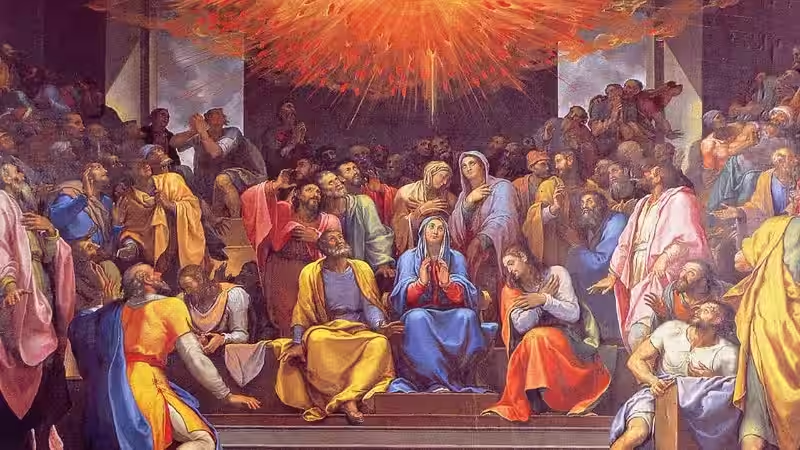
The arrival of the Holy Ghost was dramatic and unmistakable. The Scripture records that a sound like a violent wind swept through the house where they were gathered, and tongues of fire appeared and rested on each of them. This was not a subtle occurrence; it was a powerful, visible, and audible manifestation of God’s presence. The disciples were not only filled with the Spirit but also began to speak in other languages, enabling them to communicate the Gospel message to a diverse crowd present in Jerusalem for the festival. This miraculous ability, known as speaking in tongues, is a key element often associated with the Pentecost experience in religion.
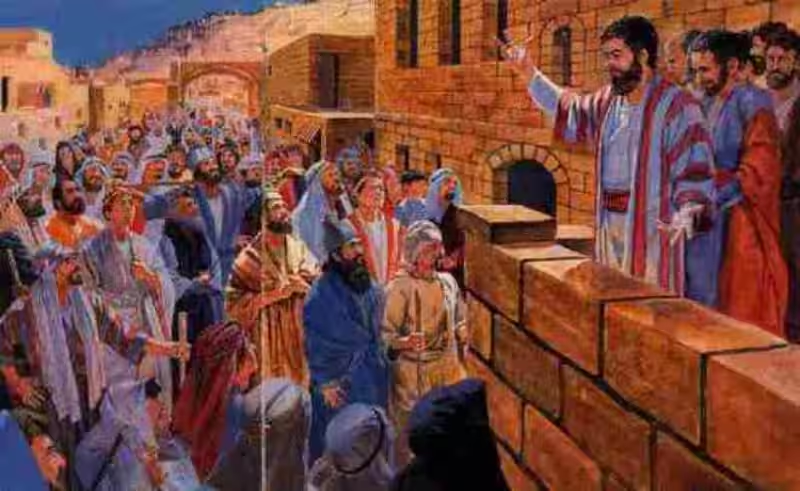
The impact of these manifestations was immediate and profound. The crowd was astonished, and Peter, filled with the Holy Ghost, delivered a powerful sermon that led to the conversion of thousands. This initial outpouring at Pentecost set a precedent for the continued ministry of the Holy Ghost throughout the early church and, by extension, within the broader spectrum of religion. It demonstrated that the Holy Ghost is a dynamic force that empowers believers for witness, worship, and service, equipping them with gifts and abilities that transcend natural human capacity.
The Role of the Holy Ghost in Contemporary Religion
While the historical event of Pentecost is a foundational narrative, its implications extend far beyond the first century. For countless individuals today, the Holy Ghost is not a distant theological concept but a present and active reality within their religious lives. Believers seek to experience the same infilling and empowerment that the disciples received, understanding that the Holy Ghost is the divine agent who enables them to live a transformed life, to overcome sin, and to walk in obedience to God’s will. This pursuit of a deeper connection with the divine Spirit is a hallmark of many spiritual journeys.
The role of the Holy Ghost in contemporary religion is multifaceted. He is understood as the Teacher, illuminating God’s Word and guiding believers into truth. He is the Comforter, providing solace and strength during trials and difficulties. He is the Empowerer, gifting believers with spiritual abilities to serve others and to advance God’s kingdom. This active involvement of the Holy Ghost makes religion a living, breathing experience, not merely a set of rules or traditions. The ongoing work of the Holy Ghost ensures that the Pentecost promise remains relevant and accessible.
Experiencing the Holy Ghost Today
The desire to experience the Pentecost touch of the Holy Ghost remains a central aspiration for many in religion. This experience is often sought through prayer, worship, and a life of obedience. Believers are encouraged to yield to the Spirit’s leading, to be open to His promptings, and to actively cultivate a relationship with Him. It’s not about a passive reception but an intentional partnership with the divine. This active engagement allows the Holy Ghost to work in and through individuals, bringing about personal growth and spiritual maturity.
Practices such as corporate worship services that emphasize the presence of the Spirit, personal prayer for infilling, and acts of service motivated by love are all avenues through which the Holy Ghost can be experienced. The fruits of the Spirit, such as love, joy, peace, patience, kindness, goodness, faithfulness, gentleness, and self-control, are tangible evidence of the Holy Ghost’s presence and work in a believer’s life. These qualities, when evident, demonstrate the transformative power of God’s Spirit working within the framework of religion.
The Gifts of the Spirit and the Legacy of Pentecost
Pentecost is also inextricably linked to the spiritual gifts bestowed by the Holy Ghost. These gifts, enumerated in Scripture, are divine enablements given to believers for the building up of the church and the advancement of God’s purposes. They can include prophecy, healing, wisdom, knowledge, faith, and the manifestation of power. The Pentecost experience was the catalyst for these gifts to be actively distributed and utilized within the early Christian community, making their religious endeavors remarkably effective.
These gifts of the Spirit are not merely historical artifacts; they are understood by many to be available and active in religion today. Through the Holy Ghost, believers are equipped to minister to one another, to evangelize the lost, and to meet the needs of the world. The legacy of Pentecost is therefore one of empowerment and service, a continuous flow of divine power through ordinary individuals committed to God’s work. Understanding these gifts helps to illuminate the practical application of the Holy Ghost’s presence in everyday religious life.
Living a Spirit-Filled Life
To live a Spirit-filled life, rooted in the Pentecost reality, involves a conscious and consistent reliance on the Holy Ghost. It means seeking His guidance in decision-making, allowing Him to shape one’s character, and being willing to be used for His purposes. This is a journey of progressive sanctification, where the Holy Ghost works to conform believers to the image of Christ. It transforms the practice of religion from a ritualistic observance into a vibrant, dynamic walk with God.
Ultimately, the Pentecost event and the ongoing ministry of the Holy Ghost underscore a central truth in religion: that God desires an intimate relationship with humanity and provides the divine power necessary for believers to live a life of purpose and impact. The Holy Ghost is the guarantee of our inheritance and the source of our strength. Embracing this truth allows for a profound and transformative experience of faith, where the power demonstrated at Pentecost continues to be a living reality.
Frequently Asked Questions about Pentecost and the Holy Ghost
What is Pentecost?
Pentecost is a Christian festival celebrated fifty days after Easter. It commemorates the descent of the Holy Spirit on the Apostles, as described in the Book of Acts in the New Testament. It is also known as the “Feast of Weeks” or “Whitsun.”
What is the Holy Ghost?
The Holy Ghost, also commonly referred to as the Holy Spirit, is considered the third person of the Trinity in Christianity, along with God the Father and God the Son (Jesus Christ). It is understood as the divine presence and power of God active in the world and in the lives of believers.
What happened on Pentecost?
According to the Bible, on the day of Pentecost, while the Apostles were gathered together, a sound like a rushing wind filled the house, and tongues of fire appeared among them. They were all filled with the Holy Spirit and began to speak in other languages, proclaiming the wonders of God.
What is the significance of Pentecost in Christianity?
Pentecost is a pivotal event in Christian theology. It marks the birth of the Christian Church and the empowerment of the disciples to spread the Gospel. It signifies the presence and working of the Holy Spirit in the lives of believers, enabling them to live a Christian life and fulfill God’s will.
How does the Holy Ghost relate to religion?
In most Christian traditions, the Holy Ghost is central to religious experience and practice. It is believed to inspire faith, guide believers, grant spiritual gifts, sanctify individuals, and empower them for service and evangelism. The Holy Ghost is often seen as the active agent of God in the world today.
Are there different interpretations of Pentecost and the Holy Ghost in various denominations?
Yes, while the core event of Pentecost and the belief in the Holy Spirit are shared across Christian denominations, there are differences in emphasis and interpretation. Some denominations place a stronger emphasis on the manifest spiritual gifts associated with the Holy Spirit, such as speaking in tongues, prophecy, and divine healing, as described in the Book of Acts. Others focus more on the internal transformation and guidance of the Holy Spirit in the lives of believers.