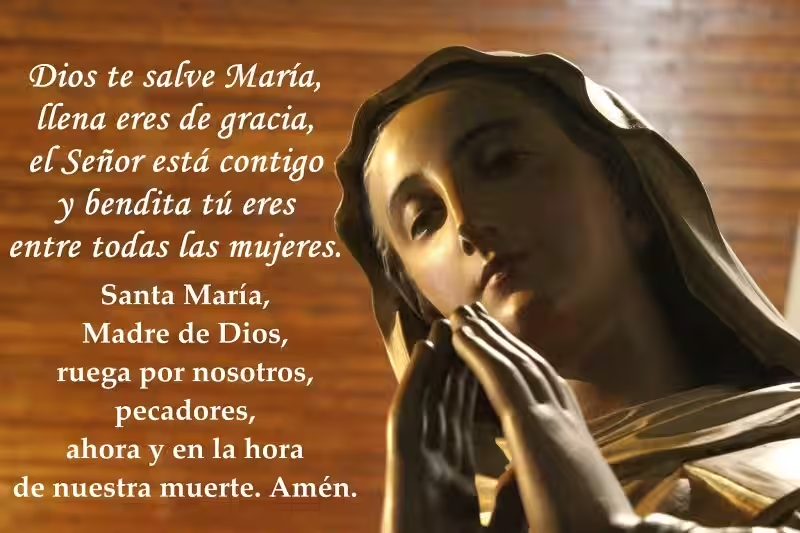
In the tapestry of religious devotion, the figure of Mary, the mother of Jesus, occupies a particularly luminous and enduring space. For millions across the globe, the act of praying to Mary is not merely a ritual, but a profound expression of faith, a seeking of intercession, and a connection to a maternal presence that is both powerful and compassionate. This article aims to explore the rich history, diverse expressions, and profound significance of praying to Mary within the context of Christian religion, particularly Catholicism and Orthodoxy, offering insights that are both informative and relatable.
The practice of venerating Mary and seeking her prayers is deeply rooted in Christian tradition, extending back to the earliest centuries. Her unique role as the Theotokos, the God-bearer, has always set her apart. This elevated status naturally led believers to see her as a privileged intercessor, someone uniquely positioned to present their needs and petitions to her divine Son. Understanding praying to Mary involves appreciating this foundational belief in her closeness to God and her maternal love for all humanity.
The theological underpinnings of praying to Mary are multifaceted and have been developed over centuries of reflection and tradition. At its core, it rests on the belief that Mary, through her immaculate conception, her perpetual virginity, and her role as the Mother of God, holds a special place in the divine economy of salvation. Her profound humility and perfect obedience to God’s will make her an ideal model of discipleship. Therefore, when individuals engage in praying to Mary, they are not worshipping her, but rather asking her to pray for them, much like one might ask a beloved and respected elder or friend to offer a prayer on their behalf.
This distinction between veneration (hyperdulia) and worship (latria) is crucial. Catholics and Orthodox Christians believe that while God alone is to be worshipped, Mary, due to her unique closeness to Christ and her role in salvation history, can be highly honored and asked to intercede. Think of it this way: Imagine a child who has a very close relationship with their mother, who in turn has a direct line to the king. The child might ask their mother to present a request to the king on their behalf, believing that her plea would carry great weight. Similarly, praying to Mary is seen as asking a mother figure, who is exceptionally close to God, to advocate for us.
Mary as Intercessor: A Mother’s Love
The concept of Mary as an intercessor is intrinsically linked to her role as a mother. Her earthly experience of nurturing Jesus, of witnessing his suffering and the immense pain of his crucifixion, has imbued her with a profound understanding of human sorrow. This maternal heart, now glorified and united with God, is believed to be eternally sensitive to the needs and struggles of her earthly children. When we are praying to Mary, we are often reaching out to this universal motherly love, seeking comfort, guidance, and strength.
This maternal intercession is not seen as bypassing Jesus, but rather as complementing and enhancing our relationship with him. Mary’s prayers are believed to be particularly efficacious because they are offered in perfect alignment with God’s will. She knows her Son’s heart, and her petitions are always for our ultimate good and spiritual growth. The Rosary, a central devotion for many who practice praying to Mary, is a prime example of this, with its meditations on the life of Christ, woven together with Hail Marys, which are essentially requests for her prayers.
Expressions of Praying to Mary: From Personal Devotion to Public Liturgy
The ways in which people engage in praying to Mary are as diverse as the individuals themselves and the cultures they inhabit. From the quiet, personal recitation of the Hail Mary in a moment of need to elaborate public novenas and Marian festivals, devotion to Mary manifests in countless forms. These expressions are not rigid prescriptions but rather invitations to deepen one’s faith through a personal relationship with Jesus’ mother.
One of the most widespread and recognizable forms of praying to Mary is the recitation of the Rosary. This prayer involves meditating on key events in the lives of Jesus and Mary, known as the Mysteries, while reciting a series of prayers, including the Our Father, the Hail Mary, and the Glory Be. Each Hail Mary is an appeal to Mary, asking her to pray for the one who is praying. Beyond the Rosary, individuals might offer personal prayers of petition, thanksgiving, or simply express their love and devotion. Many also find solace and inspiration in Marian apparitions, such as those at Lourdes and Fatima, which have led to increased devotion and specific prayers dedicated to Mary under various titles.
The Hail Mary: A Cornerstone of Marian Devotion
The Hail Mary, or the Angelic Salutation, stands as a cornerstone of Marian devotion for many Christians. This prayer combines the words of the Angel Gabriel at the Annunciation (“Hail, full of grace, the Lord is with you!”) and Elizabeth’s greeting (“Blessed are you among women, and blessed is the fruit of your womb, Jesus!”), followed by a petition for Mary’s intercession: “Holy Mary, Mother of God, pray for us sinners, now and at the hour of our death. Amen.” The repetition of this prayer, especially within the Rosary, allows for a contemplative and meditative approach to faith.
When someone is praying to Mary through the Hail Mary, they are essentially acknowledging her unique role and asking her to be present in their lives. Each repetition is an opportunity to focus on her virtues – her faith, her obedience, her love – and to invite her to be a spiritual guide. The phrase “pray for us sinners” is particularly poignant, recognizing our human frailty and our need for constant divine assistance, which we ask Mary to help us obtain. It’s a simple yet profound prayer that has sustained countless souls through times of joy and sorrow.
Finding Comfort and Guidance Through Praying to Mary
In a world that can often feel chaotic and uncertain, the practice of praying to Mary offers a sanctuary of comfort and a beacon of unwavering guidance. Many find that in moments of personal struggle, family crises, or global anxieties, turning to Mary provides a sense of peace and reassurance that transcends their immediate circumstances. Her perceived gentleness, combined with her immense spiritual authority, creates a powerful anchor for the faithful.
The relatable aspect of praying to Mary lies in her humanity. She was a mother who experienced the joys and sorrows of raising a child, who undoubtedly worried, grieved, and rejoiced. This shared human experience allows individuals to connect with her on a deeply personal level. When facing a difficult decision, a period of grief, or simply feeling overwhelmed, many turn to Mary, asking for her motherly wisdom and intercession. It is akin to confiding in a trusted confidante who has experienced life’s challenges and emerged with profound grace and understanding.
Personal Anecdotes and the Power of Intercession
Countless personal stories attest to the profound impact of praying to Mary. From miraculous healings to unexpected moments of clarity and peace during difficult times, the faithful often share testimonies of how their prayers to Mary have been answered, or how her intercession has brought solace and strength when they felt they had nowhere else to turn. These lived experiences, while subjective, form a powerful testament to the active role Mary is believed to play in the lives of believers.
Consider the simple act of asking Mary for help with a specific concern. Perhaps it’s strength for a challenging task, patience in a trying relationship, or guidance in making a significant life choice. By offering these petitions, individuals are not passively awaiting a miracle, but actively engaging in a relationship of trust with Mary, believing that her prayers are a powerful conduit to God’s grace. The act of speaking these requests aloud, or meditating on them while reciting prayers like the Hail Mary, can itself be a source of empowerment and spiritual renewal. This is the essence of praying to Mary: a dynamic and personal journey of faith.
Conclusion: A Timeless Devotion
In conclusion, the practice of praying to Mary is a rich and enduring aspect of Christian faith, deeply interwoven with theological understanding and personal devotion. It is a testament to the profound love and respect believers hold for Jesus’ mother, recognizing her unique role as intercessor and spiritual mother. Whether through the contemplative repetition of the Rosary, the heartfelt recitation of the Hail Mary, or silent, personal appeals, the act of turning to Mary offers comfort, guidance, and a tangible connection to the divine.
The enduring nature of praying to Mary speaks to its timeless relevance. In every age, individuals have found solace, strength, and inspiration in her maternal presence. Her example of faith, humility, and obedience continues to guide believers on their spiritual journeys. As we navigate the complexities of life, the invitation to bring our concerns to Mary, asking her to pray for us, remains a powerful and deeply meaningful pathway to a closer relationship with God.
Frequently Asked Questions about Praying to Mary
What is praying to Mary?
Praying to Mary, also known as Marian devotion or veneration, refers to the practice of asking Mary, the mother of Jesus, to intercede on behalf of believers with God. It is not an act of worship, which is reserved for God alone, but rather a form of asking for her prayers and support, similar to asking a living person to pray for you.
What is the religious basis for praying to Mary?
The practice is rooted in Catholic and Orthodox Christian traditions. It stems from the belief in Mary’s unique role as the Mother of God (Theotokos) and her closeness to Jesus. The New Testament describes Mary’s significant role in salvation history, her obedience to God’s will, and her presence at key moments in Jesus’ life, including his crucifixion. The belief in her intercessory power is supported by theological reasoning and historical tradition.
Is praying to Mary the same as worshipping Mary?
No, praying to Mary is distinct from worshipping her. Worship (latria) is reserved for God alone. The veneration of Mary (dulia) is a recognition of her exalted status as the Mother of God and her holiness, and it is believed that she can intercede for believers. This is not seen as giving her divine attributes, but rather acknowledging her special relationship with God.
What are common prayers to Mary?
Common prayers to Mary include the Hail Mary, the Rosary, and the Memorare. The Hail Mary is a prayer that asks Mary to pray for us now and at the hour of our death. The Rosary is a prayer that uses beads to meditate on the life of Jesus and Mary. The Memorare is a prayer of trust in Mary’s mercy.
Why do some Christians not pray to Mary?
Many Protestant denominations do not practice praying to Mary. Their theology often emphasizes a direct relationship with God through Jesus Christ alone, without the need for intermediaries. They may interpret biblical passages differently or focus more exclusively on Jesus as the sole mediator between God and humanity.