The Deep Well of Forgiveness: God’s Infinite Mercy
In the heart of Catholic faith lies a profound and enduring concept: reconciliation. It’s not just a religious practice; it’s a testament to the boundless love and mercy of God. For Catholics, understanding reconciliation is akin to grasping the very essence of their relationship with the divine. It speaks to the belief that even when we stumble, when we fall short of God’s perfect will, there is always a path back. This path is paved with grace, and its ultimate destination is a restored communion with the Creator. Think of it as a loving parent always waiting with open arms, no matter how far a child may have strayed.
This foundational understanding of God’s mercy is what makes reconciliation so central to Catholicism. It’s a constant reminder that humanity, though flawed, is deeply cherished. The Church teaches that this divine forgiveness isn’t earned through perfect adherence to rules, but is freely given. It’s a gift, a testament to God’s unwavering desire for connection with His creation. This belief fosters a sense of hope and personal responsibility, empowering individuals to seek healing and renewal in their spiritual lives. The very word “mercy” evokes a sense of compassion and understanding, qualities that are central to the Catholic understanding of God’s nature.
The Sacrament of Reconciliation: A Concrete Pathway to Healing
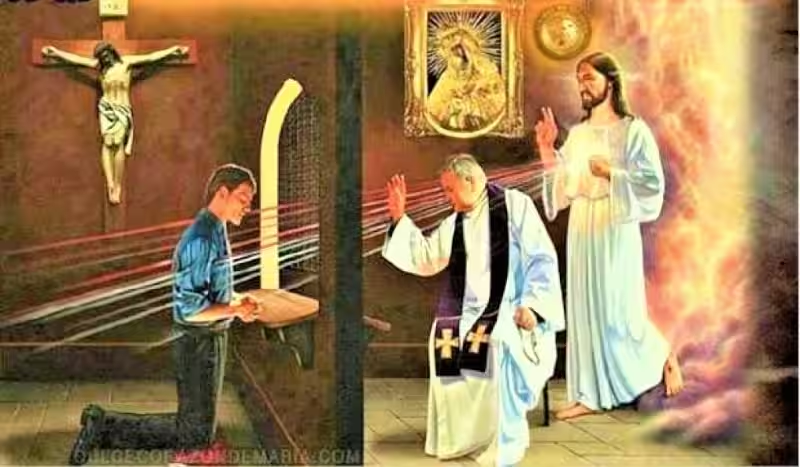
Within Catholicism, the sacrament of reconciliation, often referred to by its older name, Penance, or also known as Confession, provides a tangible and structured way for individuals to experience this divine forgiveness. It’s more than just a private prayer; it’s a sacred encounter where the faithful confess their sins to a priest, who acts in the person of Christ. This act of confession is an outward expression of inner repentance, an acknowledgment of wrongdoing and a sincere desire for amendment. This isn’t about a legalistic checklist, but a deeply personal and spiritual journey of healing.
The process of reconciliation involves several key components, each designed to foster genuine conversion and reintegration into the community of faith. These typically include: contrition (sorrow for sin), confession (telling sins to a priest), absolution (the priest’s declaration of God’s forgiveness), and penance (a prayer or action given by the priest to help make amends and grow in virtue). Consider it like this: if you break a treasured heirloom, you wouldn’t just say “sorry” and expect it to be fixed. You’d take it to a craftsman, express your regret, receive their expertise, and then perhaps be asked to care for it in a special way going forward. This sacrament offers a similar, albeit spiritual, form of restoration.
Contrition: The Heartbreak of Separation
At the core of the sacrament of reconciliation lies contrition, a heartfelt sorrow for sins committed. This isn’t simply regretting getting caught or facing consequences; it’s a deep, genuine regret for having offended God and harmed oneself and others. Catholics distinguish between two types of contrition: perfect contrition, which arises from love of God, and imperfect contrition, which arises from fear of God’s punishment or the ugliness of sin. Both are considered valuable in preparing the soul for the sacrament, demonstrating a willingness to turn away from sin and towards God.
Imagine a child who has lied to their parents. Perfect contrition would be the child feeling a pang of guilt because they’ve hurt the trust and love of their parents. Imperfect contrition might be the child feeling worried about being grounded. While the latter is less ideal, it’s still a step towards acknowledging the wrong. The Church encourages the faithful to strive for perfect contrition, but emphasizes that imperfect contrition is also a valid and important starting point for seeking God’s forgiveness through reconciliation. This sorrow is the fertile ground upon which God’s mercy can truly take root and flourish.
Confession: Speaking Our Truth to God’s Representative
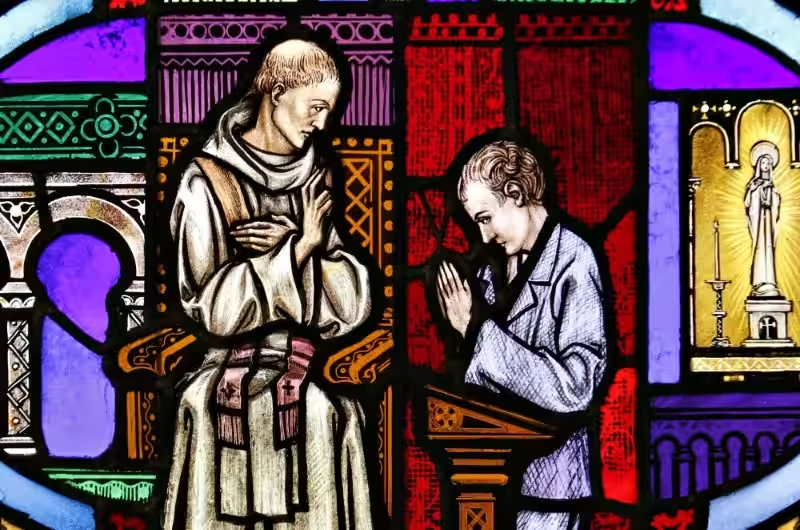
The act of confession is perhaps the most visible and often intimidating aspect of the sacrament of reconciliation. It involves openly and honestly recounting one’s sins to a priest. This isn’t about listing every minor infraction; rather, it’s about confessing the gravest sins, especially those that are mortal (sins that gravely offend God and sever one’s relationship with Him). The priest, as a minister of Christ, listens with compassion and understanding, offering guidance and support. This act requires courage, but it’s a crucial step in acknowledging our need for healing and divine intervention.
Think of confession as cleaning out a wound. It’s not always a pleasant process, but it’s essential for healing. By speaking our sins aloud, we bring them into the light of God’s grace and begin the process of spiritual cleansing. The priest’s role isn’t to judge, but to offer the healing power of God. He acts as an intermediary, a conduit through which God’s infinite mercy flows. This practice of confession is a cornerstone of Catholic practice, providing a regular opportunity for spiritual renewal and growth. It’s an invitation to be vulnerable and honest, trusting in the merciful heart of God.
Absolution: The Divine Pronouncement of Freedom
Following confession and the expression of contrition, the priest pronounces absolution. This is the solemn declaration by which God, through the ministry of the priest, forgives the sins confessed. It is a powerful moment, a tangible sign of God’s unconditional love and His desire to restore us to full communion. The words of absolution are not merely a priestly utterance; they are the voice of Christ Himself, offering peace and reconciliation. This is where the profound mercy of Catholicism becomes most evident.
Imagine a person who has been carrying a heavy burden for a long time. When they finally lay it down, the sense of relief is immense. Absolution is like that moment of profound relief, but on a spiritual level. It’s the release from the guilt and the spiritual separation that sin creates. The priest’s words, “I absolve you from your sins,” are a divine pronouncement of freedom, a restoration of grace, and an invitation to live anew. This sacrament is a powerful testament to the belief that God is always ready to forgive and to welcome us back into His loving embrace.
Penance: Walking the Path of Renewal
The final element of the sacrament of reconciliation is penance. This is a prayer or a specific action assigned by the priest, intended to help the penitent make amends for their sins and grow in virtue. Penance is not a punishment, but rather an opportunity for spiritual growth and healing. It might involve praying certain prayers, performing acts of charity, or making a specific effort to avoid a particular sin. The purpose is to reinforce the commitment to a changed life and to actively participate in one’s spiritual journey.
If you were learning a new skill, like playing a musical instrument, you wouldn’t just have a lesson and expect to be proficient. You’d need to practice regularly. Penance serves a similar purpose in the spiritual life. It’s the practice that solidifies the grace received through absolution and helps to build new, virtuous habits. It might be reciting the Rosary, performing an act of kindness for someone you’ve wronged, or dedicating time to studying Scripture. These acts are designed to help the individual integrate the teachings of Christ more fully into their lives and to demonstrate a tangible commitment to their renewed relationship with God. This practice is a vital part of the ongoing journey of reconciliation.
Reconciliation in the Wider Catholic Life: Beyond the Confessional
While the sacrament of reconciliation is a primary means of experiencing God’s forgiveness, the concept of reconciliation permeates much of Catholic life and theology. It’s about more than just individual sin and forgiveness; it extends to the reconciliation of humanity with God, the reconciliation of individuals with one another, and the reconciliation of creation itself. The Church is called to be an instrument of this universal reconciliation, a beacon of hope in a world often fractured by division and conflict.
This broader understanding of reconciliation is evident in various aspects of Catholic social teaching and missionary work. The Church actively promotes peace, justice, and understanding between peoples and nations. It encourages dialogue and forgiveness in contexts of conflict and seeks to heal historical injustices. This commitment to reconciliation is a direct reflection of Christ’s own mission to bring about a reconciled world, where all are united in love. It’s a continuous effort to mend broken relationships and to build a more harmonious community, mirroring the divine harmony it seeks to embody.
The Reconciliation of Humanity with God
The ultimate reconciliation in Catholicism is the restoration of the broken relationship between humanity and God. This was tragically severed by original sin, but made possible through the life, death, and resurrection of Jesus Christ. His sacrifice is seen as the ultimate act of reconciliation, bridging the gap between a holy God and sinful humanity. Through faith in Christ and participation in the sacraments, individuals can experience this profound reconciliation and live in intimate communion with God.
Consider the story of a prodigal son. He alienated himself from his father through his actions, creating a chasm between them. Christ’s sacrifice is like the father’s unconditional love and the open door, allowing the son to return and be reconciled. The Church’s teachings emphasize that this reconciliation is a gift offered freely, a testament to God’s enduring love and desire for a restored relationship with all of His children. This is the foundational reconciliation that underpins all other forms of reconciliation within the Catholic faith.
Reconciliation Between People: Building a Community of Love
The call to reconciliation extends to our relationships with one another. Jesus commanded His followers to love their neighbors as themselves, and this love necessarily includes forgiveness and reconciliation. Catholics are called to actively seek reconciliation in their personal lives, mending broken relationships, offering forgiveness to those who have wronged them, and striving for justice and understanding. This is a practical application of their faith, demonstrating God’s love through their actions.
Imagine a friendship that has been strained by a misunderstanding. The act of reaching out, apologizing, and seeking to understand the other person’s perspective is a form of reconciliation. The Catholic faith encourages this kind of active peacemaking, urging believers to be agents of healing and unity in their families, workplaces, and communities. This commitment to interpersonal reconciliation is a vital expression of their faith and a testament to the transformative power of God’s love working through them. It’s about creating a tapestry of understanding and forgiveness.
The Universal Call to Reconciliation
Ultimately, Catholicism envisions a universal reconciliation, where all of creation is brought into harmonious relationship with God and with each other. This is the eschatological hope, the ultimate fulfillment of God’s plan, where there will be no more sin, suffering, or division. The Church, through its mission and teachings, is a sign and instrument of this future reconciliation, working towards a world that reflects God’s perfect love and unity. This is the ultimate destination of the Christian journey.
Think of a grand symphony where every instrument plays its part in perfect harmony. The Church believes that in the end, all of creation will be united in a glorious symphony of praise to God. This hope for universal reconciliation inspires Catholics to work for peace and justice in the present, knowing that every act of love and forgiveness contributes to the unfolding of God’s ultimate plan. It’s a vision that transcends individual lives and embraces the entirety of existence, a testament to the enduring power of God’s love and His desire for complete harmony. This profound understanding of reconciliation offers a powerful message of hope and purpose.
Frequently Asked Questions about Reconciliation in Catholicism
What is Reconciliation in Catholicism?
Reconciliation, also known as the Sacrament of Penance or Confession, is a sacrament in the Catholic Church instituted by Jesus Christ. It is the ordinary way for baptized Catholics to be reconciled with God and the Church after committing sin. Through this sacrament, the faithful receive God’s forgiveness and grace, which helps them to resist future sin.
Who can receive the Sacrament of Reconciliation?
Any baptized Catholic who is conscious of having committed mortal sins is obliged to confess them at least once a year. Baptized Catholics who have committed venial sins are also encouraged to receive the sacrament regularly for spiritual growth and to strengthen their resolve against sin. Children can receive the sacrament after reaching the age of reason, typically around the age of seven.
What is the difference between mortal and venial sins?
Mortal sins are grave offenses against God’s law that destroy charity in the heart of the person and turn them away from God. To be a mortal sin, three conditions must be met: the sin must be grave matter, committed with full knowledge, and committed with deliberate consent. Venial sins, on the other hand, are less serious offenses that wound or weaken the relationship with God but do not destroy it.
How is the Sacrament of Reconciliation celebrated?
The sacrament typically involves:
1. Examination of Conscience: Reflecting on one’s actions and thoughts to identify sins.
2. Confession: Expressing one’s sins to a priest.
3. Absolution: The priest, acting in the person of Christ, grants forgiveness.
4. Penance: Performing an act of atonement, such as prayer, fasting, or charitable works, assigned by the priest.
What is the Seal of Confession?
The Seal of Confession is an absolute and inviolable obligation of secrecy that binds the confessor. The priest is forbidden, under severe penalties, from revealing anything that he has heard in confession, even to the person who confessed, and certainly not to any third party.
Why is going to a priest necessary for Reconciliation?
In Catholic theology, Jesus entrusted the power to forgive sins to his apostles and their successors, the bishops and priests. Therefore, confession to a priest is seen as a way of confessing to Christ himself, who works through the ministry of the Church. It also provides an opportunity for spiritual guidance and counsel.
Can I confess directly to God?
Catholics believe that while we can and should confess our sins directly to God at any time, the Sacrament of Reconciliation is the divinely instituted means for receiving forgiveness for grave sins and for the restoration of full communion with God and the Church. It is a communal aspect of faith, acknowledging that sin affects not only our relationship with God but also with the Church community.
What are the benefits of frequent confession?
Frequent confession, even of venial sins, can help Catholics to:
* Increase self-knowledge and awareness of their faults.
* Grow in humility and a desire for God’s grace.
* Strengthen their resolve to avoid sin.
* Receive God’s healing grace and spiritual strength.
* Deepen their relationship with God and the Church.
What if I don’t know all my sins?
It is not necessary to confess sins that one has forgotten or does not remember. If a forgotten sin is later remembered, and it was a mortal sin, it should be confessed the next time one goes to confession. The intention to confess all mortal sins known at the time of confession is what is required.