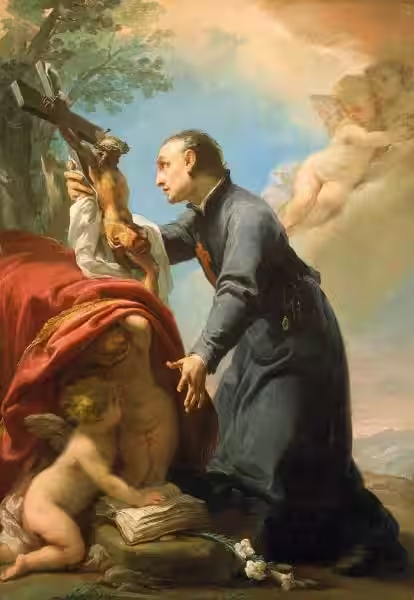
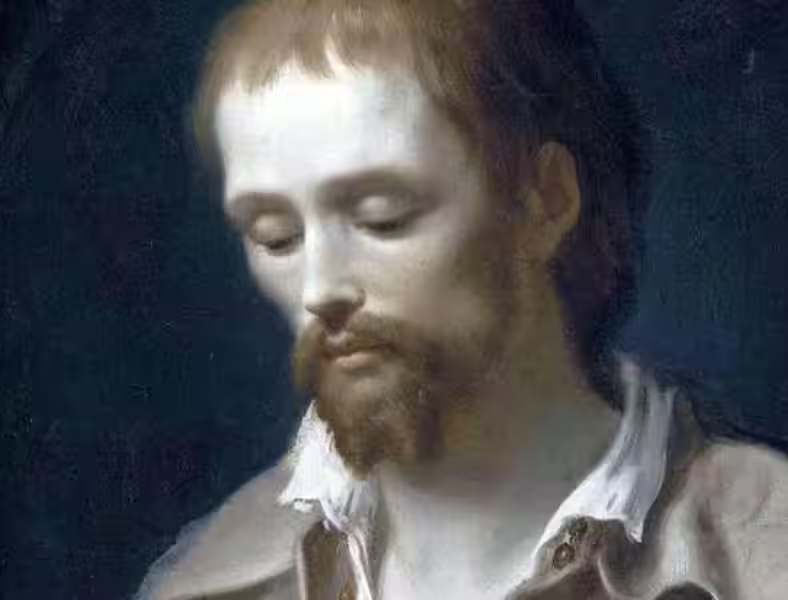
In the annals of religious history, certain figures stand out not for grand pronouncements or theological treatises, but for the profound impact of their lived compassion. Among these luminous souls, Saint Camillus de Lellis shines brightly, a testament to the transformative power of dedicated service, particularly to those who are suffering. Born in Bucchianico, Italy, in 1550, Camillus’s early life was far from the devout path he would eventually forge. He served as a soldier, a life marked by hardship and a certain wildness, a stark contrast to the profound empathy that would later define him. It was through his own struggles with illness and a deeply moving encounter with a crucifix that the seeds of his spiritual transformation were sown. This period of personal affliction and subsequent conversion became the cornerstone of his eventual ministry, igniting a burning desire to alleviate the suffering of others.
His journey was not a straight line to sainthood; rather, it was a path of disillusionment, repentance, and ultimately, divine calling. After experiencing a profound spiritual awakening, Camillus dedicated himself to serving the sick, initially as a lay volunteer in a hospital. He witnessed firsthand the dire conditions, the lack of proper care, and the often-discouraging prognosis faced by the ailing. This direct exposure to suffering ignited a passion within him that transcended mere charity; it became a sacred vocation, a calling deeply rooted in his newfound faith and a burning desire to embody Christ’s love for humanity, especially the most vulnerable.
Founding an Order: The Camillians and Their Sacred Mission
The dedication of Saint Camillus de Lellis to the sick was so profound that it led to the establishment of a religious order destined to carry on his work for centuries: the Ministers of the Sick, commonly known as the Camillians. Recognizing the immense need for organized, compassionate care, Camillus, with the blessing of the Church, founded this order with a radical commitment to serving those afflicted by illness. The vow taken by Camillian priests and brothers went beyond the usual vows of poverty, chastity, and obedience; they added a fourth vow, pledging to serve the sick, even at the risk of their own lives. This was a revolutionary concept in an era when contagious diseases were rampant and often led to the abandonment of the afflicted.
The Camillians, under the guidance of Saint Camillus de Lellis, were not just caregivers; they were heralds of hope and dignity. Their mission was to provide not only physical relief but also spiritual comfort and emotional support to patients. They were known for their unwavering dedication, tending to wounds, administering medicines, and offering prayers, all with a profound sense of humanity. Imagine a soldier who, after a life of conflict, dedicates himself to healing – this was the essence of Camillus’s transformation and the driving force behind his order. Their work extended beyond the walls of hospitals, reaching out to those suffering in their homes, bringing the solace of religion and the practicalities of care to forgotten corners of society.
The Four Significant Vows: More Than Just Rules
The distinguishing feature of the Camillians, and a testament to the vision of Saint Camillus de Lellis, lies in their unique fourth vow. While most religious orders commit to traditional vows, the Camillians added a specific pledge concerning the sick. This vow, often summarized as “to serve the sick, poor, and dying, even at the peril of one’s life,” highlights the extraordinary commitment that defined their ministry. This wasn’t a casual promise; it was a solemn oath, a profound embodiment of their faith in action.
This vow meant that Camillians would willingly expose themselves to danger to care for those who were most vulnerable. In times of plague or widespread illness, when others fled in fear, the Camillians stepped forward. This dedication serves as a powerful example of how religion can inspire individuals to undertake acts of immense courage and self-sacrifice. Their commitment was a tangible manifestation of the Gospel message, demonstrating that faith compels us to prioritize the needs of others, especially those in dire circumstances. Think of it like a firefighter who runs into a burning building not out of recklessness, but out of a deep-seated duty to save lives – that was the spirit of the Camillians.
Saint Camillus de Lellis: A Model of Compassionate Prayer and Action
The life of Saint Camillus de Lellis is a powerful illustration of how deep prayer and fervent faith translate into tangible action. His personal transformation from a soldier to a saint was fueled by a profound spiritual awakening that instilled in him an unshakeable commitment to serving God through serving humanity. He understood that true religious devotion was not merely an internal experience but an outward expression of love and compassion. His encounters with the suffering of others became opportunities for him to deepen his own relationship with God, seeing Christ in the face of every ailing person.
This profound connection between the spiritual and the practical is what makes his legacy so enduring. He didn’t just preach about charity; he lived it. His ability to find God in the midst of suffering inspired countless others to join his cause. He taught that tending to the sick was a form of worship, a direct way of encountering the divine. This holistic approach, where prayer and service were inextricably linked, remains a profound lesson for us today, reminding us that our faith calls us to be actively engaged in alleviating the pain and hardship in the world around us. The very essence of his religion was service.
The Role of Suffering in Spiritual Growth
Saint Camillus de Lellis’s own journey was marked by periods of intense personal suffering, both physical and spiritual. These experiences, rather than breaking him, became crucial crucibles for his spiritual growth. He learned firsthand the isolation and vulnerability that illness can bring, which in turn fostered a deep sense of empathy for those in similar predicaments. His own battles with hardship forged within him a resilience and a profound understanding of the human condition that would later inform his compassionate ministry.
This perspective offers a valuable insight into the role of suffering within the framework of religion. While we often seek to avoid pain, religious tradition, exemplified by figures like Saint Camillus de Lellis, suggests that suffering can be a pathway to deeper spiritual awareness and compassion. By confronting our own limitations and vulnerabilities, we can develop a more profound connection with the suffering of others. This doesn’t mean that suffering is desirable, but rather that when faced with faith and a commitment to service, it can lead to an extraordinary strengthening of character and a heightened capacity for love. It’s like forging metal; the heat and pressure are intense, but they create something strong and useful.
The Enduring Relevance of Saint Camillus de Lellis Today
In a world that often grapples with the complexities of healthcare, the profound simplicity of Saint Camillus de Lellis’s mission continues to resonate. His unwavering dedication to the sick, regardless of their social standing or the contagiousness of their ailments, serves as a timeless model of Christian charity. The Camillian charism, born from his personal experience and unwavering faith, remains a vital force in modern healthcare, offering a beacon of hope and compassionate care. The organization he founded continues to operate worldwide, embodying his spirit of service.
His life reminds us that the core of religion often lies not in elaborate rituals or rigid doctrines, but in the practical application of love and mercy. In a society that can sometimes feel impersonal or detached, the example of Saint Camillus de Lellis calls us to reconnect with our shared humanity and to prioritize the well-being of those who are most in need. Whether through organized religious orders or individual acts of kindness, his legacy encourages us to see the divine in every person and to act with compassion, especially when faced with suffering. This commitment is the very heart of a life lived according to the principles of true religion.
Frequently Asked Questions about Saint Camillus de Lellis
Who was Saint Camillus de Lellis?
Saint Camillus de Lellis was an Italian Catholic priest who founded the Order of the Ministers of the Sick (Camillians). He is known for his profound dedication to caring for the sick, especially those suffering from the plague and other contagious diseases.
What is the religion of Saint Camillus de Lellis?
Saint Camillus de Lellis was Roman Catholic.
What is the significance of Saint Camillus de Lellis in Catholicism?
He is venerated as the patron saint of the sick, nurses, hospitals, and healthcare workers. His life serves as an inspiration for compassionate care and service to the suffering.
When did Saint Camillus de Lellis live?
He lived from 1550 to 1614.
What is the Order of the Ministers of the Sick (Camillians)?
The Camillians are a religious order dedicated to serving the sick, both spiritually and physically, with a particular emphasis on those who are most neglected and suffering. Their charism is rooted in the example and spirit of Saint Camillus.
What is the main message or legacy of Saint Camillus de Lellis?
His enduring legacy is one of unconditional love and service to the sick, urging others to see Christ in the suffering and to offer care with dignity, compassion, and the highest quality of attention.