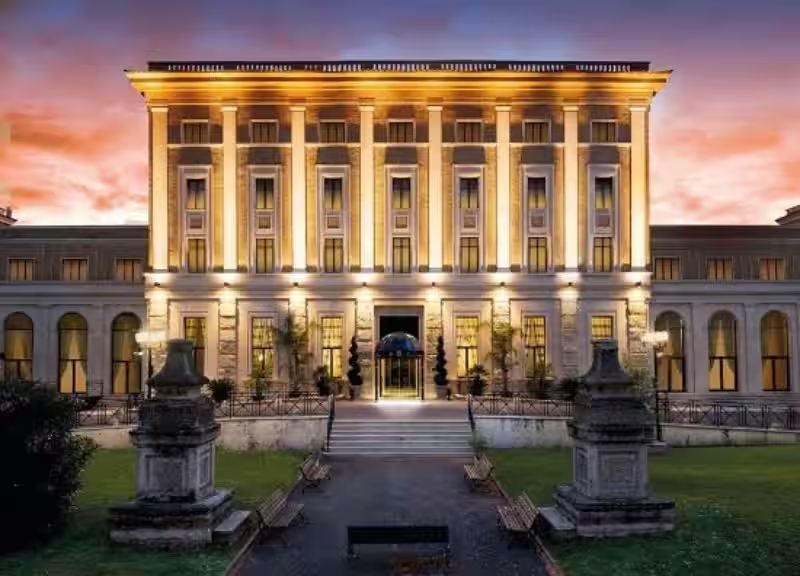
Rome, a city steeped in millennia of history and faith, is home to countless sacred sites that draw millions seeking spiritual solace and artistic wonder. Among these, the church of Sant’Agostino stands as a particularly poignant testament to the enduring power of religion and artistic devotion. Nestled in the heart of the Eternal City, this beautiful basilica offers a serene escape from the bustling streets, inviting visitors to connect with a rich spiritual legacy. More than just a building, Sant’Agostino is a living entity, a place where centuries of prayer, art, and architectural evolution converge to create an atmosphere of profound reverence.
The allure of Sant’Agostino lies not only in its architectural grandeur but also in its deep-seated connection to the very fabric of Roman religious life. It’s a place where the whispers of history mingle with the echoes of contemporary faith, offering a unique experience for both the devout pilgrim and the curious traveler. Understanding the significance of Sant’Agostino requires delving into its history, its artistic treasures, and the profound religious sentiment it embodies, making it a cornerstone for anyone interested in the intersection of art and religion in Rome.
A Glimpse into History: The Foundations of Faith
Tracing the Origins of Sant’Agostino
The story of Sant’Agostino in Rome is intrinsically linked to the Augustinian order, a religious community founded on the principles of the philosopher and theologian Saint Augustine of Hippo. The construction of the church began in the late 15th century, commissioned by Cardinal Giovanni Castellar di Sant’Agostino, who envisioned a magnificent edifice befitting the order’s importance. This period was a fertile ground for artistic and architectural innovation, and Sant’Agostino became a prime example of the Early Renaissance style that was taking hold in Rome. The initial design, attributed to the renowned architect Donato Bramante, set a high standard for the subsequent work, emphasizing balance, harmony, and classical proportions.
The church’s construction spanned several decades, with various architects and artists contributing to its evolution. This gradual development has resulted in a fascinating blend of styles, though the Renaissance influence remains dominant. The very act of building Sant’Agostino was a profound expression of faith, a tangible representation of the Augustinian commitment to intellectual and spiritual pursuits. It was a project undertaken with a deep understanding of its religious purpose, aiming to create a space that would inspire awe and facilitate communion with the divine. The foundation of Sant’Agostino was therefore not just a construction project, but a spiritual undertaking.
The Augustinian Legacy in Rome
The Augustinian order has a long and distinguished history in Rome, and the church of Sant’Agostino serves as a central hub for their ongoing ministry and spiritual guidance. The order’s dedication to the teachings of Saint Augustine has shaped the intellectual and religious landscape of Christianity for centuries, emphasizing themes of grace, free will, and the nature of God. Within the walls of Sant’Agostino, this legacy is kept alive through daily services, theological discussions, and the welcoming presence of the Augustinian friars. They continue to serve the Roman community and welcome visitors from around the globe, offering spiritual counsel and a connection to this ancient tradition.
The presence of Sant’Agostino reinforces the Augustinian order’s commitment to Rome as a spiritual center. It’s a place where the philosophical depth of Saint Augustine is not just studied but lived, fostering an environment of contemplation and devotion. The friars at Sant’Agostino are not merely custodians of a historical building; they are active participants in the city’s religious life, nurturing faith and offering a beacon of Augustinian wisdom. Their dedication ensures that the spiritual heart of Sant’Agostino continues to beat strongly, providing a vital resource for those seeking spiritual nourishment.
Artistic Masterpieces within a Sacred Space
Caravaggio’s Vision: “The Madonna of the Rosary” (or “Madonna del Popolo”)
One of the most compelling reasons to visit Sant’Agostino is to witness its extraordinary collection of art, which serves as a powerful visual sermon, enhancing the religious experience. Foremost among these treasures is the “Madonna of the Rosary” (also known as “Madonna del Popolo”) by the revolutionary Baroque artist Michelangelo Merisi da Caravaggio. This masterpiece, painted around 1604, is renowned for its dramatic use of light and shadow, known as chiaroscuro, and its stark realism. Caravaggio’s ability to portray sacred figures with such earthy humanity was groundbreaking and continues to captivate viewers.
The painting depicts the Virgin Mary holding the infant Jesus, surrounded by saints and patrons. Caravaggio’s choice to depict the saints with the faces of ordinary people, some even appearing worn and weary, was a radical departure from the idealized representations common at the time. This realistic portrayal of faith made the divine feel more accessible and relatable, a core tenet of Caravaggio’s artistic philosophy and a testament to the power of religion to touch everyday lives. The palpable emotion and raw humanity in the faces of the figures invite contemplation on the sacredness of the ordinary and the profound mystery of faith.
Raphael’s Fresco: “The Prophet Isaiah”
Beyond Caravaggio’s dramatic realism, Sant’Agostino also boasts the early Renaissance brilliance of Raphael Sanzio da Urbino. His fresco, “The Prophet Isaiah,” adorning a pillar in the church, is a testament to his prodigious talent even at a young age. Painted around 1512, this work showcases Raphael’s mastery of form, composition, and his ability to imbue his figures with a sense of divine inspiration. The muscular, powerful depiction of Isaiah, with his gaze directed upwards, conveys a profound spiritual intensity, capturing the moment of divine revelation that is central to religious experience.
Raphael’s “Prophet Isaiah” is a key example of how art can serve religious devotion by visualizing abstract spiritual concepts. The fresco’s bold lines and vibrant colors, though softened by time, still convey a sense of dynamism and power. It stands as a powerful reminder of the prophets’ role in conveying God’s message, and within the context of Sant’Agostino, it encourages visitors to reflect on their own spiritual journeys and the messages they receive. The presence of Raphael’s genius elevates the art within Sant’Agostino to a level of universal appreciation, connecting the viewer directly to the divine through artistic excellence.
Other Artistic Treasures and Their Spiritual Significance
The artistic richness of Sant’Agostino extends far beyond these two iconic works. The church houses numerous other sculptures, paintings, and altarpieces, each contributing to its overall spiritual atmosphere. For instance, the Chapel of Saint Augustine features beautiful works that detail the life and teachings of the saint, offering a visual narrative that complements the church’s namesake. These works are not merely decorative; they are integral to the religious education and inspiration of the faithful, serving as windows into sacred history and theological truths. The cumulative effect of these artistic treasures is a profound immersion in beauty that enhances spiritual contemplation.
Visitors will also find exquisite works by artists like Guercino and Annibale Carracci, each contributing their unique artistic voice to the sacred narrative of Sant’Agostino. The iconography and symbolism within these artworks are carefully considered, aiming to convey specific religious messages and foster a deeper understanding of Christian doctrine. Whether it’s a depiction of the Virgin Mary, a scene from the life of a saint, or a symbolic representation of theological concepts, each piece in Sant’Agostino plays a role in creating a holistic environment conducive to prayer, reflection, and the cultivation of faith. The art of Sant’Agostino thus becomes a powerful tool for religious engagement.
Experiencing Sant’Agostino: A Personal Journey of Faith
The Atmosphere of Reverence and Contemplation
Stepping into Sant’Agostino is like entering a different realm, a sanctuary where the clamor of the city fades away, replaced by a profound sense of peace and spiritual tranquility. The high vaulted ceilings, the soft glow filtering through stained glass windows, and the hushed reverence of fellow visitors create an atmosphere that is both humbling and uplifting. It’s a space designed to encourage introspection and a connection with something larger than oneself. The spiritual ambiance is palpable, inviting a moment of pause in the often-hectic pace of modern life.
Whether you are attending a Mass service, participating in private prayer, or simply taking a moment to absorb the beauty, the environment of Sant’Agostino is conducive to deep contemplation. The quiet nooks and alcoves offer private spaces for personal reflection, while the grand nave inspires a sense of collective worship and shared faith. The very architecture seems to draw the eye upwards, towards the heavens, reinforcing the spiritual purpose of the space. This is a place where one can truly feel the presence of the divine.
Connecting with the Divine Through Ritual and Art
The religious practices that take place within Sant’Agostino are central to its identity. The celebration of the Eucharist, the sacrament of confession, and the recitation of prayers are all vital components of the church’s life. These rituals, performed consistently over centuries, create a spiritual continuity that resonates deeply with visitors. Participating in a service, even as an observer, allows one to connect with the timeless traditions of the Catholic Church and experience the communal aspect of faith. The Augustinian friars play a crucial role in facilitating these experiences, offering guidance and a welcoming presence.
The interplay between art and religion at Sant’Agostino is a powerful way to deepen one’s spiritual understanding. Looking at Caravaggio’s “Madonna of the Rosary” or Raphael’s “Prophet Isaiah” is not just an aesthetic experience; it’s an invitation to engage with the stories, the emotions, and the theological messages they represent. These artworks act as visual aids to faith, helping to make abstract concepts concrete and relatable. They encourage personal reflection on themes of compassion, divine guidance, and the human condition, making the religious experience at Sant’Agostino multifaceted and profoundly engaging.
Practical Tips for Your Visit to Sant’Agostino
For those planning a visit to Sant’Agostino, it’s helpful to keep a few things in mind to enhance your experience. First, dress respectfully as you would for any church; this means covering shoulders and knees. The church is usually open daily, but it’s wise to check the official website or local listings for specific opening hours and any potential closures due to religious services. Consider visiting during quieter times, such as early morning or late afternoon, to avoid the largest crowds and allow for a more peaceful exploration.
To truly appreciate the artistic and spiritual significance of Sant’Agostino, consider taking a guided tour or downloading an audio guide. Many tours focus specifically on the religious art and history of the church, offering insights that might otherwise be missed. Allow ample time to sit in quiet contemplation, to admire the artwork at your own pace, and to absorb the sacred atmosphere. Whether you are coming for a specific artistic masterpiece, a religious service, or simply a moment of quiet reflection, Sant’Agostino in Rome offers a truly enriching experience for all who seek its embrace.
Frequently Asked Questions about Sant’Agostino, Rome – Religion
What is the religious significance of Sant’Agostino in Rome?
Sant’Agostino is a significant church in Rome dedicated to Saint Augustine of Hippo, a prominent theologian and philosopher in early Christianity. The church houses relics of Saint Monica, Augustine’s mother, and is a place of devotion for those who venerate him and his teachings. It is an active parish church within the Diocese of Rome, serving the local community and attracting pilgrims interested in Augustinian spirituality.
What are the main religious features or artworks within Sant’Agostino?
The church is renowned for its artistic treasures, many of which have religious significance. These include:
Raphael’s Madonna del Popolo: A pivotal work in the history of Renaissance art, depicting the Virgin Mary.
Caravaggio’s The Pilgrims’ Madonna (Our Lady of Loreto): A powerful and moving depiction of the Virgin Mary appearing to pilgrims, located in the Cavalletti Chapel.
Sculptures and frescoes by prominent artists: Many chapels contain altarpieces, frescoes, and sculptures that illustrate biblical stories, lives of saints, and theological themes, reflecting the Catholic faith.
Is Sant’Agostino a place of pilgrimage or prayer for specific religious groups?
Yes, Sant’Agostino is a significant site for those interested in Saint Augustine and Saint Monica. It is a place of prayer and reflection for Augustinians, scholars of theology, and devotees of these saints. The church offers opportunities for Mass, confession, and personal prayer, making it a spiritual destination for Catholics.
Can visitors attend religious services at Sant’Agostino?
Absolutely. Sant’Agostino is an active church, and visitors are welcome to attend Mass and other liturgical celebrations. The schedule for services is typically available at the church or on its official website.
What is the historical connection between Sant’Agostino and the Augustinian order?
The church was built by the Augustinian friars in the 15th century, and it has been closely associated with the Augustinian order throughout its history. It served as a major Augustinian church in Rome, fostering the study and practice of Augustinian spirituality.