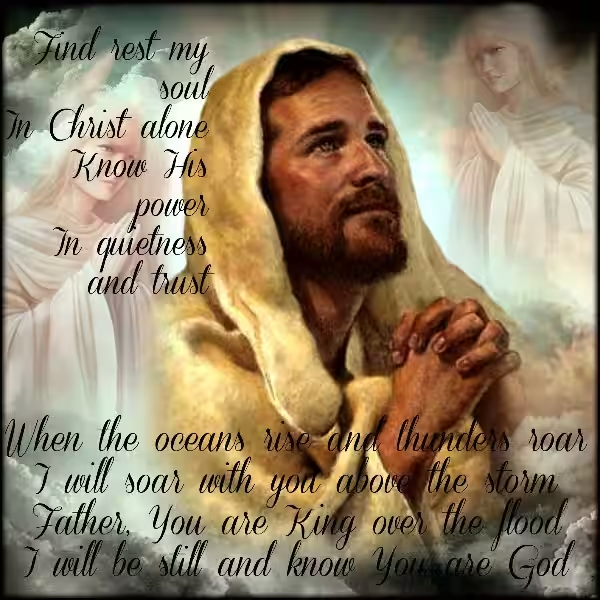
The concept of a “sinner’s prayer” is a cornerstone for many Christians, representing a pivotal moment of spiritual transformation and a personal commitment to a life guided by faith. It’s not merely a ritual but a heartfelt expression of repentance, a plea for divine forgiveness, and an acceptance of Jesus Christ as savior. For some, this prayer is a clear and conscious decision, a moment they can pinpoint and recall with vivid clarity. For others, the journey might be more gradual, a series of reflections leading to a profound internal shift. Regardless of the path taken, understanding what the sinner’s prayer entails and how to approach it can be incredibly meaningful and empowering.
At its core, the sinner’s prayer is a dialogue with God. It’s about acknowledging our human imperfections, our tendency to stray from what is right, and our need for a higher power to guide and redeem us. This prayer is a bridge, connecting the individual to the divine, offering a path to reconciliation and a renewed sense of purpose. It’s a declaration of faith, a willingness to surrender personal will for a divine plan, and an embrace of grace and salvation.
A sinner’s prayer is, in essence, a prayer of repentance and acceptance. It’s an individual’s conscious decision to turn away from a life they perceive as being outside of God’s will and to embrace a relationship with God through Jesus Christ. This prayer is often seen as the starting point of a person’s Christian journey, a public or private declaration of their newfound faith and commitment. It’s about recognizing one’s own sinfulness – not in a way that breeds despair, but with an understanding that all humans fall short and are in need of mercy.
Think of it like this: imagine you’ve been lost in a dense forest, feeling disoriented and alone. You’ve made wrong turns and are unsure of the way back. The sinner’s prayer is like calling out for help, acknowledging you’re lost and asking for guidance from someone who knows the way. It’s an act of humility and trust, believing that a rescuer is there and willing to lead you to safety. This prayer is a personal and intimate conversation, a heartfelt plea that comes from the depths of one’s being.
The Essential Elements of a Sinner’s Prayer
While there isn’t a single, prescribed script for a sinner’s prayer, certain core elements are consistently present. These components represent the fundamental tenets of Christian belief regarding sin, repentance, and salvation. Understanding these building blocks can help someone formulate their own authentic and heartfelt prayer.
Firstly, acknowledging sin and the need for forgiveness is paramount. This involves recognizing that we have all done things that are contrary to God’s will and that these actions separate us from Him. It’s not about dwelling on past mistakes with shame, but about honest self-assessment and a sincere desire to be cleansed. A simple way to express this might be: “Lord, I know I am a sinner, and I ask for Your forgiveness for all my wrongdoings.” This is the foundation upon which the rest of the prayer is built.
Secondly, expressing belief in Jesus Christ is crucial. This includes acknowledging His sacrifice on the cross for the forgiveness of sins and His resurrection, which offers the promise of eternal life. This is where the acceptance of His work comes into play. A common expression of this element would be: “I believe that Jesus Christ is the Son of God and that He died for my sins and rose again.” This belief is the gateway to receiving the benefits of His sacrifice.
Finally, the prayer typically involves inviting Jesus into one’s life and asking Him to be one’s Savior and Lord. This signifies a personal commitment to follow His teachings and to live a life dedicated to Him. A concluding phrase might sound like: “Jesus, please come into my heart and be my Lord and Savior. Help me to live for You from this day forward.” This is the invitation, the act of opening the door to a new relationship with the divine.
For those new to the concept or seeking a straightforward expression of faith, a simple sinner’s prayer can be incredibly powerful. It emphasizes clarity and sincerity above elaborate wording. This type of prayer is often used in situations where someone feels an immediate conviction and desires to make a quick, yet deeply meaningful, commitment.
Consider someone who has just heard a sermon or had a profound personal experience that has moved them to seek spiritual guidance. They might utter a prayer like this: “God, I’m sorry for my sins. I believe Jesus died for me. Please save me and be my guide.” This prayer, though brief, encapsulates the essential elements of repentance, belief, and the acceptance of salvation. It demonstrates that authenticity of heart is more important than eloquent language. The directness of this prayer allows for immediate connection and a clear expression of intent.
Example 2: A More Detailed Expression of Personal Renunciation
As individuals grow in their understanding of faith, their prayers may become more detailed, reflecting a deeper understanding of their past and a more comprehensive commitment to their future. This type of prayer often includes a more specific acknowledgment of areas in their life they wish to surrender to God’s control. It’s a profound act of relinquishing personal autonomy in favor of divine wisdom.
A person might pray: “Heavenly Father, I come before You today, acknowledging that I have lived apart from You. I confess my sins – my pride, my selfishness, my doubts – and I ask for Your cleansing and forgiveness through the precious blood of Jesus. I believe He is my Savior, and I now invite Him to be the Lord of my life. I surrender my will to Yours, and I pray that Your Holy Spirit will guide me, strengthen me, and help me to live a life that honors You. Amen.” This prayer showcases a deeper self-awareness and a more comprehensive surrender, demonstrating a willingness to be transformed in every aspect of their being. The personal renunciation is a key feature of this more developed prayer.
The Significance of the Sinner’s Prayer in Religious Traditions
The sinner’s prayer holds significant weight across various Christian denominations, though its specific emphasis and the context in which it’s prayed can differ. In some traditions, it’s a central event in evangelistic outreach and personal conversion, often encouraged during altar calls or in one-on-one evangelistic encounters. In others, it might be integrated into baptismal vows or seen as a more private, ongoing aspect of spiritual discipline.
For many, the sinner’s prayer is seen as the initiation into the Christian family. It’s a public or private declaration of faith that marks a turning point, symbolizing a new beginning. It’s a moment of profound assurance for believers, often accompanied by a sense of peace and a renewed sense of purpose. This prayer is not just a solitary act but often leads to community integration within a church or faith group.
Historical Context and Evolution
The concept of a prayer for forgiveness and a plea for divine intervention is as old as religious practice itself. However, the specific phrasing and emphasis on the “sinner’s prayer” as an act of conscious conversion gained particular prominence during revival movements in Christian history, notably in the 18th and 19th centuries. Figures like John Wesley and Charles Finney emphasized the importance of individual decision and a personal acceptance of Christ.
These movements often featured public invitations for people to come forward and pray for salvation. This practice, while sometimes criticized for potentially leading to superficial conversions, undeniably brought millions of individuals to a conscious faith decision. The sinner’s prayer, in this context, became a tangible expression of an internal spiritual awakening, a clear signal of a commitment to a new way of life. The historical impact of these revival movements on the understanding and practice of the sinner’s prayer is undeniable.
The Sinner’s Prayer in Practice Today
Today, the sinner’s prayer remains a vital practice in many Christian circles. It’s commonly heard in youth group meetings, evangelistic crusades, and even in one-on-one conversations between believers and those seeking spiritual answers. Pastors and lay leaders often guide individuals through this prayer, offering support and encouragement as they make their decision.
The beauty of the sinner’s prayer lies in its adaptability. It can be prayed in a crowded stadium or in the quiet solitude of one’s bedroom. It can be a spontaneous cry from the heart or a carefully considered affirmation. Regardless of the setting, the essence remains the same: a heartfelt plea for divine mercy and a willingness to embrace a life transformed by faith. The contemporary relevance of this prayer continues to resonate with individuals seeking spiritual grounding.
Beyond the Words: The Internal Transformation
It’s crucial to understand that the sinner’s prayer is not a magical incantation that instantly solves all life’s problems or guarantees a sin-free existence. Its true power lies in the internal transformation it signifies and initiates. It’s the beginning of a journey, not the end of one. The prayer is the doorway, and the Christian life is the path walked through it.
The prayer is an act of faith, a declaration of trust that God hears and responds. It’s about a change of heart and mind, a redirection of one’s desires and priorities. This internal shift is what truly matters, leading to a desire to live a life that reflects the values and teachings of Christ. The lasting impact of the prayer is seen in the ongoing effort to live a life pleasing to God.
The Role of Repentance and Faith
Repentance is the turning away from sin, a genuine sorrow for wrongdoing and a conscious decision to change course. It’s not just feeling bad about what you’ve done, but actively deciding to stop doing it and to seek a better way. Faith, on the other hand, is the belief in God’s ability and willingness to forgive and to transform. It’s the trust that God will accept your plea and begin the work of renewing your life.
Think of it like a pilot who realizes they’ve been flying off course. Repentance is the pilot deciding to change direction, to correct their path. Faith is the pilot trusting that the navigation system and their own skills will get them back on track. The sinner’s prayer is the pilot’s declaration of this intent to the control tower – God. The interplay between repentance and faith is what activates the power of this prayer.
The Ongoing Journey of Discipleship
After praying the sinner’s prayer, the journey of discipleship begins. This involves actively learning about God, growing in one’s faith, and striving to live according to Christian principles. It’s a process of spiritual growth, often nurtured through prayer, Bible study, fellowship with other believers, and service to others. This isn’t a passive experience; it requires active participation and a willingness to learn and grow.
This ongoing journey is like tending to a garden. The sinner’s prayer is like planting the seed. Discipleship is the watering, weeding, and nurturing that allows the plant to grow and flourish. It’s a continuous process of learning, applying, and deepening one’s relationship with God. The commitment to discipleship is the testament to the sincerity of the initial prayer.
Finding Your Own Words: Crafting Your Sinner’s Prayer
While examples of sinner’s prayers can be helpful, the most impactful prayer is one that comes from your own heart. It’s about expressing your unique feelings, your specific needs, and your personal understanding of God’s grace. Don’t feel pressured to use specific phrases; focus on the sincerity and honesty of your plea.
Consider what you are feeling in this moment. Are you feeling remorse for specific actions? Are you overwhelmed by a sense of emptiness and seeking purpose? Are you simply ready to commit your life to something greater? Let these feelings guide your words. The authenticity of your expression is what truly matters.
Key Considerations for Personal Prayer
When crafting your own sinner’s prayer, keep these points in mind:
Honesty: Speak truthfully to God about your feelings and your situation. Authenticity is key.
Humility: Approach God with a humble heart, acknowledging your need for His help. Modesty is a virtue.
Belief: Express your faith in Jesus Christ as your Savior. Conviction in His power is essential.
Commitment: Indicate your desire to follow Him and to live a life that honors Him. Dedication is the follow-through.
Gratitude: Even in your plea, express thanks for God’s love and mercy. Appreciation deepens the connection.
Remember, this is your personal conversation with God. There’s no right or wrong way to pray, as long as it comes from a sincere heart. The freedom to express oneself is a gift.
Example 3: A Prayer of Comprehensive Surrender and Hope
This example combines the elements of acknowledgment, belief, and a hopeful outlook for the future, offering a full picture of what a personalized sinner’s prayer might encompass. It reflects a deep longing for a renewed existence and a partnership with the divine.
“Dear God, I come to You today with a heavy heart, recognizing the many times I have strayed from Your path and the harm I have caused myself and others. I confess my pride, my selfishness, and my tendency to doubt Your goodness. I believe, with all my heart, that Jesus Christ is Your Son, that He died on the cross to pay the penalty for my sins, and that He was raised to life again to give me hope and eternal life. I now choose to receive Him as my personal Savior and to invite Him to be the Lord of my life. I surrender my past, my present, and my future to Your loving care. Please forgive me, cleanse me, and fill me with Your Holy Spirit. Help me to grow in Your love, to understand Your Word, and to live a life that brings glory to Your name. I trust in Your promises and look forward to the new life You offer. Amen.” This prayer exemplifies a holistic approach to seeking redemption, encompassing acknowledgment, belief, surrender, and a forward-looking hope. The comprehensive nature of this prayer speaks to a deep desire for a complete transformation.
The sinner’s prayer is a powerful expression of faith, a personal invitation to a divine relationship, and the starting point for a transformed life. Whether you are exploring your spiritual path or seeking to deepen your existing faith, understanding and embracing the concept of a sinner’s prayer can be an incredibly rewarding and life-changing experience. It’s a fundamental act of devotion that opens the door to a world of grace, forgiveness, and eternal hope.
Frequently Asked Questions About the Sinner’s Prayer
What is a Sinner’s Prayer?
A Sinner’s Prayer is a simple prayer that a person says to express their repentance for their sins and their belief in Jesus Christ as their savior. It is often seen as a declaration of faith and a commitment to follow God.
Are there specific words I need to say in a Sinner’s Prayer?
There are no exact, prescribed words that must be used. The most important elements are sincerity and a heartfelt desire to turn away from sin and accept Jesus Christ. Common themes include admitting one is a sinner, believing Jesus died for sins, asking for forgiveness, and inviting Jesus into one’s heart.
Can you give me an example of a Sinner’s Prayer?
Here is a common example: “Dear God, I know I am a sinner and I have done things that displease You. I believe that Jesus died on the cross for my sins and rose again. I ask for Your forgiveness. Please come into my heart and help me to live a life that is pleasing to You. In Jesus’ name, Amen.”
Is the Sinner’s Prayer a requirement for salvation in all religions?
The concept of a “Sinner’s Prayer” is primarily associated with Protestant Christianity, particularly evangelical traditions. Other Christian denominations may have different understandings or practices related to conversion and salvation. Many religions outside of Christianity do not use or recognize the Sinner’s Prayer.
What happens after I pray the Sinner’s Prayer?
For those who believe in its efficacy, praying the Sinner’s Prayer is considered the beginning of a new spiritual journey. This often involves growing in faith through reading the Bible, attending church, prayer, and seeking to live according to Christian teachings.