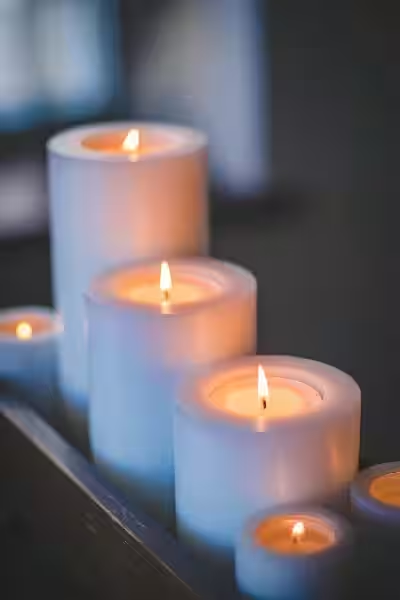
The flickering dance of a Swedish candle, a simple yet profound creation, has long held a special place in the hearts and homes of many. More than just a source of light or a decorative item, this iconic candlestick, often crafted from wood with multiple branches holding candles, carries a deep resonance with history, tradition, and, for some, even with the spiritual. While its origins are rooted in practical necessity, the Swedish candle has evolved into a symbol, touching upon themes of religion, community, and the enduring human need for warmth and connection.
In contemporary society, where the lines between the secular and the spiritual can often blur, the Swedish candle offers a tangible link to practices and beliefs that predate modern conveniences. Its presence in homes, particularly around festive seasons, evokes a sense of continuity and shared experience. Whether consciously recognized or not, the ritual of lighting these candles can tap into a deeper, almost primal, urge for illumination and reflection, often intertwining with personal or communal spiritual practices.
From Hearth to Altar: The Religious Roots of the Swedish Candle
The genesis of the Swedish candle is intertwined with the historical importance of light in human civilization, a concept deeply embedded in many religious traditions. Before the advent of electricity, fire and light were not merely functional; they were sacred, representing divinity, knowledge, and the banishment of darkness, both literal and metaphorical. In the often-dark Scandinavian winters, the ability to create and sustain light was crucial for survival and for maintaining social and spiritual life.
Early forms of the Swedish candle, likely simpler wooden stands or even carved tree stumps, would have served as central points for communal gatherings. Imagine a small village community huddling around a flickering light during long winter nights. This shared experience of light fostered a sense of unity and often became the locus for storytelling, prayer, and the passing down of religious lore. The act of tending to the flame, of ensuring its steady burn, mirrored the care and devotion expected in their spiritual lives, making the Swedish candle an unintentional, yet powerful, religious artifact.
The symbolism of light in worship and ritual
Across a vast spectrum of religions, light is a pervasive and potent symbol. In Christianity, Jesus is often referred to as the “Light of the World,” and the lighting of candles during services, particularly at Easter with the Paschal candle, signifies resurrection and the triumph over darkness. Similarly, in Judaism, the Chanukah menorah, with its nine branches, celebrates the miracle of oil that burned for eight days. The Swedish candle, with its multiple points of light, can echo these traditions, offering a visual representation of divine presence and the spreading of enlightenment.
Even beyond formal religious services, the Swedish candle can facilitate personal spiritual moments. The act of lighting each candle can be a meditative practice, a time for setting intentions, offering prayers, or simply reflecting on one’s blessings. For individuals seeking a connection to something greater than themselves, the gentle glow of a Swedish candle can create a tranquil ambiance conducive to inner peace and contemplation, transforming a simple home into a personal sanctuary.
The Swedish Candle as a Modern Emblem of Faith and Fellowship
While the overt religious associations of the Swedish candle may have receded for many in increasingly secular societies, its capacity to foster connection and shared meaning remains strong. The Swedish candle has become a prominent fixture during Advent and Christmas, a time deeply rooted in religious celebration for many. Its presence on dining tables and in windows serves as a visual marker of this significant period, uniting households in a common observance.
The multi-branched nature of the Swedish candle is particularly relevant here. As each candle is lit throughout Advent, it symbolizes the growing anticipation and the approaching celebration of Christ’s birth. This gradual illumination mirrors the journey of faith, the steady progression towards a spiritual goal. It also becomes a focal point for family gatherings, where stories are shared, carols are sung, and the spirit of fellowship, a cornerstone of many religious communities, is palpable.
Community and shared rituals around the Swedish candle
Think of a family gathered around a table, the Swedish candle casting its warm light. The youngest child might be tasked with lighting the next candle, a simple act imbued with significance. This shared ritual, whether consciously tied to religious doctrine or simply to tradition and family bonding, creates a powerful sense of belonging. It’s a moment where the everyday fades, and a deeper connection is forged, echoing the ancient communal gatherings around firelight, which often served religious purposes.
This sense of shared experience extends beyond the immediate family. The prominent display of Swedish candles in windows during the holiday season creates a beautiful, unifying spectacle for entire neighborhoods. It’s a silent acknowledgment of shared traditions and values, a gentle reminder of the collective human spirit that often finds its expression through religious and cultural observances. The Swedish candle becomes a beacon, not just of light, but of community spirit.
Navigating Spirituality: The Swedish Candle in Personal Devotion
For those who actively practice a religion or engage in personal spiritual exploration, the Swedish candle can serve as a simple yet profound tool. Its inherent symbolism of light and warmth can be harnessed to create a focused atmosphere for prayer, meditation, or reflection. The act of lighting each candle on a Swedish candle can be a deliberate ritual, marking stages of a prayer or a period of contemplation.
Consider someone facing a difficult challenge. Lighting a Swedish candle might be a personal ritual to imbue their space with a sense of hope and resilience. Each flame can represent a prayer offered, a positive affirmation, or a moment of gratitude. This personal use of the Swedish candle transforms it from a mere object into a focal point for inner dialogue and spiritual connection, a silent witness to their personal journey.
Creating sacred space with the Swedish candle
Even without a formal religious affiliation, individuals can imbue their homes with a sense of peace and mindfulness using a Swedish candle. Creating a dedicated space for quiet reflection, even a small corner with a comfortable chair and a Swedish candle, can be incredibly beneficial. The gentle, flickering light can calm the mind, reduce distractions, and open up a space for introspection. This act of intentionally creating a tranquil environment can be seen as a form of secular spirituality, a deliberate effort to cultivate inner well-being.
The Swedish candle’s ability to transform an ordinary space into something more intentional makes it a valuable asset for anyone seeking moments of peace and connection. Whether one uses it to connect with ancient religious traditions, to strengthen family bonds, or simply to cultivate personal mindfulness, the enduring glow of the Swedish candle continues to illuminate our lives in meaningful ways. It stands as a testament to the enduring human need for light, warmth, and a sense of the sacred, even amidst the complexities of the modern world.
Frequently Asked Questions about Swedish Candles
What is a Swedish candle?
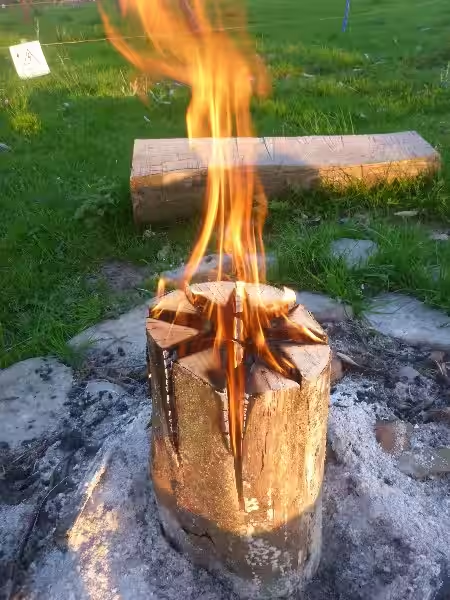
A Swedish candle, also known as a log candle or fire log, is a method of cutting a natural log in a way that it burns from the inside out, creating a self-contained fire. The log is typically split into sections that remain attached at the base, resembling a candle.
How do you make a Swedish candle?
To make a Swedish candle, you start with a fresh, dry log. Using a chainsaw, make several vertical cuts from the top of the log down to about two-thirds of the way, ensuring the cuts do not go all the way through. Then, make one or two horizontal cuts around the log, about one-third of the way up from the bottom. This creates slices that will fan out as the inside burns. You can then place tinder and kindling in the central cavity to light.
What are Swedish candles used for?
Swedish candles are primarily used for outdoor ambiance and a unique way to have a campfire. They are popular for camping, backyard gatherings, and decorative purposes during holidays or celebrations. They provide light and warmth and create a striking visual effect as they burn.
Are Swedish candles safe?
When used correctly and in an appropriate outdoor setting, Swedish candles are generally safe. It’s crucial to place them on a stable, non-flammable surface away from any combustible materials, structures, or overhanging branches. Always supervise the burning candle and have extinguishing materials (like water or sand) readily available. Never use them indoors.
Hardwoods like birch, oak, or maple are generally preferred for Swedish candles as they burn slower and more evenly, producing a good amount of heat and light. Softer woods can burn too quickly. It’s important to use dry, seasoned wood for optimal burning.
How long does a Swedish candle burn?
The burn time of a Swedish candle can vary significantly depending on the size of the log, the type of wood, and the environmental conditions (wind, humidity). A well-made log candle typically burns for several hours.
Frequently Asked Questions about Religion
What is religion?
Religion is a complex system of beliefs, practices, and rituals that often involves a belief in the supernatural, divine, or sacred. It typically provides a framework for understanding the meaning of life, morality, and humanity’s place in the universe, and often includes organized worship and community.
What are the main types of religions?
The world’s major religions are often categorized into several groups, including Abrahamic religions (Judaism, Christianity, Islam), Dharmic religions (Hinduism, Buddhism, Sikhism, Jainism), and East Asian religions (Taoism, Confucianism, Shinto). There are also indigenous religions, new religious movements, and atheistic or agnostic viewpoints.
What is the purpose of religion?
The purpose of religion is multifaceted and can include providing comfort and hope, offering moral guidance, fostering a sense of community and belonging, facilitating rituals and ceremonies for life transitions, promoting social cohesion, and offering answers to existential questions about life, death, and the universe.
What are the common elements found in most religions?
Common elements often include beliefs about a higher power or ultimate reality, sacred texts or traditions, moral codes and ethical principles, rituals and ceremonies, places of worship, and leaders or clergy. Many religions also involve concepts of the afterlife, salvation, or enlightenment.
How do religions differ from each other?
Religions differ in their specific doctrines, beliefs about the divine, sacred stories, theological interpretations, forms of worship, ethical frameworks, and the practices they emphasize. The way they understand and interact with the divine, the path to spiritual fulfillment, and their social structures can also vary greatly.
What are some common religious practices?
Common religious practices include prayer, meditation, reading or reciting sacred texts, attending services or ceremonies, fasting, pilgrimage, charitable giving, and observing specific holidays or festivals. These practices are often central to a believer’s spiritual life.