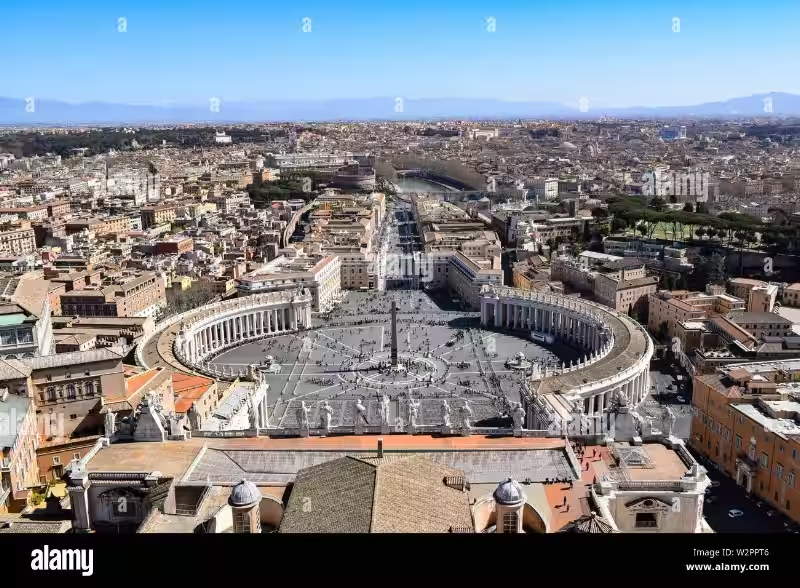
For centuries, the silhouette of St. Peter’s Basilica has pierced the Roman skyline, a testament to faith, art, and architectural ambition. But beyond the awe-inspiring facade and the grandeur of its interior lies an experience that elevates one’s perspective both literally and spiritually: the top of St. Peter’s Basilica. This ascent, a pilgrimage in itself, offers not just unparalleled panoramic views of Rome, but a profound connection to the very heart of religion and the enduring legacy of human devotion.
Standing beneath the colossal dome, one can barely fathom the human endeavor that brought this magnificent structure into existence. The journey to the top of St. Peter’s Basilica is more than just a tourist attraction; it’s an invitation to contemplate the layers of history, the unwavering faith of millions, and the sheer artistry that culminates in this sacred space. It’s an experience that speaks to the soul, offering a unique vantage point on both the earthly and the divine.
The Ascent: A Stairway to Heaven, or at Least the Dome
The adventure begins even before reaching the dizzying heights. The path to the top of St. Peter’s Basilica is not a mere elevator ride. It’s a gradual immersion into the basilica’s inner workings. Initially, you’ll traverse the magnificent nave and transepts, surrounded by masterpieces like Michelangelo’s Pietà and Bernini’s baldacchino, soaking in the palpable sense of sacredness. This initial exploration is crucial for grounding the subsequent ascent in the context of the basilica’s spiritual significance.
As you progress, the pathways narrow, and the air grows cooler, hinting at the immense structure you are entering. The climb can be challenging, with over 500 steps in total, and a portion of it involves navigating tight, spiraling corridors that follow the curve of the dome itself. This physical exertion, however, serves to heighten the sense of accomplishment upon reaching the summit. Think of it as a modern-day metaphor for the spiritual journey: it requires effort, perseverance, and a willingness to embrace the less conventional paths to reach a higher understanding.
The Dome’s Embrace: A Microcosm of Faith and Engineering
The very construction of the dome, a marvel of Renaissance engineering overseen by Michelangelo, is a story in itself. The sheer audacity of its design, soaring hundreds of feet into the sky, was a bold declaration of the Catholic Church’s power and influence. Reaching the top of St. Peter’s Basilica allows you to stand within this architectural triumph, to feel the immense scale and precision that went into its creation. It’s a testament to human ingenuity driven by profound religious conviction.
The interior of the dome is adorned with vibrant mosaics that depict scenes from the life of Christ and the early Church. As you ascend, these images become more intimate, drawing you closer to the narrative of salvation. This close-up view of the artistry, combined with the enclosing embrace of the dome, creates a powerful, almost personal connection to the sacred stories. It’s a reminder that even on a grand scale, religion is often about individual journeys and personal interpretations of divine truth.
Panoramic Rome: A World Unfolded from the Top
Emerging onto the outer terrace of the dome is a breathtaking moment. The city of Rome, a living tapestry of history, art, and vibrant life, stretches out before you. From the top of St. Peter’s Basilica, the familiar landmarks take on a new dimension. St. Peter’s Square, with its embracing colonnades, appears as a perfectly orchestrated stage, designed to welcome the faithful from across the globe.
The view is not just about recognizing famous buildings; it’s about understanding Rome’s historical and religious significance in a tangible way. You can trace the Tiber River, see the ancient ruins of the Roman Forum, and marvel at the distant silhouette of the Colosseum. This elevated perspective offers a profound insight into how religion has shaped not only this city but the course of Western civilization. It’s a visual sermon on the enduring impact of faith.
Standing at the top of St. Peter’s Basilica, surrounded by the gentle hum of the city below, it’s easy to feel a connection to the countless pilgrims who have stood in this very spot throughout the centuries. Imagine the hopes, prayers, and aspirations that have been sent heavenward from this vantage point. This is where the personal journey of faith intersects with the collective human experience of seeking something greater than oneself.
The experience is deeply personal, yet universally relatable in its pursuit of transcendence. Whether you are a devout believer, a history enthusiast, or simply a curious traveler, the top of St. Peter’s Basilica offers a moment of reflection and awe. It’s a place where the earthly and the spiritual converge, reminding us of our place in a grand narrative that extends far beyond our individual lives. The sheer magnificence of the view, coupled with the spiritual weight of the location, makes it an unforgettable encounter with religion and humanity’s enduring quest for meaning.
Frequently Asked Questions About the Top of St. Peter’s Basilica
What is the “top” of St. Peter’s Basilica?
The “top” of St. Peter’s Basilica generally refers to the dome and the panoramic viewing platform accessible to visitors. This includes the ascent to the very summit, offering breathtaking views of Rome.
What religion is associated with St. Peter’s Basilica?
St. Peter’s Basilica is the principal church of the Roman Catholic Church, and it is considered one of the holiest sites in Christendom.
Who is Saint Peter?
Saint Peter was one of Jesus Christ’s twelve apostles and is traditionally considered the first Pope of the Catholic Church, the Bishop of Rome. The basilica is built over his tomb.
Yes, St. Peter’s Basilica is an active place of worship for Roman Catholics. It is a major pilgrimage destination and hosts significant religious ceremonies.
Can anyone visit the top of St. Peter’s Basilica?
Yes, visitors can ascend to the dome of St. Peter’s Basilica after purchasing a ticket. This includes a substantial climb, with options for using an elevator for part of the way.
What is the religious significance of the dome?
The dome is an iconic symbol of the basilica and a masterpiece of Renaissance architecture. Religiously, it represents the heavens and the divine presence. The inscription around its base is a significant theological statement.
What are the dress code requirements for visiting St. Peter’s Basilica?
As a sacred religious site, St. Peter’s Basilica requires visitors to adhere to a modest dress code. Shoulders and knees must be covered.
Is there a cost to ascend to the top of the dome?
Yes, there is a fee to access the dome and the viewing platform. Different ticket options are available depending on whether you choose to use the elevator for part of the ascent.
What can I see from the top of St. Peter’s Basilica?
From the top, you can enjoy unparalleled panoramic views of St. Peter’s Square, the Vatican City, and the city of Rome. You can also see many famous landmarks.
Are there any religious ceremonies or services I can attend at St. Peter’s Basilica?
Yes, regular religious services and masses are held at St. Peter’s Basilica. Information about schedules is typically available at the basilica or on the Vatican’s official website.