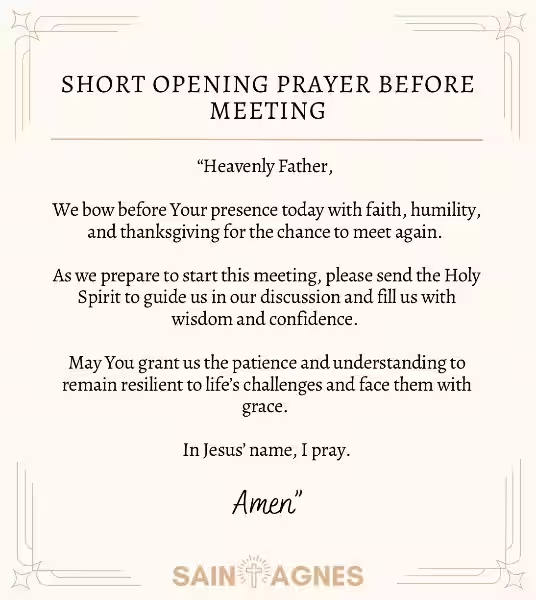
In the bustling world of business and organizational life, the concept of a prayer before a conference meeting might seem like a relic of the past, a quaint tradition reserved for purely religious gatherings. However, for many individuals and organizations rooted in faith, this practice remains a cornerstone, offering a profound opportunity to align intentions, seek wisdom, and foster a spirit of unity before delving into the complexities of decision-making and strategy. It’s more than just a ritual; it’s a deliberate act of invoking divine guidance and acknowledging a higher purpose that can profoundly shape the outcome of any meeting, regardless of its secular nature.
This article explores the multifaceted benefits and practical applications of incorporating prayer into the prelude of conference meetings. We will delve into why this practice resonates so deeply, how it can be implemented effectively, and the tangible positive impacts it can have on collaboration, ethical considerations, and overall productivity. Whether you are a seasoned practitioner or a curious observer, understanding the significance of prayer before a conference meeting can unlock new dimensions of purpose and effectiveness in your professional endeavors.
Why Pray Before a Conference Meeting? Cultivating Sacred Space in Secular Settings
The reasons behind initiating a conference meeting with prayer are as diverse as the individuals who participate. Fundamentally, it’s about creating a sacred space, a brief interlude where the everyday pressures and distractions are momentarily set aside to focus on shared values and a common good. This intentional pause allows participants to shift their mindset from individual agendas to collective responsibility, fostering an environment where respect and understanding can flourish.
For many, prayer before a conference meeting serves as a spiritual anchor, reminding them of their moral compass and ethical obligations. It’s an opportunity to acknowledge that decisions made within these rooms have real-world consequences, impacting not just the organization but also its employees, clients, and the wider community. By seeking divine wisdom and clarity, individuals hope to make decisions that are not only strategic but also just, compassionate, and aligned with their faith’s teachings. This can be as simple as praying for a speaker to articulate their points clearly or for the group to have the patience to listen attentively to differing viewpoints.
Seeking Divine Guidance and Wisdom
The core of prayer before a conference meeting often revolves around the pursuit of divine guidance and wisdom. In complex situations, where challenges are multifaceted and solutions are not immediately apparent, individuals turn to prayer as a means to access a higher perspective. This isn’t about abdicating responsibility, but rather about supplementing human intellect with spiritual insight. It’s a humble acknowledgment that our own understanding is limited, and that a greater intelligence can illuminate the path forward.
Consider a team facing a significant financial decision. While extensive analysis and debate are crucial, a prayer can be offered for discernment, asking for the wisdom to see beyond short-term gains and to consider the long-term implications for all stakeholders. Similarly, when navigating interpersonal conflicts or disagreements within the group, a prayer can be a powerful tool to cultivate empathy and understanding, fostering a spirit of reconciliation and cooperation. This practice encourages participants to listen with their hearts as well as their minds, leading to more harmonious and productive outcomes.
Beyond individual guidance, prayer before a conference meeting plays a vital role in fostering unity and collaboration. When people of faith, even from different denominations, come together to pray, they are engaging in a shared act of vulnerability and hope. This common ground can transcend organizational hierarchies and individual differences, creating a sense of shared purpose and mutual respect. It reminds everyone that they are part of something larger than themselves.
Imagine a diverse team convened to brainstorm innovative solutions. A prayer can be offered for open-mindedness and receptiveness to new ideas, encouraging each member to value the contributions of others. This shared spiritual moment can break down barriers, replacing potential competition with a collective desire to achieve a common goal. The act of praying together can forge stronger bonds, making the subsequent discussions more likely to be constructive and collaborative, as participants feel more connected and accountable to each other and to their shared spiritual aspirations.
How to Effectively Incorporate Prayer Before Conference Meetings
Integrating prayer into the beginning of a conference meeting, especially in secular environments, requires sensitivity, inclusivity, and a genuine desire to create a meaningful experience. The approach should be adaptable and respectful of diverse beliefs, ensuring that no one feels excluded or uncomfortable. The ultimate goal is to create a positive and unifying atmosphere that benefits everyone present.
The key to success lies in clear communication and thoughtful planning. Before the meeting, consider the composition of the attendees. If the group is predominantly from one faith tradition, a more specific prayer might be appropriate. However, in a diverse group, a more general, interfaith, or non-denominational prayer that focuses on universal themes like wisdom, peace, and ethical conduct is often the most effective. This ensures that the prayer serves as a bridge, not a barrier.
Choosing the Right Approach: Inclusivity and Respect
When deciding on the format of the prayer, inclusivity and respect are paramount. If unsure, it’s always best to err on the side of generality. A simple prayer that asks for clarity of thought, open minds, and the ability to make sound judgments can resonate with individuals from various spiritual backgrounds. The focus should be on shared human values that underpin most faith traditions.
For instance, a prayer might begin with a phrase like, “Let us take a moment to reflect and invite guidance…” followed by requests for wisdom in our discussions, patience in our disagreements, and a commitment to finding solutions that benefit everyone. This approach avoids specific religious dogma while still acknowledging the spiritual dimension of decision-making. It’s about creating a moment of shared intention and positive energy rather than imposing a particular religious viewpoint.
Practical Steps for Implementation
Implementing prayer before a conference meeting can be quite straightforward. It can be initiated by the meeting leader or a designated participant. Announcing the intention clearly at the outset is crucial. For example, the leader might say, “Before we begin our agenda, I’d like to invite us to take a moment for a brief prayer to seek guidance and unity in our discussions.” This sets the stage and allows individuals to mentally prepare.
The prayer itself can be led by one person, or it can be a moment of silent contemplation where each individual offers their own personal prayer. Alternatively, some meetings might opt for a shared reading of a relevant scripture or inspirational text followed by a brief period of reflection. Regardless of the method, the key is to ensure it is concise, meaningful, and serves the purpose of setting a positive and focused tone for the meeting. The duration should generally be kept brief, perhaps one to three minutes, to respect everyone’s time and maintain the meeting’s momentum.
The Tangible Benefits of Prayer in Conference Meetings
The practice of praying before a conference meeting, though seemingly simple, yields a range of tangible benefits that can profoundly impact the effectiveness and ethical integrity of an organization. These benefits extend beyond mere spiritual comfort, manifesting in observable improvements in decision-making, team dynamics, and overall productivity.
One of the most significant advantages is the enhancement of ethical considerations. When individuals pause to seek guidance from a higher moral authority, they are more likely to approach decisions with a stronger sense of responsibility and integrity. This can lead to choices that are not only financially sound but also morally defensible and aligned with the organization’s values. Furthermore, the act of praying together can foster a sense of collective accountability, where participants feel a shared commitment to acting ethically.
Improved Decision-Making and Problem-Solving
When a conference meeting begins with prayer, it often sets a tone of deliberation and thoughtfulness. The act of seeking wisdom encourages participants to approach challenges with a more open and objective mindset. Instead of rushing to conclusions, the prayer can prompt a desire for deeper understanding and more comprehensive solutions. This can be particularly valuable when facing complex or contentious issues, where clarity of thought and unbiased perspectives are essential.
For example, a marketing team might be struggling to devise a new campaign strategy. A prayer could be offered for creativity and insight, asking for the ability to see innovative approaches that resonate with their target audience. This spiritual invocation can help break through mental blocks and encourage participants to think outside the box, leading to more effective and successful strategies. The result is not just better decisions, but decisions made with a greater sense of purpose and foresight.
Enhanced Team Cohesion and Morale
The shared experience of prayer can be a powerful catalyst for team cohesion and improved morale. When individuals engage in this practice together, it fosters a sense of shared humanity and mutual respect. This can break down silos, reduce interpersonal friction, and create a more supportive and collaborative environment. It reminds team members that they are working towards a common objective, united by their shared values and aspirations.
Consider a project team facing tight deadlines and high pressure. A brief prayer for strength, patience, and mutual support can significantly boost morale. It acknowledges the challenges ahead while also reinforcing the idea that they are in it together. This can lead to increased trust, better communication, and a stronger sense of camaraderie, ultimately improving the team’s ability to overcome obstacles and achieve their goals. The feeling of being spiritually connected can translate into a more positive and productive work atmosphere.
In conclusion, the practice of prayer before a conference meeting is far from an anachronism. It is a deliberate and valuable tool for individuals and organizations seeking to infuse their professional endeavors with purpose, integrity, and unity. By creating a sacred space for reflection, seeking divine guidance, and fostering mutual respect, this practice can lead to more ethical decisions, enhanced collaboration, and a stronger sense of shared purpose, ultimately contributing to greater success and fulfillment in both the professional and personal lives of those involved.
Frequently Asked Questions: Prayer Before a Conference Meeting
What is the purpose of a prayer before a conference meeting?
A prayer before a conference meeting can serve to bless the proceedings, encourage unity among participants, seek guidance for decision-making, and foster a sense of shared purpose and reflection.
Is prayer before a conference meeting mandatory?
Generally, the inclusion of a prayer is not mandatory in all conference settings. Its practice often depends on the organizational culture, the nature of the conference, and the preferences of the attendees.
Who typically leads the prayer?
The leader of the prayer can vary. It might be an appointed individual, a volunteer, or rotate among participants. In some cases, a designated chaplain or religious leader may be present.
What if I don’t share the same religious beliefs as the prayer?
Many prayers offered in diverse or secular settings are designed to be inclusive and non-denominational, focusing on universal themes like wisdom, collaboration, and positive outcomes. If a prayer feels uncomfortable, respectful silence, mindful reflection, or focusing on the communal aspect can be alternatives.
Can I opt out of participating in the prayer?
Yes, individuals are generally free to opt out of actively participating in a prayer if they wish. This can be done by remaining silently present, bowing one’s head in reflection, or discreetly engaging in another quiet activity.
What are common themes for a prayer before a conference meeting?
Common themes include seeking wisdom, clarity, and insight for the discussions; promoting cooperation and understanding among participants; asking for successful outcomes and productivity; and expressing gratitude.
How long should a prayer before a conference meeting be?
These prayers are typically brief, often lasting no more than a minute or two, to allow the meeting to commence promptly.
What if the prayer is specific to a particular religion?
If a prayer is specific to a particular religion and you do not share those beliefs, you can respectfully observe the moment in silence, focusing on the shared intention of a productive meeting.
Is it appropriate to have a prayer if the conference has diverse religious backgrounds?
Yes, it can be appropriate if the prayer is conducted in an inclusive manner that respects diverse beliefs. Often, prayers are framed with universal appeals rather than specific religious dogma.
What is the expected posture during a prayer?
Common postures include standing, sitting, or bowing one’s head. The specific posture often depends on the cultural norms or the preference of the prayer leader.