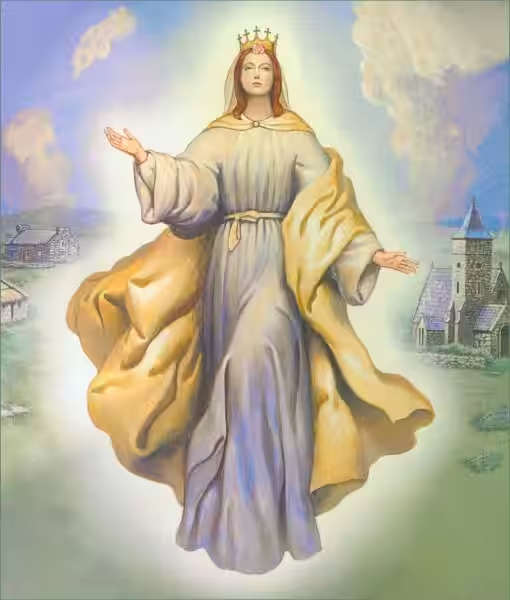
The Catholic Church, a venerable institution steeped in centuries of tradition and faith, holds within its heart a unique and often awe-inspiring phenomenon: Marian apparitions. These reported celestial visitations, where the Virgin Mary is believed to have appeared to individuals or groups, have profoundly shaped the spiritual landscape for countless believers. Far from being isolated incidents, these miraculous encounters form a fascinating, albeit sometimes debated, marian apparitions list that spans continents and eras, each offering a distinct message and calling for a particular response. Exploring this rich tapestry allows us to delve deeper into the mysteries of faith, the power of prayer, and the enduring maternal love attributed to Mary, the mother of Jesus.
For many, the concept of Marian apparitions might seem distant or even fantastical. Yet, for millions worldwide, these events are not mere legends but powerful attestations to divine intervention and the tangible presence of heavenly grace in the earthly realm. They represent moments where the veil between the human and the divine is perceived to have thinned, allowing for direct communication and guidance. Understanding the significance of these apparitions requires an appreciation of their historical context, the theological framework surrounding them, and the personal transformations they have inspired. This article aims to provide a comprehensive yet accessible exploration, weaving together a marian apparitions list with insightful commentary to illuminate their enduring relevance.
A Glimpse into History: Early Whispers of the Divine
The earliest accounts of what could be considered Marian apparitions are not always as clearly defined as later, more publicized events. However, early Christian tradition and hagiography offer glimpses of encounters that foreshadowed the more recognized visitations. These early whispers from the divine often occurred during times of intense persecution or significant societal upheaval, serving as beacons of hope and encouragement for struggling communities. The belief in Mary’s intercessory power was already strong, and these reported sightings reinforced that conviction.
Consider the early Church Fathers, who, in their writings, sometimes alluded to extraordinary experiences that hinted at Mary’s continued involvement in the lives of believers. While not always presented as a formal marian apparitions list, these mentions reveal a deep-seated understanding that Mary’s maternal care extended beyond her earthly life. These early accounts, though often sparse on details, laid the groundwork for the more elaborate and widely accepted apparitions that would emerge in later centuries, demonstrating that the desire for direct divine reassurance has been a constant thread in the human spiritual journey.
The Dawn of Recognition: From Ancient Rome to Medieval Europe
As Christianity spread and solidified its presence, so too did the narratives of Marian apparitions. One of the earliest and most enduring examples, though its historical verification is complex, is the Apparition of Our Lady of the Snows in Rome. Legend has it that in the 4th century, Mary appeared to Pope Liberius and a wealthy Roman couple, instructing them to build a church where snow would fall on a particular summer night. This miraculous snowfall, which occurred on August 5th, led to the construction of the Basilica di Santa Maria Maggiore, a testament to this purported divine direction and a cornerstone of Marian devotion in the Western Church.
Moving into the medieval period, the marian apparitions list begins to expand with more documented accounts that resonated deeply with the populace. The Apparition at Lourdes in France, though occurring much later in the 19th century, shares a similar theme of divine instruction for the building of a sacred space. However, prior to Lourdes, figures like the Apparition of Our Lady of Walsingham in England, dating back to the 11th century, played a significant role in fostering pilgrimage and devotion. These early recognized apparitions often involved a call to prayer, penance, and the veneration of Mary, reinforcing her role as a powerful intercessor and a source of spiritual comfort during times of both joy and tribulation, making them vital entries on any comprehensive marian apparitions list.
Pillars of Faith: Notable Apparitions and Their Messages
The modern era has witnessed a dramatic increase in the number of reported Marian apparitions, many of which have been formally investigated and recognized by the Catholic Church. These apparitions often carry specific messages intended for the faithful, urging them towards a deeper commitment to their faith, a greater practice of prayer and penance, and a renewed focus on the teachings of Jesus. Understanding the core messages of these prominent events provides invaluable insight into the spiritual needs of different times and places.
When we examine a comprehensive marian apparitions list, we find recurring themes that underscore the enduring nature of Mary’s maternal concern. These include calls for conversion, the recitation of the Rosary, acts of charity, and devotion to the Sacred Heart of Jesus. Each apparition, while unique in its details, often serves as a powerful reminder of the spiritual realities that underpin our earthly existence and the importance of living a life aligned with God’s will.
Fatima: A Call to Prayer and Penance
Perhaps one of the most widely known and impactful Marian apparitions is that of Our Lady of Fatima, which occurred in Portugal between May and October 1917. To three young shepherd children – Lucia dos Santos, Francisco Marto, and Jacinta Marto – Mary appeared a total of six times, delivering messages that have had profound global significance. The core of her message at Fatima was a fervent plea for prayer and penance, especially for the conversion of sinners and for peace in a world ravaged by war.
The children were entrusted with three “secrets” by Our Lady. The first two revealed prophecies concerning the end of World War I, the rise of Communism and future conflicts, and the importance of consecrating Russia to Mary’s Immaculate Heart. The third secret, revealed later, spoke of a “bishop clothed in white” suffering and a church in ruins, which many interpret as a prophecy of persecution and martyrdom. The marian apparitions list would be incomplete without prominently featuring Fatima, as its messages continue to resonate, urging believers to embrace the Rosary as a powerful spiritual weapon and to live lives of sacrifice for the salvation of souls, emphasizing the enduring power of prayer.
Lourdes: Healing and Hope in the Grotto
Another pivotal entry on any marian apparitions list is Our Lady of Lourdes. In 1858, in the small town of Lourdes, France, a humble peasant girl named Bernadette Soubirous experienced a series of visions in a grotto by the Gave de Pau river. The lady who appeared to Bernadette identified herself as the “Immaculate Conception,” a declaration that resonated deeply with the theological understanding of Mary’s unique status. The apparitions at Lourdes became a powerful beacon of hope and healing, both spiritual and physical, for millions.
At Lourdes, Mary instructed Bernadette to drink from a spring that appeared where she had been digging. This spring has since become renowned for its miraculous healing properties, drawing pilgrims from across the globe seeking solace and cures. The message of Lourdes is one of simplicity, humility, and unwavering faith in the face of suffering. It is a powerful reminder that divine grace can manifest in the most unexpected of places, offering comfort and renewal to those who approach with an open heart, solidifying its place as a crucial element on the marian apparitions list.
The Apparition of Our Lady of Guadalupe in Mexico in 1531 holds immense cultural and religious significance, particularly in Latin America. To Juan Diego Cuauhtlatoatzin, a poor indigenous convert, Mary appeared on the hill of Tepeyac, identifying herself as the Mother of God. She instructed him to ask the bishop to build a church in her honor on that site. When the bishop demanded proof, Mary guided Juan Diego to a barren hillside where he found Castilian roses blooming out of season.
Juan Diego gathered these roses in his cloak, his tilma, and presented them to the bishop. When he unfurled the cloak, the image of the Virgin Mary, as we know it today on the tilma of Juan Diego, was miraculously imprinted upon it. This image, a profound symbol of unity between indigenous and European cultures, became a powerful tool for evangelization and a source of immense devotion. The marian apparitions list would be incomplete without acknowledging Guadalupe, as it represents a powerful intermingling of divine intervention and cultural synthesis, inspiring faith and devotion across generations.
Beyond the Well-Known: Diverse Voices on the List
While Fatima, Lourdes, and Guadalupe are perhaps the most internationally recognized, the marian apparitions list extends far beyond these iconic sites. Countless other reported visitations have occurred throughout history and across the globe, each with its own unique narrative and spiritual import. These less publicized apparitions often speak to the specific needs and contexts of their local communities, offering personalized messages of encouragement and guidance.
Exploring these diverse voices on the marian apparitions list reveals the pervasive nature of Mary’s maternal love and her continued interest in the lives of her children. From the Apparition of Our Lady of Akita in Japan, which carried a solemn warning about the state of the Church, to the Apparition of Our Lady of Knock in Ireland, a silent, reverent vision that offered comfort and peace, each event adds another layer to our understanding of divine communication. These apparitions, though varied in their messages and reception, collectively paint a picture of a loving Mother actively engaged with humanity.
The Authority of the Church: Discernment and Recognition
It is crucial to understand that not all reported Marian apparitions are recognized by the Catholic Church. The Church has a rigorous process for investigating claims of apparitions, involving theological examination, spiritual discernment by qualified experts, and often, the testimony of medical professionals. This process is designed to ensure that any recognized apparition is indeed of divine origin and not a product of human imagination, deception, or psychological phenomena.
The marian apparitions list that is officially endorsed by the Church represents those events that have undergone this thorough scrutiny and have been deemed to be authentic expressions of divine revelation. This discernment process is not meant to stifle faith but rather to protect believers from potential error and to ensure the integrity of the Church’s teachings. When the Church does recognize an apparition, it is often accompanied by a call for increased prayer, devotion, and a recommitment to the Gospel.
The Enduring Significance of Marian Apparitions
The phenomenon of Marian apparitions continues to captivate and inspire believers, serving as powerful reminders of the active presence of the divine in our world. These celestial visits, documented in a rich and varied marian apparitions list, offer not just historical accounts but living testaments to faith, hope, and the transformative power of God’s love, mediated through His mother. They encourage a deeper engagement with prayer, a commitment to living a virtuous life, and an unwavering trust in the intercessory power of Mary.
Ultimately, the importance of Marian apparitions lies not just in the miraculous events themselves, but in the spiritual fruits they bear. The countless conversions, the acts of penance and charity, the renewed devotion to the sacraments, and the profound personal transformations that have sprung from these encounters are the true measure of their significance. As we continue to explore the marian apparitions list, we are invited to listen to the whispers of heaven, to open our hearts to divine guidance, and to walk more closely with Christ, guided by the loving hand of His mother.
Frequently Asked Questions About Marian Apparitions
What are Marian apparitions?
Marian apparitions are supernatural occurrences in which the Virgin Mary, the mother of Jesus Christ, is said to have appeared to individuals or groups of people. These apparitions are often accompanied by messages, visions, or miracles.
Are Marian apparitions recognized by the Catholic Church?
The Catholic Church has a formal process for investigating reported Marian apparitions. While many apparitions are not officially recognized, some have been approved by the Church after rigorous examination of evidence, including theological soundness, the spiritual fruits of the apparitions, and eyewitness testimonies.
What is the purpose of Marian apparitions?
According to believers, Marian apparitions often serve as calls to prayer, penance, conversion, and a reminder of God’s love and Mary’s intercessory role. The messages conveyed can vary, but frequently emphasize themes of peace, reconciliation, and the importance of living a Christian life.
Can Catholics disregard Marian apparitions?
Catholics are not obligated to believe in any particular apparition. The Church’s approval signifies that the apparitions are considered worthy of belief and free from error, but individual faith is still a personal matter. Disbelief in an approved apparition does not necessarily constitute heresy.
What are some of the most well-known Marian apparitions?
Some of the most historically significant and widely recognized Marian apparitions include those at:
* Lourdes, France (1858): Mary appeared to Bernadette Soubirous, identifying herself as the Immaculate Conception. A famous spring at the site is associated with healing.
* Fatima, Portugal (1917): Mary appeared to three shepherd children, delivering messages of prayer for peace, devotion to her Immaculate Heart, and warnings about future events. The “miracle of the sun” is famously linked to this apparition.
* Guadalupe, Mexico (1531): Mary appeared to Juan Diego, leaving her miraculous image imprinted on his cloak. This is a highly venerated apparition in the Americas.
* Akita, Japan (1973): Mary appeared to Sister Agnes Sasagawa, with messages of prayer, suffering, and the possibility of chastisement.
How does the Church investigate Marian apparitions?
The investigation typically begins at the diocesan level, led by the local bishop. This involves gathering testimonies, examining any miraculous events, and assessing the spiritual impact of the reported apparitions. If deemed credible, the case may be forwarded to the Vatican for further review by the Congregation for the Doctrine of the Faith. The process can be lengthy and involves theological, historical, and scientific scrutiny.
Are all Marian apparitions accepted by the Church?
No, the Church does not accept all reported Marian apparitions. Many are deemed inconclusive, lacking sufficient evidence, or are found to be inconsistent with Catholic doctrine. Even for approved apparitions, the Church’s stance is usually one of “worthy of belief” rather than absolute dogma.