As we navigate the ever-evolving landscape of modern relationships, the enduring principles of marriage often come into sharper focus. This is particularly true during Marriage Week, a dedicated time that encourages couples and communities to reflect on and celebrate the profound significance of marital commitment. For many, the concept of marriage is deeply intertwined with their religious beliefs, offering a spiritual framework that guides and strengthens their union. This article will explore how Marriage Week serves as a vital reminder of the sacred vows exchanged, and how various religions imbue marriage with timeless meaning and purpose.
The act of marriage, in its most fundamental sense, is a covenant – a solemn promise made before God or a higher power. Marriage Week provides an opportune moment to delve into the rich tapestry of religious perspectives on this covenant, understanding that its spiritual dimension can foster resilience, foster deeper connection, and offer a moral compass for navigating life’s inevitable challenges. It’s a time to not just acknowledge the legal and social aspects of marriage, but to truly reignite the spiritual spark that often lies at its heart.
Across a vast spectrum of faiths, marriage is not merely a societal contract but a divinely ordained institution. Marriage Week offers a chance to revisit these foundational beliefs, understanding that for many, the union is seen as a sacred partnership blessed by their Creator. This spiritual underpinning provides a unique lens through which to view the responsibilities and joys of married life, transforming ordinary moments into opportunities for spiritual growth and mutual devotion.
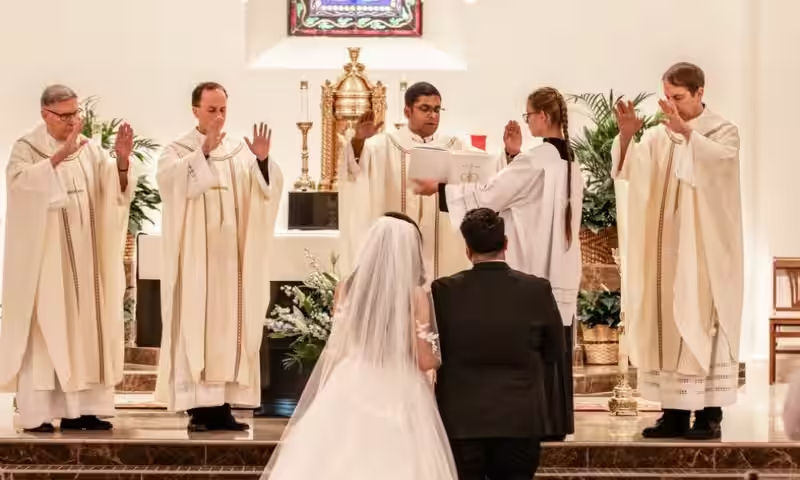
In Judaism, marriage is considered a mitzvah, a commandment from God, symbolizing the divine union of the Jewish people with God. The seven blessings recited under the chuppah (wedding canopy) speak to the creation of the world and the joy of this new partnership. Similarly, in Christianity, marriage is often viewed as a sacrament, mirroring the relationship between Christ and the Church. This perspective emphasizes unconditional love, forgiveness, and sacrifice as the cornerstones of a Christ-centered marriage. During Marriage Week, couples can find inspiration in these ancient teachings to recommit to their sacred vows.
Marriage as a Divine Covenant in Islam
In Islam, marriage, or ‘nikah’, is considered half of one’s faith, a beautiful and essential aspect of life. It’s a contract that establishes rights and responsibilities for both husband and wife, emphasizing compassion, mercy, and mutual respect. The Quran encourages believers to marry and to live with their spouses in kindness. Marriage Week can be a time for Muslim couples to reflect on the barakah (blessing) inherent in their union, seeking to live according to the Prophet Muhammad’s (peace be upon him) teachings on marital harmony and to strengthen their bond through faith-centered practices.
The emphasis in Islamic marriage is on building a family unit that honors Allah, with both partners working together to raise children in a godly environment. This involves shared duties, open communication, and a commitment to supporting each other’s spiritual journeys. For couples observing Marriage Week, it’s an opportunity to reaffirm their commitment to Allah and to each other, ensuring their marriage is a source of peace and blessings.
Building a Strong Marriage Through Faith Practices
Beyond the theological underpinnings, Marriage Week serves as a powerful catalyst for couples to actively engage in faith-based practices that strengthen their marital bond. These practices are not just rituals; they are active expressions of love, commitment, and shared spiritual purpose. By integrating religious elements into their daily lives, couples can cultivate a deeper, more resilient connection.
For many Christian couples, engaging in prayer together is a cornerstone of marital strength. This could involve praying for each other, for their family, or reciting scripture that speaks to love and commitment. Attending church services as a couple and participating in marriage enrichment programs offered by their congregations can also provide invaluable support and guidance. During Marriage Week, they might make a conscious effort to dedicate specific time for shared spiritual activities, such as reading a devotional together or discussing how their faith intersects with their daily lives.
The Role of Shared Rituals in Hindu Marriages
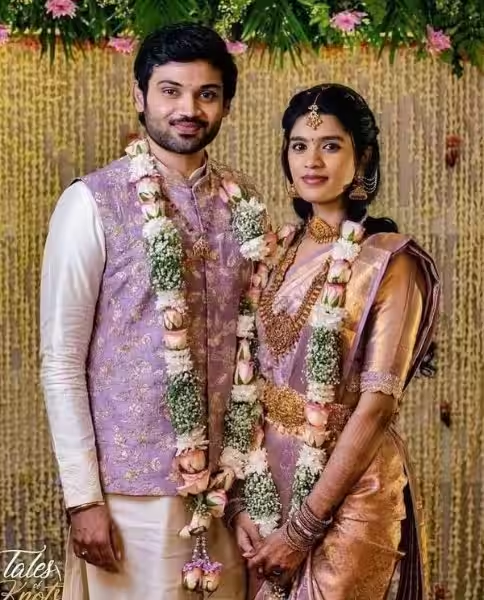
In Hinduism, marriage is a profound samskara, a sacred rite of passage that signifies the union of two souls. The Saptapadi, or seven steps taken around the sacred fire, are a central ritual symbolizing eternal companionship, mutual support, and shared responsibilities. Each step is accompanied by vows that articulate the couple’s commitment to each other and to their dharma, or duty.
During Marriage Week, Hindu couples can revisit the meaning behind these sacred vows, perhaps even performing a symbolic re-enactment or discussing the significance of each step. The emphasis on shared rituals reinforces the idea that marriage is a collaborative journey, guided by ancient wisdom and a deep spiritual connection. This can include regular puja (worship) together or engaging in scriptural study to deepen their understanding of marital responsibilities within their faith.
No marriage is without its challenges. Disagreements, financial stress, and life’s unpredictable events can test even the strongest bonds. It is in these moments that the religious framework of marriage can provide an anchor and a source of unwavering strength. Marriage Week is an ideal time to reflect on how faith can be a powerful tool for overcoming adversity.
For couples from various faiths, seeking guidance from spiritual leaders, such as priests, imams, or rabbis, can offer invaluable wisdom and support when facing marital difficulties. These leaders can provide a biblical, Quranic, or Torah-based perspective on conflict resolution, forgiveness, and rebuilding trust. Prayer and meditation, as individual practices or as a couple, can also help to foster inner peace and clarity, allowing for more constructive communication and understanding. Marriage Week encourages couples to lean into their faith during tough times.
The Power of Forgiveness and Grace in Religious Marriages
A core tenet across many religions is the importance of forgiveness and grace. In marriage, this translates to the ability to let go of hurts, offer understanding, and extend compassion to one’s spouse, even when it’s difficult. This spiritual principle is not about condoning wrong behavior, but about choosing love and connection over resentment and bitterness.
During Marriage Week, couples can consciously practice acts of forgiveness, whether through direct conversation, a prayer for their spouse, or a commitment to rebuilding trust. Understanding that imperfections are a part of the human experience, and that divine grace is always available, can be incredibly freeing. This religious perspective fosters a marriage where mistakes are seen as opportunities for growth rather than reasons for condemnation. It’s about cultivating a spirit of unconditional love, mirroring the love that their faith teaches.
Celebrating Marriage: A Week of Reflection and Renewal
Ultimately, Marriage Week is a celebration – a time to honor the commitment, the love, and the spiritual journey that married couples share. It’s an invitation to pause, reflect, and reaffirm the sacred vows that bind them together. By embracing the religious dimensions of marriage, couples can cultivate a union that is not only strong and resilient but also deeply meaningful and spiritually fulfilling.
Whether through shared prayer, religious study, acts of service, or simply by reaffirming their love and commitment in a spirit of gratitude, couples can make Marriage Week a truly transformative experience. It’s a reminder that marriage, when nurtured with faith and intention, can be a beautiful testament to divine love and a lifelong journey of shared growth and spiritual discovery. Let this Marriage Week be a catalyst for renewed commitment and a deeper appreciation for the sacred bond you share.
Frequently Asked Questions: Marriage Week and Religion
What is Marriage Week?
Marriage Week is an annual initiative dedicated to celebrating and strengthening marriages. It provides resources, events, and encouragement for couples to invest in their relationships. While it’s not tied to any single religion, many faith traditions see marriage as a sacred covenant and often participate in or offer related programming during Marriage Week.
How does religion view marriage?
Most religions view marriage as a significant and often sacred institution, intended for companionship, procreation, mutual support, and the building of a family. The specific theological understandings and practices surrounding marriage can vary greatly between different faiths. Many religions offer pre-marital counseling and ceremonies to bless and formalize the union.
How do different religions approach marriage during Marriage Week?
Different religions may mark Marriage Week in various ways. Some may organize special services, prayer gatherings, or interfaith dialogues focusing on marital commitment and the spiritual dimension of marriage. Others might offer workshops or retreats specifically for married couples within their faith community, drawing on their religious teachings about love, forgiveness, and partnership.
Can people of different faiths celebrate Marriage Week together?
Absolutely. Marriage Week is an inclusive event. Couples from different religious backgrounds can celebrate their union and commitment, regardless of their specific faiths. Interfaith couples often find Marriage Week to be an opportunity to explore shared values and support each other’s spiritual journeys within their marriage. Inter-religious events during Marriage Week can also foster understanding and unity.
What are some common religious themes related to marriage?
Common religious themes in marriage often include:
* Love and Commitment: Emphasizing unconditional love, faithfulness, and a lifelong commitment.
* Partnership and Unity: Viewing marriage as a team effort and a spiritual union.
* Sacrifice and Service: Encouraging mutual sacrifice and serving one another.
* Forgiveness and Grace: Highlighting the importance of forgiving each other and extending grace.
* Building a Family: Often seeing children as a blessing and marriage as the foundation for family life.
* Spiritual Growth: Encouraging couples to grow together in their faith.