The journey of faith is often a complex and deeply personal one, marked by moments of profound connection and, at times, by the struggle with our own imperfections. Within many religious traditions, particularly Christianity, the concept of mortal sin looms large, representing a significant deviation from spiritual paths. Understanding what constitutes a mortal sin is not about fostering fear, but about cultivating a deeper awareness of our choices and their potential impact on our relationship with the divine and our own souls. This exploration aims to demystify this often-intimidating topic, offering clarity and practical insights for those seeking to live a more intentional and spiritually aligned life.
The idea of sin, in its broadest sense, is the act of transgressing divine law or moral principles. However, the distinction between venial and mortal sin is crucial. While venial sins are considered less severe, like minor stumbles on a path, mortal sins are seen as grave offenses that sever our connection with God. They are not simply mistakes; they are conscious decisions to reject God’s love and grace. This understanding encourages a proactive approach to spiritual well-being, prompting us to examine our hearts and actions with honesty and a desire for growth.
What Exactly Is a Mortal Sin? Unpacking the Definition
At its core, a mortal sin is defined by three specific conditions that must all be present for an act to be considered so grave. Firstly, the act itself must be inherently grave matter. This refers to offenses that are considered serious in the eyes of God and the Church. Think of actions that directly violate fundamental moral principles or commandments designed to protect life, love, and truth. Secondly, the individual must have full knowledge that the act is sinful and contrary to God’s will. This means being aware of the gravity of the offense and its potential consequences. Finally, the individual must have deliberate consent or a firm purpose of will to commit the sin. This implies a conscious and uncoerced choice to engage in the wrongful act, rather than an accidental or unintentional transgression.
To illustrate, imagine someone who knowingly and intentionally lies to cause significant harm to another person’s reputation or livelihood. This isn’t a casual white lie to avoid hurting someone’s feelings; it’s a deliberate act with severe repercussions. If this person understands the gravity of their deceit and chooses to proceed, this could be considered a grave offense. Conversely, if someone accidentally spreads misinformation without intending to deceive or cause harm, it might be considered a less severe offense, assuming the other two conditions of grave matter and deliberate consent are not fully met. The emphasis is on the intent and the conscious rejection of God’s law when considering the gravity of a sin.
The Pillars of Grave Matter: Examining the Core Offenses
The concept of grave matter is central to understanding what constitutes a mortal sin. While specific interpretations can vary slightly between denominations, certain acts are consistently recognized as falling under this category. These are often actions that fundamentally undermine the core tenets of love for God and neighbor. For many within Christianity, the traditional list of grave sins, often referred to as the Ten Commandments, provides a foundational understanding of what constitutes grave matter. Violating these foundational moral laws with full knowledge and deliberate consent can lead to a state of mortal sin.
Examples of actions considered grave matter include willful murder, which is the intentional taking of an innocent human life. This is a direct contravention of the commandment “You shall not kill.” Other examples include grave theft, not merely taking something small, but a significant act of stealing that deprives someone of essential resources. Adultery, the violation of marital vows, is also considered grave matter, as it directly attacks the sanctity of marriage. Furthermore, blasphemy, the act of insulting God or sacred things, and grave sins against chastity, particularly those that cause serious harm or exploitation, are often included. It’s important to remember that the context and intent behind an action are crucial in determining its gravity.
The Deadly Dozen (and More): A Closer Look at Mortal Sins
While the concept of grave matter provides a framework, many traditions offer more specific lists of actions that are considered mortal sins when all three conditions (grave matter, full knowledge, and deliberate consent) are met. These lists are not meant to be exhaustive legalistic checklists but rather guiding principles to help individuals discern where their actions might be leading them away from spiritual well-being. Understanding these can be a powerful tool for self-reflection and growth.
Some of the most commonly recognized mortal sins, often derived from the traditional understanding of the Seven Deadly Sins and other biblical teachings, include: Pride, an excessive belief in one’s own importance or superiority; Greed, an insatiable desire for material possessions or wealth; Lust, an excessive or disordered craving for sexual pleasure; Envy, a discontented or resentful longing aroused by someone else’s possessions, qualities, or luck; Gluttony, excessive indulgence in food or drink; Wrath, uncontrolled feelings of anger, rage, and even hatred; and Sloth, spiritual or physical laziness that leads to neglecting one’s duties towards God and others. Beyond these, as mentioned, murder, grave theft, adultery, and blasphemy are also considered grave offenses.
Beyond the Traditional Lists: Modern Interpretations and Nuances
It’s vital to acknowledge that the understanding and application of mortal sin can evolve and have nuances within different religious communities. While the core principles of grave matter, full knowledge, and deliberate consent remain consistent, the specific interpretation of what constitutes them can be subject to theological discussion and individual conscience. For instance, what might be considered grave matter in one context might be viewed differently in another, depending on cultural factors and the specific ethical framework being applied.
In contemporary religious discourse, there’s often a greater emphasis on the intent and the impact of an action. For example, while gossip might not always be a mortal sin, if it’s done with the deliberate intent to ruin someone’s life and causes significant damage, it could certainly cross the line into grave matter. Similarly, while disobedience to religious authority isn’t inherently a mortal sin, persistent and willful defiance of core doctrines that lead to spiritual harm could be considered so. The key is always to examine the action through the lens of the three defining conditions, focusing on the conscious turning away from God’s love that a mortal sin represents.
The Path to Reconciliation: What Happens After a Mortal Sin?
The recognition of having committed a mortal sin can be a challenging and even daunting experience. However, it’s crucial to understand that religious traditions that teach about mortal sin also offer pathways to reconciliation and forgiveness. The existence of mortal sin is not meant to condemn individuals to eternal damnation without hope, but rather to highlight the seriousness of certain choices and the need for spiritual healing.
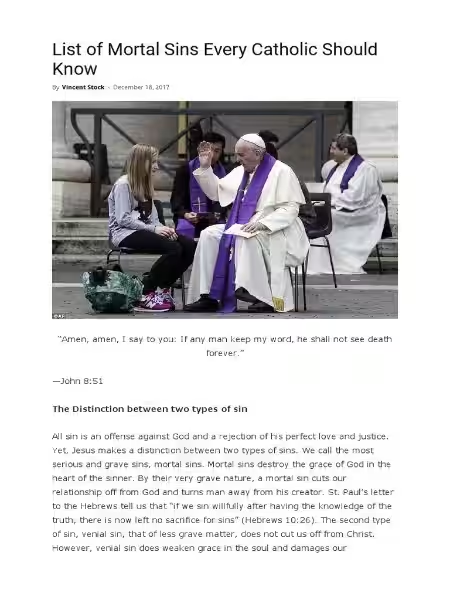
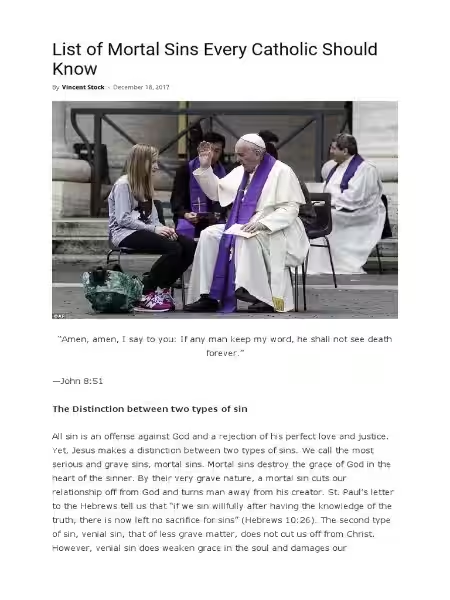
For many Christians, the sacrament of Reconciliation (Confession) is the primary means of receiving forgiveness for mortal sins. This involves confessing the sin to a priest, expressing sincere remorse, and receiving absolution. The process is designed to help individuals confront their actions, receive divine grace, and be restored to full communion with God and the Church. Beyond specific sacraments, a sincere act of contrition, a heartfelt sorrow for sin and a firm purpose of amendment, is also central to seeking forgiveness. The emphasis is on the desire to turn back to God and to live a life more in accordance with divine will.
Living a Virtuous Life: Preventing Mortal Sins Through Awareness
Ultimately, the most effective way to navigate the concept of mortal sin is not through dwelling on fear, but through actively cultivating a virtuous life. This involves a continuous process of self-examination, prayer, and seeking spiritual guidance. By understanding the nature of grave matter and the importance of full knowledge and deliberate consent, individuals can become more discerning about their choices and their potential spiritual consequences.
Developing a strong moral compass and a commitment to living according to religious teachings can act as a powerful preventative measure. This includes actively practicing virtues such as humility, charity, temperance, and diligence, which are the counterpoints to the traditional Seven Deadly Sins. Engaging in regular prayer, studying religious texts, and seeking counsel from trusted spiritual leaders can provide the wisdom and strength needed to resist temptation and make choices that align with one’s faith. The goal is not perfection, but a steadfast commitment to growing in love for God and neighbor, making each step of the spiritual journey a conscious movement towards grace.
Frequently Asked Questions: Mortal Sin in Religion
What is a mortal sin?
A mortal sin is considered a grave offense against God that severs one’s relationship with Him. It is believed that if unrepented, mortal sin can lead to eternal damnation.
What are the conditions for a sin to be considered mortal?
For a sin to be classified as mortal, three conditions must be met:
The sin must be grave matter.
The sin must be committed with full knowledge that it is a sin and that it is gravely wrong.
The sin must be committed with deliberate consent, meaning the person chose to commit the act.
Is there a definitive list of mortal sins?
While there isn’t a single, universally agreed-upon “list” that applies to all denominations or interpretations within Christianity (as the concept of mortal sin is primarily associated with Catholicism and some other branches), certain actions are consistently identified as grave matter. These generally include offenses that directly violate the Ten Commandments or the core teachings of love for God and neighbor.
What are some examples of actions often considered grave matter?
Examples of actions frequently cited as grave matter include:
Deliberate murder
Adultery and other grave sexual sins
Grave theft or robbery
Willful blasphemy
Grave scandal that leads others to sin
Intentional abortion
Grave hatred or malice towards God or neighbor
Grave apostasy (abandoning one’s faith)
It’s important to note that intent, circumstances, and the degree of harm all play a role in determining the gravity of an act.
What is the importance of confession for mortal sins?
In traditions that emphasize mortal sin, such as Catholicism, confession (Sacrament of Reconciliation) is considered the primary means by which a person can receive forgiveness for mortal sins and have their relationship with God restored.
What is venial sin?
Venial sin is a less serious offense against God. While it wounds the relationship with God, it does not break it. Venial sins can be forgiven through prayer, acts of charity, and reception of Holy Communion, in addition to confession.