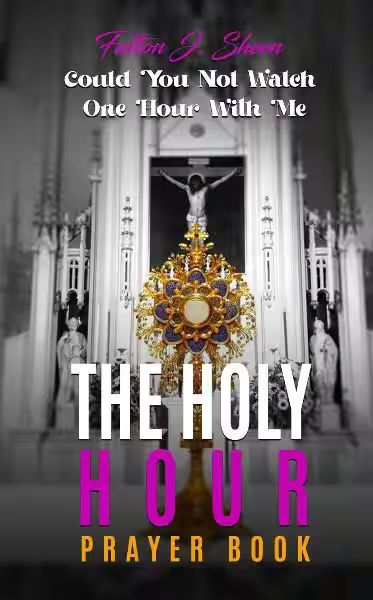
Discovering Solace and Strength Through Sacred Texts
In the tapestry of human existence, faith often serves as a guiding thread, illuminating our paths through life’s complexities. For many, this spiritual guidance is deeply intertwined with praise books, those venerable collections of hymns, prayers, and devotional writings that have resonated through generations. These aren’t merely historical artifacts; they are living conduits of devotion, offering solace, inspiration, and a profound connection to the divine. Whether you’re a seasoned believer or just beginning to explore the landscape of religious expression, understanding the role and impact of praise books in religion can profoundly enrich your spiritual life.
The act of engaging with praise books is a deeply personal yet universally shared experience. Imagine the quiet stillness of a morning, the scent of old paper in your hands, and the resonant words of a centuries-old hymn filling your mind. This is the essence of communion, a bridge built between the human seeker and the eternal. These texts, often meticulously compiled and lovingly preserved, represent the collective spiritual yearning and articulated faith of countless individuals. They offer a framework for expressing gratitude, seeking forgiveness, and finding strength in times of trial, making them invaluable companions on our religious journeys.
What Constitutes a “Praise Book”? Understanding the Diverse Landscape
The term “praise book” itself is wonderfully broad, encompassing a wide array of religious literature designed to uplift, guide, and facilitate devotion. At its core, a praise book is a compendium of sacred expressions, often focusing on the attributes of the divine and encouraging a reverent response from the reader or singer. This can include everything from the Psalms in Christianity, with their raw emotional honesty and soaring declarations of praise, to the Gurbani in Sikhism, which are hymns and verses from the Guru Granth Sahib, meant to be sung and contemplated.
Different religious traditions have their unique forms of praise books. In Judaism, the Siddur, a prayer book, contains a wealth of liturgical poetry and blessings that are central to worship and personal prayer. Within Hinduism, while not always a single codified “praise book” in the Western sense, collections of bhajans and kirtans (devotional songs) serve a similar purpose, fostering a deep sense of connection through their melodic and lyrical expressions of love for the divine. Even within smaller, more specific religious communities, specialized praise books emerge, tailored to particular theological emphases or devotional practices.
The Role of Praise Books in Worship and Personal Devotion
The impact of praise books is felt powerfully in both communal worship and individual spiritual practice. In a church service, the shared singing of hymns from a praise book can create an incredible sense of unity and collective spirit. It’s a moment where individual voices merge into a harmonious offering, a testament to shared belief and common purpose. Similarly, in a mosque, the recitation of quranic verses (often considered the ultimate form of divine praise) or devotional poetry can foster a profound sense of connection among the congregation.
For individuals, praise books are often cherished companions for private reflection and prayer. The act of reading a devotional passage, reciting a prayer, or singing a hymn to oneself can be incredibly grounding. It allows for a personal dialogue with the divine, a space to process emotions, seek comfort, and reaffirm one’s faith. Think of someone facing a personal crisis, finding solace in the familiar words of a well-loved hymn, the rhythm and meaning providing a steady anchor in turbulent times. This personal engagement transforms the praise book from a mere collection of words into a source of living strength.
Beyond Hymns: Exploring the Rich Content of Praise Books
While hymns are often the most recognizable element of praise books, their content is far richer and more varied than many realize. They can contain psalms, which are poetic expressions of human experience, ranging from profound lament to ecstatic joy, all directed towards the divine. You’ll also find prayers, both formal liturgical prayers and more spontaneous, personal supplications. These prayers offer models for how to approach God, articulating needs, expressing gratitude, and seeking guidance.
Furthermore, many praise books incorporate scriptural readings or excerpts from sacred texts, designed to be meditated upon. These passages often encapsulate core theological principles or offer profound insights into the nature of the divine and humanity’s relationship with it. For example, a Christian praise book might include passages from the Gospels that speak of God’s love, or verses from the Old Testament prophets that call for justice. The inclusion of these diverse elements ensures that the praise book serves as a comprehensive resource for spiritual growth, catering to different needs and stages of faith.
The Timeless Relevance of Praise Books in a Modern World
In our fast-paced, often secularized world, the enduring presence of praise books might seem, to some, like a relic of the past. However, their relevance is perhaps more profound than ever. In an era bombarded by fleeting digital distractions, the deliberate act of engaging with a praise book offers a powerful counterpoint – a call to slow down, to reflect, and to connect with something deeper and more enduring. The praise book provides a sanctuary for the soul, a quiet space away from the noise of daily life.
The wisdom and comfort found within these sacred texts are not bound by time. The human search for meaning, for purpose, and for a connection to something greater than ourselves remains a constant. Praise books, with their timeless expressions of faith, hope, and love, continue to offer profound answers and unwavering support. They remind us that we are not alone in our struggles or our joys, and that the divine presence is an ever-available source of strength and guidance, accessible through the simple, yet profound, act of opening a praise book.
Frequently Asked Questions about Praise Books and Religion
What are praise books in the context of religion?
Praise books are religious texts, often compiled from various sources, that contain hymns, prayers, psalms, and other devotional material intended for collective worship and personal reflection. They are designed to facilitate expressions of adoration, thanksgiving, and reverence towards a deity or deities.
What is the purpose of praise books in religious practice?
The primary purpose of praise books is to guide and standardize worship. They provide a common framework for congregations to engage in communal singing and prayer, fostering unity and shared spiritual experience. They also serve as a resource for individual devotion, allowing believers to connect with their faith through song and prayer outside of formal services.
Are praise books specific to certain religions?
While the concept of compiling devotional material exists across many religions, the term “praise book” is most commonly associated with certain Christian denominations, particularly those with a strong tradition of congregational singing. However, other faiths have similar collections of hymns, psalms, or devotional poetry used in worship.
How are praise books used in a religious service?
During a religious service, praise books are typically used by the congregation to follow along with sung worship songs or recited prayers. Leaders will often announce specific hymns or psalms from the book, and the lyrics or text are displayed or sung from the pages.
Can individuals use praise books for personal prayer and study?
Yes, absolutely. Praise books are valuable tools for personal spiritual growth. Individuals can use them to read devotional poetry, sing hymns for meditation, or find prayers that resonate with their personal spiritual journey.
What kind of content can be found in a praise book?
Praise books typically contain a wide range of content, including:
* Hymns: Songs of worship, praise, and theological reflection.
* Psalms: Sacred songs and poems from the Book of Psalms in the Bible.
* Chants and responsive readings: Liturgical texts for communal recitation.
* Short prayers and blessings: Devotional prayers for various occasions.
* Sometimes, scriptural passages or theological reflections.
How do praise books contribute to the theological understanding of a religion?
Through their lyrics and content, praise books often encapsulate and communicate the core theological beliefs of a religion. The hymns and prayers express doctrines about God, Jesus Christ (in Christianity), salvation, creation, and the relationship between humanity and the divine, reinforcing and teaching these beliefs to worshippers.
Are praise books static or do they evolve?
Praise books can evolve over time. New hymns are written, theological understandings may deepen, and cultural shifts can influence the selection and composition of material. Many denominations periodically revise or update their praise books to reflect contemporary expressions of faith and to include new songs.
What is the difference between a praise book and a hymnal?
In many contexts, the terms “praise book” and “hymnal” are used interchangeably, especially within Christian traditions. A hymnal is specifically a collection of hymns. A “praise book” might sometimes be a broader term that includes hymns along with other devotional material like psalms, prayers, and responsive readings.
How do praise books serve as a form of religious expression?
Praise books provide a structured yet deeply personal avenue for religious expression. Through singing, reciting, and meditating on the words within, believers articulate their faith, express their emotions towards the divine, and connect with a community of fellow worshippers. They are a tangible manifestation of a community’s spiritual life.