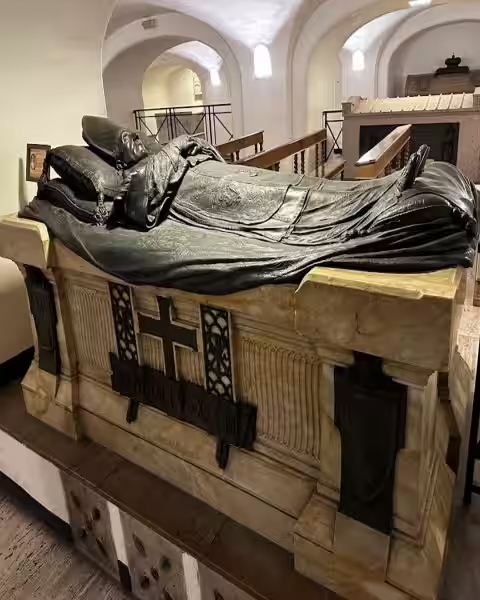
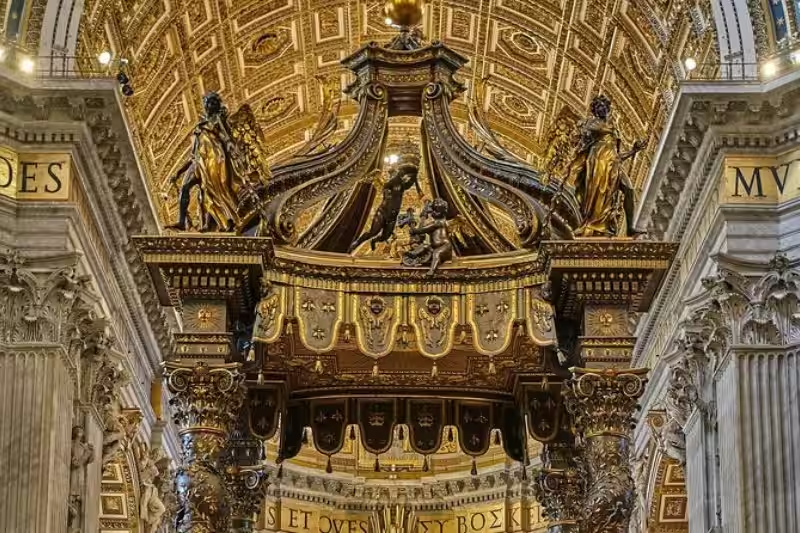
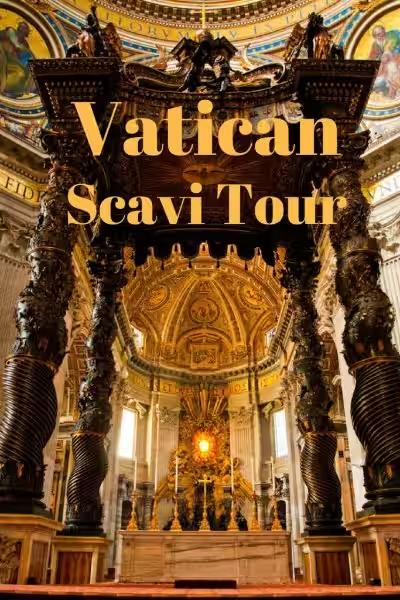
The allure of the Vatican City extends far beyond its magnificent St. Peter’s Basilica and the breathtaking Sistine Chapel. Beneath the hallowed grounds lies a secret, a silent city that predates much of what we see above: the Vatican Necropolis. For those seeking a deeper connection to the origins of Christianity and the tangible history of faith, a visit to the Vatican Necropolis offers an unparalleled and deeply moving experience. This subterranean labyrinth is not merely an archaeological site; it is a testament to devotion, a place where the echoes of early believers resonate, and where the very foundations of the Catholic Church are laid bare.
Embarking on a visit to the Vatican Necropolis is akin to stepping back in time, to an era when Christianity was nascent and its adherents practiced their faith in hushed reverence. It’s a journey that transcends mere tourism, inviting introspection and a profound appreciation for the sacrifices and convictions of those who came before us. The meticulous preservation of this ancient burial ground allows us to connect with history on a visceral level, offering a perspective that no museum or historical text alone can provide. This is where the enduring power of faith truly comes alive.
The Vatican Necropolis, also known as the Scavi, is an ancient Roman pagan cemetery that was later consecrated by the burial of Christian martyrs and, most significantly, the Apostle Peter himself. Imagine a bustling, vibrant city above ground, with ordinary Romans going about their daily lives, and beneath them, a quiet, sacred space dedicated to remembrance and eternal rest. This layered history is what makes the visit to the Vatican Necropolis so compelling. The transition from the pagan world to the Christian faith is palpable here, etched into the very stones and frescoes that adorn the tombs.
The discovery and excavation of the Necropolis in the 20th century were monumental undertakings, driven by a desire to confirm the traditional resting place of St. Peter. This quest, fueled by centuries of religious belief and historical inquiry, culminated in the meticulous unearthing of a complex network of mausoleums and burial chambers. The visit to the Vatican Necropolis allows you to trace these discoveries, to understand the immense effort involved in preserving this sacred space, and to witness the archaeological evidence that supports the profound religious significance of this location. It’s a narrative of discovery, faith, and the enduring human desire to honor the departed.
Unveiling the Secrets of the Scavi Digger Site
The “Scavi,” as it’s commonly known, is an intricate maze of narrow corridors and richly decorated burial chambers. Each tomb tells a story, from the opulent mausoleums of wealthy Roman families to the simpler, yet deeply spiritual, resting places of early Christians. A guided tour is essential for a meaningful visit to the Vatican Necropolis, as the sheer density of history and symbolism can be overwhelming without expert interpretation. Your guide will illuminate the meaning behind the mosaics, the inscriptions, and the architectural features, transforming the stones into a narrative of lives lived and faith embraced.
One of the most poignant aspects of the visit to the Vatican Necropolis is the proximity to the traditional tomb of St. Peter. The “Tropaion” of Gaius, a monument believed to mark the apostle’s burial site, is a focal point of the excavation. Standing here, surrounded by the tangible evidence of early Christian devotion, is an experience that deeply touches the spiritual core of many visitors. It’s a powerful reminder that this sacred ground is not just an ancient site, but a living testament to the very beginnings of a global religion, a place where millions feel a profound spiritual connection.
Navigating the Necropolis: A Journey of Faith and Discovery
Planning a visit to the Vatican Necropolis requires careful consideration, as access is strictly controlled to preserve this delicate archaeological site. Unlike other Vatican attractions, you cannot simply walk in. Instead, you must book a guided tour through the Excavations Office or authorized tour operators well in advance. This controlled access ensures that the experience remains intimate and respectful, allowing for a deeper immersion into the atmosphere of the Necropolis. The anticipation of this unique journey often builds long before you even descend beneath the basilica.
The guided tour itself is a carefully orchestrated descent into the past. You will walk through ancient Roman streets, past pagan mausoleums adorned with intricate frescoes depicting mythological scenes and daily life, and eventually into the Christian sections. The contrast between the two is striking, highlighting the gradual but profound shift in beliefs. The visit to the Vatican Necropolis is structured to reveal this transition, offering insights into how early Christians adapted and reinterpreted existing traditions, infusing them with their own unique theology and hope for the afterlife. It’s a history lesson brought to life, etched in stone and pigment.
The Tomb of St. Peter: The Heart of the Necropolis
At the very core of the visit to the Vatican Necropolis lies the profound significance of St. Peter’s tomb. The journey culminates in a space that is both humble and awe-inspiring, a testament to the enduring legacy of Christ’s chief apostle. The reverence with which this area is treated underscores its paramount importance in Christian tradition. Imagine standing in the very place where, according to tradition, Peter, the rock upon which Christ built his Church, was laid to rest. This is not just a historical curiosity; for many, it is a pilgrimage of immense spiritual weight.
The archaeological evidence, including inscriptions and artifacts, strongly supports the tradition of St. Peter’s burial here. The visit to the Vatican Necropolis allows you to see this evidence first-hand, connecting you directly to the foundational figures of your faith. This is where the abstract tenets of religion meet the concrete reality of history, offering a tangible link to the men and women who shaped Christianity in its earliest days. The quiet solemnity of this space encourages personal reflection and a deep appreciation for the continuity of faith across millennia.
Beyond the Tombs: Understanding the Religious Significance
The visit to the Vatican Necropolis is more than just an archaeological tour; it’s a profound exploration of faith, martyrdom, and the enduring promise of resurrection. The early Christians who were buried here did so with the unwavering belief in a life beyond death, a belief that emboldened them to face persecution and even martyrdom. The intricate frescoes found in some of the mausoleums often depict scenes from the Old and New Testaments, serving as visual affirmations of their faith and hope. These images are not mere decorations; they are powerful statements of belief.
For believers, a visit to the Vatican Necropolis can be an intensely spiritual experience. It provides a tangible connection to the roots of their faith, a reminder of the sacrifices made by countless individuals throughout history. The very act of descending into this ancient burial ground, where martyrs and early followers of Christ are interred, can evoke a sense of awe and deep reverence. It’s a chance to stand on consecrated ground, to feel the weight of history and faith, and to draw strength from the enduring legacy of those who lived and died for their beliefs. This is the essence of religious pilgrimage.
Practical Tips for Your Necropolis Visit
To ensure a smooth and meaningful visit to the Vatican Necropolis, some practical steps are crucial. Firstly, book your tour well in advance. Popular dates fill up months ahead, so plan accordingly, especially if you’re traveling during peak season. Secondly, dress modestly. While not as strict as entering the basilica itself, it’s a sacred site, so shoulders and knees should be covered. Thirdly, wear comfortable shoes. You’ll be doing a lot of walking on uneven surfaces. Lastly, be prepared for a unique experience. The lighting is subdued, the air is cool, and the atmosphere is one of profound respect and quiet contemplation. The visit to the Vatican Necropolis is a journey into the heart of faith’s enduring power.
Remember that photography is strictly prohibited within the Necropolis to preserve the delicate frescoes and maintain the solemn atmosphere. This enforced digital detox allows you to be fully present in the moment, to absorb the history and spirituality without distraction. The visit to the Vatican Necropolis is an opportunity to disconnect from the outside world and reconnect with something far older and more profound. It’s a chance to witness, firsthand, the foundations of a faith that has shaped the world for two millennia, leaving an indelible mark on history and the hearts of billions.
Frequently Asked Questions about Visiting the Vatican Necropolis
What is the Vatican Necropolis?
The Vatican Necropolis, also known as the Scavi tour, is an ancient Roman necropolis located directly beneath St. Peter’s Basilica. It contains the tomb of Saint Peter, along with many other burials from the Roman period and the early Christian era.
Is the Vatican Necropolis the same as the Vatican Museums?
No, the Vatican Necropolis is a separate site from the Vatican Museums. While both are located within Vatican City, the Necropolis is an underground archaeological site, whereas the Vatican Museums house vast collections of art and historical artifacts.
Can anyone visit the Vatican Necropolis?
Access to the Vatican Necropolis is strictly controlled and requires a guided tour booked in advance. It is not a walk-in attraction.
How do I book a tour of the Vatican Necropolis?
Tours can be booked through the official website of the Fabbrica di San Pietro (the office responsible for the maintenance of St. Peter’s Basilica). Due to high demand, it is recommended to book several months in advance.
What is the religious significance of the Vatican Necropolis?
The Vatican Necropolis is of immense religious significance as it is believed to be the burial site of Saint Peter, the first Pope. Visiting the tomb of Saint Peter is a profound experience for many Christians.
What is the dress code for visiting the Vatican Necropolis?
As you will be visiting a sacred religious site, a modest dress code is required. Shoulders and knees must be covered.
How long does the Vatican Necropolis tour last?
The guided tour of the Vatican Necropolis typically lasts about 60-90 minutes.
Is the Vatican Necropolis suitable for everyone?
The Necropolis involves walking on uneven surfaces, narrow passages, and stairs. It is not recommended for individuals with severe mobility issues, claustrophobia, or young children who may find it challenging.
Can I take photos inside the Vatican Necropolis?
Photography is generally not permitted inside the Vatican Necropolis to preserve the site and for security reasons.
What should I expect during the tour?
You will be guided by a licensed archaeologist or historian who will explain the history of the necropolis, the different types of tombs, and the evidence supporting the location of Saint Peter’s tomb.
Is the Vatican Necropolis a religious pilgrimage site?
Yes, for many Christians, visiting the tomb of Saint Peter is considered a significant religious pilgrimage.
Do I need to be Catholic to visit?
No, visitors of all faiths and no faith are welcome to visit the Vatican Necropolis. The tour is historical and archaeological in nature, and the site’s significance transcends religious affiliation.