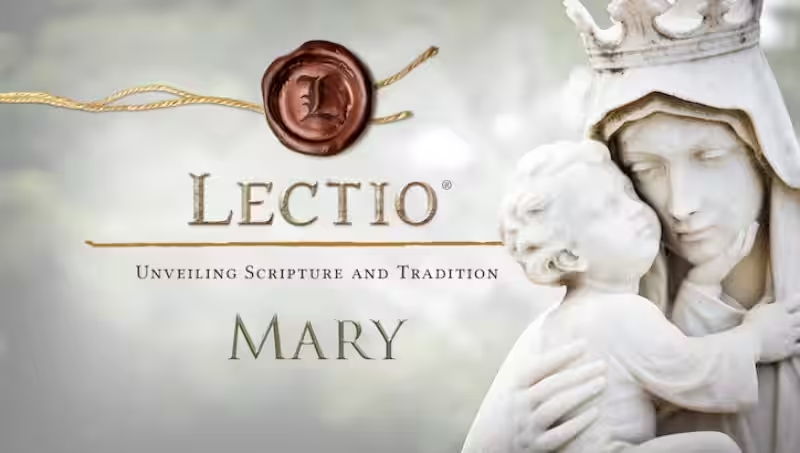
Discovering the Sacred in the Everyday with Lectio Mary
In the tapestry of religious devotion, certain practices offer a pathway to a more profound and personal connection with the divine. Among these, the contemplative use of scripture, often referred to as Lectio Divina, stands as a time-honored method for spiritual growth. When this ancient practice is specifically applied to the life and teachings of Mary, the Mother of Jesus, it transforms into Lectio Mary, a rich and transformative approach to understanding her role and embracing her spirit within our own faith journeys. This isn’t just about reading stories; it’s about listening deeply to the whispers of the Holy Spirit through Mary’s experiences, allowing her faith to illuminate our own path.
The beauty of Lectio Mary lies in its accessibility. It doesn’t require advanced theological degrees or years of seminary training. It’s a practice rooted in attentive reading, prayerful reflection, and a willingness to be transformed. Imagine sitting with a familiar passage about Mary – perhaps the Annunciation, the Visitation, or the scene at the foot of the cross. Instead of just skimming the words, Lectio Mary invites us to linger, to ask questions, and to allow the narrative to resonate within our hearts. This deliberate engagement helps us move beyond a superficial understanding and discover the sacred narrative that can profoundly impact our daily lives and our relationship with God.
The Pillars of Lectio Mary: Engaging with Mary’s Story
At its core, Lectio Mary follows the established rhythm of Lectio Divina, but with a specific focus on the person and example of Mary. This practice can be broken down into several key stages, each designed to foster a deeper, more intimate encounter with her faith. Understanding these stages is crucial for anyone seeking to cultivate this devotional practice.
The first stage, Lectio (Reading), involves carefully and slowly reading a chosen biblical passage that features Mary. This isn’t a passive reading; it’s an active engagement, paying attention to every word, every nuance, and every detail. Think of it like dissecting a precious jewel, turning it over and over to appreciate its facets. For instance, when reading the Annunciation (Luke 1:26-38), we might focus on Mary’s simple “yes” – “Behold, I am the handmaid of the Lord; let it be to me according to your word.” This single phrase, when considered through the lens of Lectio Mary, reveals immense faith, humility, and surrender.
The second stage is Meditatio (Meditation). Here, we ponder the text, allowing it to sink into our minds and hearts. We ask ourselves: What does this passage say to me personally? How does Mary’s experience relate to my own struggles, joys, and challenges? If we meditate on Mary at the Visitation (Luke 1:39-56), we might reflect on her promptness to serve her cousin Elizabeth, even when she herself was carrying the immense weight of her divine pregnancy. This prompts us to consider our own willingness to reach out to others in need, reflecting Mary’s compassionate heart.
The third stage is Oratio (Prayer). This is where our reflection moves from our minds to our hearts, transforming into a dialogue with God. We might express our gratitude for Mary’s example, ask for the grace to emulate her virtues, or simply share our feelings about the passage. For example, after meditating on Mary’s presence at the foot of the cross (John 19:25-27), our prayer might be a simple plea: “Lord, grant me the courage and steadfastness of Mary in my own moments of suffering.” This prayerful response is a vital element of Lectio Mary, allowing the divine encounter to move from contemplation to communion.
Finally, the fourth stage is Contemplatio (Contemplation). This is a state of resting in God’s presence, allowing the Holy Spirit to work within us. It’s a quiet, wordless awareness, a deep sense of peace and connection. In Contemplatio, we simply be with God, allowing the insights gained through Lectio Mary to permeate our being. It’s a profound surrender, where we allow Mary’s faith to inspire and guide us, fostering a deeper union with Christ through her maternal intercession.
The Transformative Power of Lectio Mary in Religious Life
The impact of Lectio Mary extends far beyond a simple devotional exercise; it has the power to profoundly shape our religious lives, fostering a more authentic and vibrant faith. By immersing ourselves in Mary’s narrative, we unlock profound lessons that resonate through all aspects of our spiritual journey.
One of the most significant benefits of Lectio Mary is the deepening of our understanding of God’s grace and plan. Mary’s life is a testament to God’s extraordinary work in an ordinary woman. Her willingness to embrace God’s will, even when it was daunting and mysterious, serves as a powerful model for our own lives. When we engage in Lectio Mary, we begin to see how God can work through humble hearts and how His divine purpose can unfold in unexpected ways. Consider the story of the wedding at Cana (John 2:1-11). Mary’s quiet instruction to the servants, “Do whatever he tells you,” is a profound lesson in trust and obedience, demonstrating her complete reliance on Jesus and her desire for His will to be done. This simple act, when meditated upon, reminds us to listen to Jesus’ voice in our own lives, no matter how insignificant our requests may seem.
Furthermore, Lectio Mary cultivates a stronger sense of discipleship. Mary is the first and most perfect disciple of Jesus. Her journey, from accepting the angel’s message to standing with her Son at the crucifixion, exemplifies unwavering faith and love. By studying her example through Lectio Mary, we are inspired to follow Christ more closely, to embrace His teachings, and to live lives that are pleasing to Him. We learn about patience in suffering, joy in service, and unconditional love. The image of Mary as the “Mother of Sorrows” at the foot of the cross is particularly poignant. Through Lectio Mary, we can find solace and strength in her shared grief, recognizing that we are not alone in our own trials, and that her intercession is a source of profound comfort.
Ultimately, Lectio Mary fosters a deeper relationship with Jesus Christ. Mary’s unique role as the Mother of God means that her life is inextricably linked to Jesus. By focusing on her, we are naturally drawn closer to her Son. Her quiet strength, her profound love, and her unwavering faith all point us towards Him. She is a divine guide, leading us gently towards her Son. The very act of engaging with Lectio Mary is a way of honoring her, and in doing so, we often find ourselves experiencing a renewed encounter with the love and mercy of Jesus. It’s a reciprocal relationship, where our devotion to Mary deepens our love for her Son, and our love for her Son inspires us to appreciate Mary all the more.
Integrating Lectio Mary into Your Daily Spiritual Practice
The beauty of Lectio Mary is its adaptability. It can be seamlessly woven into the fabric of your daily religious life, transforming ordinary moments into opportunities for profound spiritual encounters. You don’t need hours of dedicated time; even a few minutes of focused engagement can yield significant spiritual fruit.
To begin, choose a short passage that features Mary. This could be from the Gospels, or even from a devotional text that focuses on her life. For instance, you might start with the Magnificat (Luke 1:46-55). Find a quiet, undistracted space where you can pray and reflect. Turn off notifications, settle your mind, and approach the scripture with an open heart. Read the passage slowly, perhaps two or three times, paying attention to any words or phrases that catch your attention. As you meditate, ask yourself: What is God saying to me through Mary’s words and actions here? What virtue is she demonstrating that I need to cultivate in my own life?
When you move into the prayer stage, don’t be afraid to speak honestly with God. If the passage inspires gratitude, express it. If it highlights a personal failing, confess it and ask for help. You might pray, “Mary, you sang of God’s mighty deeds. Help me to recognize and praise God’s blessings in my own life.” The contemplation stage is about simply resting in God’s presence, allowing His love to wash over you. Don’t strive for grand revelations; often, it’s in the quiet stillness that the deepest transformations occur. Even a single sentence from Mary’s story, when approached with the spirit of Lectio Mary, can become a wellspring of grace for your day.
It’s helpful to establish a consistent rhythm with your Lectio Mary. Perhaps you can dedicate five to ten minutes each morning or evening. You might choose to focus on a different aspect of Mary’s life each week, creating a structured devotional journey. For example, one week could be dedicated to her obedience, another to her compassion, and another to her steadfastness. Keep a journal to record your insights, prayers, and any promptings you receive. This practice of writing down your reflections can solidify your learning and provide a valuable record of your spiritual growth through Lectio Mary. Remember, the goal is not perfection, but a heart open to God’s voice speaking through the life of His Mother.
Frequently Asked Questions about Lectio Maria Religion
What is Lectio Maria Religion?
Lectio Maria Religion is a method of prayer and spiritual reading that focuses on meditating on the Gospels through the lens of Mary, the Mother of Jesus. It encourages a deeper understanding of Christ’s life and teachings by contemplating them in union with Mary’s perspective.
How does Lectio Maria Religion differ from traditional Lectio Divina?
While both practices involve prayerful reading of scripture, Lectio Maria Religion specifically centers the meditation on Mary’s role and experience. Traditional Lectio Divina can focus on any scriptural passage, whereas Lectio Maria Religion emphasizes passages where Mary is present or plays a significant role, or invites a reflection from her viewpoint.
What are the main steps involved in Lectio Maria Religion?
The practice typically involves several stages:
* Lectio (Reading): Reading a chosen Gospel passage slowly and attentively.
* Meditatio (Meditation): Reflecting on the passage, often considering Mary’s possible thoughts, feelings, and reactions.
* Oratio (Prayer): Responding to God through prayer, inspired by the meditation, perhaps speaking to Jesus as Mary would.
* Contemplatio (Contemplation): Resting in God’s presence, allowing His grace to work within.
* Actio (Action): Considering how the insights gained can be lived out in daily life, mirroring Mary’s obedience and love.
What kind of scriptural passages are typically used in Lectio Maria Religion?
Passages that feature Mary prominently are often chosen, such as the Annunciation (Luke 1:26-38), the Visitation (Luke 1:39-56), the Nativity (Luke 2:1-20), the presentation in the Temple (Luke 2:21-38), the finding of Jesus in the Temple (Luke 2:41-52), the Wedding at Cana (John 2:1-11), and Jesus’ crucifixion (John 19:25-27), as well as her presence in the Upper Room after the Ascension (Acts 1:14).
Who can practice Lectio Maria Religion?
Anyone who desires to grow in their faith and deepen their relationship with Jesus Christ through a Marian perspective can practice Lectio Maria Religion. It is particularly beneficial for those who feel a devotion to Mary or wish to understand her role in salvation history more profoundly.
What are the benefits of practicing Lectio Maria Religion?
Practicing Lectio Maria Religion can foster:
* A deeper understanding of the Gospels.
* A closer relationship with Jesus Christ.
* Increased devotion to Mary and understanding of her motherhood.
* Enhanced prayer life and spiritual growth.
* Greater imitation of Christ through Mary’s example of faith and obedience.
Is Lectio Maria Religion only for Catholics?
While the practice is deeply rooted in Catholic tradition and devotion to Mary, its core principles of prayerful scriptural meditation can be beneficial to Christians of various denominations who are open to exploring the Gospels through Mary’s eyes.